Maison-Rouge Castle: A Rebuilt Estate in France
Site at a Glance
- Rating
- 5
- Popularity
- Very Low
- Country
- France
- Primary era
- Modern
- External website
- Open
- Eras represented
- Modern
- Civilizations
- French
- Site type
- Domestic
- Remains
- Manor House
On this page6 sections
History
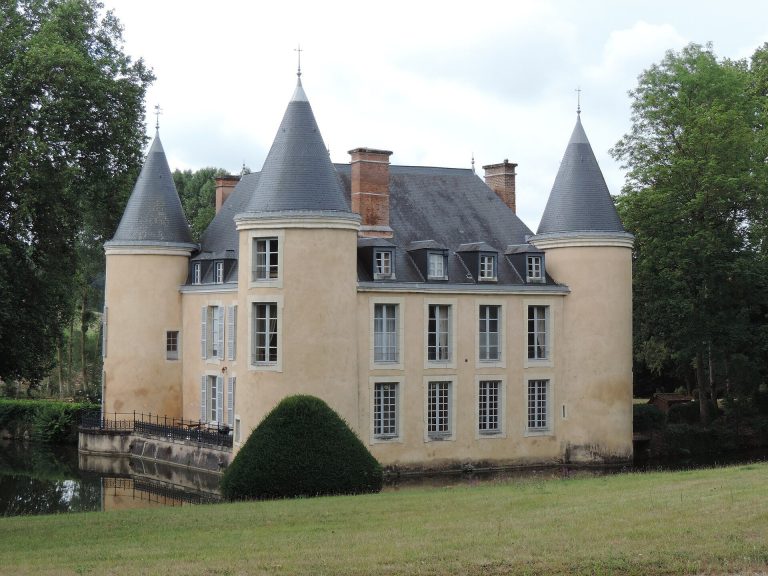
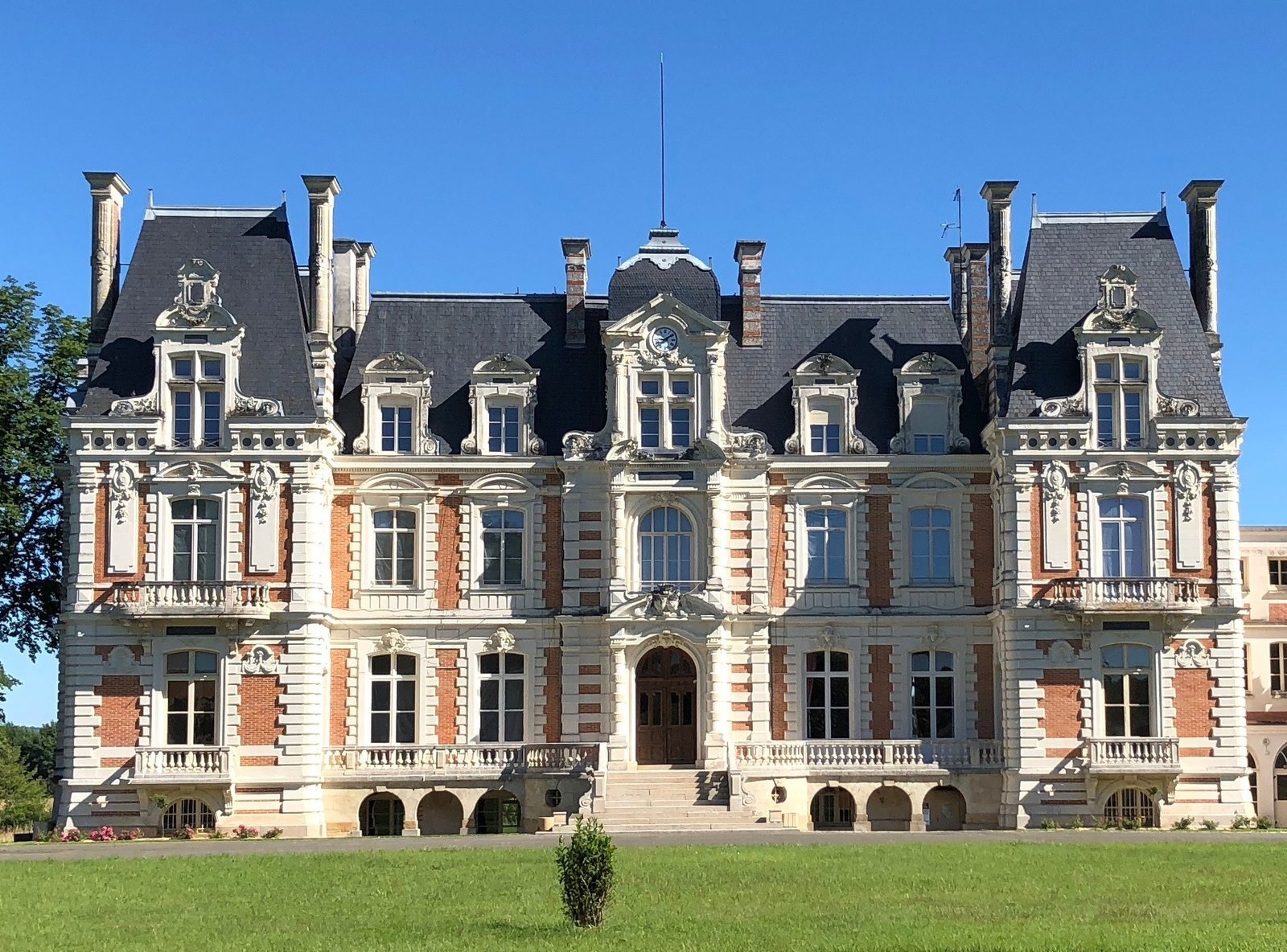
Maison-Rouge Castle is an estate in La Bruère-sur-Loir, France. Its present castle was built around 1880 in the Neo-Louis XIII style, a nineteenth-century revival drawing on French architecture from Louis XIII’s reign. Ownership passed through the de Rougé, Savonnières, and Jourdan de Savonnières families before the estate became an educational institution.
Medieval tradition and early ownership
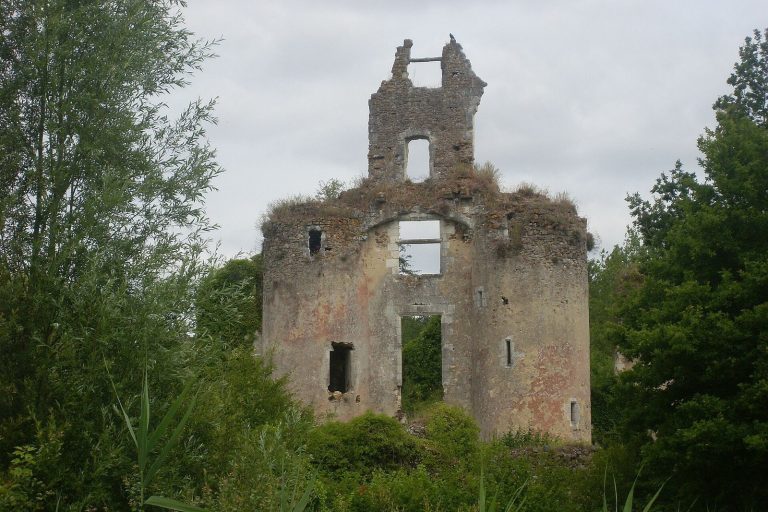
Local historian Charles Vergnaud attributed an earlier manor on the site to a knight who had taken part in the Crusades, medieval Christian military expeditions, probably in the thirteenth or fourteenth century. Tradition placed the manor on land called “the sandpit,” held from the Grand Perray, a landed estate. The knight was said to have bound himself and his successors to appear there on the winter feast of Saint Martin, or Martinmas, a Christian feast associated with Saint Martin of Tours, a fourth-century bishop. They were to bring a four-ox cart, a white riding horse, and a caged wren, and give the lord violets and a fragrant cake called a “rose kiss.”
The earliest known ownership is associated with the de Rougé family. Antoine de Rougé was styled lord of Maison Rouge in 1554, and Gilles de Rougé held the lordship from 1589 to 1615. Around 1620, Gilles’s daughter Françoise married Charles de Savonnières, and the estate passed to the Savonnières family.
The Savonnières family
Charles de Savonnières was the first of his family to live at Maison Rouge, from 1621 to 1688. Nicolas de Savonnières owned the estate until his death in 1704. Nicolas’s brother Jacques held it in the early eighteenth century. After Jacques died before 1712, his widow inherited the property and still held it in 1722; their son Charles-René was also identified as an owner that year and retained the estate until his death in 1759.
Jacques-René de Savonnières was named as lord of Maison Rouge in 1764 and 1784. Jacques Jean-Baptiste Louis de Savonnières owned the estate from the late eighteenth century until his death in 1837.
Rebuilding in the nineteenth century
In 1832, Catherine Mathilde de Savonnières married Auguste Georges de Jourdan, bringing the estate into the Jourdan de Savonnières family. Auguste Georges died in 1835, before his father-in-law, and apparently never owned Maison Rouge. Their son, Augustin Georges, Count de Jourdan de Savonnières, later owned the estate and arranged for its rebuilding.
Augustin considered the earlier castle too small and in poor condition, so he had it demolished in 1862. The replacement was built around 1880, and Augustin moved temporarily to La Gagnerie while work proceeded. In 1884, Joseph-René, Viscount de Jourdan de Savonnières, received Maison Rouge as a gift from his parents. He still owned it in 1914, when he sold the Château de la Gagnerie. His household in 1906 included a governess for his three young daughters and six servants, one assigned solely to the poultry yard.
Educational use and later ownership
After his parents died in 1938, Jacques Marie Joseph, Viscount de Jourdan de Savonnières, held the estate. He and his wife had no children, and his will left the property and its many outbuildings to Apprentis d’Auteuil, a French charity concerned with young people’s care and education. The organization became the owner in 1955. The castle served as the Maison Saint-Martin educational establishment until 2014.
The estate was later sold to Diderot Education, which planned to make it part of the Tersac schools as a boarding school for the 2018 school year. Delays postponed the project, which was abandoned in 2022. During this period, the mayor accused owner Aldrick Allal of carrying out defective, cheaply executed work. Giles Corbin bought the castle in late 2024.
Remains
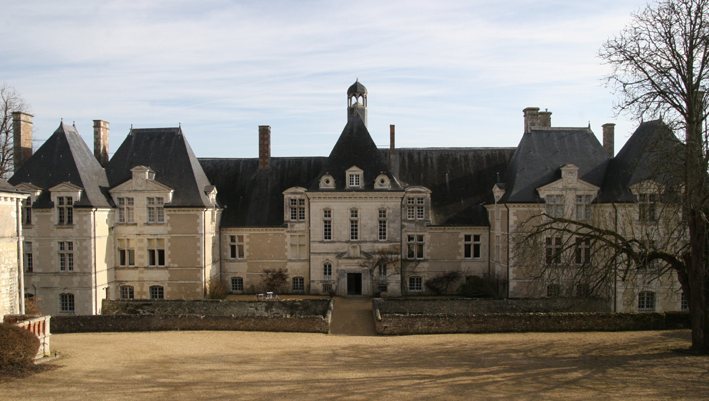
The present castle is built of brick and tuffeau, a soft, porous limestone used as building stone in western France. An attached chapel is the sole surviving part of the earlier castle; it was left untouched during the demolition. The replacement building’s Neo-Louis XIII style reflects a nineteenth-century revival of French architecture associated with the reign of Louis XIII.
The estate includes numerous outbuildings. Horse boxes were also erected on the property without a construction permit.