Rüti Monastery: A Premonstratensian Abbey in Switzerland
Site at a Glance
- Popularity
- Medium
- Country
- Switzerland
- Primary era
- Early Modern
- Eras represented
- Medieval, Early Modern
- Civilizations
- Holy Roman Empire, Swiss
- Site type
- Religious
- Remains
- Monastery
On this page19 sections
History
Rüti Monastery was a Premonstratensian abbey dedicated to Saint Mary in Rüti, Switzerland, founded in 1206 by Liutold IV, Count of Regensberg. Its first stone church was built in the Romanesque style. The community combined religious life with parish ministry, care for the poor, teaching, and management of a substantial estate.
Foundation and growth
Liutold invited Provost Ulrich and Prior Luther to establish the house after they had left Churwalden following disagreements within its community. He granted them his estate at Rüti and the existing St Nicholas Chapel, with the intention of creating a monastery independent of Einsiedeln. Liutold died during the Fifth Crusade in 1218. His brother Eberhard, Archbishop of Salzburg, and Liutold’s son Liutold V confirmed the foundation in 1219.
The preferred foundation date is 1206, although documents relating to the foundation extend across 1206 to 1221. A narrative written in 1441, during the Old Zürich War, attributes the beginning of construction to 1206 under Pope Innocent III and King Philip of Swabia. It names Konrad II of Tegerfelden as bishop of Constance, though he was elected to that office in 1208 and consecrated in 1210. An arrangement confirmed in 1209 transferred the chapel’s revenues and rights to the community.
Rüti began as a branch of Churwalden. In 1228 Pope Gregory IX placed the monastery and its possessions under papal protection, exempted it from spiritual and secular levies, and granted rights that included baptism and burial. The canons followed the Rule of Saint Augustine, a framework of religious discipline, and belonged to the Premonstratensians, a Catholic order founded by Norbert of Xanten in 1120. Its canons regular lived in a religious community while carrying out pastoral work. In 1230 the bishop of Constance placed Rüti under Weissenau Abbey in the Premonstratensian administrative district of Swabia. The priory became an abbey in 1259.
The community could elect its abbot and admit both clergy and laypeople. Rüti may also have included a community of women until 1283, when the canons resolved to accept no more sisters. The relationship between a possible women’s community at Rüti and the dependent convent at Bollingen remains uncertain. In 1468 Rüti and Churwalden renewed their ties through an agreement for prayerful remembrance of deceased canons and hospitality for members travelling between the houses.
Parish work, property, and local life
Between 1206 and 1525, Rüti had pastoral connections with 14 churches. At 12, it held the right to present a priest for appointment; Bollingen and Fischenthal were not formally incorporated into the abbey. Incorporation attached a church’s benefice and revenues to a religious house. Rüti could not fill all its parish positions with its own canons, but its responsibilities extended well beyond the monastery itself. It supported poor relief, including food deliveries arranged through notices posted on doors in Dürnten, and sometimes opposed Anabaptist teaching, a Reformation-era movement that emphasized adult baptism.
Donations, purchases, and exchanges gradually enlarged the abbey’s lands and rights. At its height, between 1371 and 1450, it held farms or other property in about 185 localities, especially around Rüti, Ferrach, and Oberdürnten, between Greifensee and Pfäffikersee, and around Zürichsee and the upper lake. Its interests included land, tithes, the right to present clergy, and lower-court jurisdiction over local matters. Some farms were managed directly and others leased.
Among its early acquisitions was Seegräben, whose chapel was incorporated in 1221 along with rights to a mill, fields, woodland, and fishing. In 1238 Provost Ulrich bought Ferrach and the Toggenburg counts’ rights there for 80 marks of silver. The abbey assumed public and judicial duties, while villagers made an annual payment. Over time, their legal and economic position came to resemble that of the abbey’s dependent tenants. The Regensberg family granted Rüti tax exemptions in Grüningen in 1260 and transferred additional property there before its decline following the Regensberg feud of 1267 to 1268.
In 1286 Countess Elisabeth of Rapperswil granted Rüti the farm and local court rights at Oberdürnten. After the monastery suffered serious damage in conflict between Austria and Zürich in 1359, it received the right to present the priest at Dürnten; the church was incorporated in 1414. The Toggenburg counts gave the church and property at Dreibrunnen in 1289, and it was incorporated in 1330. Rüti acquired church property at Gossau in 1414 and built a replacement church there, then received the church and goods at Fehraltorf in 1469. Its wider holdings included, among many other places, Aadorf, Dürnten, Eschenbach, Fischenthal, Hinwil, Rapperswil, Uster, Winterthur, and Zürich.
A small farming village developed around the monastery and its economic activity. Residents raised crops and livestock and, in later centuries, also worked for wages in wine production around Zürichsee and in textiles. Rüti stood on the Way of St James, a network of Christian pilgrimage routes leading toward the shrine of Saint James at Santiago de Compostela, via Rapperswil and the lake crossing to Einsiedeln.
Noble burials and late medieval upheaval
From the late thirteenth century, the Counts of Toggenburg increasingly chose Rüti as their burial place. Fourteen members of the family were buried there, alongside other nobles and local ministerial families who sought burial and commemorative services. In 1389 Abbot Bilgeri von Wagenberg arranged for the remains of at least 20 Habsburg fighters killed at the Battle of Näfels, including his brother Johann von Klingenberg, to be brought to Rüti for burial.
Count Friedrich VII of Toggenburg, who had sometimes lived at Rüti with his household, died in 1436. His widow, Elisabeth von Matsch, endowed a daily Mass for their souls on 5 September 1439, giving the abbey 30,000 Rhenish guilders, a medieval currency, and a precious ornamented jewel. The foundation required the abbot and community to maintain the services and gave the abbot of Einsiedeln a supervisory role.
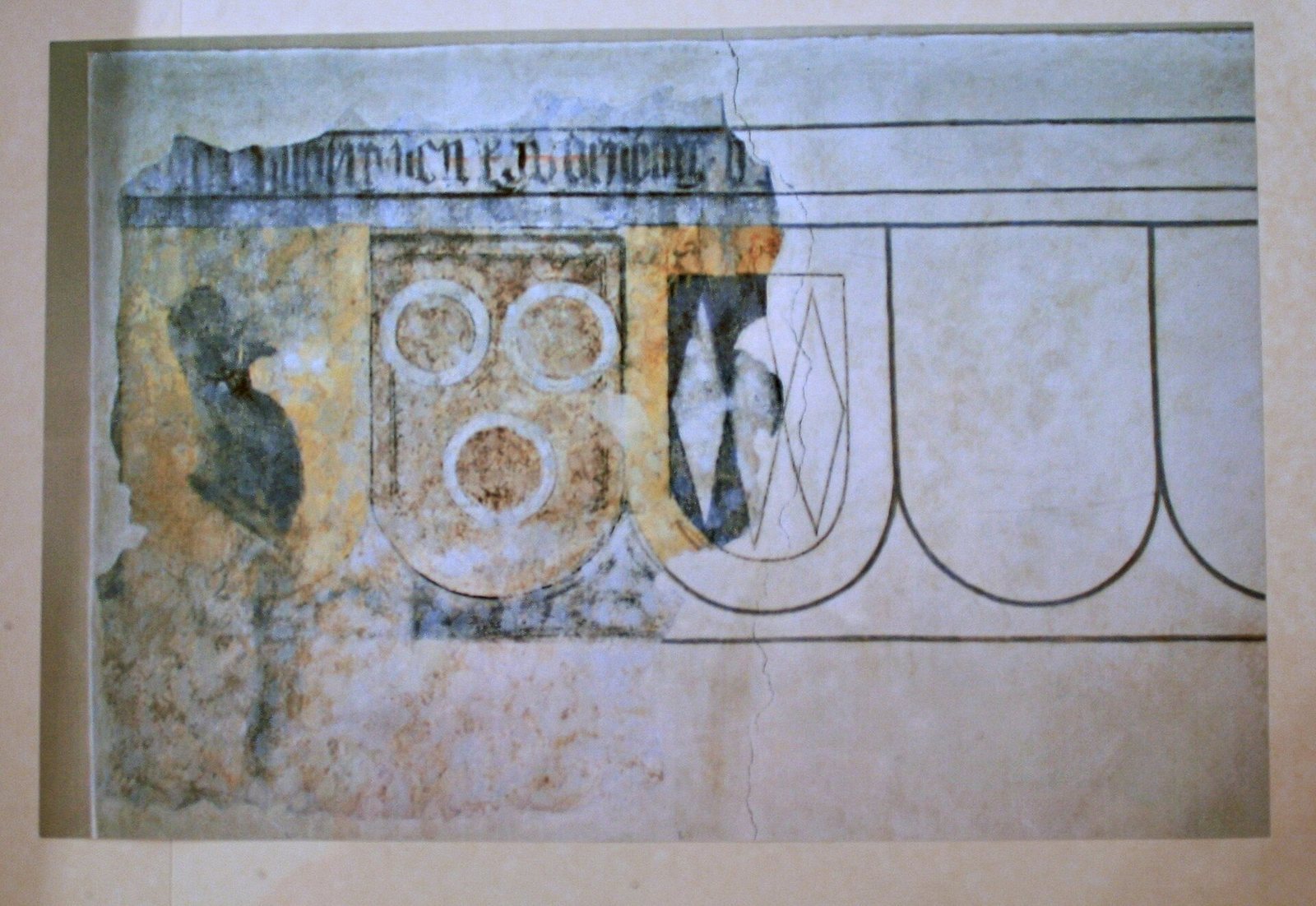
Rüti came under Zürich’s authority in 1408 as part of the lordship of Grüningen. Emperor Sigismund placed it under imperial protection in 1415 and again in 1433. On 11 June 1443, during the Old Zürich War, a conflict between Zürich and the other members of the Swiss Confederacy, troops from eight cantons plundered the monastery and desecrated noble graves. They took heraldic funeral shields, banners, religious furnishings, and church bells. The attack and the wider impoverishment of the region halted the abbey’s territorial expansion and building work for decades.
Abbot Markus Wyler commissioned Hans Haggenberg to renew the abbey church in 1492, with further major improvements associated with Wyler and Abbot Felix Klauser. The church portal bears the date 1499. The municipality’s coat of arms derives from the abbey emblem, which appeared on the church’s sacrament house in 1490. After the monastery’s suppression, the emblem became the arms of the Rüti administrative district and, in 1803, of the municipality.
Reformation and later administration
On 22 April 1525 Abbot Felix Klauser fled to Rapperswil with money, documents, and part of the monastic treasury. The next day, about 1,200 local peasants plundered the abbey and destroyed its extensive library. Zürich had decided in November 1524 to suppress the city’s monasteries. An agreement dated 17 June 1525 transferred Rüti’s property to the city, which administered it as Amt Rüti, an estate office and administrative district. A 1559 arbitration confirmed the closure, although a later legal interpretation questioned whether the abbey had been formally abolished.
Some canons took Protestant parish posts, and three former members who became Protestant clergy died at the Battle of Kappel, a conflict of the Swiss Reformation. Three canons remained at Rüti for a time; the last resident, Sebastian Hegner, moved to Rapperswil in 1557. The former abbey’s property helped establish a public school in Rüti, one of the first in the Zürich countryside. Ulrich Zwingli’s plan for a teacher-training institution there did not succeed, but the school continued for 312 years.
The monastery’s treasury remained in Rapperswil. A gift made by Hegner to the parish of St John there in 1561 later became the basis of a claim to the objects, and the collection is now held in Rapperswil, including in the town museum. Klauser carried away documents and other important records; some administrative books were destroyed during the Reformation, and the monastery archive was handed to Zürich’s official in Rüti in 1557.
The former abbey’s holdings were administered as Amt Rüti until 1798. A major fire in 1706 damaged the complex, and the Amt house was rebuilt in 1710. The Amt was abolished in 1833, after which surviving monastery and estate buildings were sold and many demolished. The former monastery buildings and associated structures are listed as a Class A object in the Swiss Inventory of Cultural Property of National and Regional Significance. The Spitzerliegenschaft has been protected since 1976.
Remains
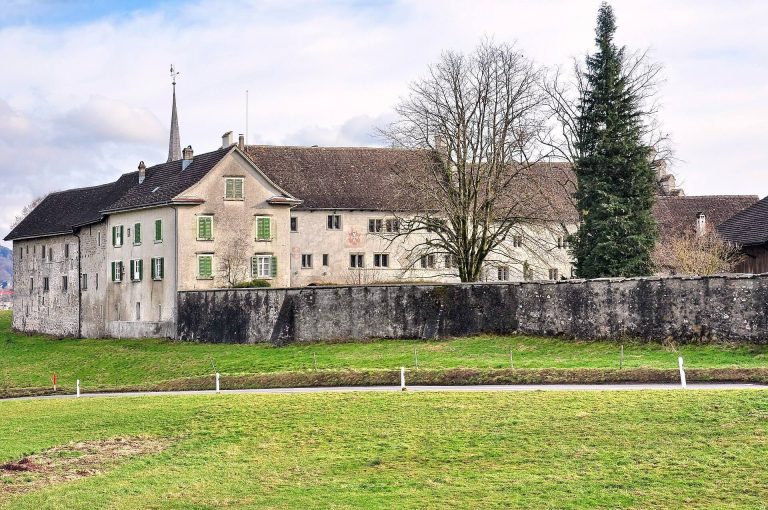
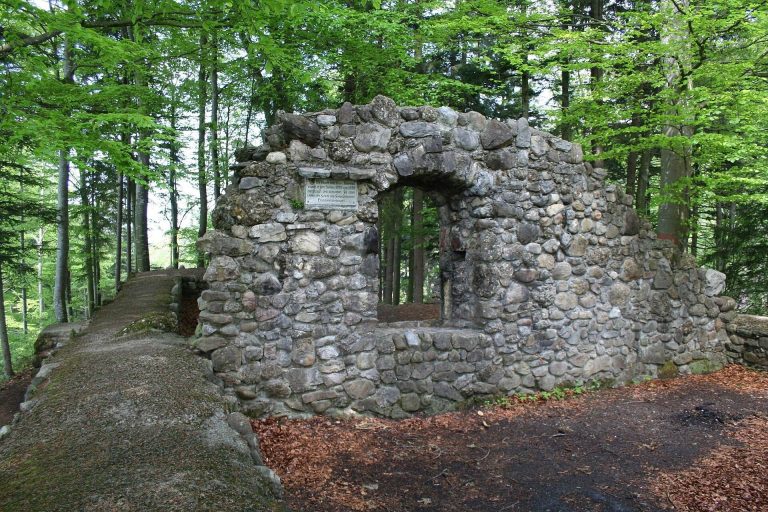
The former complex combined a church, cloister, chapter house, living and communal rooms, an infirmary, the abbot’s residence, administrative and writing rooms, and buildings for agricultural and service work. A stone wall enclosed the monastery, while the cloister, a covered walkway around a courtyard, connected its buildings. The church, rectory, and Spitzerliegenschaft are among the surviving structures; archaeological excavations have also revealed parts of the chapel and cemetery remains.
The church
The medieval church
A wooden chapel was built in 1208. The canons began a stone church in 1214, first constructing the altar area and two apses, rounded recesses in the building. Consecrated in 1219, the church was probably complete by 1283. It was a large, three-aisled Romanesque building. Its surviving medieval core consists of the tower, choir, and north side chapel, all altered in the later Middle Ages. The high altar was dedicated to Mary in 1219, and eleven altars are recorded at the church.
Later rebuilding and decoration
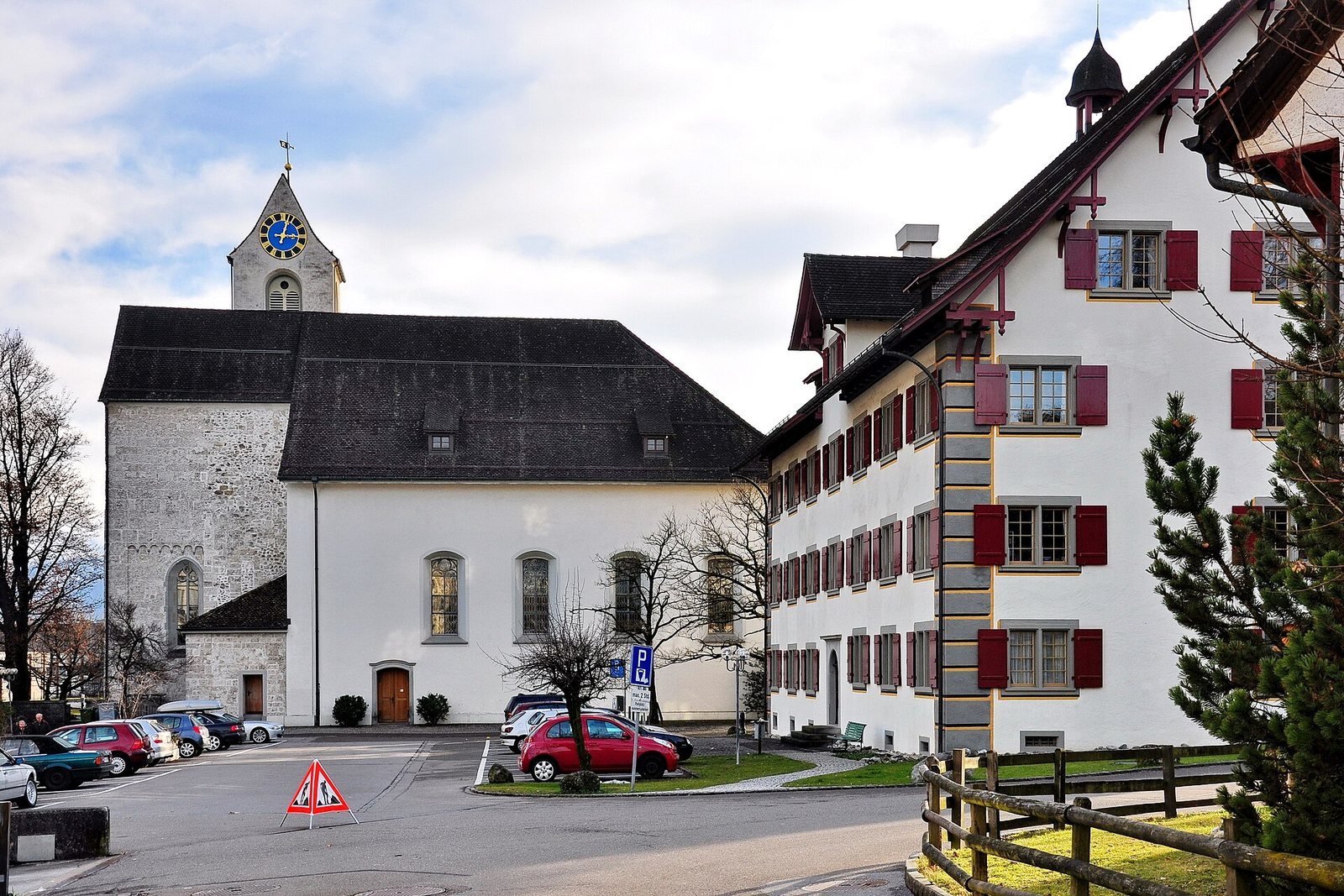
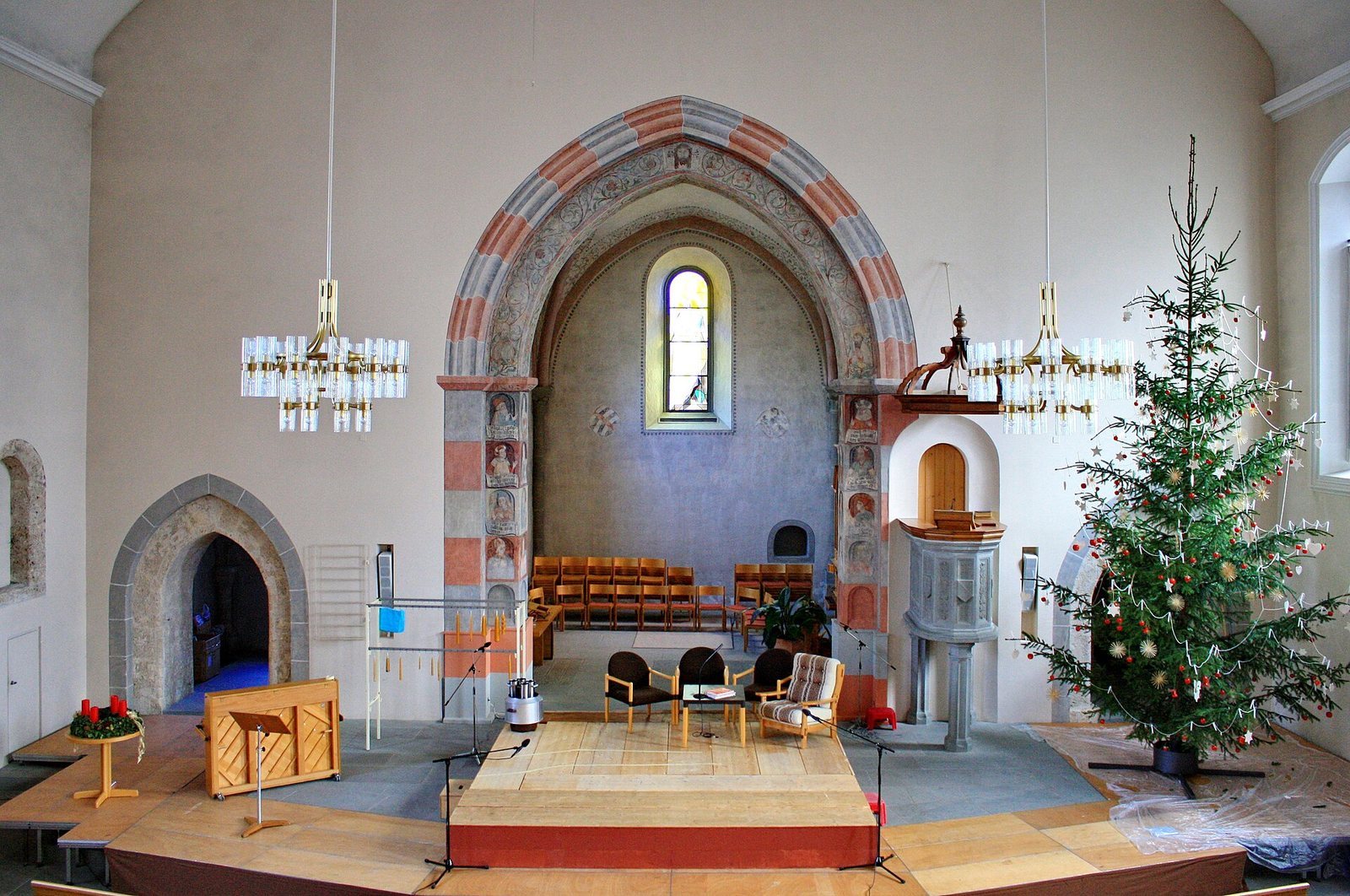
The church and monastery underwent extensive renewal around the end of the fifteenth century. Painted stucco dated to the 1480s or 1490s decorated the church interior. The 1706 fire destroyed or badly damaged the interior of the church tower and parts of the nave, as well as other monastic buildings. The church was rebuilt in a smaller Baroque form, retaining its late Romanesque choir. In 1770 the damaged nave, the main body of the church, was shortened by 12 metres and partly replaced with a structure of the same width. The present building is the Reformed church of Rüti, with its tower on the south side. Medieval choir frescoes discovered in 1904 were restored in 1962 and 1963.
Toggenburg Chapel, burials, and altarpiece
The Toggenburg Chapel was added to the church around 1439 to 1442. A vault used for Toggenburg burials lay below the church’s open porch; the area is now the entrance hall. The chapel site was excavated in 1962, and its walls and floor surfaces lay, on average, 10 to 30 centimetres below the modern ground surface. A clearly traced foundation, one metre wide, ran south from the site’s southwest corner toward the church forecourt. Built with irregularly selected pebbles set in abundant mortar, it rested on conglomerate bedrock about 1.5 to 1.8 metres below ground. The excavated area is thought to correspond to the chapel.
The church’s main altarpiece is a three-panel work, or triptych, dated 1503 and attributed to Hans Leu the Elder. It measures 89 by 87 centimetres when closed, including its frame, and 162 centimetres across when open. The open panels show Saint Augustine, a late-antique bishop and theologian, with the Christ Child, the Crucifixion, and Saint Norbert in episcopal clothing. The closed panels depict Christ presented before his crucifixion, God the Father, and Mary showing her breasts to her son. The altarpiece was moved to Wurmsbach during the Reformation. In 1798 it was transferred to the episcopal residence in St Gallen, and it is now in the episcopal collection there.
The enclosure and charitable facilities
Cloister and monastic buildings
The enclosure held the chapter house, cells and common rooms, infirmary with chapel, abbot’s residence, administrative and writing rooms, benefice house, stables, and service and agricultural buildings. The benefice house, a residence for people supported by an endowment, is recorded from 1351. Construction of the enclosing stone wall is attributed to Abbot Berchtold, who led the abbey from 1226 to 1237.
Hospital and pilgrim facilities
The hospital stood inside the enclosure beside the Way of St James and served sick people and the poor. Its facilities included a chapel dedicated to Saints Jodocus and Bartholomew; an eternal lamp was maintained there in 1411. A clothing store for needy clergy and laypeople is recorded in 1328, and the complex also included a pilgrims’ hospice.
Surviving buildings and earlier chapel
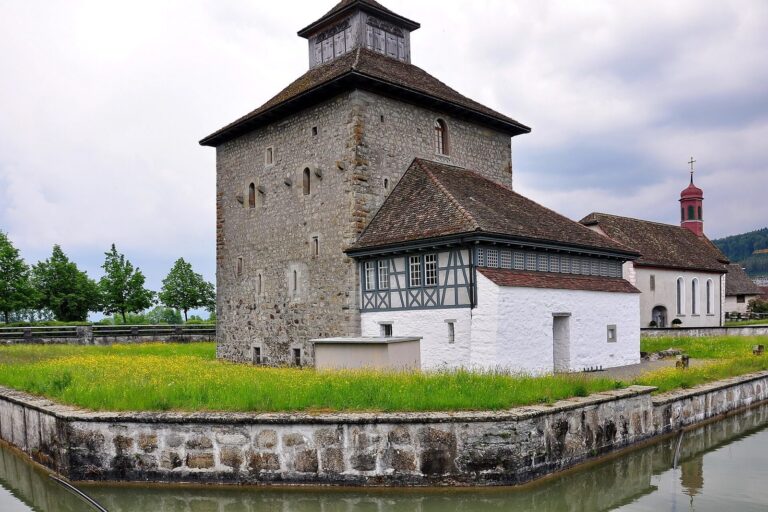
The former monastery’s surviving associated buildings include the rectory and the Spitzerliegenschaft, a row northwest of the Amt house and southwest of the rectory. The row developed during the sixteenth century. Its southwest part was the former stable, probably built in the monastery’s last years or early in the Amt period. The adjoining northeast section may have served as an Amt armoury and was built in two stages during the seventeenth century. The Amt house was reconstructed in 1710 after the fire. Restoration of the Spitzerliegenschaft in 1973 retained its old façades and included repairs to masonry, gables, timber framing, roof structure, and rear timberwork, as well as renewal of the roof and repair or replacement of stone and wooden door and window surrounds.
The earlier St Nicholas Chapel stood on the hill south of the monastery. It was later demolished following the Reformation. Its estate and rights had been granted to the community as part of the foundation arrangements.
Archaeological features and burials
Excavated chapel foundations
Excavations at the Toggenburg Chapel site ran from 21 May to 5 June 1962 across an area of just under 500 square metres. A layer of building debris, 40 to 80 centimetres thick, contained tiles and pottery dating from the fifteenth through the eighteenth centuries. Some excavated walls were later used as foundations for the Amt boundary wall and courtyard gate; those structures appear to have been removed after 1833.
Cemetery graves
An investigation in 1971 examined the former monastery cemetery at the Hunggarten, beside the southern forecourt of the modern Klosterhof. Two graves were found at a depth of about 80 centimetres. One contained an almost complete, well-preserved skeleton apparently belonging to an adult male. The other held a skullcap, lower jaw, and parts of limb bones, also apparently from an adult male. The remains are held by the Anthropological Institute of the University of Zürich.
Grave slab
A sandstone grave slab measuring 110 by 105 by 12 centimetres was found in 1974. It had been reused as a floor slab at the entrance to Amtshof 5. Its inscription commemorates Anna Magdalena Steinbrüchel, wife of cavalry captain and Amtmann Hans Rudolf Hirzel, who died on 27 March 1744, aged 39 years and seven months, after giving birth. The slab was placed against the east exterior wall of the church’s former north side chapel.
Water-powered work
At least one monastery mill used water power from the Schwarz stream near its confluence with the Jona.