Dachstein Castle: A Strasbourg Bishops’ Fortress and Residence
Site at a Glance
- Popularity
- Medium
- Country
- France
- Primary era
- Medieval
- Eras represented
- Medieval, Early Modern, Modern
- Civilizations
- French, Holy Roman Empire
- Site type
- Military
- Remains
- Castle
On this page12 sections
History
Dachstein Castle is a medieval fortress and episcopal residence in France, built in 1214 by Henri II de Veringen, bishop of Strasbourg. The bishops’ office combined religious leadership with territorial and military authority, and the castle served as both a residence and a military base among their holdings in the foothills of the Vosges.
Foundation and destruction in 1262
After rebellious citizens drove Walter de Hohengeroldseck, another bishop of Strasbourg, from the city, he made the castle his residence. On March 8, 1262, he left to fight the citizens at Haubergen. Defeated, he withdrew to the castle, which Strasbourg forces then besieged and set on fire.
Rebuilding and later medieval conflicts
In 1278, Conrad de Lichtenberg, bishop of Strasbourg, had the castle rebuilt. It was pledged to Mullenheim-Brantgasse in 1410. Strasbourg forces failed to take it in a siege in January 1421, and an attack by Armagnac forces in 1439 was repelled. The Armagnacs were associated with a French political faction during the Hundred Years’ War.
Fortification and seventeenth-century wars
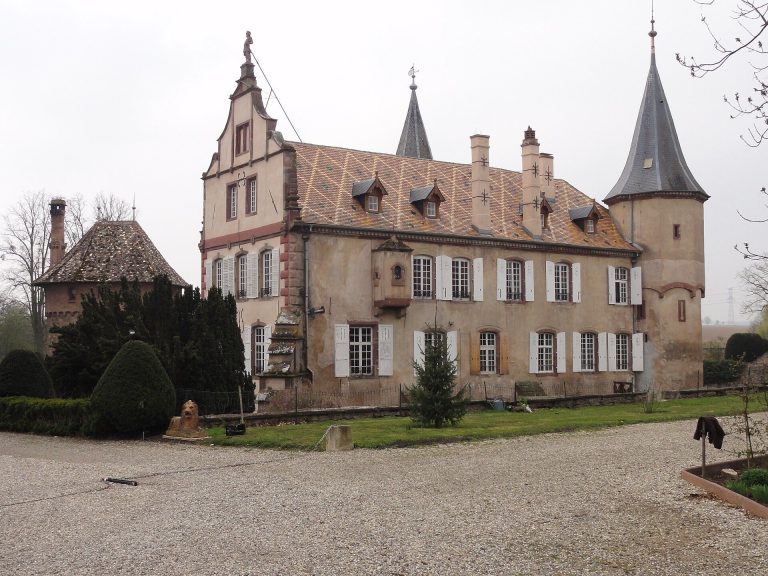
From 1574 to 1589, Frédéric de Blankenheim-Manderscheidt, bishop of Strasbourg, carried out major fortification works and built a Renaissance château. In 1592, troops of Charles, Duke of Lorraine, besieged the castle during the War of the Bishops, a conflict over control of the Strasbourg bishopric. Protestant League troops, an alliance of Protestant powers in the Holy Roman Empire, attacked it in 1610.
Swedish forces occupied the town and castle in 1633. Imperial troops attacked the following year. The town capitulated, but the castle held out. In 1675, French troops under Vaubrun captured the stronghold during the Dutch War, a major European conflict involving France and the Dutch Republic.
Estate and nineteenth-century transformation
In 1718, Cardinal de Rohan-Soubise granted the castle as a fief, land held in return for service or allegiance, to his bailiff François Antoine Herrenberger. A bailiff administered an estate or jurisdiction. The property belonged to Natalis de Régemorte in 1769. After the estate was divided in 1803, Adrien Brunck de Freundeck purchased the former episcopal castle.
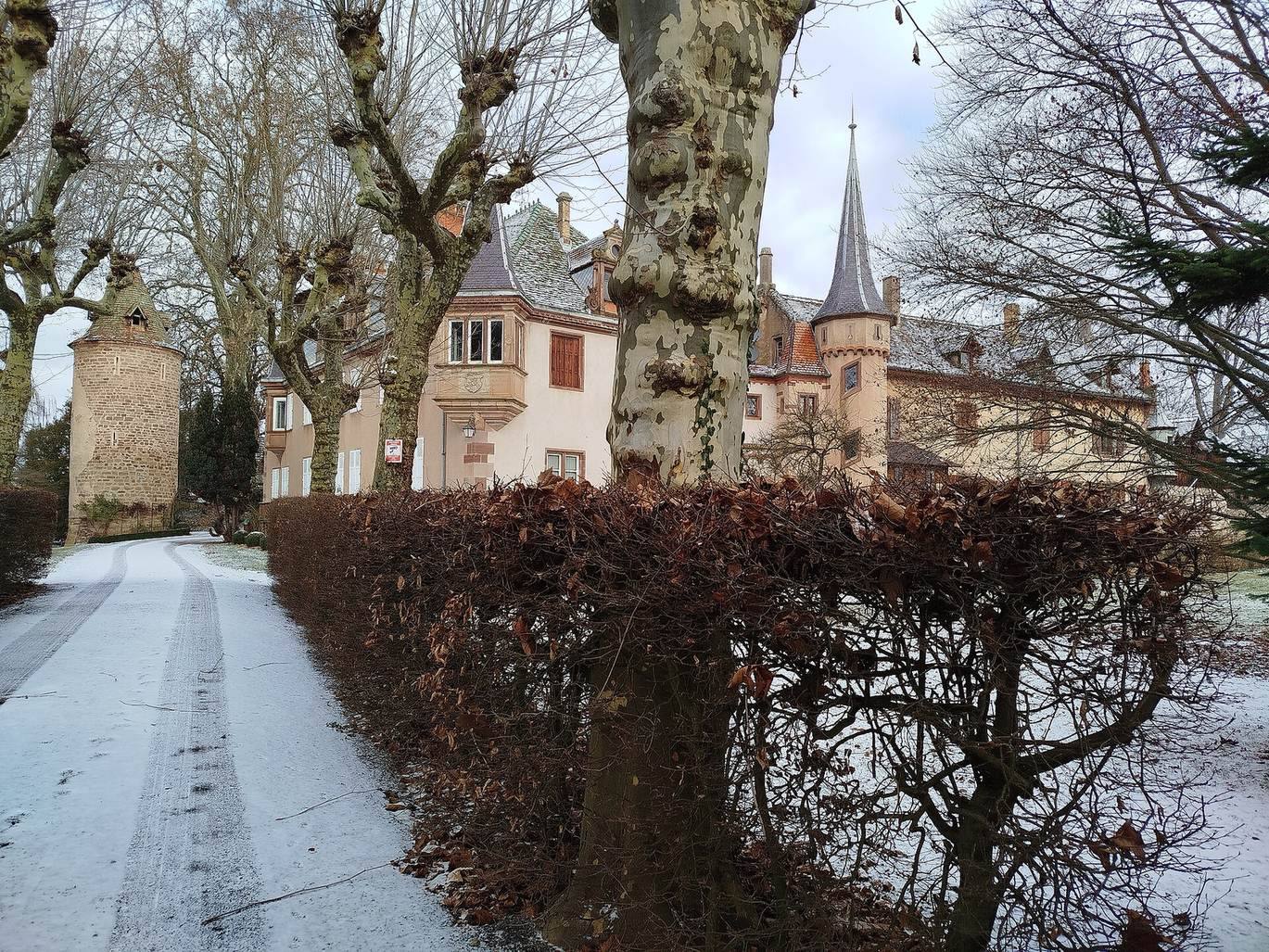
In 1865, Eugène Dock enlarged and embellished the château in the Neo-Renaissance style, a nineteenth-century revival of Renaissance forms. The château was listed as a French historic monument in 2002.
Remains
The castle complex
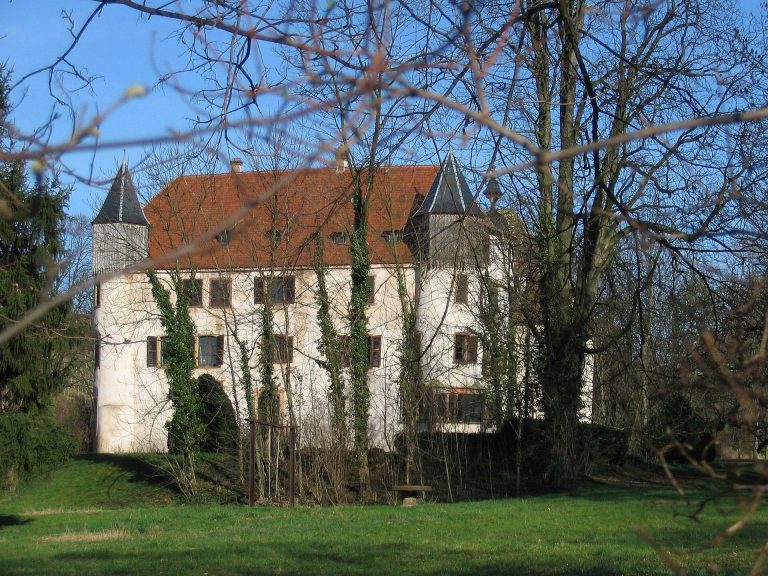
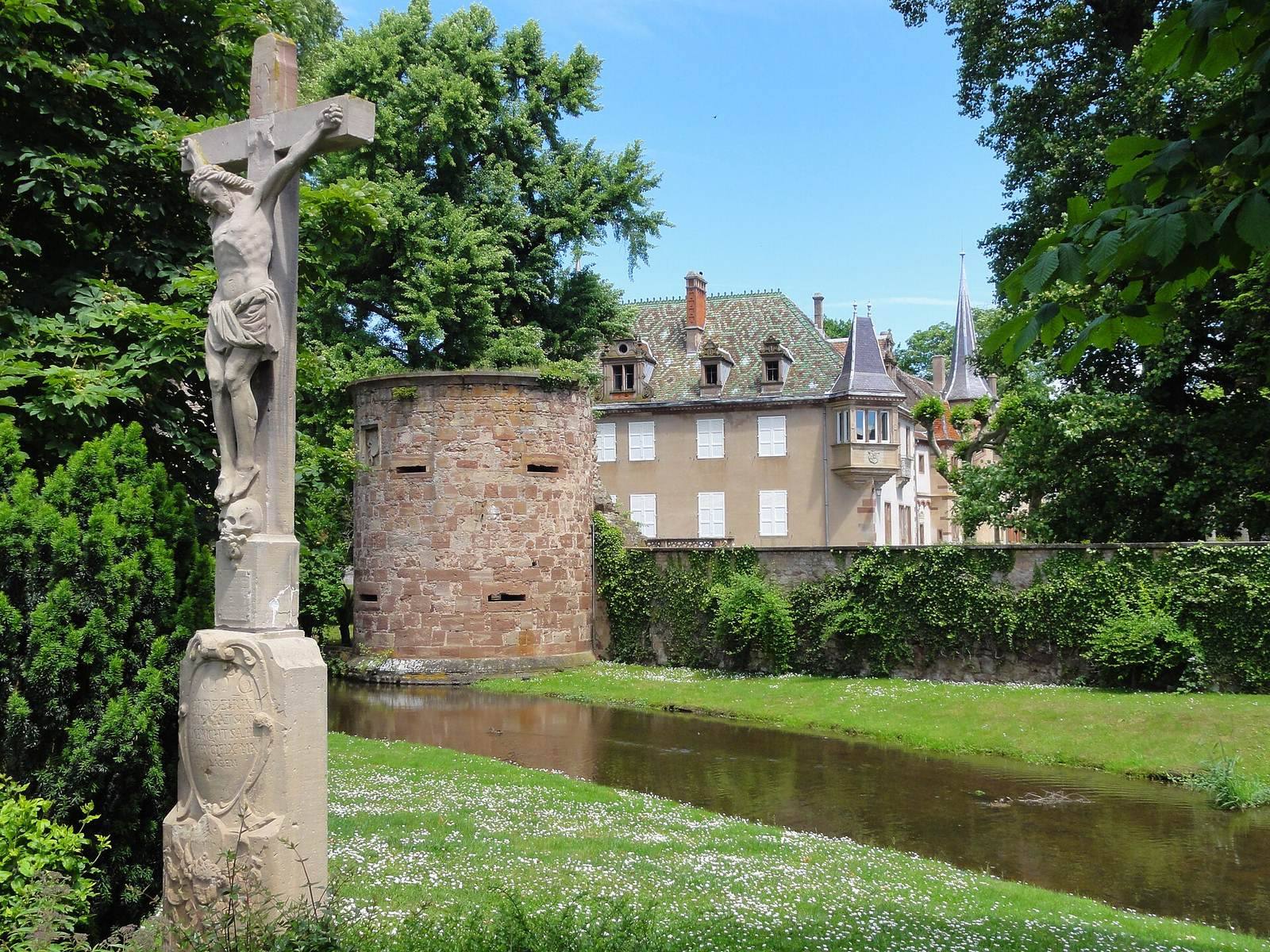
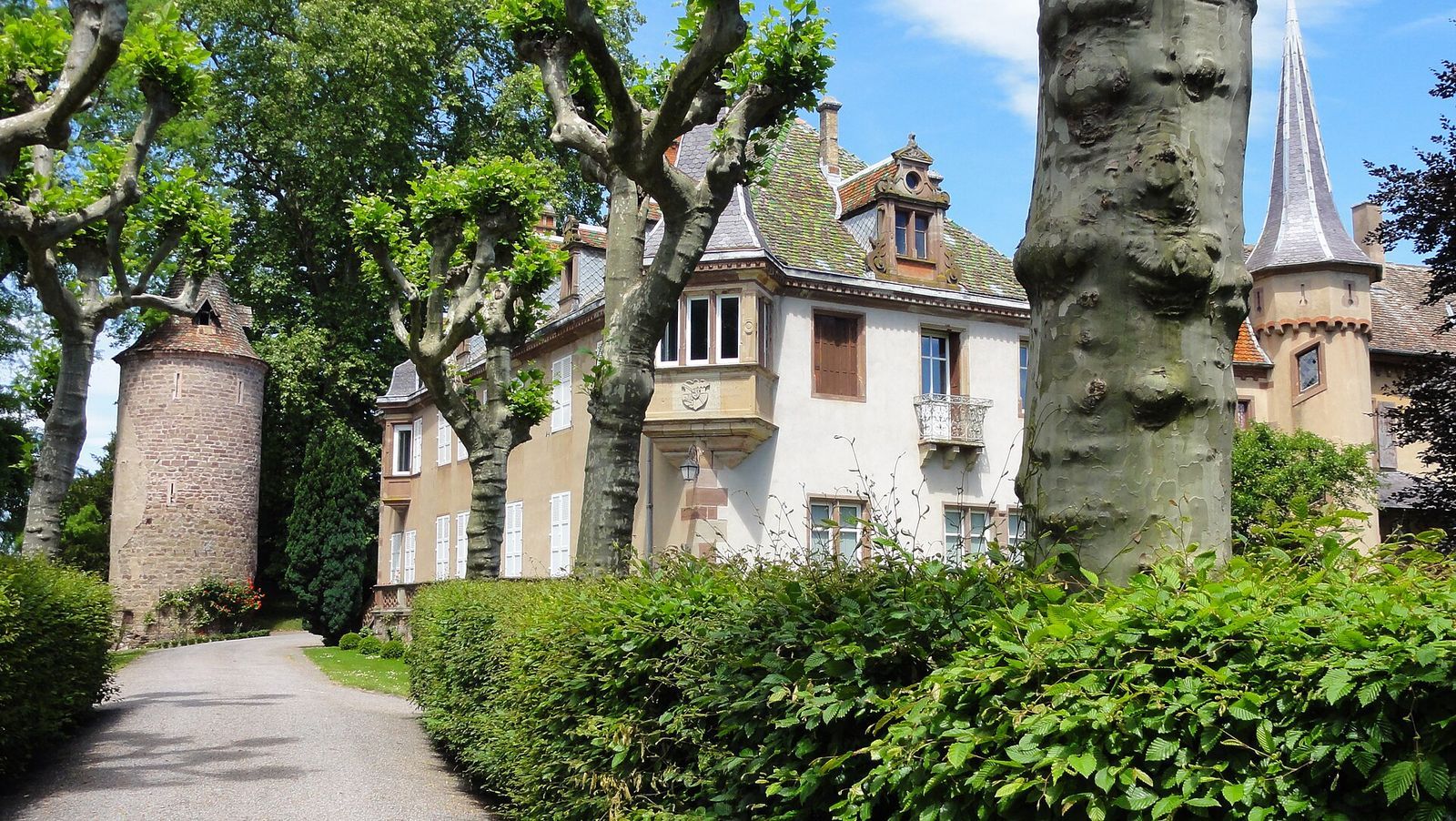
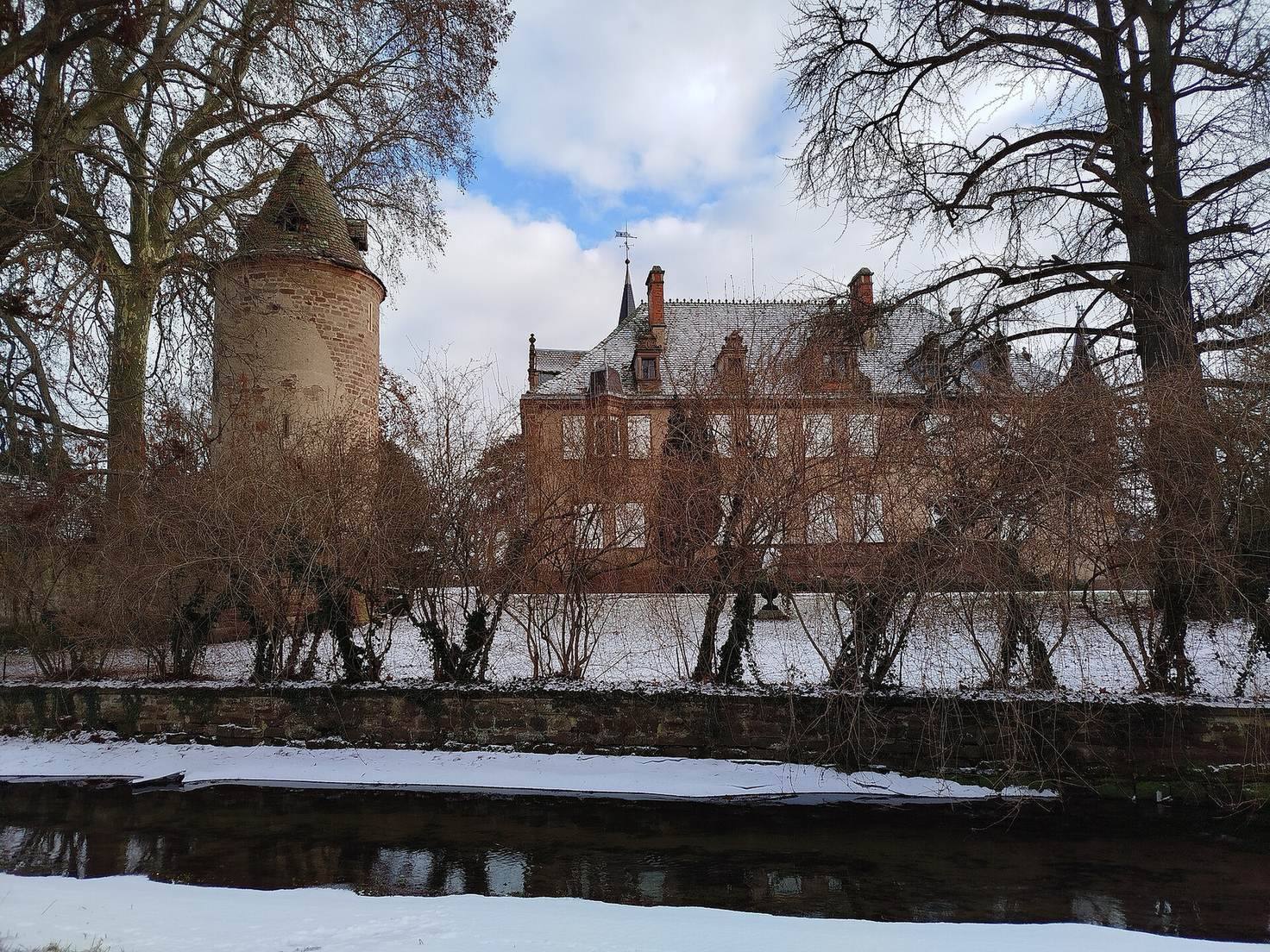
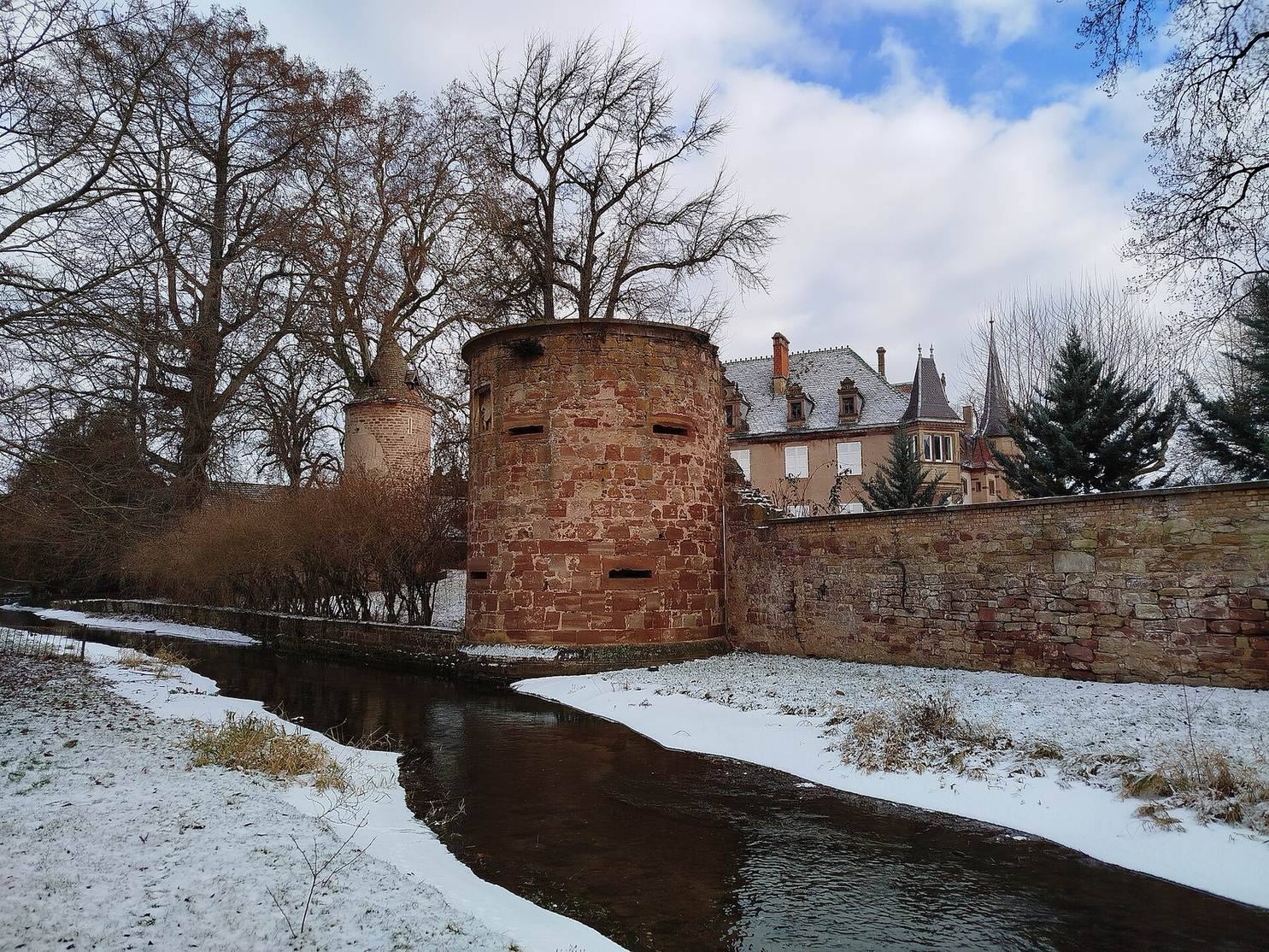
The surviving complex combines medieval defensive features with a Renaissance residence and nineteenth-century alterations. Its layout includes the remains of the medieval castle, the château in the lower courtyard, enclosing walls and entrance portals, northern outbuildings, and a park.
Medieval castle
The medieval remains include a moat, a round tower, and a square tower. These features survive as parts of the earlier fortified complex.
Renaissance château
The Renaissance château stands in the lower courtyard. It forms a distinct part of the complex alongside the medieval castle remains.
Enclosure and interior features
Entrance portals and enclosing walls form part of the site. A staircase turret and a kitchen fireplace also survive within the complex.
Northern outbuildings and grounds
The northern outbuildings retain façades and roofs and include a well. A park forms part of the château grounds.
Nineteenth-century alterations
The château’s later alterations include rendered façades and roofs, associated with its nineteenth-century enlargement and embellishment.