Fort King: A U.S. Army Frontier Fort in Florida
Site at a Glance
- Rating
- 4.6
- Popularity
- High
- Country
- United States
- Primary era
- Modern
- External website
- Open
- Eras represented
- Modern
- Civilizations
- Unclassified
- Site type
- Military
- Remains
- Fort
On this page7 sections
History
Early occupation and establishment
Fort King was a U.S. Army fort near what became Ocala, Florida, in the United States. The area had two periods of Indigenous occupation, approximately 6500–2000 BC and AD 200–1500. In 1827, the Army built the fort as a buffer between Seminole territory to the south and European American settlements to the north. The Seminoles are an Indigenous people of the southeastern United States with substantial Creek ancestry. Their territory lay within a Florida reservation established under the Treaty of Moultrie Creek. The fort was named for Colonel William King, commander of the 4th Infantry Regiment and the first American governor of provisional West Florida.
Military roads converged at Fort King. Fort King Road connected the post with Fort Brooks, Fort McCoy, a St. Johns River crossing at the place later called Astor, Palatka, Jacksonville, and Fort Brooke on Tampa Bay. The fort fell into disuse after 1829. The Army reactivated it in 1832 to support the planned removal of Seminoles west of the Mississippi River under the Treaty of Payne’s Landing.
The Second Seminole War
The Second Seminole War, a conflict between the United States and Seminoles in Florida, began in late 1835 and lasted until 1842. Fort King became a major U.S. military base during the war because of its strategic position. On December 23, 1835, Major Francis L. Dade led an Army column from Fort Brooke to reinforce and resupply the fort. Seminole warriors ambushed the column on December 28 in the engagement later known as the Dade Battle. That same day, Seminole raiders killed Wiley Thompson, a U.S. official involved in federal relations with Seminoles, at Fort King. The attacks marked the beginning of the war.
Seminoles burned the fort in July 1836 after the Army had abandoned it. The Army returned and rebuilt it in April 1837. In May 1839, U.S. Army General Alexander Macomb and Seminole representatives negotiated a peace agreement at Fort King. The agreement collapsed two months later, after the Battle of the Caloosahatchee.
Later use and preservation
After Marion County was organized, Fort King served as its first courthouse in 1844. The fort was later abandoned, and early settlers dismantled it for building materials. In October 1927, the Ocala chapter of the National Society Daughters of the American Revolution bought the memorial property to protect the site’s history.
On February 24, 2004, the site was listed on the National Register of Historic Places and designated a National Historic Landmark. The Fort King Heritage Association was formed in 2013 to develop, promote, and protect the site.
Remains
Fort site and replica
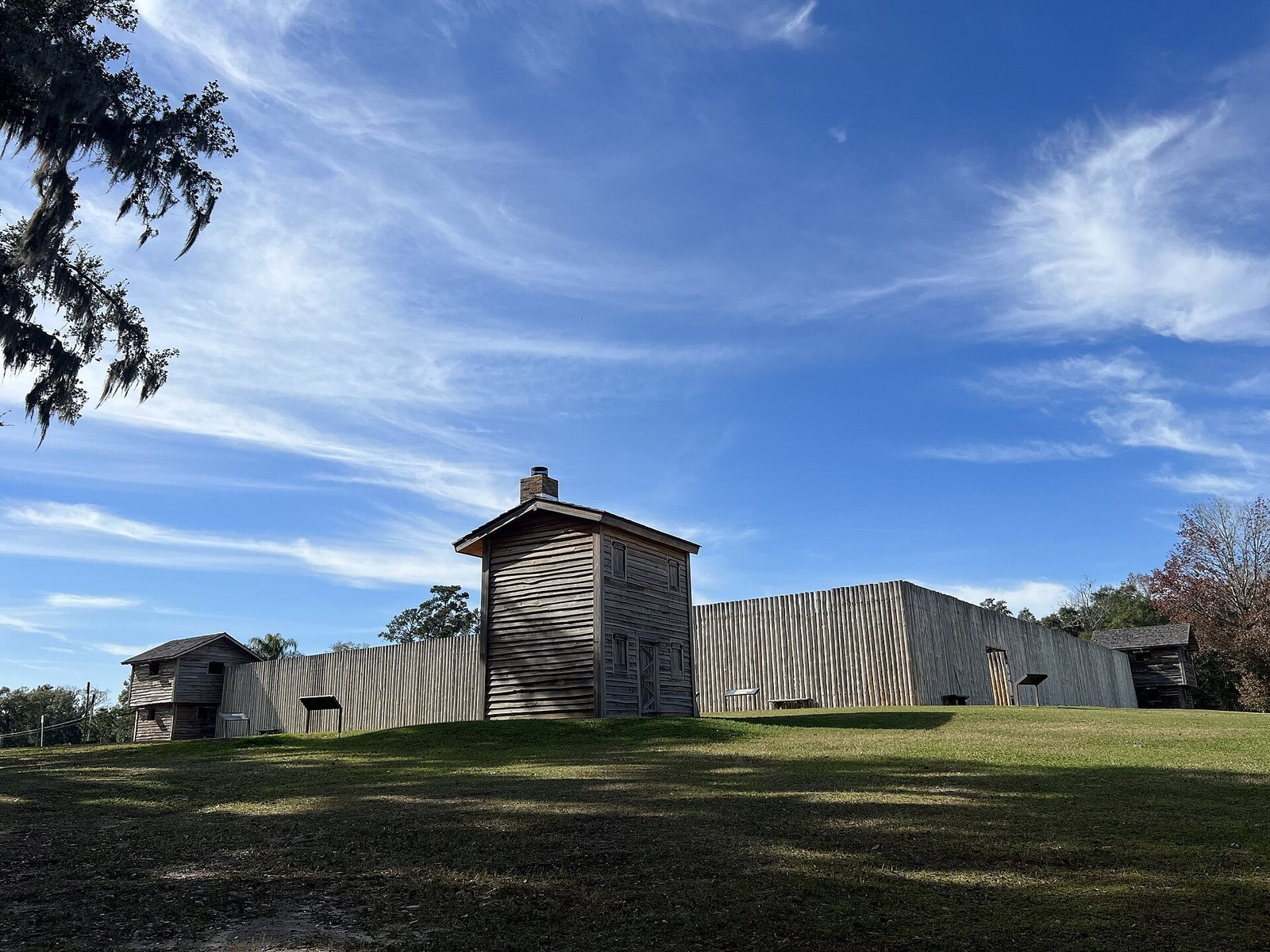
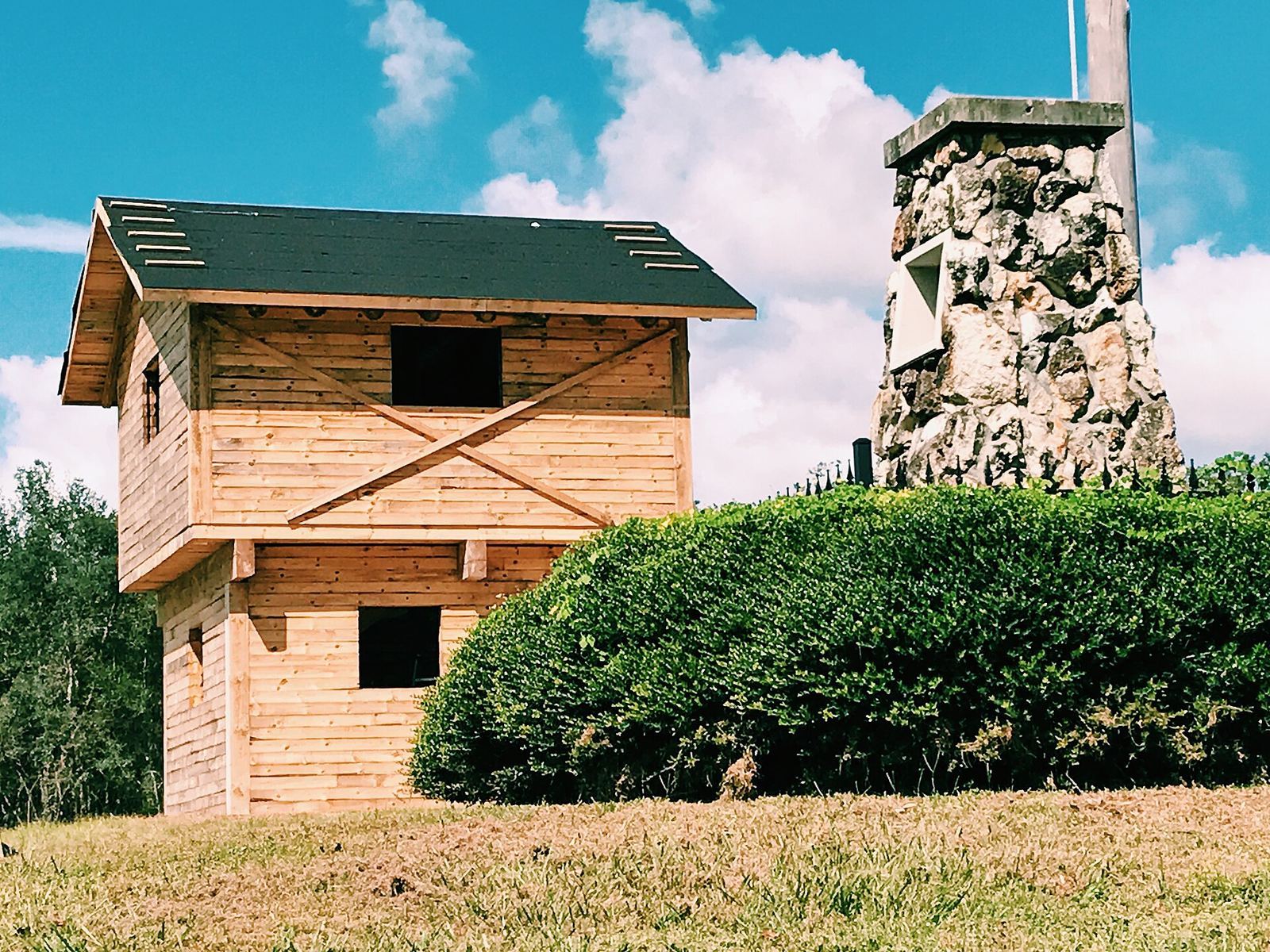
The historic property covers 37 acres in a residential area of Ocala, near the corner of East Fort King Street and 39th Avenue. No original fort fabric survives. A replica was reconstructed on the original site in late 2017, with the aim of making it as historically accurate as possible.
Memorials and markers
A granite monument stands on the memorial property, along with a granite bench dedicated on August 26, 2017. Three markers commemorate the site: a memorial marker near the fort, a National Historic Landmark marker near the fort’s former location, and a marker at the site of the old Fort Cemetery.