Tamchinsky Deer Stone: A Carved Pillar Used in Buddhist Ritual
Site at a Glance
- Popularity
- Medium
- Country
- Russia
- Primary era
- Iron Age
- Eras represented
- Bronze Age, Iron Age, Classical
- Civilizations
- Unclassified
- Site type
- Religious
On this page11 sections
History
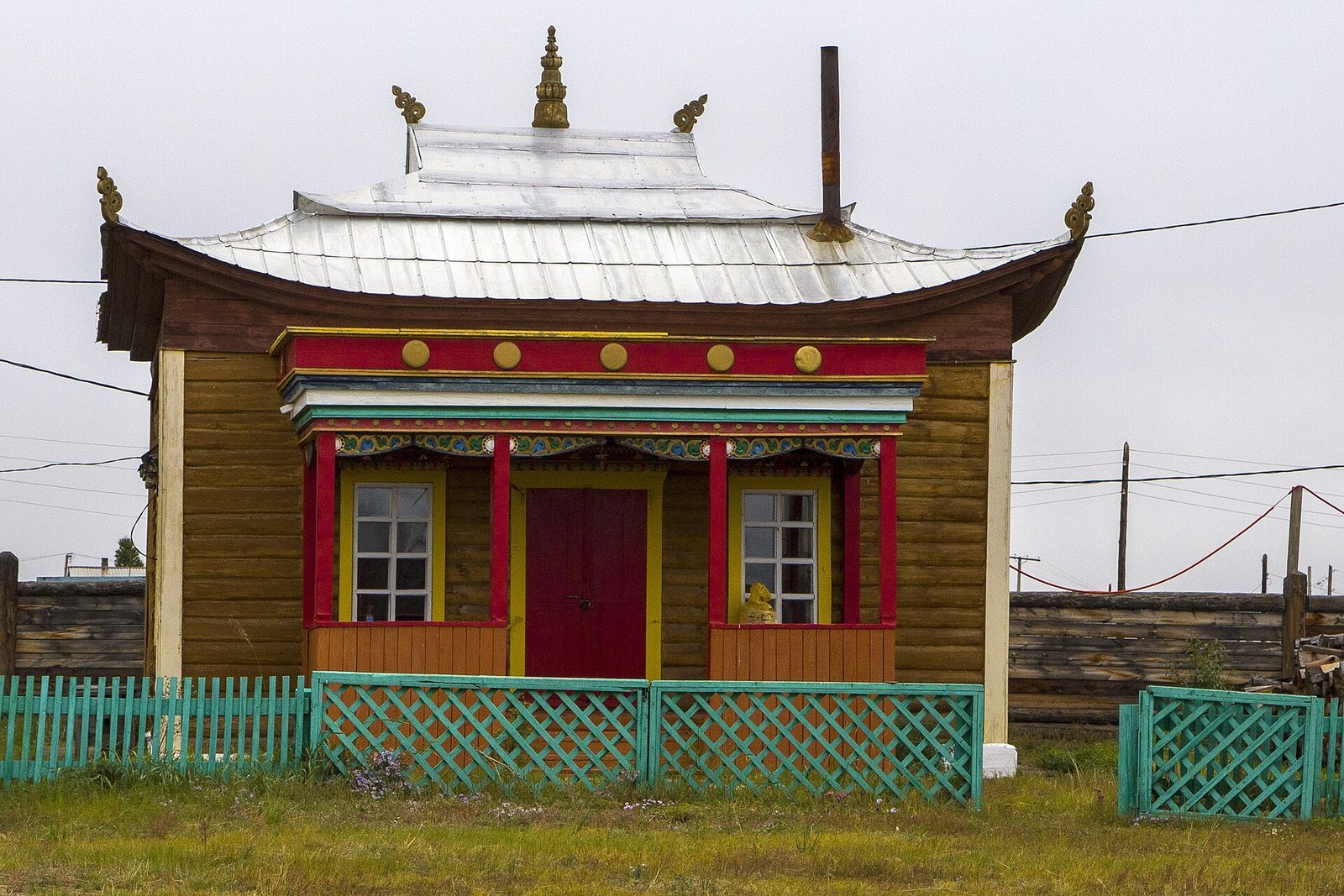
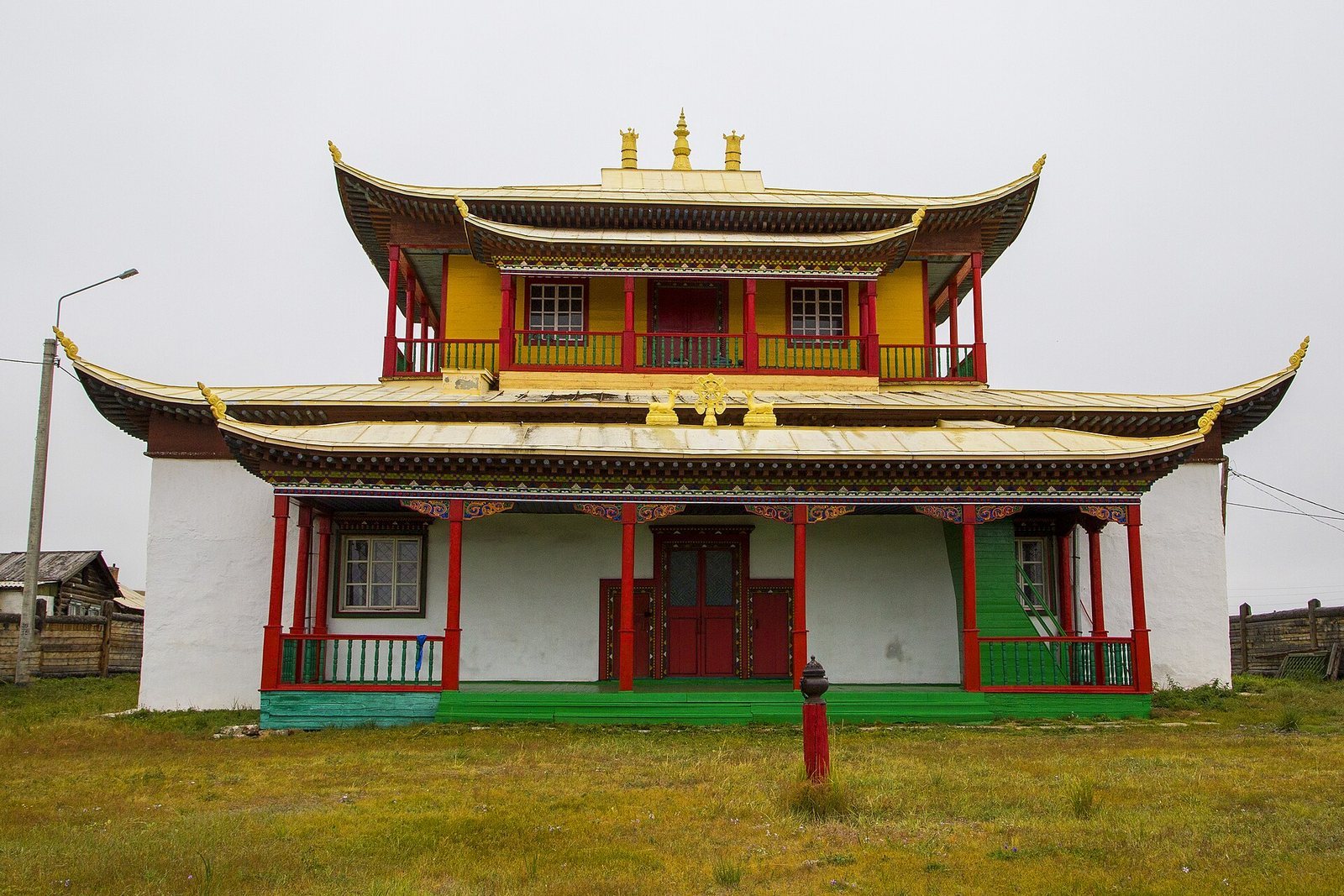
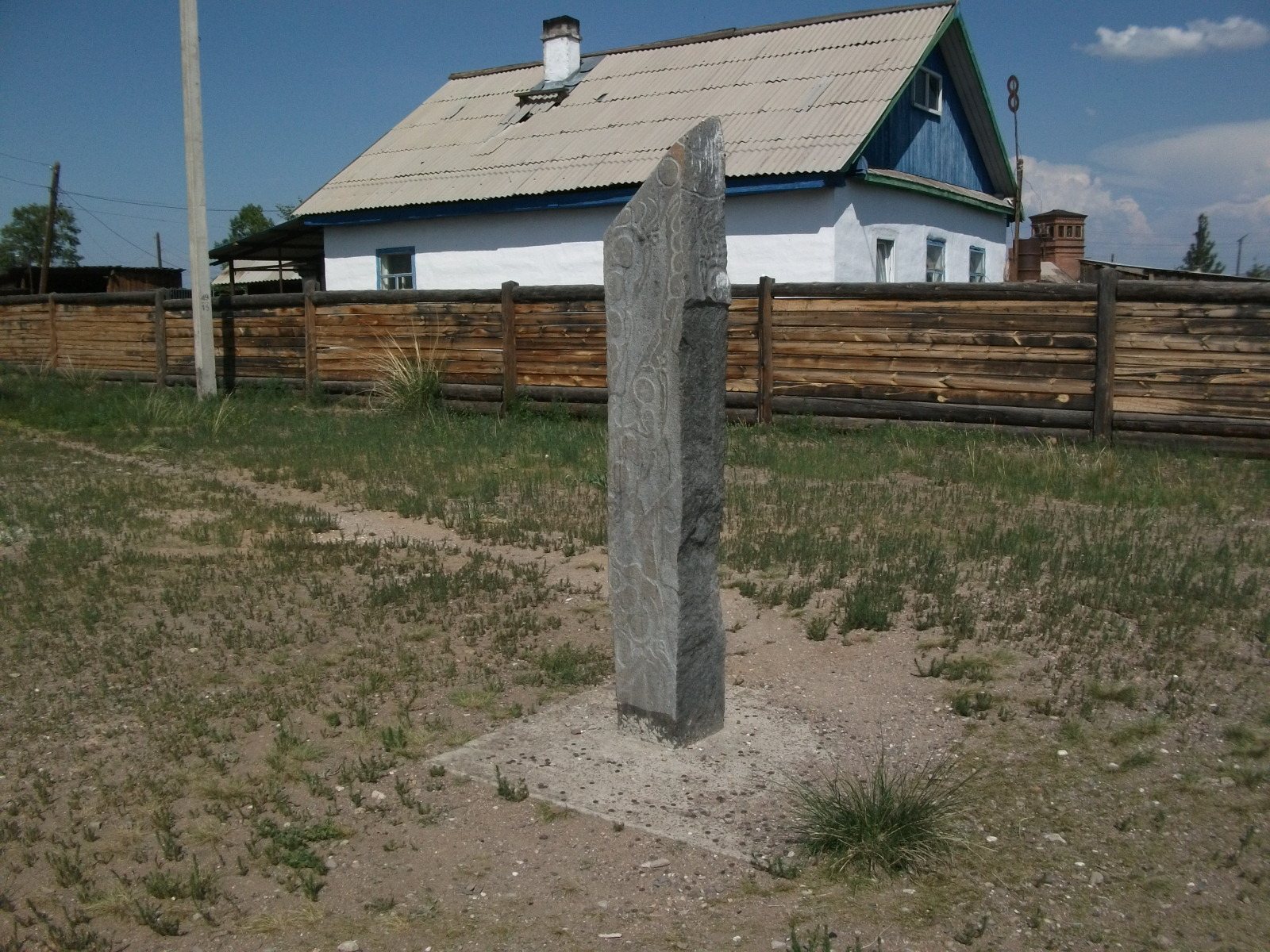
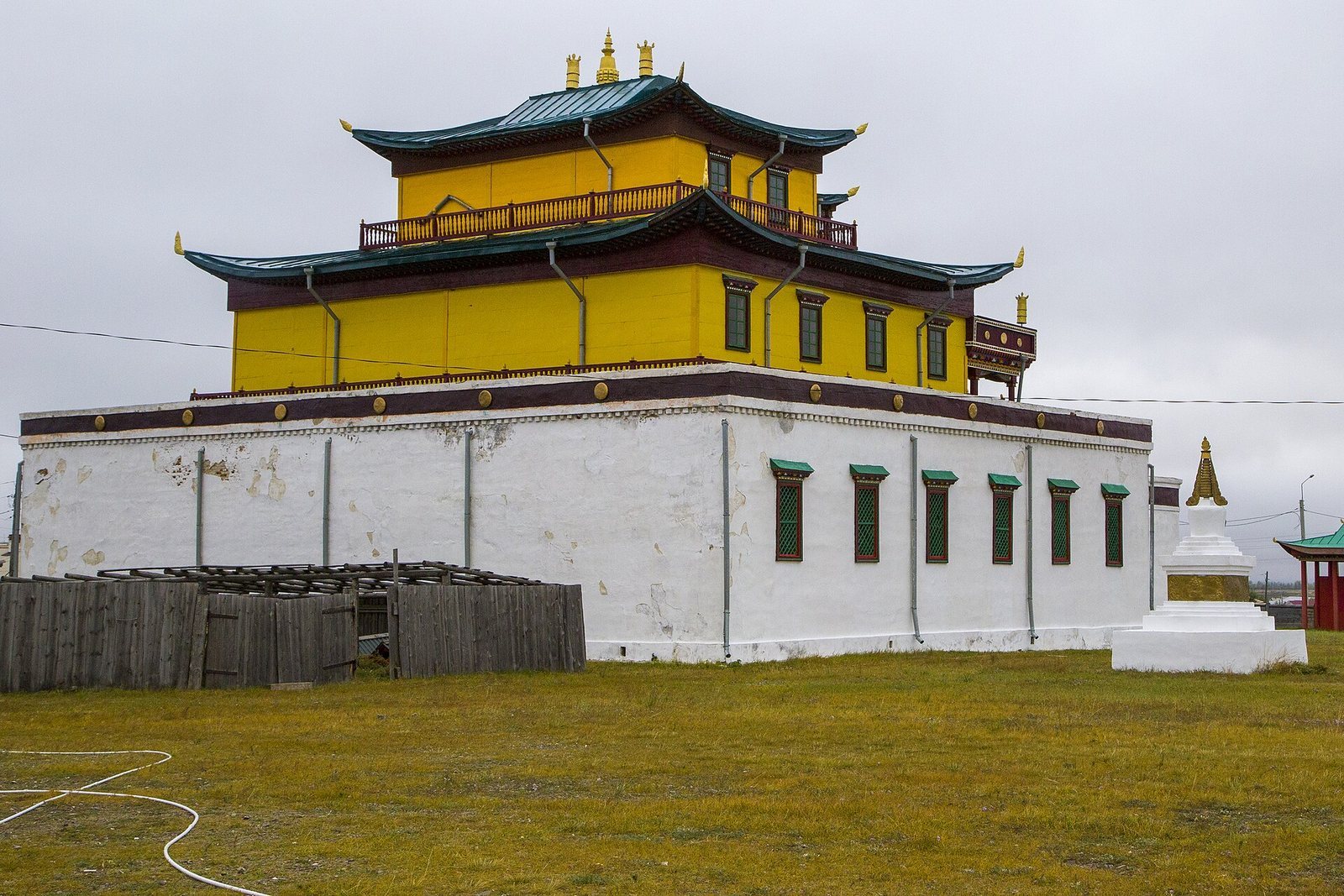
The Tamchinsky Deer Stone is a carved standing stone at Tamchinsky datsan, a Buryat Buddhist monastery and center of religious learning, in Gusinoe Ozero, Buryatia, Russia. It is the only surviving deer stone in Buryatia. Its date is generally placed either in the Bronze Age or the early nomad period, a broad archaeological label for mobile pastoralist peoples.
Dating and original purpose
Its dating remains disputed. Archaeologist P. P. Khoroshikh assigned it to the eighth to second centuries BCE. V. V. Kukharev and N. V. Imenokhoyev proposed the eleventh to eighth centuries BCE, linking its images, decoration, and carving style to Bronze Age art.
The stone’s original function is uncertain. It may have marked the grave of a tribal leader or warrior chief and may have been made by local craftspeople for that purpose. Most interpretations of deer stones treat them as markers for elite burials, while others view them as figures of warriors carrying weapons. Human faces on some Mongolian examples have also been used to argue that the stones represent human forms.
Buddhist use at Tamchinsky datsan
The stone is thought to have been brought to the datsan by Buddhist lamas, or teachers and monastics. They may have selected it from an ancient burial site; lamas were known to travel to Mongolia to choose stones from such places. The stone was also called Altan-serge, meaning golden hitching post.
During Tsam, a masked Buddhist dance-drama in which performers represent deities and supernatural beings, the stone served as a hitching post for the sacred horse of heavenly beings arriving for the festival. It also formed a cosmic center within the ritual space. Khoroshikh recorded a local belief that it protected the horse. The ritual use connected with wider Buddhist deer imagery, including deer-headed dance masks and deer designs on monastery gates, entrances, and ritual objects.
Rediscovery and restoration
References to deer stones near Gusinoe Ozero appeared in the first half of the nineteenth century, but the Tamchinsky stone itself was first mentioned in 1889 by ethnographer G. N. Potanin. A. I. Termen examined it in 1909 and later published a photograph and a story from local lamas about its ritual use. Khoroshikh studied the stone in 1928 and published a note about it in 1962.
In the early twentieth century, the stone stood near the entrance to the datsan’s main temple. It was gone by the early 1930s, and a local resident recalled that it had already disappeared in 1931. Proposed explanations included its reuse as rubble in a datsan building, its removal to a local-history museum in Kyakhta, or its concealment by lamas.
The datsan’s designation as a historical-architectural monument in 1957 prompted restoration work on its grounds. A search for lost monuments began in 1988 and 1989. In autumn 1989, local school students found a carved fragment in the foundation of a ruined building constructed in 1934; an expert team led by archaeologist E. A. Khamzina found six more fragments. M. N. Lebed of the State Hermitage’s decorative-sculpture research and restoration laboratory restored the stone in 1990 with V. G. Sorochin and P. V. Porgugalsky of the Restavrator association. It was reinstalled where it had stood in the early twentieth century.
In the late 2010s, researchers used 23 photographs taken from different angles to create a three-dimensional model. The work produced a digital record of 2.8 million points, height maps, and orthophotographs, geometrically corrected images suitable for measurement, of each face, as well as hand-drawn records of the carvings.
Remains
The stone is a flattened, bar-shaped pillar with a beveled, truncated top, carved from one block of fine-grained gray dacite tuff, a type of volcanic rock. Its length along the long edge is 2.69 m, including 65 cm below ground, and a crack extends along the pillar. In its early-twentieth-century position, the four faces were aligned with the cardinal directions. The broad east and west faces carry most of the imagery, while the north and south faces are narrower. This alignment may reflect Buddhist practice: it differs from the eastward orientation toward the rising sun typical of deer stones at slab graves.
Carving and imagery
The stone is classified as a Mongol-Transbaikalian deer stone, a regional archaeological style. Its principal designs are stylized deer with branching antlers and unusually beak-shaped heads. Larger figures in the upper parts of the broad faces point their heads upward, while smaller ones below face downward. The style and carving method resemble examples from the Selenga, Uda, and Ivolga river valleys; Mongolian examples have more realistic figures. The carvings were first shallowly cut into a smooth, possibly polished surface, then deepened with a metal tool. The cuts are more than 0.5 cm deep.
Archaeologist M. V. Konstantinov interpreted the deer as expressing hopes for health, fertility, and prosperity for a family, tribe, or people. He connected this meaning with beliefs in the medicinal effects of deer antlers, including claims that they could improve the ability to work and sexual potency.
Individual faces
West face
The west face measures 37 cm across at the top and 31 cm at the bottom. Its three galloping deer are well preserved. A circle 10 cm across appears near the upper-right corner, with a pendant extending down and left; the pendant widens at its center and forks at the end. A shallow ornamental pattern lies below the head of the first deer. Beneath its front antler is a probable axe with a curved handle and a projecting back to its head.
The circle has been interpreted in several ways. A. P. Okladnikov proposed that it represented a bronze mirror with a handle. S. I. Vainshtein, M. Kh. Mannai-Ool, and Khoroshikh associated it with the sun, while M. P. Gryaznov, V. V. Volkov, E. A. Novgorodova, and N. L. Chlenova read it as an earring.
East face
A small deer near the upper corner faces right. Below it, two deer run diagonally along the left edge, beside another partly damaged image. The lowest deer extends along the left side of the face.
South face
The south face is up to 36 cm wide at the bottom and 25 cm at the top. Its middle and lower portions are damaged. Near the top, two bands curve downward, one above the other. Beneath them is a deer with a beak-shaped head and an unusually formed neck; its body was rendered in shallow engraving.
North face
The north face is 2.3 m high, 10 cm wide at the top, and up to 29 cm wide at the bottom. Kukharev and Imenokhoyev proposed that its design included two deer arranged one above the other, with a five-sided shape filled with angular crossing lines below the lower figure. They suggested that this shape might represent a dwelling, a rib cage, or a shield. The shield interpretation has been compared with five-sided shields of the Zhou, an ancient Chinese ruling dynasty. They also proposed that a curved, handle-like shape with a perpendicular projection represented a battle axe or another chopping weapon.