Bushy Run Battlefield: A Pennsylvania State Park and Battle Site
Site at a Glance
- Rating
- 4.7
- Popularity
- Medium
- Country
- United States
- Primary era
- Modern
- External website
- Open
- Eras represented
- Modern
- Civilizations
- Unclassified
- Site type
- Military
On this page8 sections
History
Bushy Run Battlefield is a 218-acre historic park in Penn Township, Westmoreland County, Pennsylvania, United States, associated with the British victory of August 5–6, 1763, during Pontiac’s Rebellion, an Indigenous uprising against British rule in North America. The park is the only historic site or museum devoted exclusively to the rebellion and Pennsylvania’s only recognized Native American battlefield.
The Battle of 1763
In July 1763, British Army Colonel Henry Bouquet led 500 soldiers from Carlisle to relieve Fort Pitt, which was under siege. On August 5, about 25 miles east of the fort, warriors from Delaware, Shawnee, Mingo, and Huron communities ambushed the column as it crossed what is now Westmoreland County. The battle is named for Bushy Run, although most of the fighting took place on nearby Edge Hill.
The British held their position until the Indigenous force withdrew at sunset. Bouquet then ordered his men to build a small temporary defensive fortification, called a redoubt, from flour sacks on Edge Hill, with wounded soldiers and livestock within its center. The next morning, the Indigenous force attacked as British sentries were being relieved. The relieved sentries ambushed the attackers; after the warriors were flanked and retreated in disorder, Bouquet’s troops dispersed those who remained. The column went to Bushy Run for urgently needed water, then continued to Fort Pitt. Fifty British soldiers died. The Indigenous force’s losses are unknown, though two prominent Delaware chiefs were among the dead. The British victory enabled them to secure control of the Ohio River Valley and the region that later became the Northwest Territory.
The Park and its commemoration
The site became a Pennsylvania state park in 1927. It received National Historic Landmark status in 1960, recognizing it as a nationally significant place; a Pennsylvania state historical marker followed in 1964. In 1966, it was added to the National Register of Historic Places, the federal list of sites recognized for their historical importance.
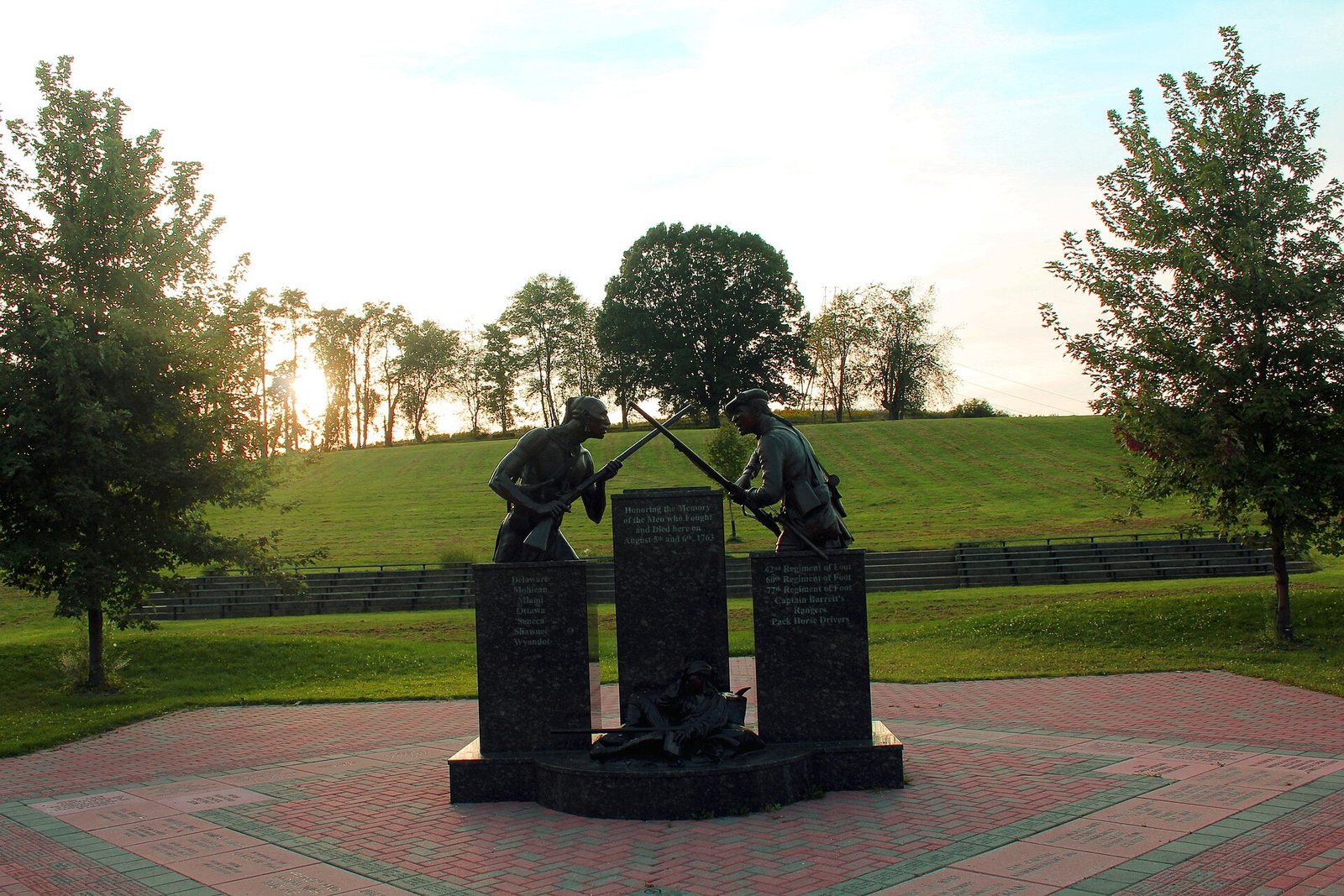
During a state funding crisis in 2009, the park was among those slated for closure. The Bushy Run Battlefield Heritage Society, a volunteer organization, helped keep the museum open. In 2010, it reached an agreement with the Pennsylvania Historical and Museum Commission, the state agency responsible for historical sites and museums, to staff and operate the museum. For the battle’s 250th anniversary in 2013, the society installed a bronze monument at the location of the first action.
In May 2024, the park joined the Old-Growth Forest Network, a conservation network that promotes old-growth forest preservation. An EF1 tornado struck on June 26, 2024, changing parts of the park’s landscape.
Remains
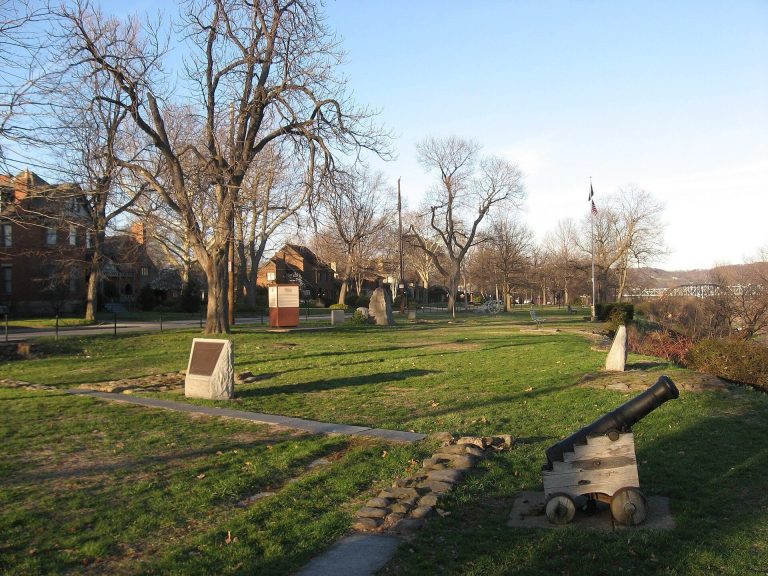
The park’s battlefield landscape includes Edge Hill, where Bouquet’s flour-sack fort stood, and a memorial courtyard at the location of the battle’s first action. Granite and bronze monuments mark these places, while old-growth trees form part of the surrounding landscape.
Battlefield monuments
Edge Hill monument
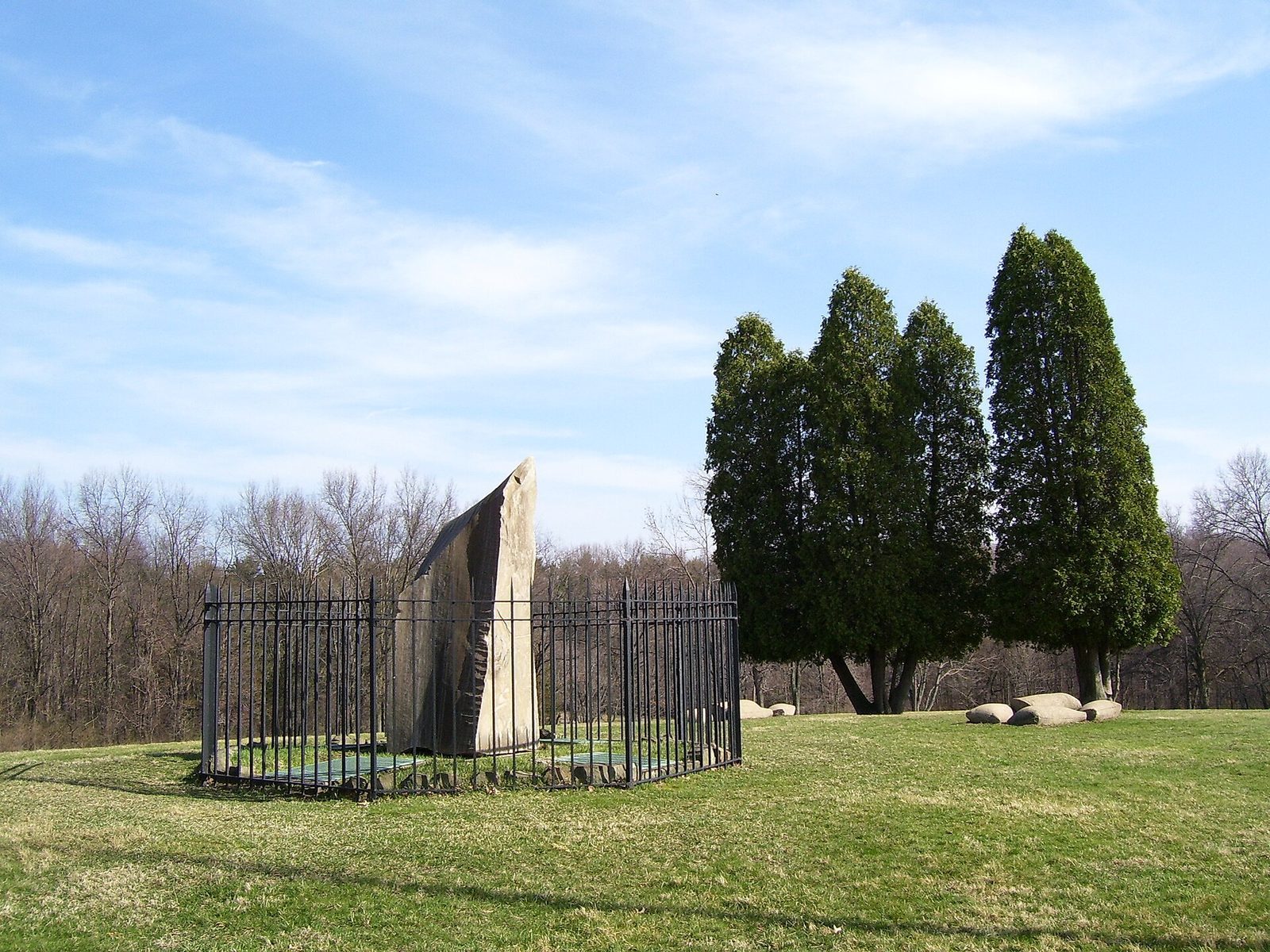
A granite monument on Edge Hill marks the location of Bouquet’s flour-sack fort. Bronze plaques on the monument carry quotations from Bouquet’s letters about the battle.
Commemorative monument
A bronze monument stands in a memorial courtyard at the site of the battle’s first action on August 5, 1763. Sculptor Wayne Hyde created it from concepts developed by historical artists Robert Griffing and John Buxton. Hyde and Griffing worked together to photograph reenactors for the final design.
Old-growth trees
Some trees in the park are estimated to be 170 and 210 years old. The 2024 tornado brought down many trees, while buildings and sections of old-growth forest survived.