Palazzo Mazzola: Renaissance Palace and Municipal Archive in Asti
Site at a Glance
- Rating
- 3.5
- Popularity
- Very Low
- Country
- Italy
- Primary era
- Early Modern
- Eras represented
- Medieval, Early Modern, Modern
- Civilizations
- Duchy of Savoy, French, Holy Roman Empire
- Site type
- Domestic
- Remains
- Elite Residence
On this page10 sections
History
Palazzo Mazzola is a Renaissance palace in Asti, Italy, probably originating in the thirteenth century and given its present arrangement in 1516 at the commission of Francesco Mazzola. Alongside Palazzo Malabaila, it is one of Asti’s few examples of Renaissance architecture.
Origins and the Mazzola family
The Mazzola family’s presence in Asti dates from the fifteenth century. Its members belonged to the city’s de populo nobility, an urban noble class, and shared lordship over Villadeati, Murisengo, and Grana Monferrato. The family also had a tradition of notarial work. Francesco Mazzola was a jurist and count palatine, a noble title associated with a ruler’s court, and served repeatedly as a city councillor during the sixteenth century.
Charitable use and the city archive
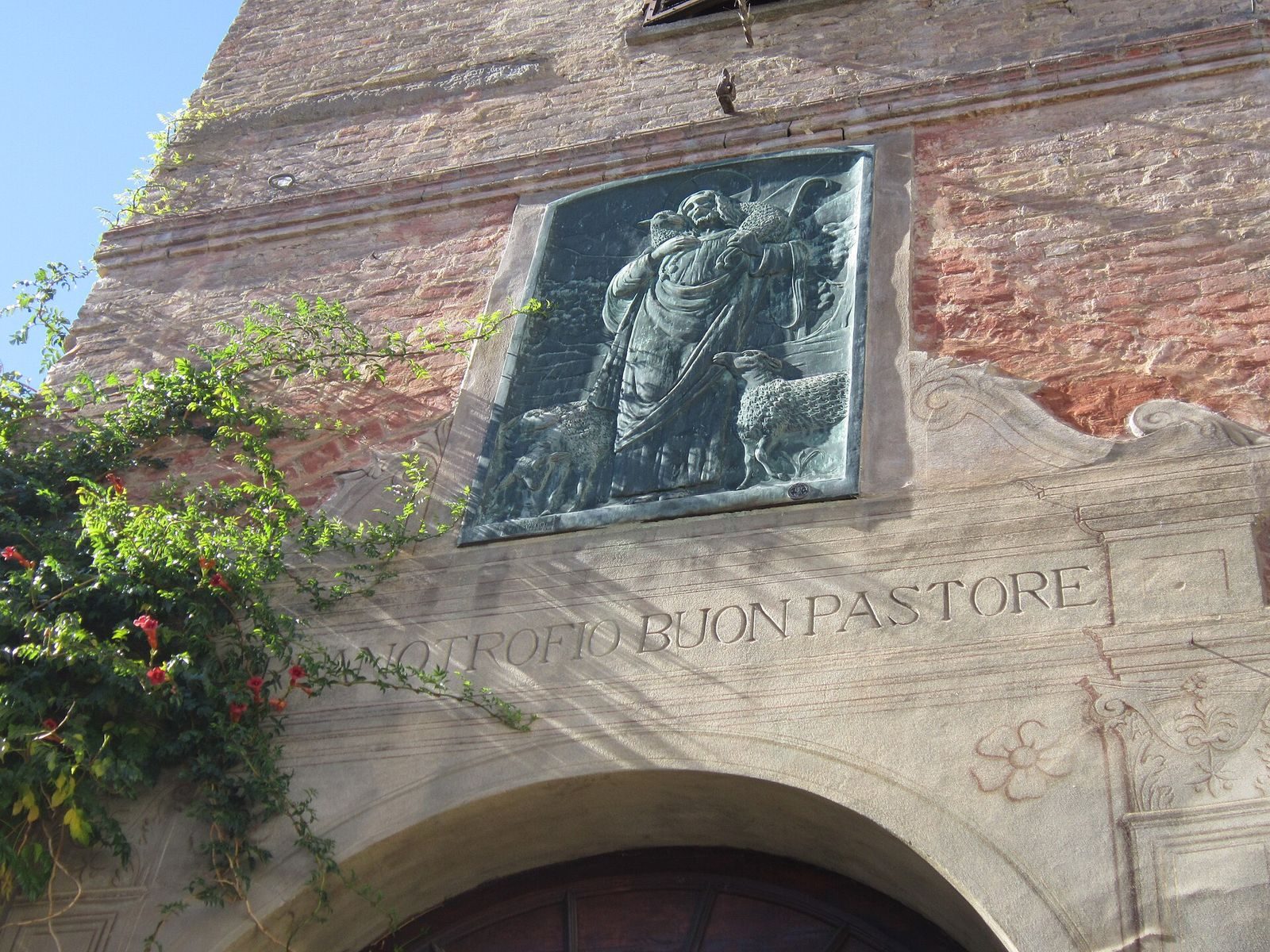
In 1710, Filippo Mazzola gave the palace to Buon Pastore, a charitable institution intended to house vulnerable young people and abandoned infants. Filippo and his wife, Maria Maddalena, continued to live in part of the building. The Mazzola family ended after their deaths.
Buon Pastore was suppressed in 1979. From 1980, the palace became the headquarters of Asti’s municipal historical archive.
Remains
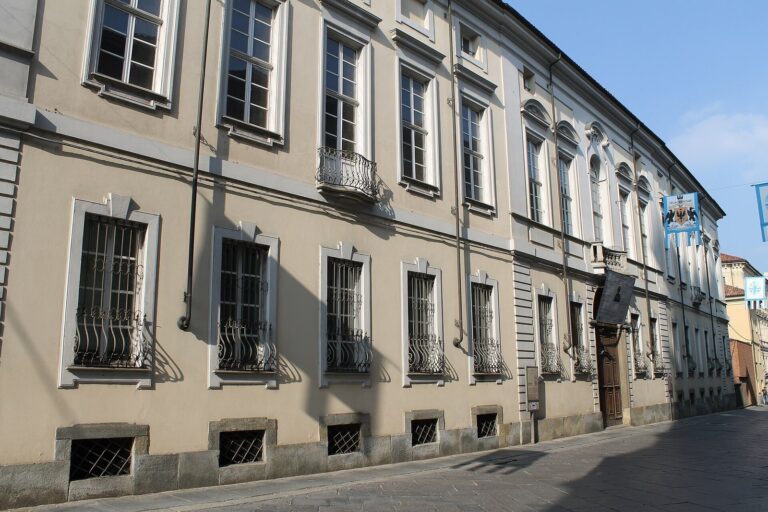
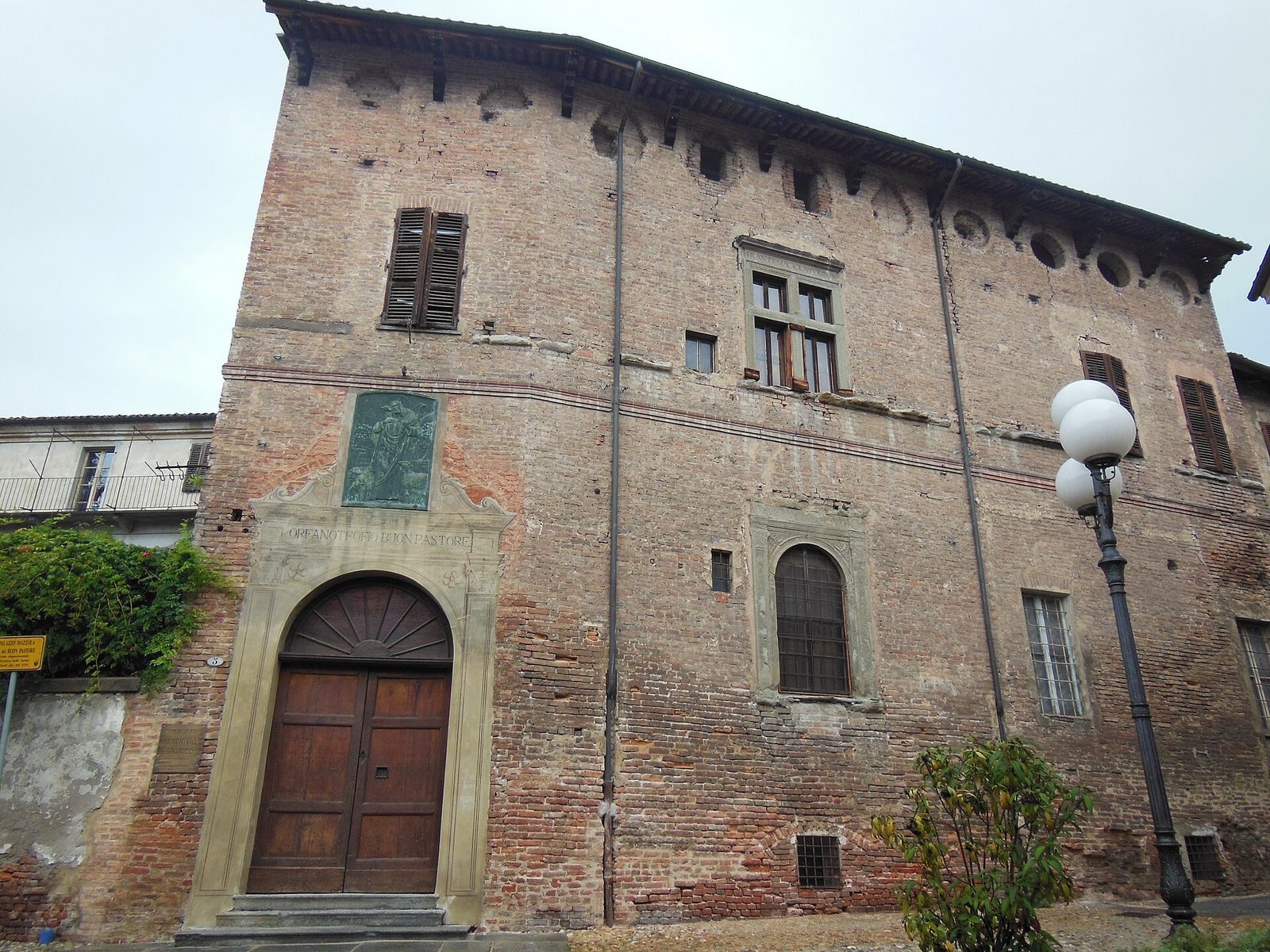
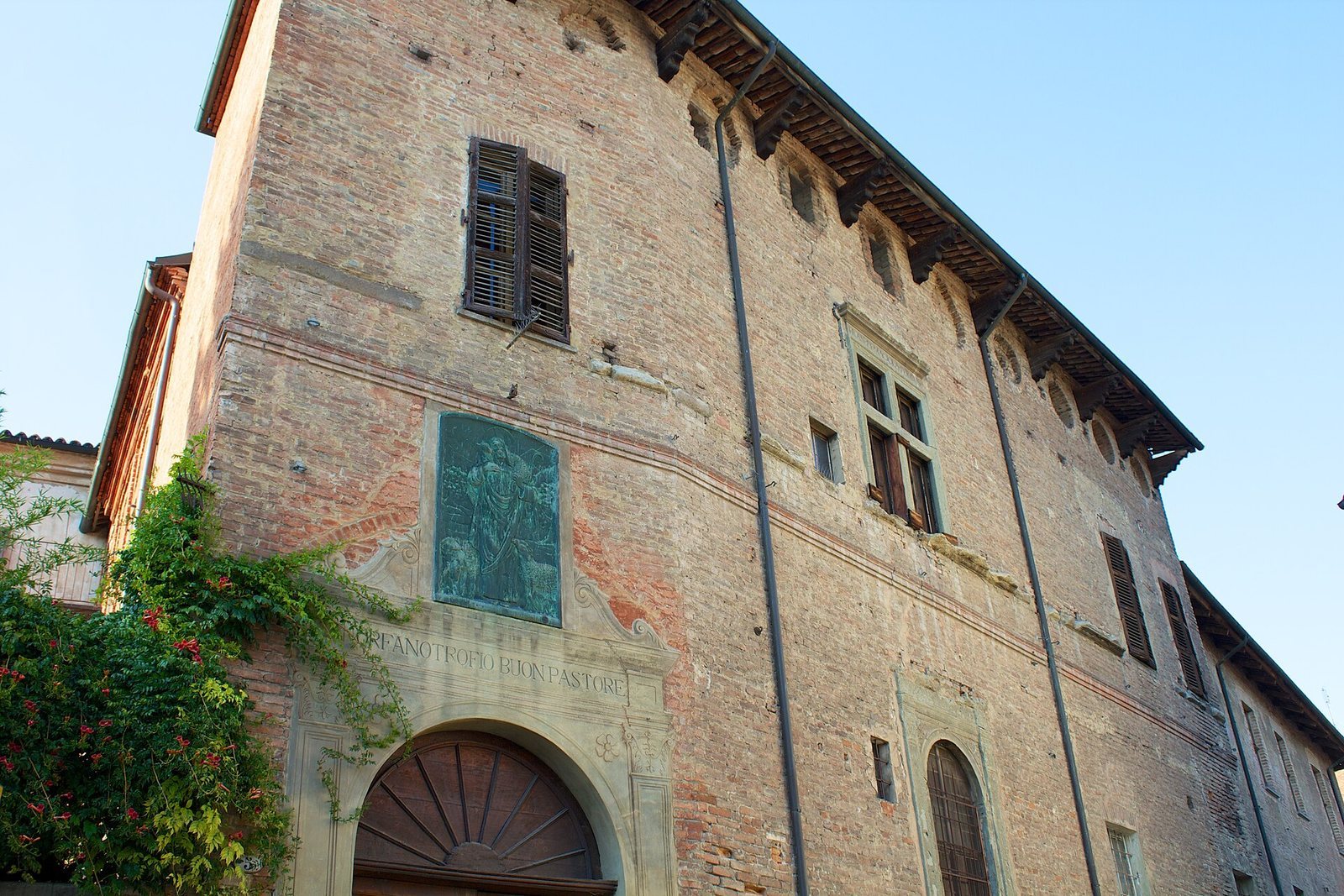
The palace has an irregular rectangular plan, with lateral wings, a courtyard to the north, and a garden to the south. It stands at the corner of Via Cardinal Massaia and Via Buon Pastore in Asti’s Cathedral district. Three windows with sickle-shaped arches face Via Buon Pastore.
Exterior
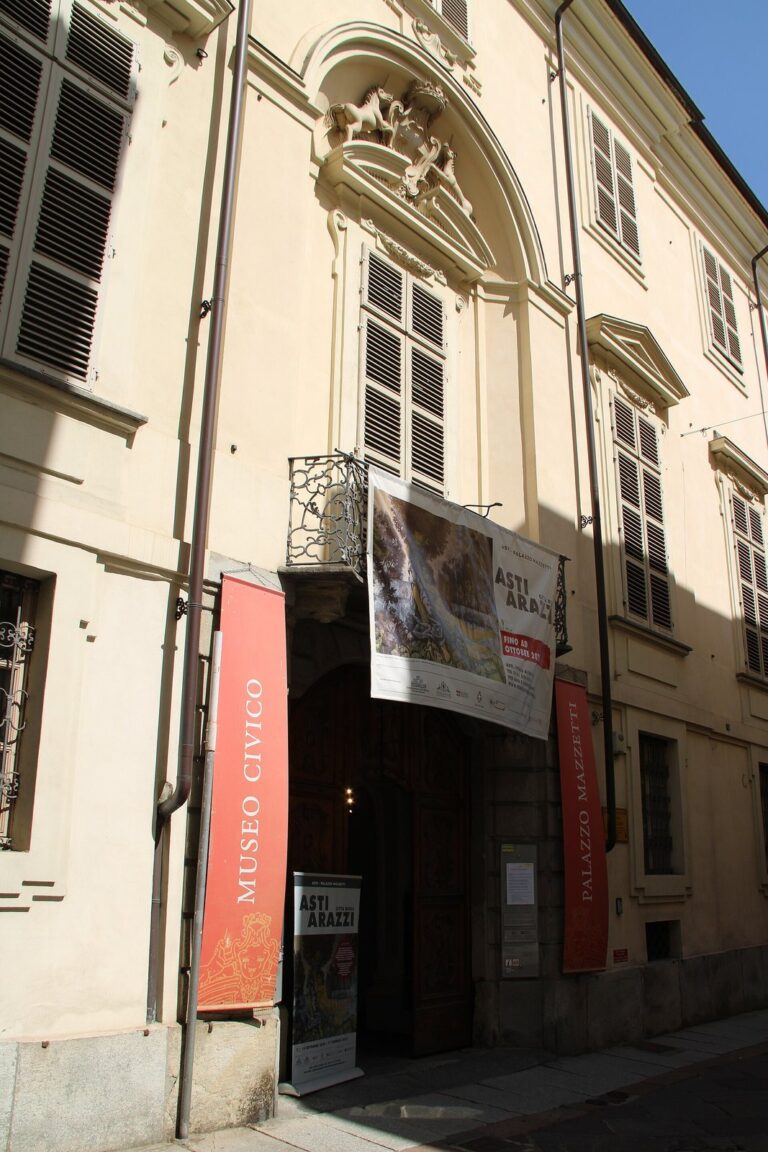
The main façade has been altered several times. It was once divided into two levels by a large marble cornice with ornament and grey-stone mouldings, which has since been lost. A few badly weathered sandstone fragments remain beside the main doorway. The second floor once had cross-mullioned windows, divided by stone bars; one survives.
Courtyards and interiors
The better-preserved interior includes two courtyards. The first, adjoining the palace, had a portico with two bays that was walled up during the twentieth century. The second faces the garden and retains a portico with four arches, brick columns, and Doric capitals, whose rounded sections support square slabs.
A corridor and staircase dating to the sixteenth century have barrel-vaulted ceilings, with a continuous semicircular form. On the ground floor, the great hall has a wooden coffered ceiling divided into recessed panels, decorated with seventeenth-century paintings of Mazzola emblems and mottoes. On the principal floor, small vaults added in the nineteenth century partly conceal the coffered ceilings.
Municipal historical archive
Medieval records
The archive holds administrative documents from the tenth century to the present; its oldest document dates to 947. Among its fourteenth-century books, the Codice Catenato contains civil, criminal, and administrative statutes as well as notarial records about property. The Codex Astensis includes material on public offices, Asti’s noble families, and the city’s relations with the Empire.
Municipal and regional records
Other holdings include charter collections from the Valmanera Charterhouse, a Carthusian monastery, concerning the municipality’s dealings with religious and secular bodies in the region. Ordinances from Visconti rule, the period when the Visconti dynasty governed, record measures affecting city life. Documents on Orléans rule extend to 1531, when Asti passed to the House of Savoy. Further records cover three centuries of Savoyard rule, French rule under Napoleon, and the Restoration, when monarchies returned after Napoleon’s defeat.
The archive also preserves records about festivals, fairs, public events, censuses, and statistics, together with archives from communities incorporated into Asti between the late nineteenth century and 1929. Its photographic collection, dating from the second half of the nineteenth century onward, includes images of people, places, buildings, and events, as well as collections associated with Secondo Pia, Angelo Gatti, L. Borelli, D. Massasso, and L. Quaglia.
Documents on the Palio
A room in the palace displays documents relating to the Palio, Asti’s traditional horse race, and the festivities of San Secondo, the Christian martyr venerated as the city’s patron saint. The oldest Palio-related item shown is an excerpt from the memorial, or chronicle, of the medieval Asti writer Guglielmo Ventura. It recounts that after Asti defeated Alba in 1275, the people of Asti decided to run the race beneath Alba’s walls as a mockery, following the custom of holding it in Asti during San Secondo’s festivities.
The display also includes a 1545 agreement between Asti’s municipality and Emanuele Filiberto, Duke of Savoy, which maintained privileges for the San Secondo festivities. Other items include records of Palio presentations and participants from the seventeenth to the mid-nineteenth century, a 1749 depiction of the long-course route, prize records from the Napoleonic period, and posters and sketches for the Palio editions of 1929–1935.