El Chorro de Maita: An Indigenous Settlement and Archaeological Site in Cuba
Site at a Glance
- Rating
- 4.3
- Popularity
- Medium
- Country
- Cuba
- Primary era
- Medieval
- Eras represented
- Medieval, Early Modern
- Civilizations
- Taíno
- Site type
- Burial
- Remains
- Necropolis
On this page7 sections
History
Settlement and colonial contact
El Chorro de Maita is an Indigenous settlement and archaeological site on the slopes of Yaguajay Hill in Banes municipality, Holguín province, Cuba. Founded in the thirteenth century, it remained occupied into the sixteenth century, and its cemetery continued in use until around the middle of that century. The settlement preserves evidence of contact among Taíno people, Indigenous peoples of the Caribbean, Europeans, Africans, and people from Mesoamerica, a cultural region spanning parts of Mexico and Central America.
After European contact, burials increased around 1510 and funerary practices changed under the forced introduction of Christianity. The Indigenous population was also subjected to the Spanish encomienda system, which compelled people to provide labor or tribute and was formally linked to Christian instruction. Anthropological analysis led by Manuel Rivero de la Calle identified human remains of Indigenous, European, African, and Mesoamerican origin.
Archaeological study and protection
Residents found archaeological objects and human remains while farming and building homes from the early twentieth century. José Garcia Castañeda, an archaeology enthusiast from Holguín, mentioned the site in 1927. Archaeologist Irving Rouse studied it in 1941 and 1942, finding fragments of glass and pottery.
From the 1970s, the East-Central Department of Archaeology, directed by José Manuel Guarch Delmonte, formally recorded the site. Excavations conducted from 1986 to 1988 uncovered a large cemetery in September 1986, with European objects found alongside traditional Taíno burials. Armando Hart Dávalos inaugurated the site museum on 1 November 1990. Regarded as Cuba’s first archaeological site museum, it was declared a National Monument in 1991.
Remains
Settlement and cemetery
The archaeological site covers 34,448 square metres on the slopes of Yaguajay Hill, and its cemetery lies within the settlement. Excavations yielded 133 burials, with human remains dating to the fifteenth and sixteenth centuries.
The dead were buried in fetal or extended positions. Extended burials, often accompanied by clothing, reflect European Christian influence. Some graves lie above others, a pattern that may relate to high mortality during epidemics.
Museum and displays
The museum building is adapted to the landscape and its contours. Traditional clay roof tiles and turned wooden balusters are among its features, while a curved corridor and display cases set into the walls shape the interior.
The exhibits include 62 skeletons displayed where they were found, in their original positions and at their recorded depths. The collection contains 416 archaeological pieces arranged in nine display cases and a main diorama. Finds include coral ornaments and necklaces, gold and copper objects, gold idols, carved pottery, brass objects, and ornaments made from resin, stone, and other materials. A young woman’s burial contained numerous objects that may indicate high social status. Another grave held a male skeleton measuring 1.75 metres, unusually tall compared with average Taíno stature. A collar of tiny quartz beads was associated with a possible behíque, a Taíno ritual specialist.
Reconstructed Indigenous village
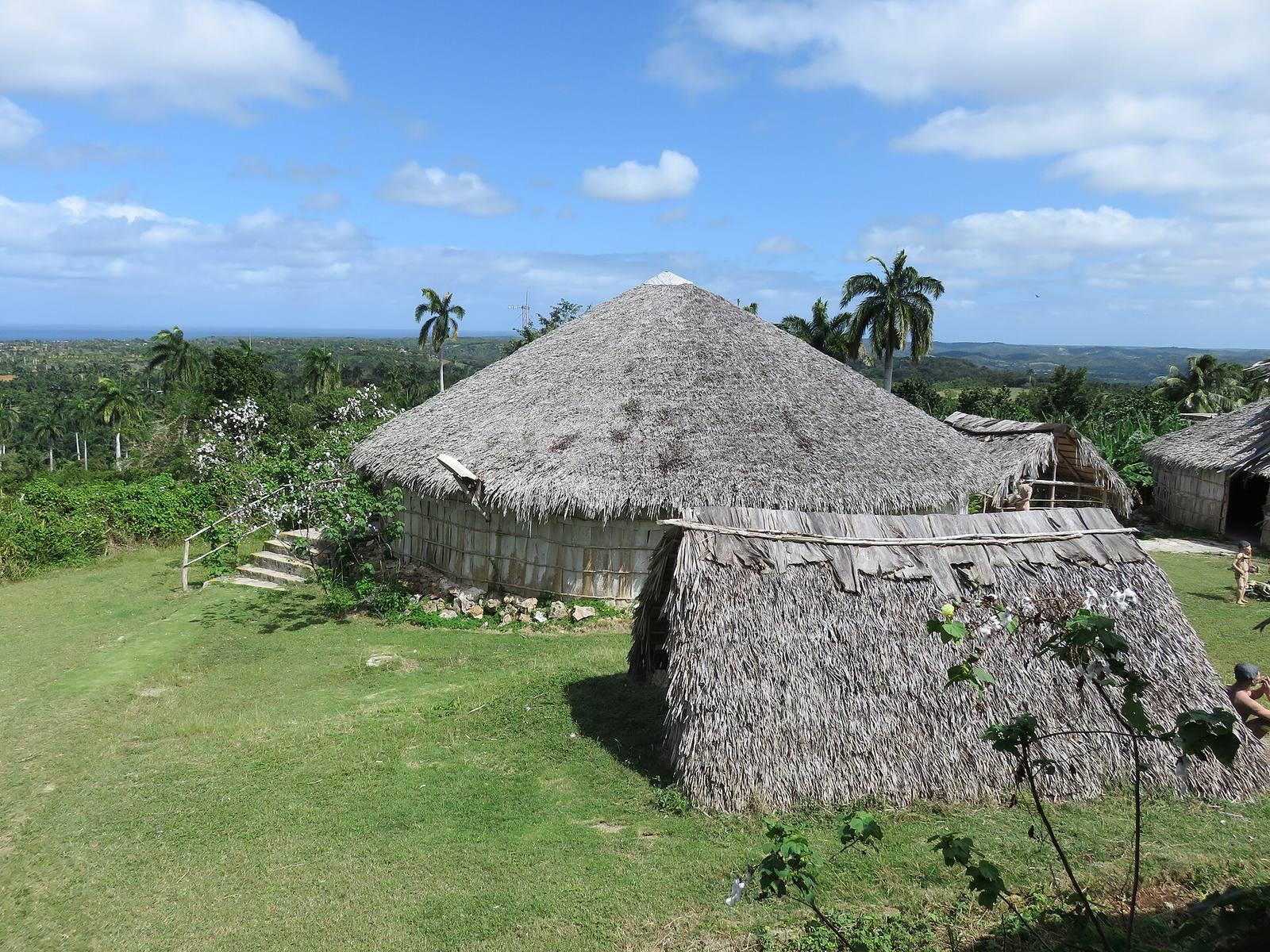
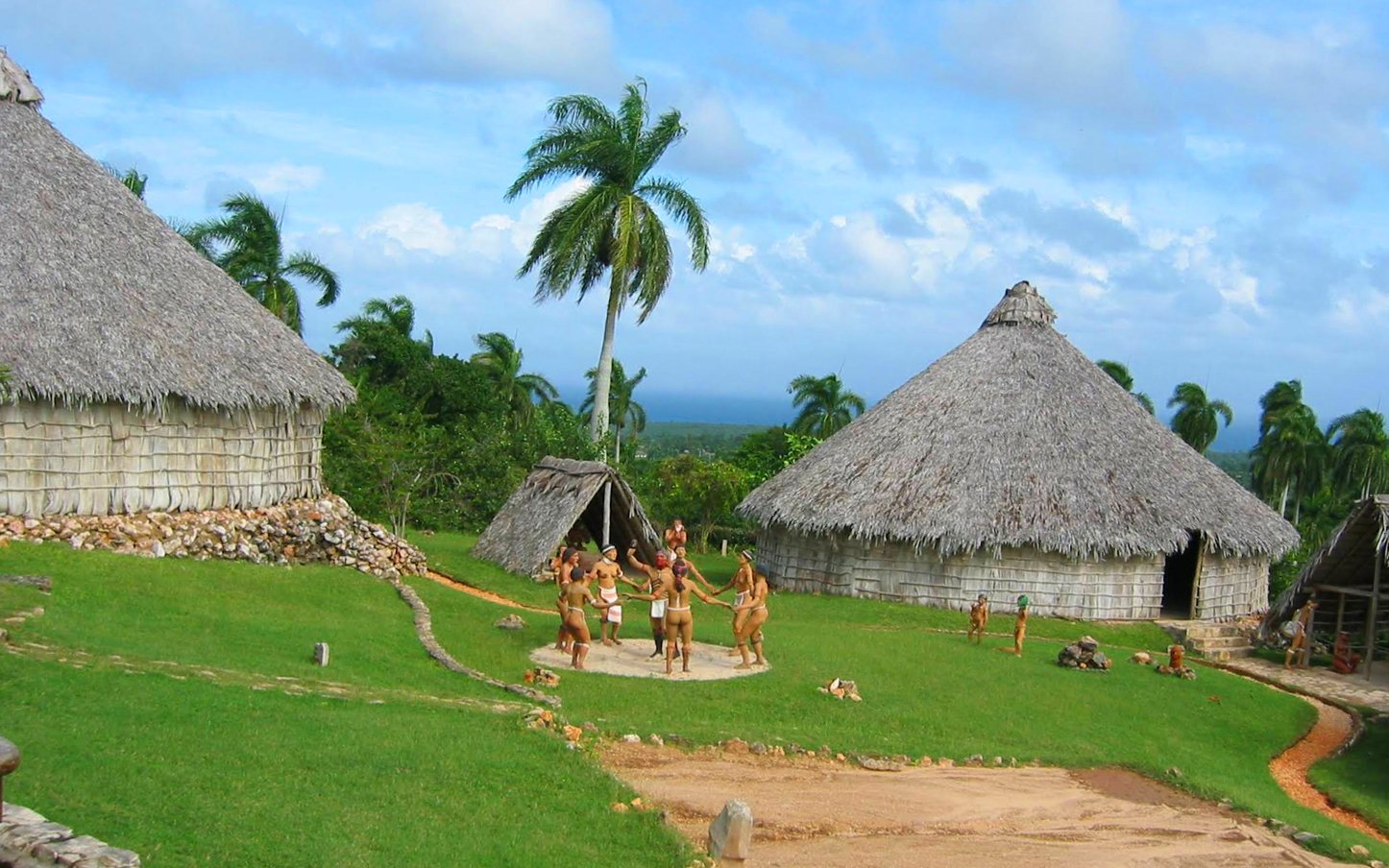
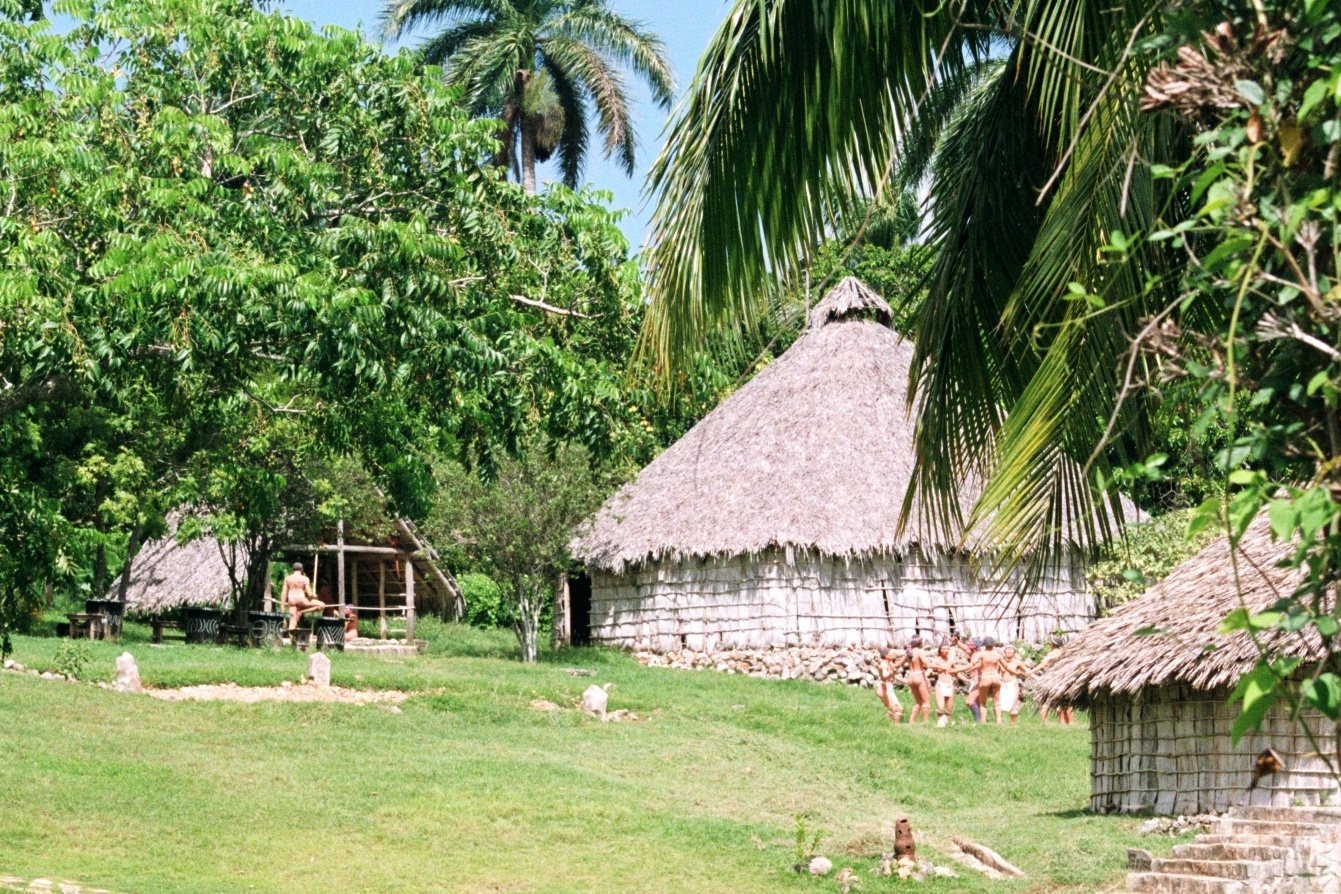
Across from the museum, a life-size reconstruction of an Indigenous village presents scenes of food preparation, rituals, dances, and ceremonies.