Neuscharfenberg Castle: A 19th-Century Residence in Thuringia
Site at a Glance
- Rating
- 3.7
- Popularity
- Very Low
- Country
- Germany
- Primary era
- Modern
- Eras represented
- Modern
- Civilizations
- German, Grand Duchy of Saxe-Weimar-Eisenach
- Site type
- Domestic
- Remains
- Castle
On this page10 sections
History
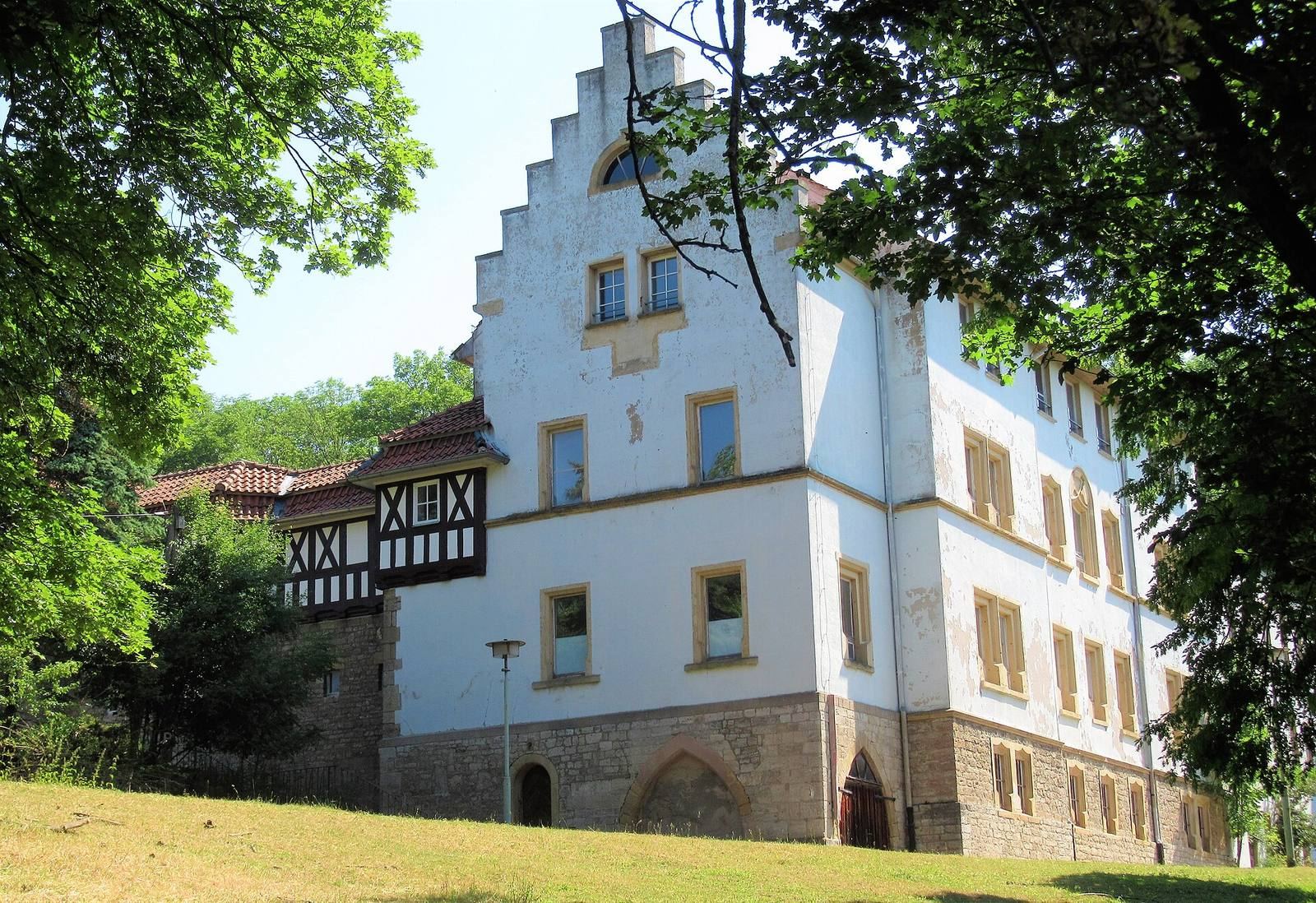
Neuscharfenberg Castle is a 19th-century residence at Wenigenlupnitz in Hörselberg, Germany. Count Wolf Sigismund von Uetterodt began building the present castle in 1846 in the “Old German” style, a 19th-century historicist mode drawing on earlier German architectural forms. Its history is rooted in medieval landholding and the successive rebuilding of a noble residence.
Medieval lordship and property
Hermann von Lupnitz, the earliest named lord of Wenigenlupnitz, appears in records from 1224 to 1268. He belonged to the service nobility, whose members carried out administrative or military duties for a lord, and served Fulda Abbey, a major Benedictine monastery and landholder. In the 13th century, the lords of Erffa were among the West Thuringian families connected to Fulda through feudal agreements.
In 1357, Hartung von Erffa received property at Wenigenlupnitz as Fulda’s bailiff for the Lupnitz settlements. Erffa holdings included a water castle, which the lords of Lupnitz had previously sold to the family, along with land and ponds. The Eisenach Monastery of St Nicholas also held substantial local property and rights. From 1414, the Eisenach Carthusian monastery, part of a contemplative monastic order, had interests in the area as well.
War, inheritance, and the earlier castle
The Uetterodt family acquired Scharfenburg and associated localities in 1442. During the Saxon Fratricidal War, a mid-15th-century conflict among members of the Wettin ruling house, Scharfenburg was besieged and reduced to ruins in 1446. The family then established a fortified house in Wenigenlupnitz as a new residence. In 1493, with Fulda’s consent, Dietrich and Hans von Farnroda acquired the Erffa holdings and rights. A Farnroda daughter’s marriage to Andreas Friedrich von Uetterodt later brought the properties around Wenigenlupnitz and Melborn into his branch of the family.
Around 1596, the water castle was probably converted into a residential castle. A major fire in 1795, during the tenure of Wolf Sigismund II von Uetterodt, destroyed the castle, the neighboring estate, and half of Wenigenlupnitz. Before his death on 26 March 1821, Wolf Sigismund II had succeeded in bringing the Uetterodt properties back together.
The 19th-century residence
The new castle’s builder, Count Wolf Sigismund, was the son of Wolf Sigismund II. He had served in the Hessian military, was a knight of the Order of St John, a religious order with military and charitable traditions, and lived mainly in Darmstadt. The residence was called Neuscharffenberg, a name reflecting the family’s continuing close connection with Thal. Professor Rein, a teacher at the Eisenach grammar school and a historian, often visited the count and recorded the castle’s interior in an album leaf.
Estate ownership and change, 1900–1945
The last count, Ludwig Wolff von Uetterodt, died at Wenigenlupnitz without an heir on 2 July 1900. The estate was sold to a Berlin building company that year, then to the Oppenheim family in 1902, landowner Leo von Ubisch in 1904, and Baron Dietrich von Klitzing in 1906. Klitzing sought to make the property a profitable agricultural estate.
Around 1918, Baron von Helldorf took over the estate and began extensive work on the castle and farm buildings. During the economic crisis and inflation of the 1920s, state-assisted drainage work on fields to the north provided employment for as many as 100 people from Eisenach and nearby settlements. From 1927, two managers shared responsibility for the estate. Helldorf had guaranteed debts owed by his nephew, Wolf Heinrich Graf von Helldorf, Berlin’s police president, and used mortgages and forest sales in efforts to withstand the financial crisis. Political pressures also contributed to the family’s departure from Wenigenlupnitz.
Hans Tölke of Quedlinburg became the next owner, taking over buildings and land burdened by mortgages and arranging employment schemes for villagers. The military took parts of the Kindel estate for use as a training ground. On 7 December 1938, Tölke sold the castle and estate to Walter Natz, owner of the Eisenach oil mill; Tölke moved to Bavaria around 1939. Natz sold the castle to the city of Berlin in 1941.
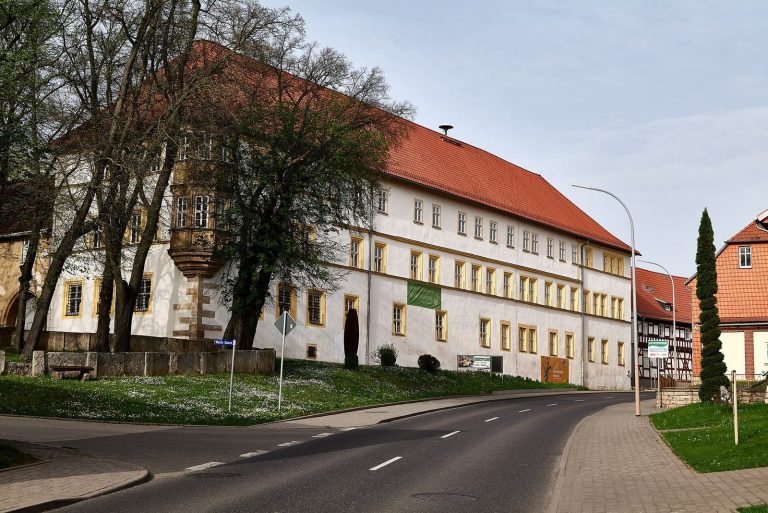
American forces entered Wenigenlupnitz on 3 April 1945, causing only slight damage to the estate and castle buildings. Later that year, the estate was expropriated without compensation under the Thuringian law implementing land reform, dated 10 September 1945. The castle now serves as a Diakonie residential home. Diakonie is the social-welfare organization associated with Germany’s Protestant churches.
Remains
The former castle complex placed the residence beside an estate, with an outlying farm on the Kindel. The present castle stands high on the bank of the Nesse, on a slope above the earlier water castle’s site on the river’s right bank. Usable components from the fire-damaged castle were incorporated into the later building.
Castle, farmyard, and grounds
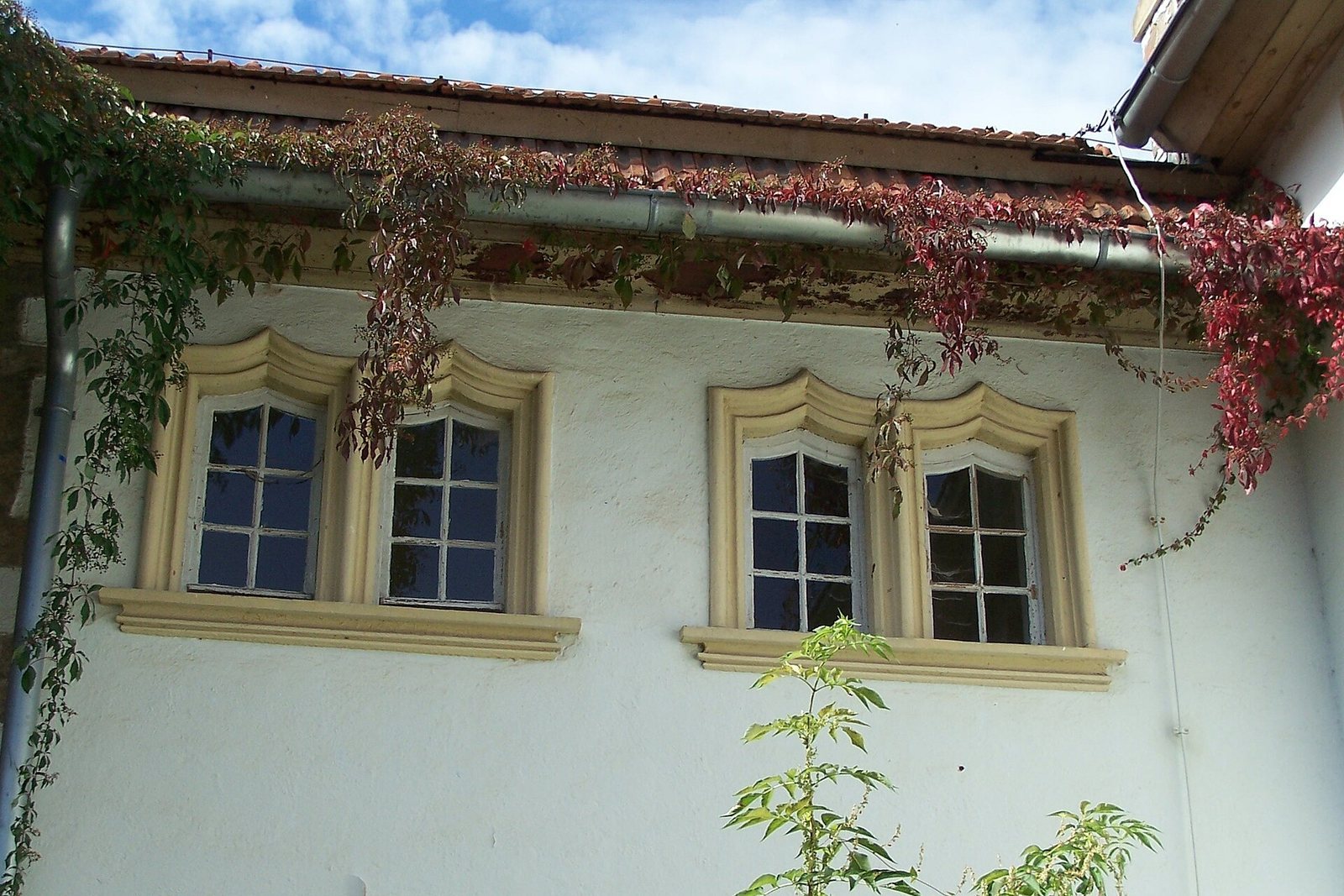
Residential building
Architect and building official Eberhardt directed the final work on the residence. At that stage, the building was complete except for its tower, which was still under construction.
Farmyard entrance and west gate
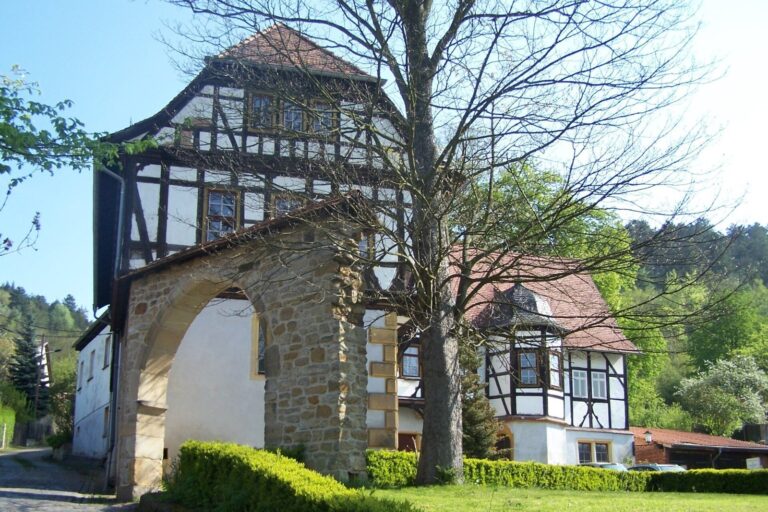
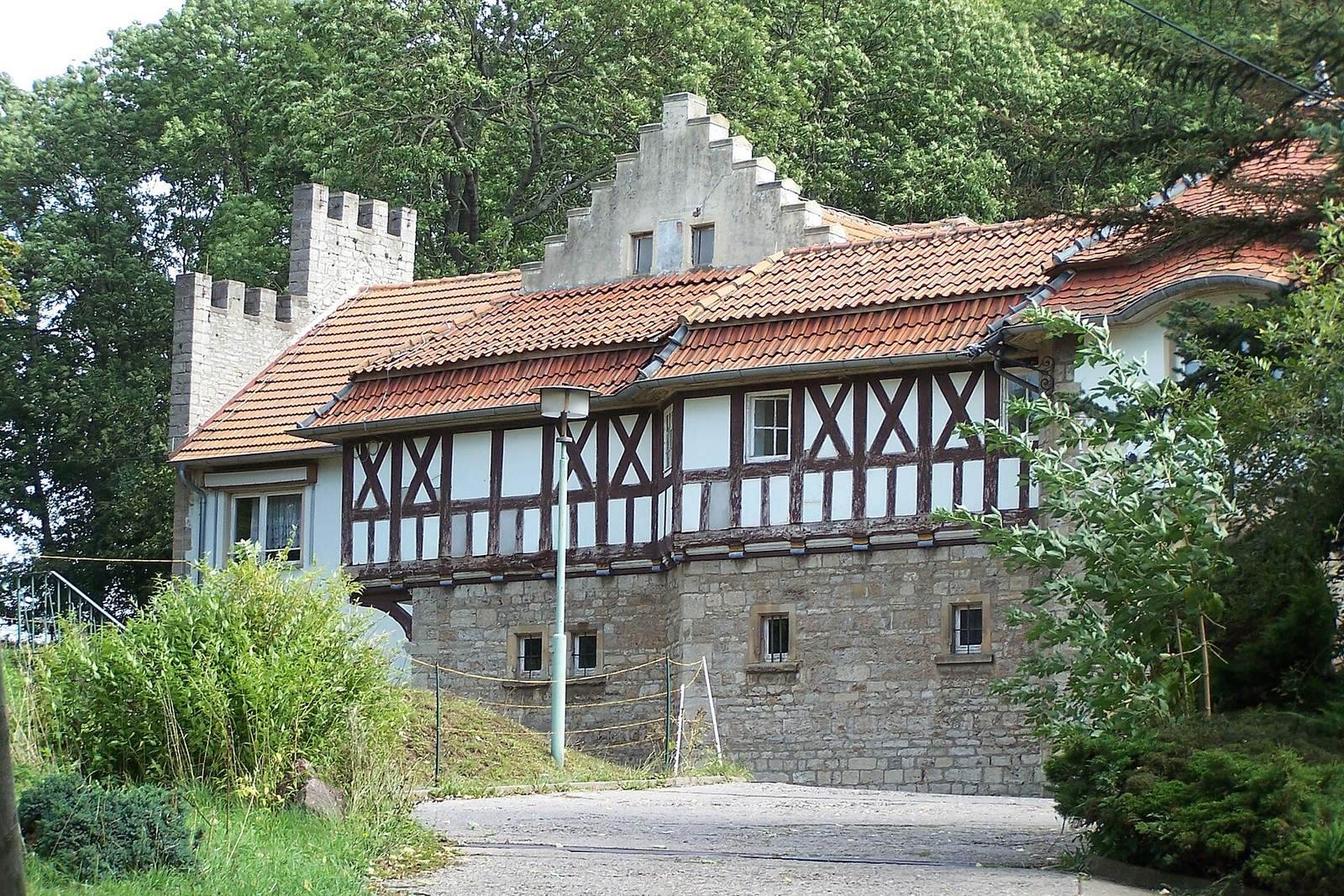
Helldorf’s building works included changes to the entrance gate for the farmyard. A half-timbered upper storey was added above the wall containing the castle’s Gothic-style west gate.
Estate buildings and landscape
The outlying farm complex on the Kindel later became known as Künkelhof. Beside the castle, the mill was modernized under Klitzing. A small hydroelectric plant west of the settlement supplied electricity to both Lupnitz villages. The road to the castle and Melborn was straightened, taking portions of the park designed by Hermann Jäger; a grove was planted in the meadow east of the castle.