Anne Hathaway’s Cottage: A Historic Farmhouse and Museum
Site at a Glance
- Popularity
- Very High
- Country
- United Kingdom
- Primary era
- Medieval
- Eras represented
- Medieval, Early Modern
- Civilizations
- English
- Site type
- Domestic
- Remains
- House
On this page6 sections
History
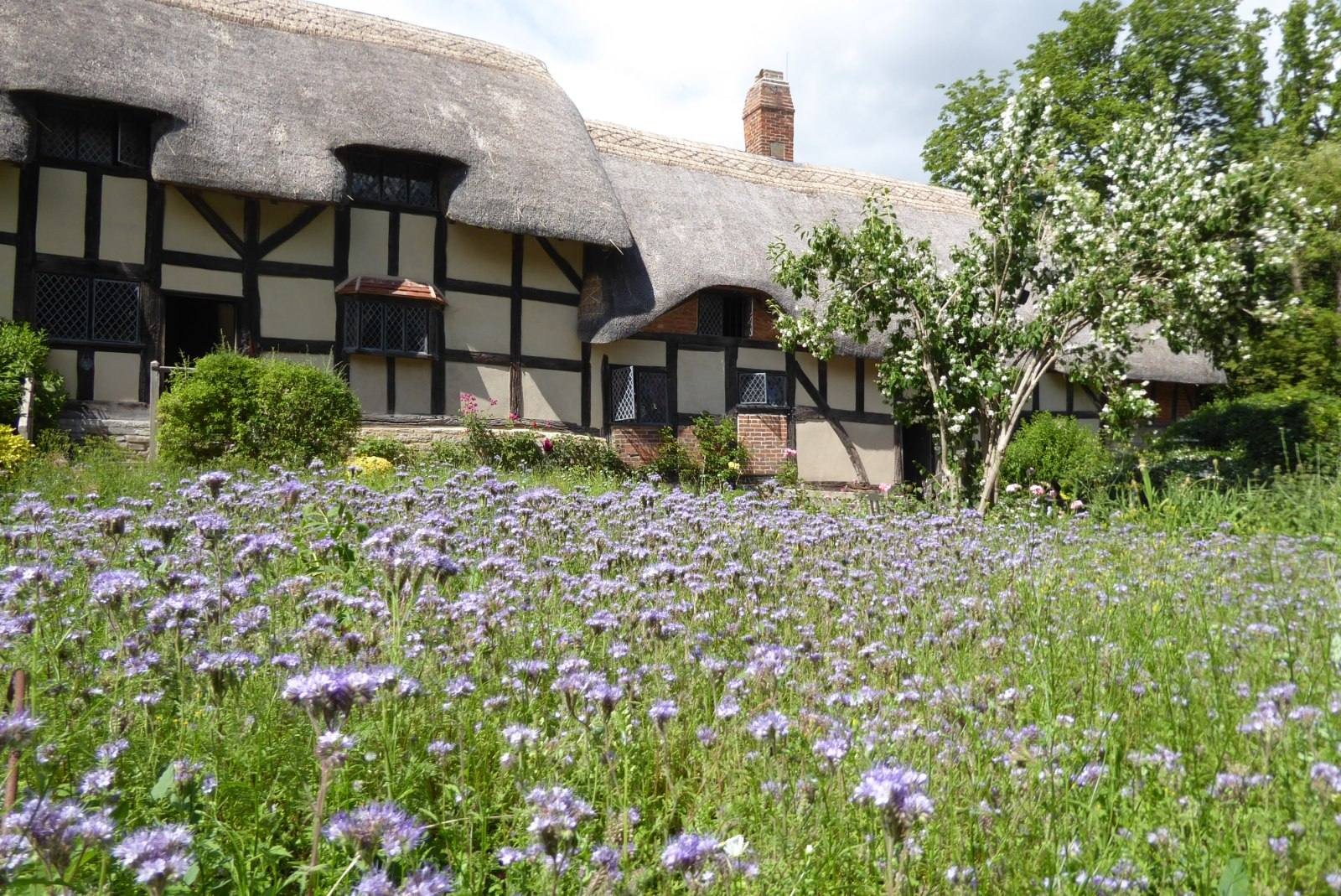
Anne Hathaway’s Cottage is a former farmhouse in Shottery, a district of Stratford-upon-Avon in the United Kingdom. First recorded in the fifteenth century, it is described as vernacular Tudor architecture, an English building tradition associated with the Tudor period (1485 to 1603), whose features continued afterward. The house is traditionally identified as the childhood home of Anne Hathaway, wife of the poet and playwright William Shakespeare, but some researchers regard this association as a later legend. Little is known about her youth.
The Hathaway family
The Hathaway family moved into the house in 1542. John Hathaway, Anne’s grandfather, was the first of the family to live there. In Shakespeare’s time, the property was known as Hewlands Farm, and Shottery was a hamlet. It is now a district of Stratford-upon-Avon.
After Anne’s father, Richard Hathaway, died in 1581, the house passed to her brother Bartholomew, who enlarged it. The property remained in the family until 1846. Financial difficulties that began in 1700 eventually led to its sale.
Ownership and preservation
After the sale, the house and land were leased, and Hathaway family members continued to live there as tenants. The Shakespeare Birthplace Trust acquired the property in 1892 and has owned it since. The Trust removed later additions and alterations, restoring the house to its seventeenth-century appearance. William Baker, its last resident, left in 1911 after his mother, Mary, died.
A fire badly damaged the house in 1969. The Trust repaired and restored it, and the building now serves as a museum. The house is Grade I listed, England’s highest category for buildings of exceptional interest. Its garden is Grade II on the Register of Historic Parks and Gardens, a category for historic parks and gardens of special interest.
Remains
The farmhouse
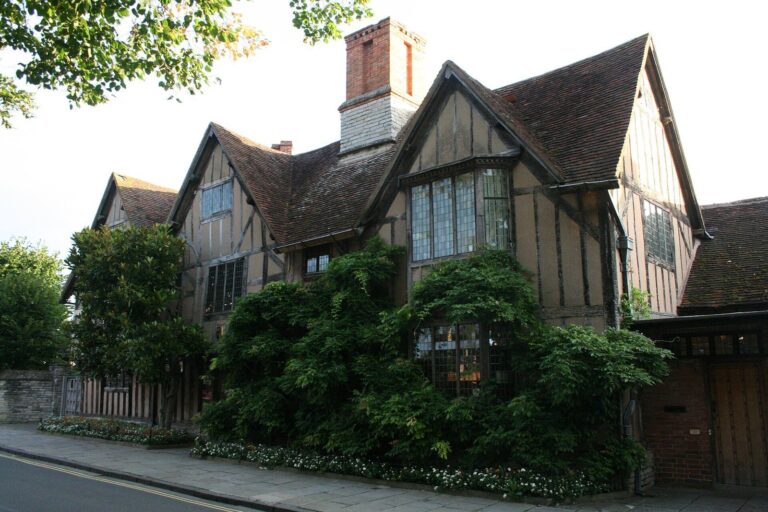
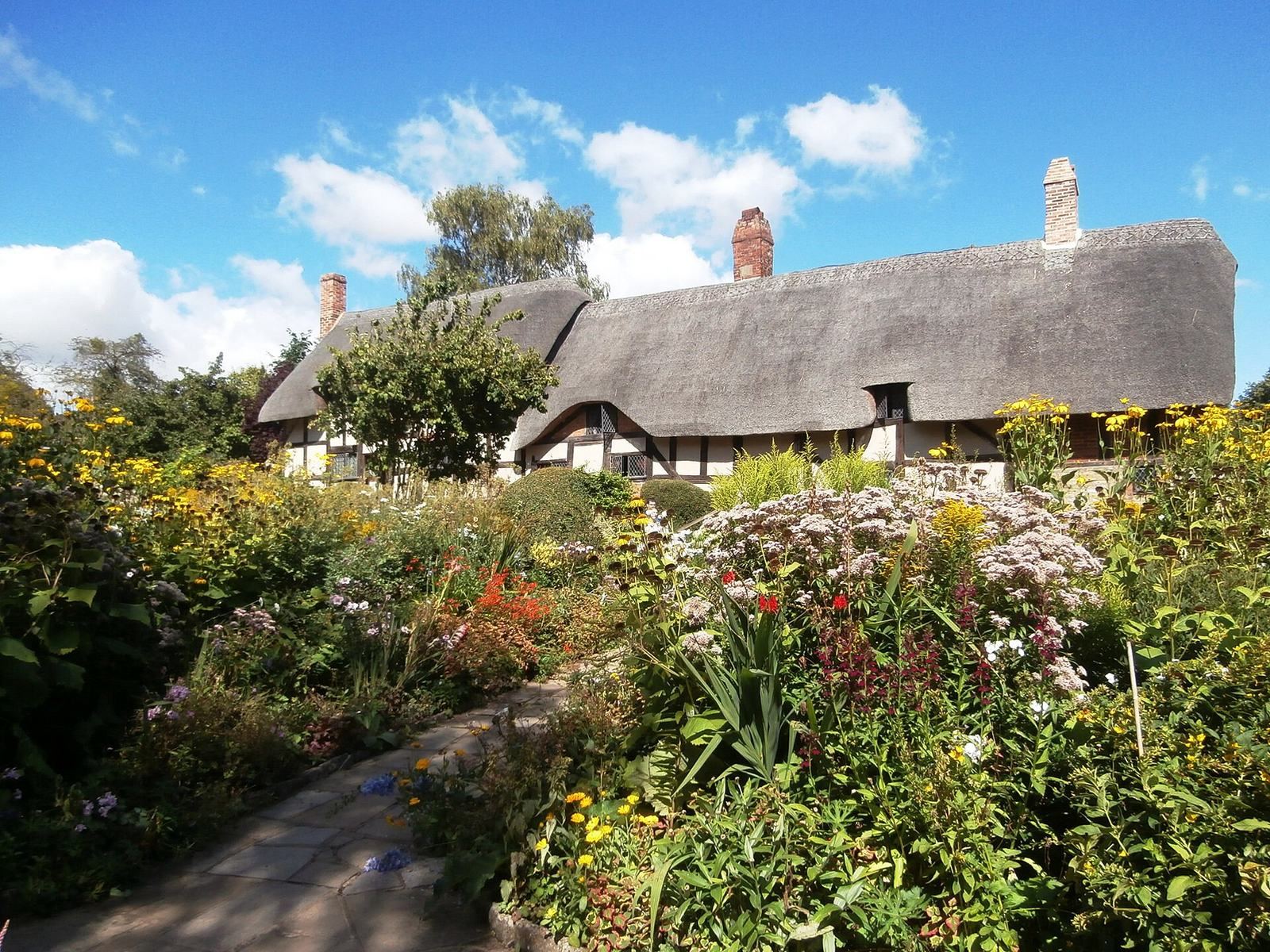
The property centers on a twelve-room former farmhouse set within extensive gardens. More than 90 acres of land were historically attached to the farm. The house is unusually spacious for a sixteenth-century English farming household and has visible timber framing, a framework of wooden posts, beams, and floor members, beneath a thatched roof. Its earliest section is dated to 1463, when the building had three rooms on one storey. The upper part was built between April 1610 and October 1624 during Bartholomew Hathaway’s expansion. Several chimneys helped distribute heat through the house in winter; the largest stands above a fireplace also used for cooking.
The garden and sculpture trail
In 1920, the Shakespeare Birthplace Trust commissioned horticulturist Ellen Willmott to advise on the garden’s design and planting, after a large sewer had destroyed the earlier garden. Her plans combined a flower garden and an orchard intended to complement the house. Planting included species mentioned in Shakespeare’s plays, with pastel-coloured borders designed to retain colour throughout the year. Much of Willmott’s layout and plant selection survives, including three flower beds near the entrance known as Miss Willmott’s garden. A sculpture trail features History Play by Jane Lawrence, Titania and Bottom by Gemma Smith, King Lear by Eve Pomerantz, Falstaff, What Is Honour by Niels Helvig Thorsen, Hamlet: What Wilt Thou Do For Her by Michele Firpo-Cappiello, and Brutus by Isaac Graham.