The Rockingham Mausoleum: A Neo-Classical Memorial in South Yorkshire
Site at a Glance
- Popularity
- Medium
- Country
- United Kingdom
- Primary era
- Early Modern
- Eras represented
- Early Modern
- Civilizations
- British
- Site type
- Civic
- Remains
- Monument
On this page5 sections
History
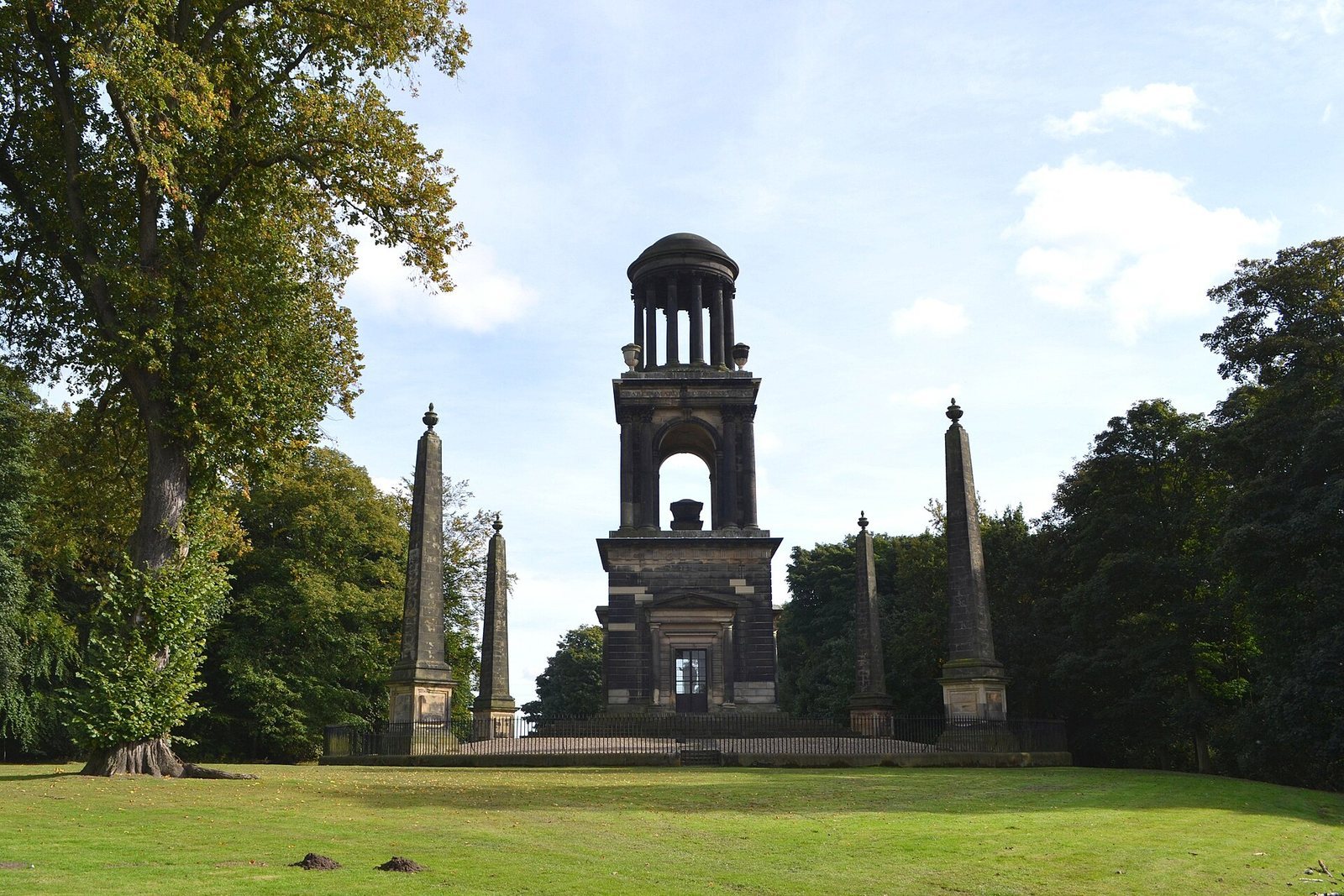
The Rockingham Mausoleum is an eighteenth-century Neo-classical memorial at Wentworth, near Rotherham in South Yorkshire, United Kingdom. It commemorates Charles Watson-Wentworth, 2nd Marquess of Rockingham, who was prime minister when he died in 1782. It is not his tomb: Rockingham was buried at York Minster. In eighteenth- and nineteenth-century usage, the structure was known simply as the Monument.
William Fitzwilliam, 4th Earl Fitzwilliam, commissioned the memorial in 1783 after inheriting the estates of his uncle, who had died without a direct male heir. He chose John Carr of York as architect. Carr had earlier built the stable block at Wentworth Woodhouse for Rockingham and later carried out alterations there for Fitzwilliam. Several designs were considered, including proposals based on an obelisk. Construction began in 1785 and took four years. Local artisans received regular, modest payments, while better-known craftsmen, including sculptor Joseph Nollekens, were paid larger sums less often.
Coal mining in the area made it necessary to reinforce the building with iron clamps. Restoration was completed in the 1980s, after mining had ended and the clamps could be removed safely. The Fitzwilliam Wentworth Amenity Trust, established in 1979 with an endowment from Thomas Wentworth-Fitzwilliam, 10th Earl Fitzwilliam, owns the monument and continues conservation work in the area. The mausoleum, obelisks and enclosure have held Grade I listed status since 29 April 1968.
Remains
Physical layout
The three-stage sandstone memorial stands within an iron-railed enclosure, with an obelisk at each of its four corners. Its Neo-classical design brings together the forms of a cenotaph and a Temple of Friendship.
The monument
Built from ashlar sandstone, carefully cut stone blocks, the structure is 90 feet (27 metres) high. A large, empty sarcophagus rests on its first storey and can be seen from outside. The design may have been inspired by the Mausoleum of the Julii at Glanum, near Arles in Provence. Inside, a statue by Nollekens portrays Rockingham in the robes of the Order of the Garter, with one hand raised. Wall niches contain busts of eight close friends and leading figures in the Whig political tradition, a major British political grouping: Admiral Viscount Keppel, Edmund Burke, Sir George Savile, Charles James Fox, the Duke of Portland, John Lee, Lord John Cavendish and Frederick Montagu. The original busts, made by Nollekens, Carrachi, John Bacon and William Hickey, have been replaced by casts. Architectural historian Nikolaus Pevsner praised the memorial as exceptionally fine and noble.
Obelisks and railings
The four obelisks were moved in 1792 from the west side of Wentworth Woodhouse and set at the corners within the mausoleum’s enclosure. The enclosure consists of 743 iron railings made by the Rotherham iron-founders Samuel Walker and Company.