Gislingegård: A Danish Manor House and Estate
Site at a Glance
- Popularity
- Low
- Country
- Denmark
- Primary era
- Modern
- Eras represented
- Early Modern, Modern
- Civilizations
- Danish, Denmark–Norway
- Site type
- Domestic
- Remains
- Manor House
On this page5 sections
History
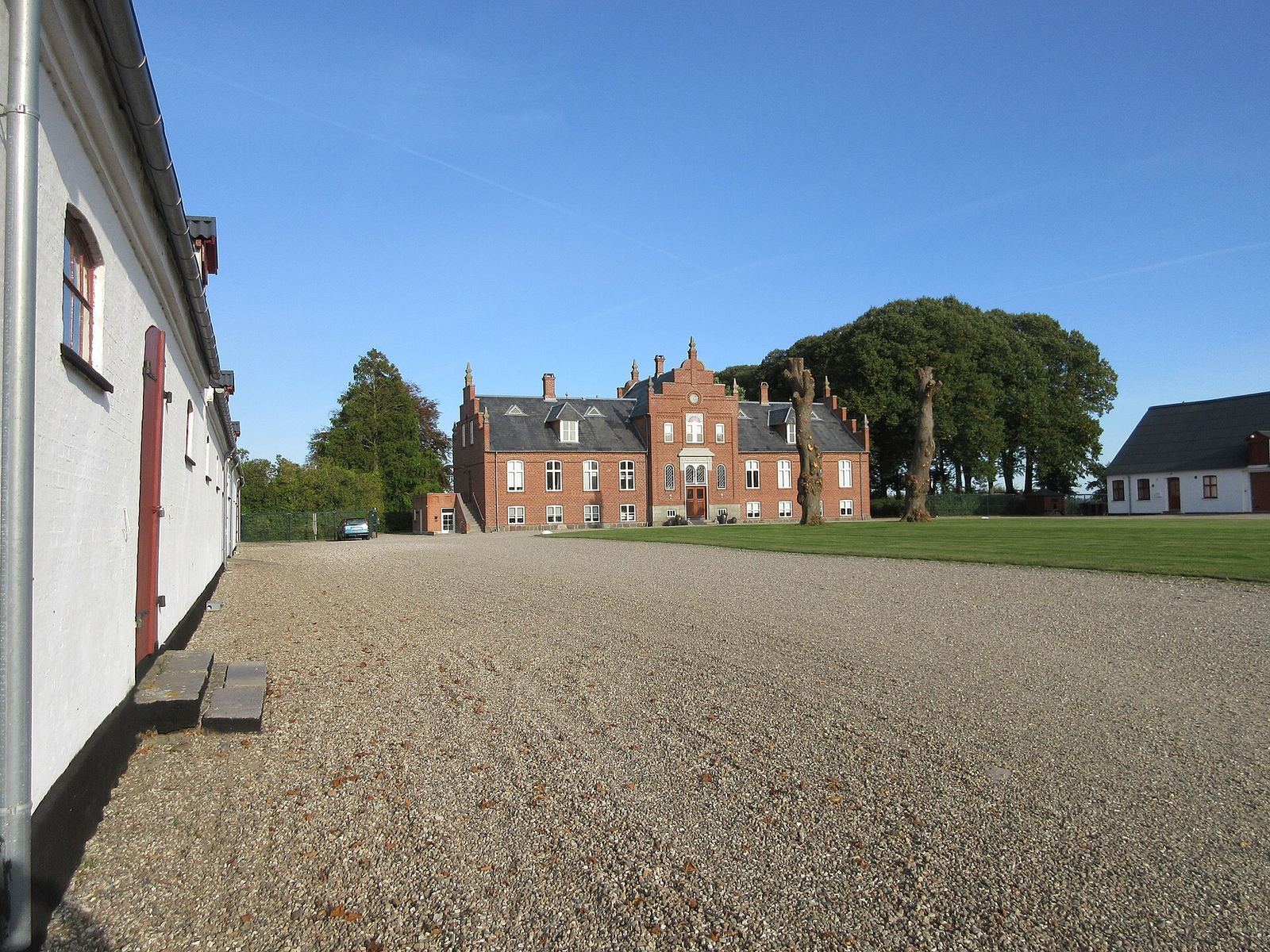
Gislingegård is a manor house and estate near Gislinge in Holbæk Municipality, Denmark, established by Peder Benzon on 30 April 1730 from two farms in the village. The estate is generally dated as completed in 1763. Its main building, dated to 1873, is in the Gothic Revival style, a revival of medieval Gothic forms.
Formation and eighteenth-century owners
Benzon expanded the estate to nearly twice its original size and held it until his death in 1735. His heirs sold it to county governor Jacob Jørgensen. H. J. Jacobsen Hvalsøe owned Gislingegård from 1740 to 1747, followed by Claus Buch. Buch’s widow held the estate after him, and Albert Phillip Buch retained it until 1759. Oluf Mandix owned it from 1759 to 1769, followed by Frederik Carl Christian von Stöcken from 1769 to 1771.
Erik Svitzer held Gislingegård from 1771 to 1794, introducing contemporary agricultural reforms and enlarging its dairy. A fire destroyed the main building in 1773; it was later rebuilt farther south at a new site.
Nineteenth-century ownership and agricultural change
Johannes Frisenborg owned the estate from 1794 to 1805. Andreas Lund and Peter Klein are both associated with 1805–1806, followed by H. C. Astrup from 1806 to 1809, Simon Groth Clausen from 1809 to 1828, and C. J. Clausen from 1828 to 1845. Gislingegård lost much of its value during the agricultural crisis of 1813–1830.
In 1845, Baron Herman Frederik Løvenskiold acquired the estate and held it until 1873. He leased it out and sold some tenant farms to the farmers who rented them. V. T. Plenge owned Gislingegård from 1873 to 1884, followed by S. Plenge until 1896. Victor Ræder held it in 1896, then J. F. Lagoni from 1896 to 1899, J. Johannesen from 1899 to 1912, and F. Ingerslev from 1912 to 1915.
Subdivision in 1915
In 1915, the Land-Subdivision Association for the Dioceses of Zealand and Funen bought Gislingegård. Part of the land was divided into nine smallholdings, and the remaining estate was sold later that year to farmer Christoffersen.
Remains
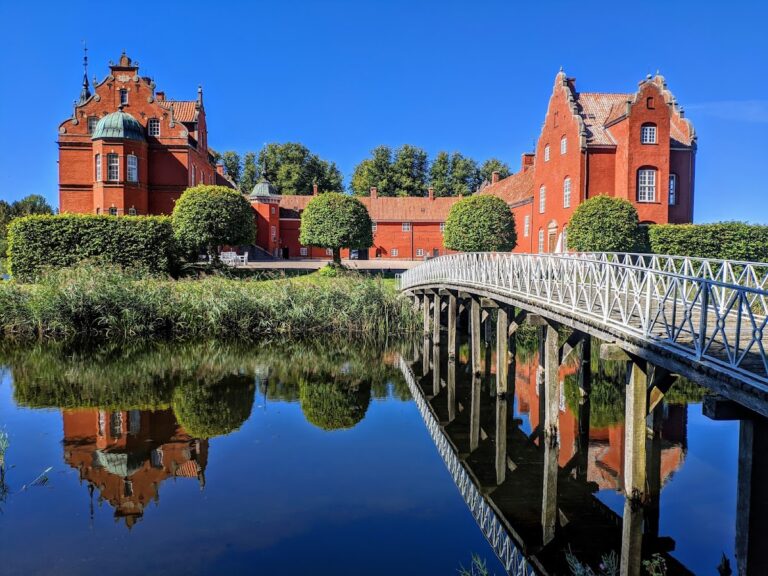
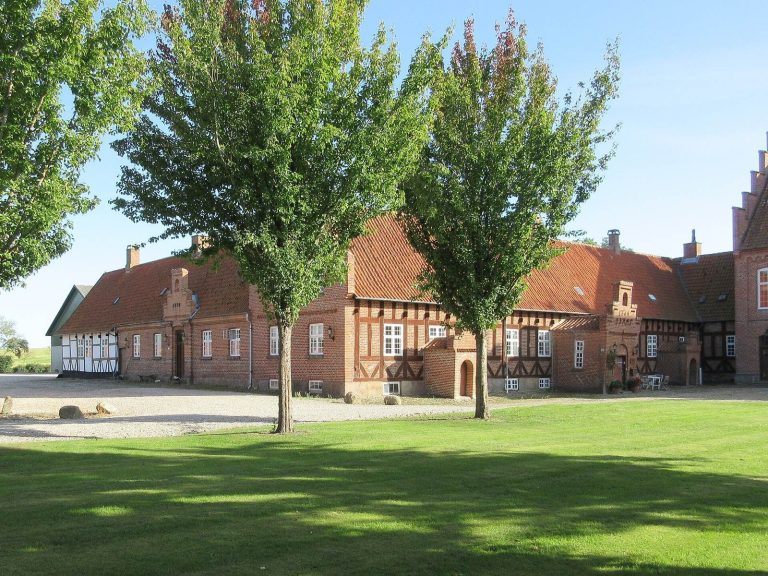
The estate covers 250 hectares, including 222 hectares of farmland and 16 hectares of meadows. Its single-storey main building has crow-stepped gables, whose stepped outlines follow the sloping sides of the roof.