Grønnessegård: A Danish Manor and Estate
Site at a Glance
- Popularity
- Low
- Country
- Denmark
- Primary era
- Modern
- Eras represented
- Modern
- Civilizations
- Danish
- Site type
- Domestic
- Remains
- Manor House
On this page5 sections
History
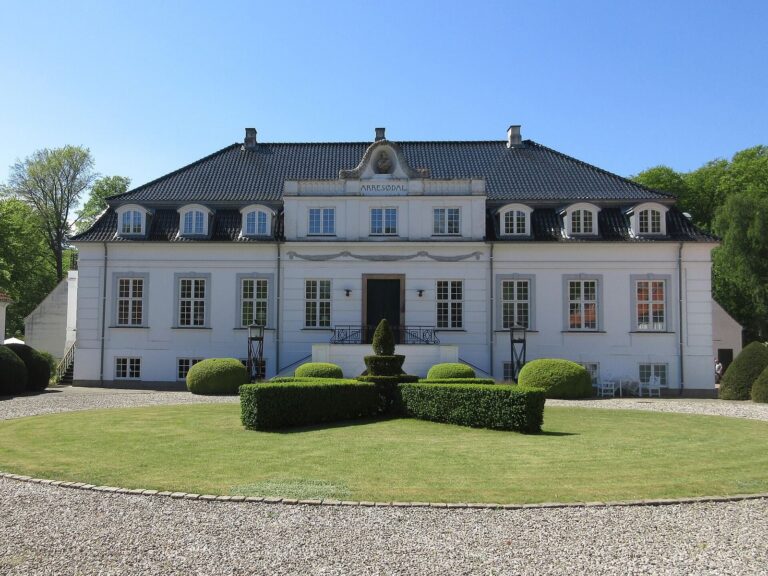
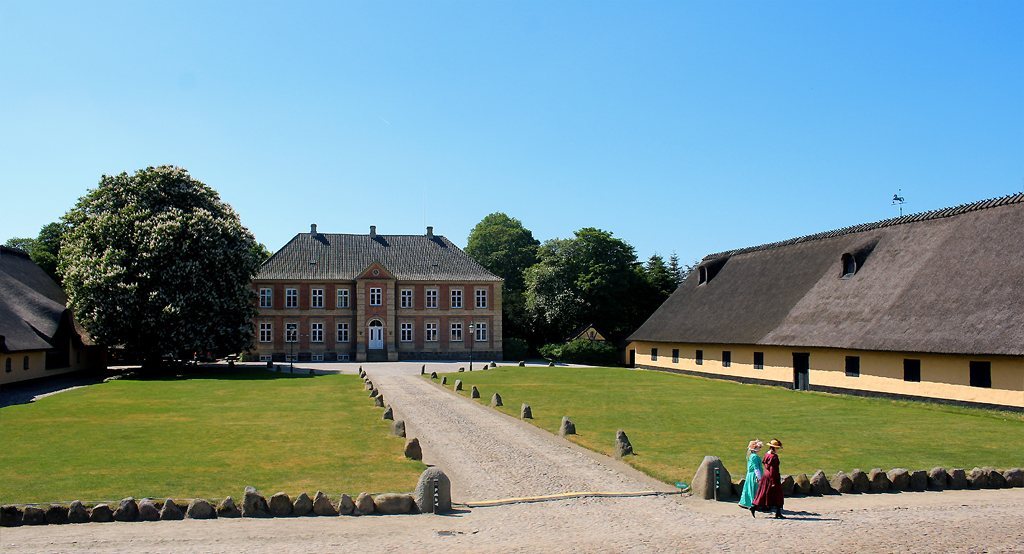
Grønnessegård is a manor house and estate east of Hundested in Halsnæs Municipality, Denmark. Danish industrialist Johan Frederik Classen established it in 1776 to support the nearby Frederick’s Works arms factory. Its two-storey main building dates to 1859 and is Neoclassical, a style inspired by ancient Greek and Roman forms and proportions.
Classen and the industrial estate
Classen and his business partner Just Fabritius established Frederick’s Works in 1756, around which Frederiksværk developed. Classen acquired surrounding land from the Crown and founded Arresødal in 1773. Three villages, Gryndese, Rorup, and Fornerup, were then merged to form Grønnessegård. The manor estates supplied food for the factory workers and served as a reserve of labor. Classen owned Grønnessegård until his death in 1792.
Transfer to the Crown and government
In 1792, Det Classenske Fideicommis, a legally restricted estate endowment, transferred Frederick’s Works, Arresødal, and Grønnessegård to Prince Charles of Hesse-Kassel in return for 7,000 Danish rigsdaler. Charles had served as governor of Norway and Schleswig-Holstein. He was married to Princess Louise of Denmark, a sister of King Christian VII, and his daughter married the future King Frederick VI.
In 1804, Charles transferred the three properties to Crown Prince Frederick, who later became King Frederick VI. Grønnessegård passed from the Crown to the government in 1840. Its copyholds, a form of land tenure held under a manor, were later converted into freeholds, which involve more direct ownership.
Private ownership
The estate’s remaining property was sold in 1859 to Jørgen Hellemann and Henrik Jørgen Hellemann, who had previously leased it. Henrik Jørgen became sole owner in 1879 and sold the estate to Andreas Christian Nissen in 1897. Nissen was succeeded by his son, Andreas Nissen. His widow sold the estate to Karl Albert Hasselbalch in 1921.
Karl Albert Hasselbalch owned Grønnessegård until 1948, when K.J. Hasselbalch took over. Karsten Hasselbalch became owner in 1967 and held the estate until 2005, when Ditlev Hasselbalch became its owner.
Remains
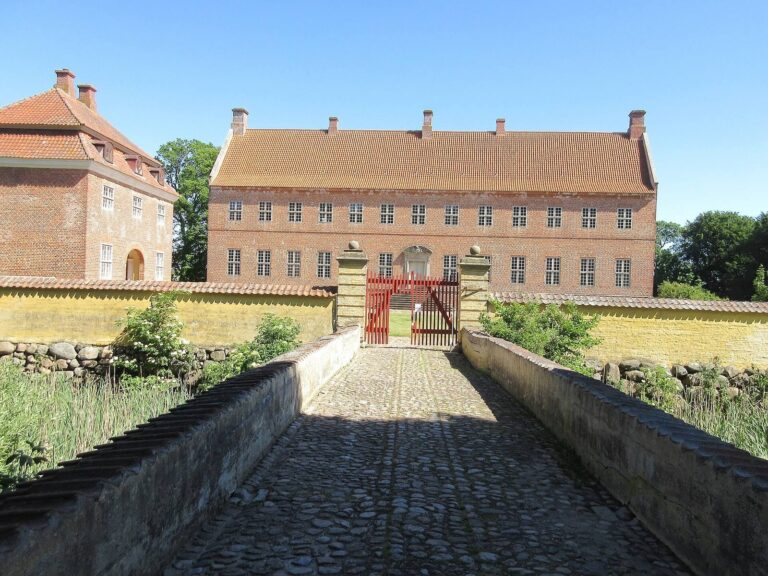
The manor house’s main building is two storeys high. It is the estate’s principal described architectural feature.