Fort Benoît: A Late-19th-Century Fortification at Besançon
Site at a Glance
- Rating
- 4
- Popularity
- Very Low
- Country
- France
- Primary era
- Modern
- Eras represented
- Modern
- Civilizations
- French
- Site type
- Military
- Remains
- Fort
On this page7 sections
History
Building the fort and its predecessor
Fort Benoît is a military fortification spanning the communes of Besançon and Chalezeule in France, built from 1873 to 1880 as part of the first phase of Besançon’s entrenched camp, a defensive area organized around a city. Its predecessor on the same site was the Palente redoubt, a small detached defensive work built during the Franco-Prussian War of 1870–71, fought between France and Prussia and its German allies. The redoubt was intended to deter German forces, which blockaded Besançon until the armistice.
The fort took its name in 1876 from Colonel Louis-Xavier Benoit, who directed fortifications during the war and died in Besançon in 1874. The name was confirmed in 1887 during the Boulanger renaming, a French military initiative that assigned new names to fortifications.
Defensive role and later use
Fort Benoît was assigned to block enemy advances along the Doubs valley by road or rail from Montbéliard, or potentially from Lure via Marchaux. It was also to cover the forts of Bregille and Beauregard and coordinate its fire with Montfaucon and Chailluz. The fort itself did not see combat.
The army retained the site until the 1980s, when Besançon’s municipality acquired it. A shooting society later set up firing ranges in the ditches and continues to occupy the fort.
Remains
Setting and defensive perimeter
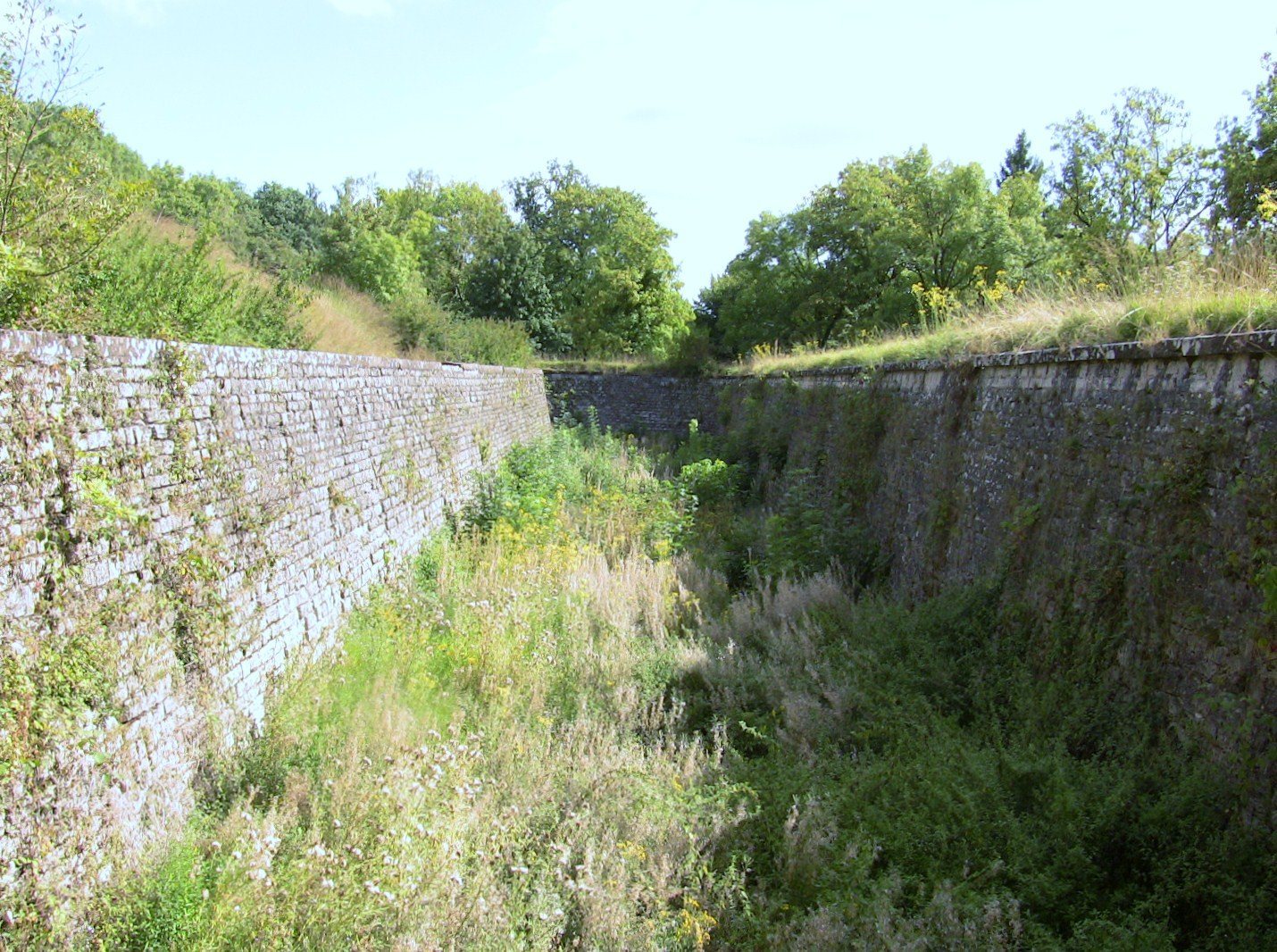
At an elevation of 365 metres, the fort stands north of the Bois de Chalezeule, overlooking the Thise plain and the approaching road and railway from Belfort. Most of the site lies in Chalezeule, while its entrance is in Besançon’s Palente district. Its ditches have masonry walls that remain in fairly good condition. A semi-detached escarp, the inner face of a ditch, provided a position for infantry, while paired caponiers, defensive works for firing along the ditch, formed part of the outer defenses.
Entrance and artillery works
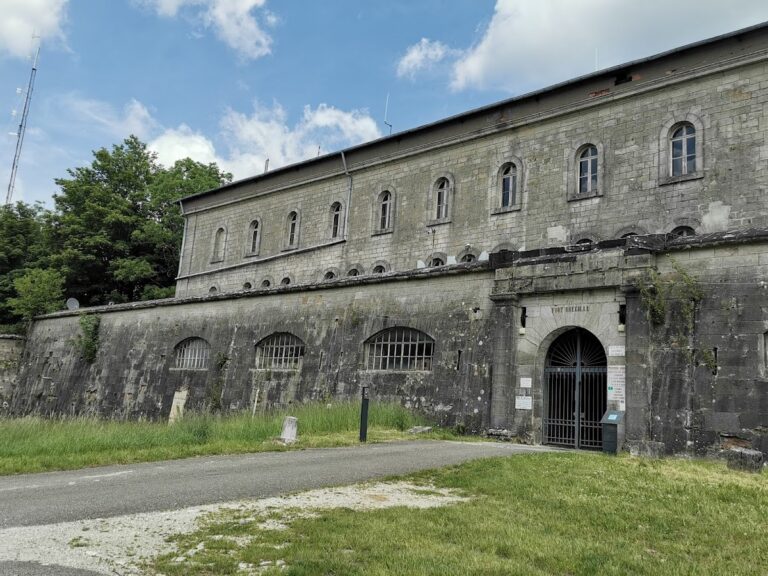
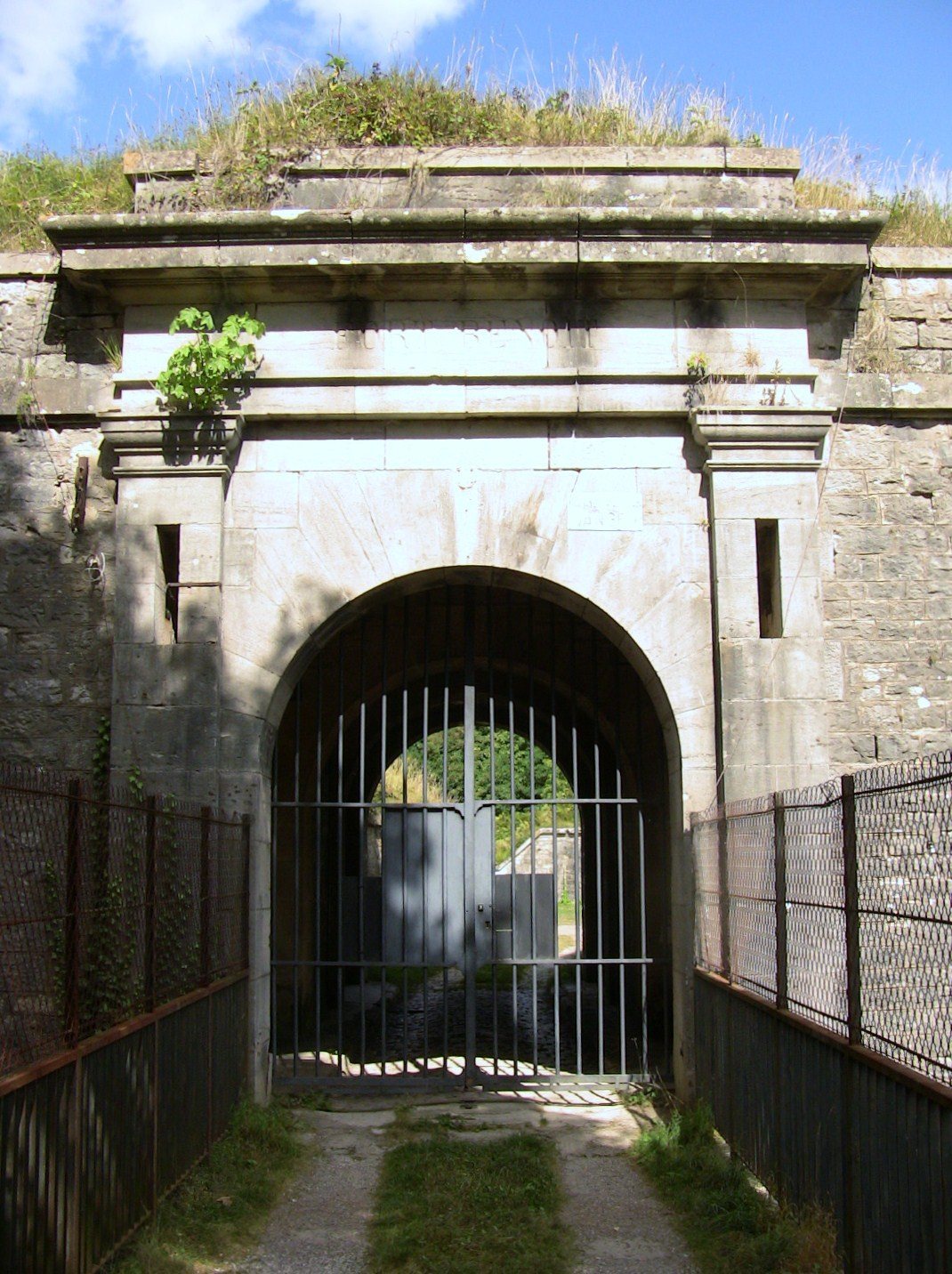
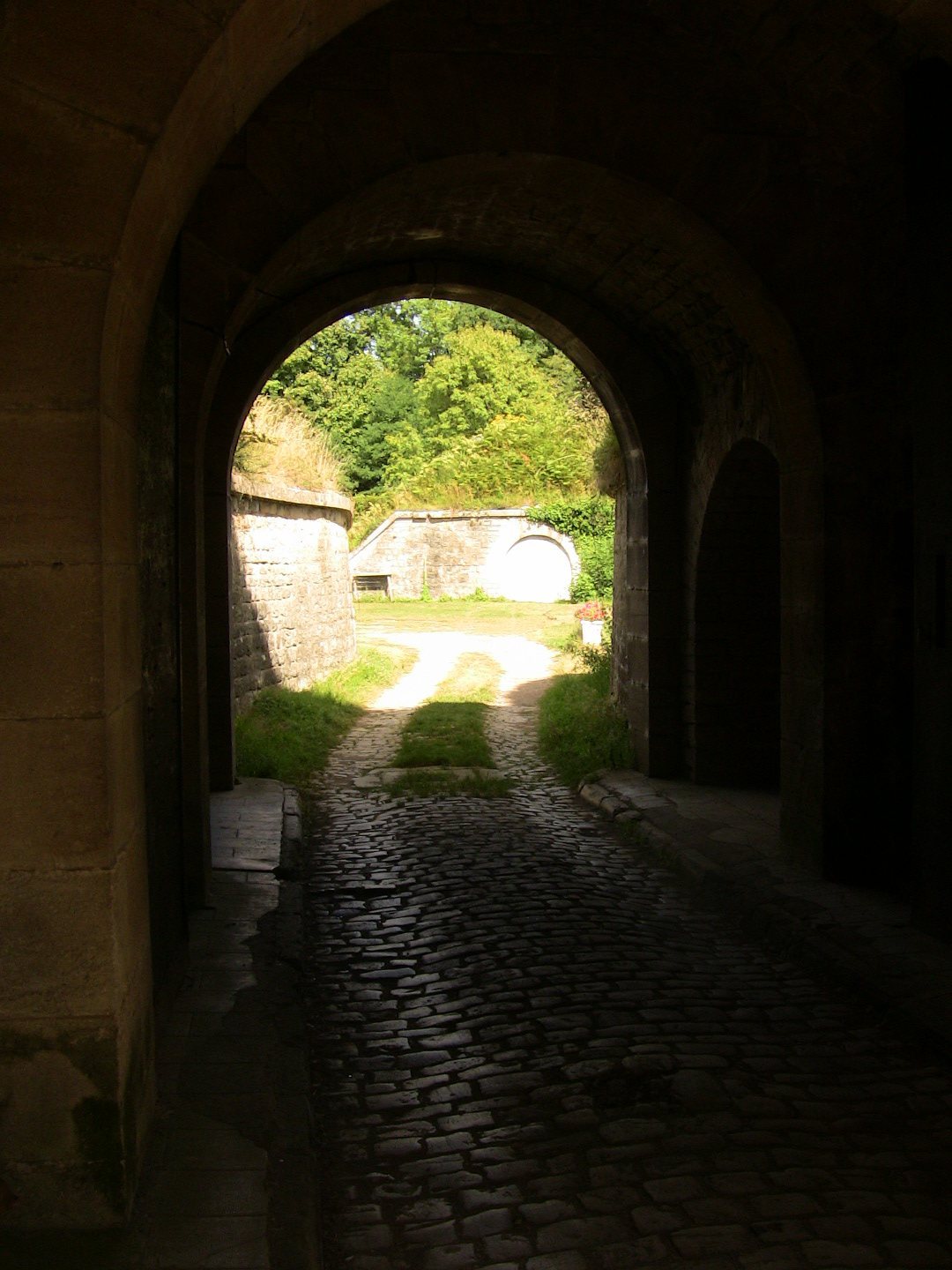
On the rear, or gorge, front, the barracks facade has the entrance portal to its right. A fixed bridge approaches the portal, replacing an earlier counterweighted drawbridge. The annex battery includes a shelter-traverse, an earthwork combined with a protective shelter.
Armament and condition
The fort initially carried 24 guns, including about a dozen mounted on the ramparts. The annex battery and the works for firing along the ditches had additional guns. Some masonry is at risk of collapse, and the interiors do not meet safety requirements.