Arch of the Sergii: A Roman Commemorative Monument in Pula
Site at a Glance
- Popularity
- High
- Country
- Croatia
- Primary era
- Classical
- Eras represented
- Classical
- Civilizations
- Roman
- Site type
- Civic
- Remains
- Arch
On this page8 sections
History
Roman commemoration
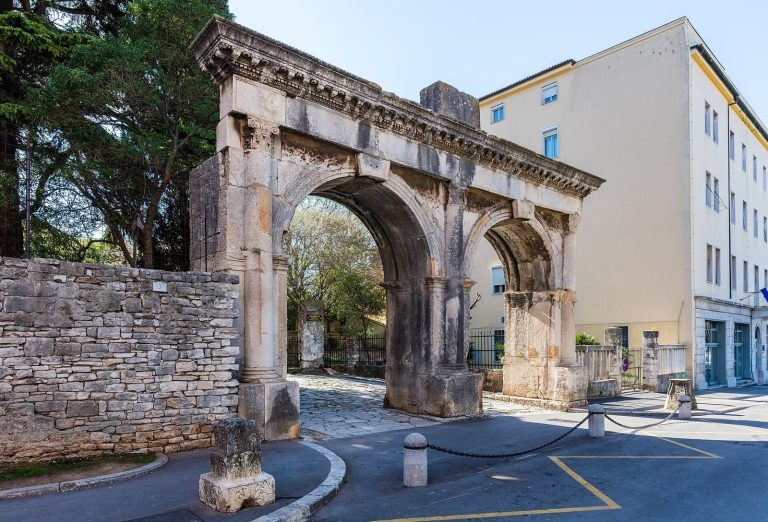
The Arch of the Sergii is a Roman commemorative monument in Pula, Croatia, generally dated to about 29–27 BC, although its precise construction date is uncertain. Erected after the Battle of Actium, the Roman naval victory in 31 BC that established Octavian’s supremacy, it honored three men of the Sergii family and celebrated the victory.
Salvia Postuma Sergia commissioned and financed the arch herself. Her relationship to Lucius Sergius Lepidus, one of the men commemorated, is uncertain: she may have been his wife or his mother. Lepidus was a military tribune, an officer in a Roman legion, and served in the Twenty-Ninth Legion. That legion fought at Actium and was disbanded in 27 BC, circumstances that support the arch’s approximate dating.
The monument was dedicated to Minerva, a Roman goddess associated with wisdom, crafts, and warfare, with the purpose of seeking her protection for the city. Salvia’s commission is considered an early example of female public benefaction, the funding of civic works or services. The deaths of her male relatives left her outside manus, the legal authority a husband held over his wife in certain forms of marriage, and able to control substantial family wealth. Augustan marriage legislation, the lex Julia de maritandis ordinibus, allowed upper-class women who had borne three or four children to dispose freely of inherited property.
The Sergii were influential officials in the Roman colony and remained prominent in Pula for centuries. In the 14th century, the Castropola family, then an important local family, traced its descent to them.
The gate and later reputation
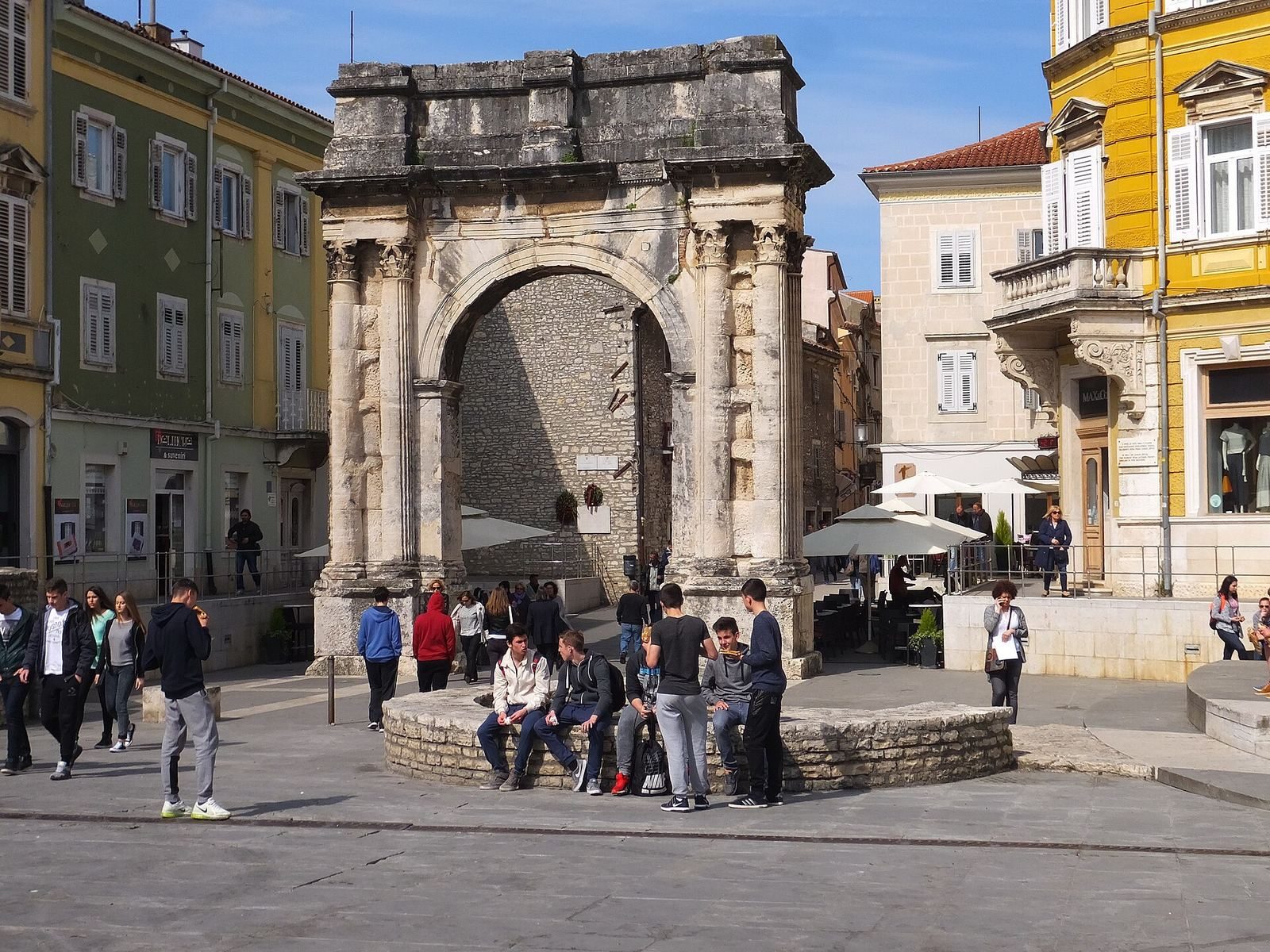
The arch stood at the Porta Aurea, or Golden Gate, the city’s main entrance. The Via Flavia, a Roman road, passed through the gate from Aquileia and Trieste toward the forum, the city’s central public space. The gate was demolished in 1829.
The monument later drew the attention of artists including Michelangelo and Giovanni Battista Piranesi. The Italian scholar Scipione Maffei proposed moving it to Venice for teaching purposes, and Austrian architect Peter von Nobile prepared a reconstruction project. The arch also influenced the main land entrance to the Venice Arsenal, built around the 1460s.
Remains
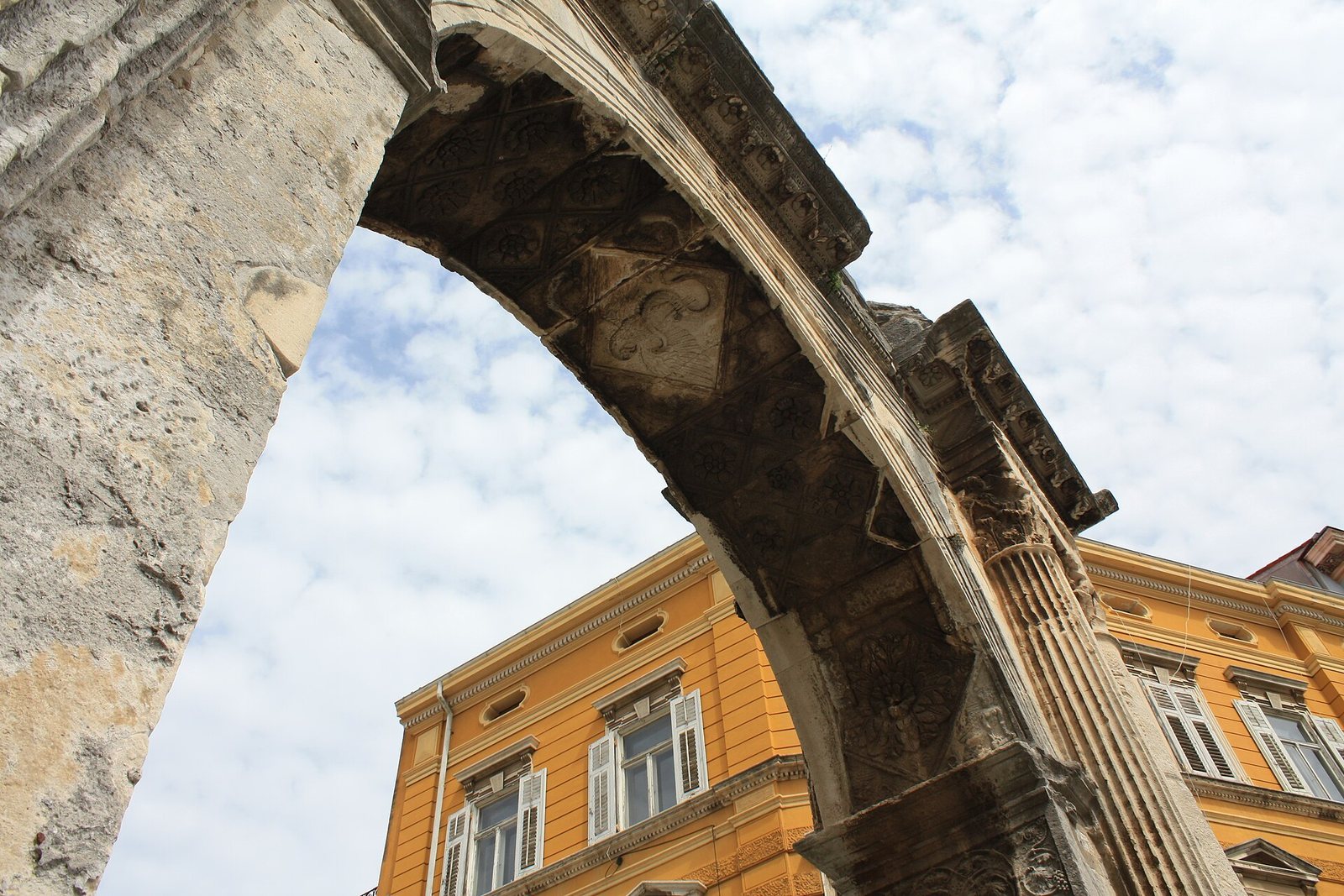
About eight metres high, the arch was built at the city gate. Its city-facing side was decorated, while the opposite side was plain. Paired columns in the Corinthian style, with foliage-decorated capitals, form part of its design, which combines late Hellenistic decoration, a Greek artistic tradition that continued after Alexander the Great’s conquests, with strong influences from Asia Minor.
Decoration and commemorative features
Arch and carved ornament
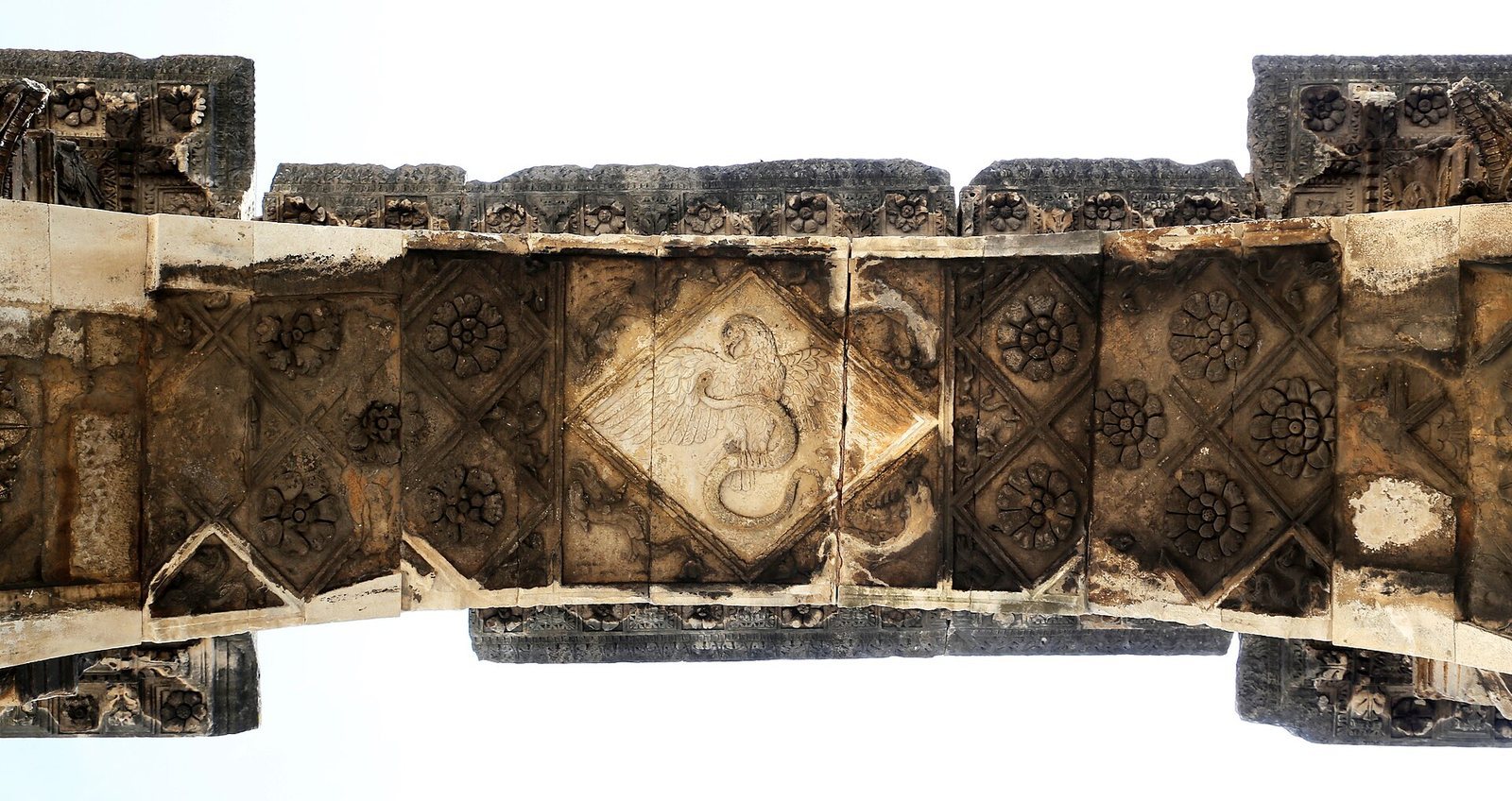
Winged figures personifying victory occupy the triangular spaces beside the arch’s curve. A shallow carving on the upper frieze shows a horse-drawn war chariot. Cupids, garlands, and ox-skull ornaments appear alongside the inscriptions, while chariots frame the inscriptions on the upper section of the monument.
Inscriptions and statues
The inscriptions name Salvia Postuma Sergia, Lucius Sergius Lepidus, and two other Sergii. They identify Lepidus as an aedile, a civic official, and a military tribune. One of the other men is named as an aedile and duovir, one of two leading municipal magistrates; the remaining man held those offices and the five-yearly form of the duovirate associated with conducting a census. An inscription on the frieze states that Salvia paid for the monument herself.
Traces on the monument’s upper section indicate that statues once stood there, representing Salvia and the three men. Lepidus occupied the centre and was larger than life-size, with the two older Sergii on either side. A fifth statue may also have been present, but its subject is unknown. One of the five inscription fields is blank. This feature prompted speculation about the arch’s asymmetry, particularly when it was thought to have held only four statues.
Possible symbolic imagery
The chariots may refer to Helios and Selene, figures associated with the sun and moon, and thereby suggest the beginning and end of life. An eagle may represent apotheosis, the elevation of a person as divine. The men commemorated on the arch were presented as local heroes.