Melek-Chesmenskiy Kurgan: A Fourth-Century BCE Burial Monument
Site at a Glance
- Popularity
- Medium
- Country
- Russia
- Primary era
- Classical
- Eras represented
- Classical
- Civilizations
- Bosporan Kingdom
- Site type
- Burial
- Remains
- Burial Mound
On this page7 sections
History
The Melek-Chesmenskiy kurgan is a fourth-century BCE burial monument in Russia, with architecture characteristic of the Bosporan Kingdom. This ancient state was centered on the Cimmerian Bosporus, the strait between the Black Sea and the Sea of Azov, and occupied the surrounding territory during the fourth and third centuries BCE. The mound takes its name from the nearby Melek-Chesme River, whose name translates from Tatar as “Angel’s Spring.”
Excavation and later history
On 13 December 1858, archaeological excavations led by the director of the Kerch Museum of Antiquities discovered the mound. The tomb had been plundered in antiquity, limiting the objects recovered. A tombstone was found in the mound’s northern part in June 1863.
Restoration work took place in 1871, after which the burial structure was opened for public viewing. The site is part of the Kerch Historical and Cultural Reserve. In October 2015, the Russian government designated it a cultural heritage site of federal significance; it is also designated an architectural monument of national significance in Ukraine.
Remains
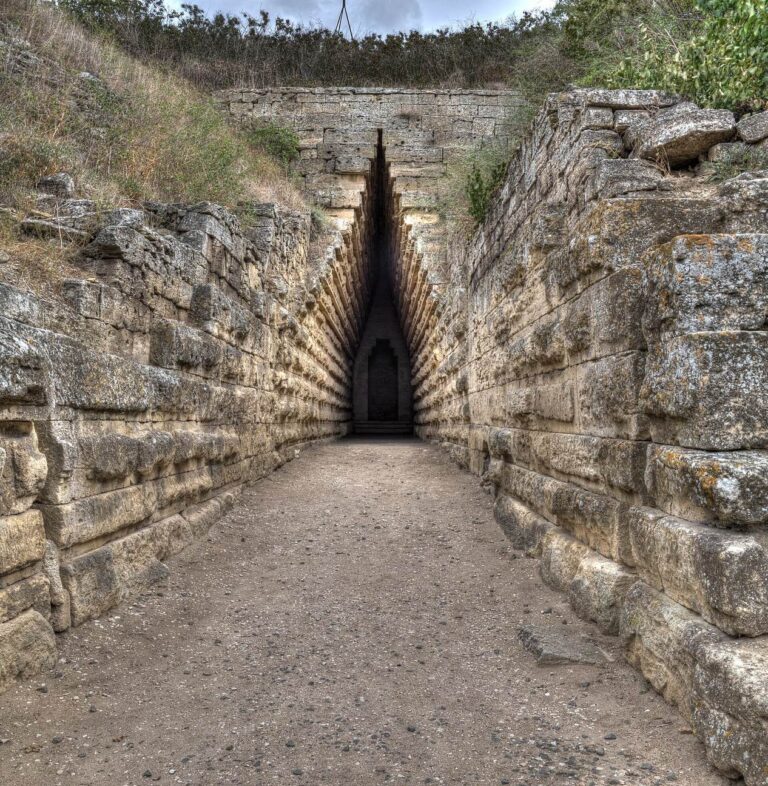
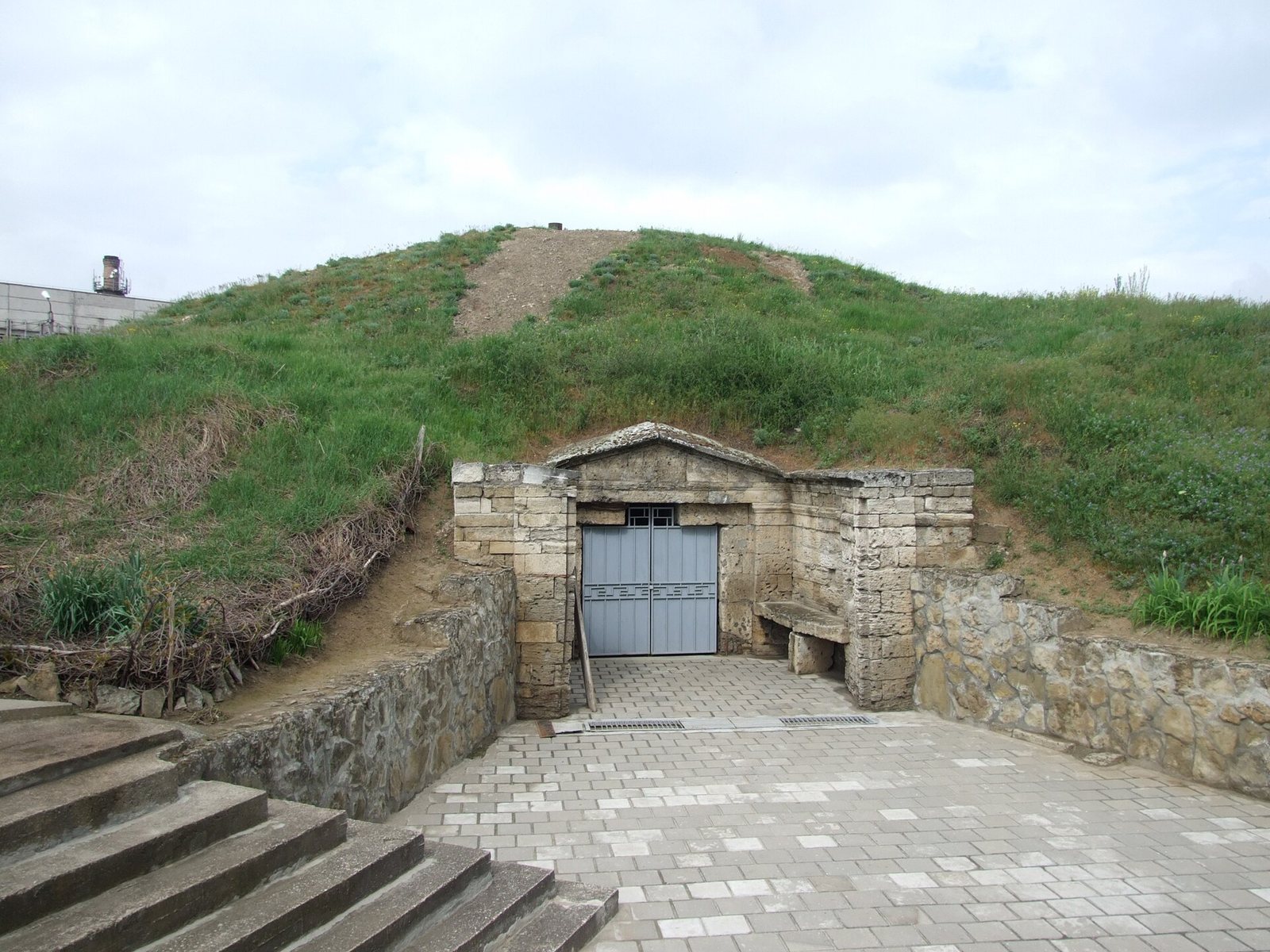
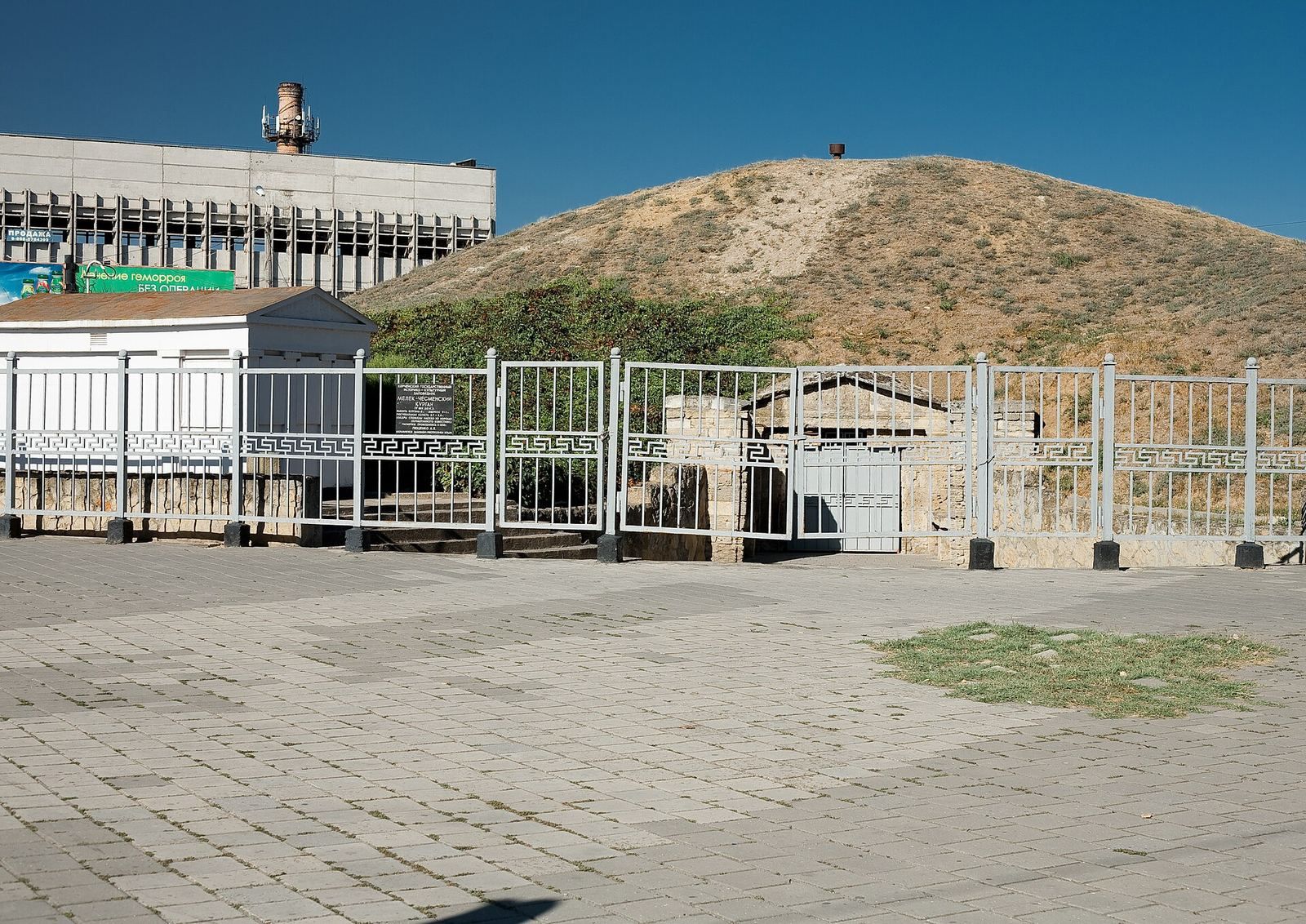
The monument consists of an earthen mound and a stone burial structure. Within the tomb, a square chamber connects to an entrance passage, with both built from stone slabs.
Mound and burial structure
Earthen mound
The mound measured 12 metres high when it was discovered and now stands 8 metres high. Its circumference is approximately 200 metres.
Stone chamber and entrance passage
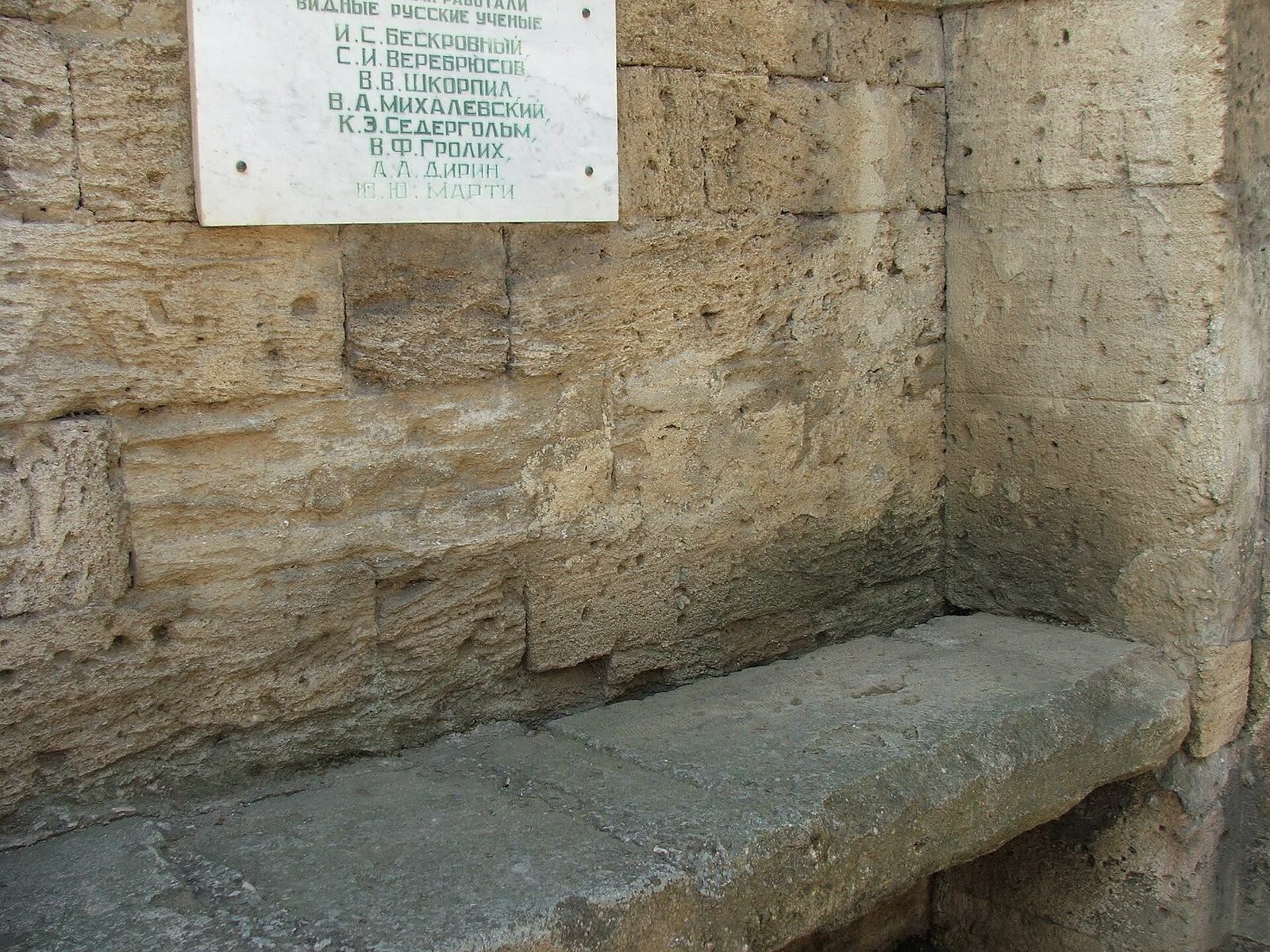
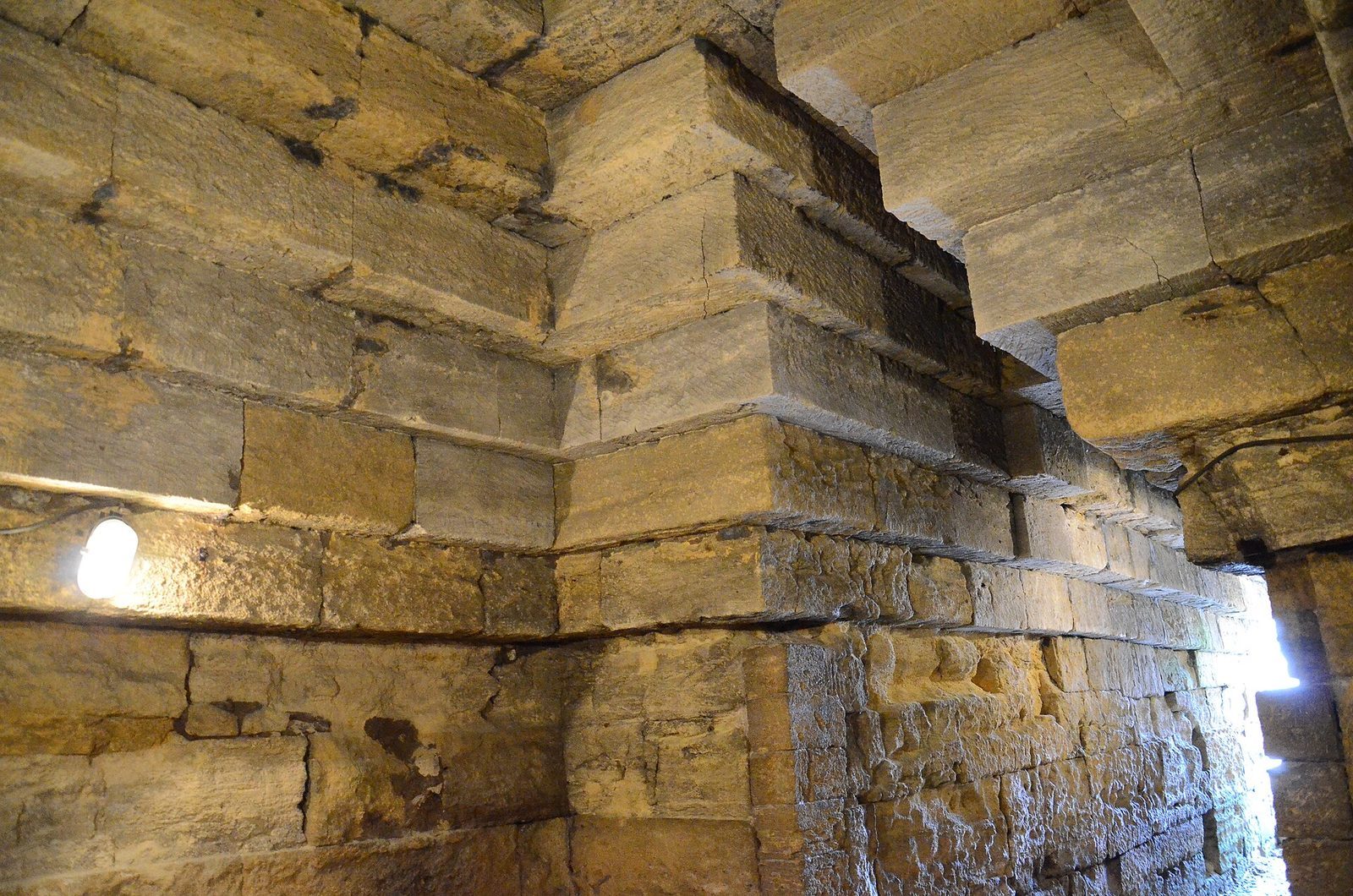
The chamber measures 3.7 by 3.7 metres. Its walls narrow inward toward the top, forming a pyramid-shaped ceiling capped by one stone slab. A passage leads into the chamber and ends beneath a pediment, the triangular feature above an entrance.
Burial finds and tombstone
Objects recovered from the plundered tomb include parts of a wooden sarcophagus, fragments of alabaster vessels, and a bronze bracelet. The tombstone found in the mound’s northern part dates to the first century BCE. Its relief depicts a woman, and its inscription identifies her as Ma and as a mother-in-law, then bids her farewell.