Porta Nomentana: A Roman Gate in the Aurelian Walls
Site at a Glance
- Popularity
- Medium
- Country
- Italy
- Primary era
- Classical
- Eras represented
- Classical, Early Modern
- Civilizations
- Papal States, Roman
- Site type
- Military
- Remains
- Gate
On this page9 sections
History
Porta Nomentana is a former Roman city gate in Rome, Italy, built between AD 270 and 273 under Emperor Aurelian, who ruled from AD 270 to 275. It formed part of the Aurelian Walls, Rome’s third-century defensive circuit. The gate served the Via Nomentana, the road to Nomentum, now Mentana. This route was less important than the Via Salaria, a difference reflected in the limited scale of later restoration.
Imperial construction and restoration
In AD 403, Emperor Honorius restored Porta Nomentana and nearby Porta Salaria. Marble from a tomb incorporated into Porta Nomentana’s left tower was used to cover the gate. Two small secondary passages, called posterns, toward the Castra Praetoria, the military camp of Rome’s Praetorian Guard, were also blocked.
Medieval tolls and names
In the fifth century, the Roman matron Vestina gave the Church of San Vitale, then under construction, a share of the gate’s toll revenue. From that century until at least the fifteenth, Rome’s gates were commonly leased or sold to private operators, who collected tolls from those passing through.
A notice issued in 1467 set out procedures for auctioning city gates on one-year terms. A record from 1474 gives Porta Nomentana’s lease price as 24 gold florins and 47 soldi, smaller Italian coins or units of account, for each six-month installment. The low price suggests that traffic was limited, though the lease could still be profitable. Toll charges varied according to the goods carried, and repeated proclamations and threats sought to curb abuses.
In the Middle Ages, the gate was also known as the Gate of Saint Agnes, an early Christian martyr, because it led to the Basilica of Sant’Agnese. Other names included Porta de Domina and Porta Domnae. During the Renaissance, scholars variously interpreted the woman suggested by these names as Cybele, a Roman mother goddess, the Virgin Mary, or Saint Agnes. The identity remained uncertain.
Papal changes and later excavation
In 1564, Pope Pius IV, pope from 1559 to 1565, altered Porta Nomentana into a two-arched entrance. That same year, Porta Pia took over as the access to the Via Nomentana. About a decade later, Porta Asinaria was closed and replaced by Porta San Giovanni.
Before Porta Nomentana was built, the area lay beyond Rome’s city centre and was sparsely settled, making it suitable for cemetery use. In 1827, the gate’s left tower was demolished to excavate the earlier tomb built into it.
Remains
Gate and towers
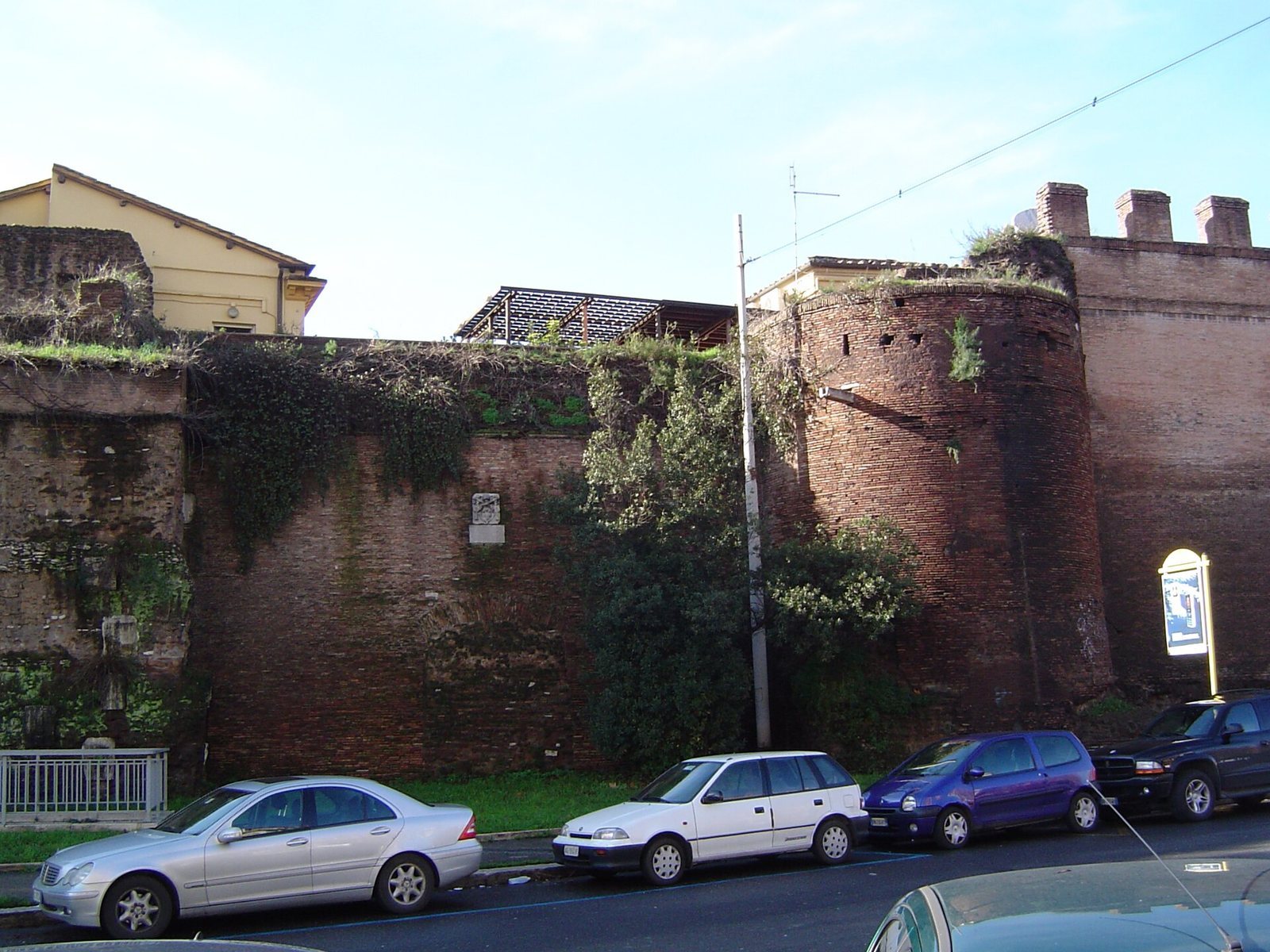
The blocked gate now forms part of the boundary wall of the British Embassy on Viale del Policlinico, about 70 to 100 metres southeast of Porta Pia. Its original entrance consisted of one arch between two semicircular towers. The gateway measures about 2.9 metres wide and 5.5 metres high; the raised modern street level makes it appear lower.
Entrance and surviving tower
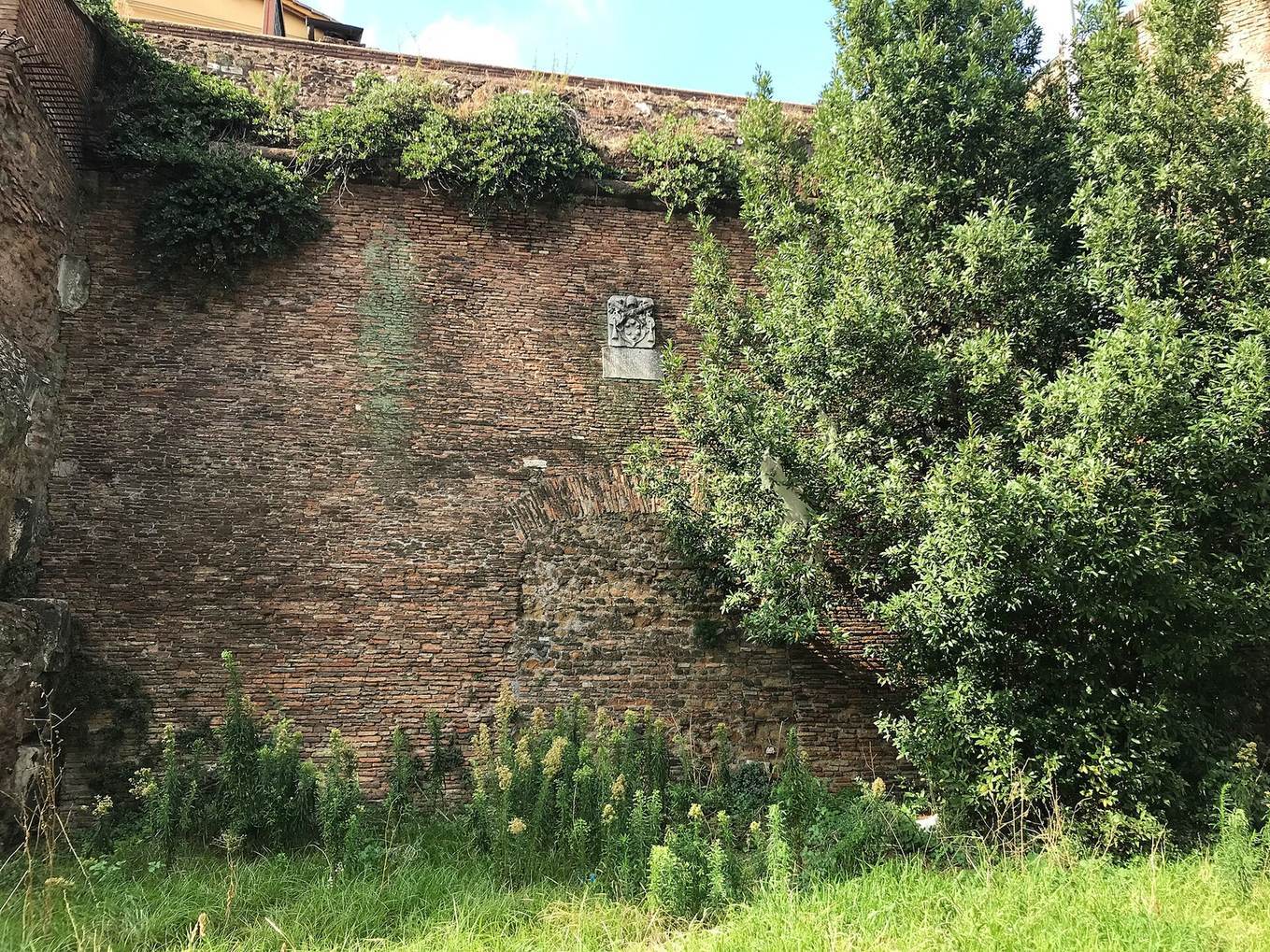
The right-hand tower survives and has a square base. Brick jambs and archwork remain, with papal arms above the arch from the sixteenth-century phase. Brickwork in the jambs is unusual among the gates of the Aurelian Walls, and the surviving structure retains much of the gate’s earlier appearance.
Tomb within the former left tower
The demolished left tower had enclosed a tomb dating to the first half of the first century AD. It is thought to have belonged to Quintus Haterius, a Roman orator at the court of Tiberius, Rome’s second emperor. The historian Tacitus described Haterius as an old man compromised by shameful flattery and noted that he was the first to speak against Tiberius’s feigned refusal of the imperial crown.
Road and secondary passages
The Via Nomentana passed through the gate toward Nomentum. Its route began at Porta Collina in Rome’s early Servian Walls, traditionally associated with King Servius Tullius, and joined the present Via Nomentana near Villa Torlonia. Two smaller passages lay nearby in the direction of the Castra Praetoria.