Rock Art Natural Reserve of Ceto, Cimbergo and Paspardo: A Protected Engraving Landscape
Site at a Glance
- Popularity
- Low
- Country
- Italy
- Primary era
- Bronze Age
- Eras represented
- Stone Age, Bronze Age, Iron Age, Classical, Medieval, Early Modern, Modern
- Civilizations
- Venetian
- Site type
- Civic
- Remains
- Rock Art
On this page12 sections
History
The Rock Art Natural Reserve of Ceto, Cimbergo and Paspardo is a protected landscape in Italy whose engraved surfaces date from the fifth millennium BCE through the modern period, including the twentieth century. Its carvings form part of Rock Drawings in Valcamonica, inscribed on the UNESCO World Heritage List in 1979, an international designation for places recognized as having outstanding universal value.
Rock art and its chronology
The engravings were identified in 1975. Particularly notable are Bronze Age carvings, especially those dating to the second millennium BCE, and images from a period of Etruscan influence. The Bronze Age is one of several successive archaeological periods distinguished partly by tools and material culture; Etruscan influence refers to cultural influence from an ancient people of central Italy.
Protection and governance
The area received biotope status, recognizing it as a distinct natural habitat, in 1977. After a proposal by the three municipalities it spans, it became a regional protected area in 1988. A revised statute in 2011 replaced its managing consortium with a public-law entity.
The reserve is administered by a Reserve Community made up of the three mayors or their delegates. A five-member Management Council, including a representative of the Lombardy Region, is responsible for ordinary administration.
Remains
Landscape and layout
The reserve covers about 290 hectares on the eastern slope of middle Val Camonica. Mostly wooded, it includes Turkey oak, linden and maple, as well as chestnut groves and woodland of birch and hazel. Introduced species have largely replaced the area’s naturally occurring vegetation. Dirt paths and roads used for agriculture, forestry and pastoral activity cross the reserve.
At least 420 engraved rock surfaces are found across its principal rock-art areas: Foppe di Nadro in Ceto, Campanine in Cimbergo, and Plas, In Vall and Sottolaiolo in Paspardo.
Engraved rock areas
Foppe di Nadro
At Foppe di Nadro, rock 24 bears a Camunian rose, a motif associated with the region’s rock art, and a figure captioned “astronaut.” Rock 4 carries engravings of Remedello-type daggers, a recognized prehistoric form, while rock 5 depicts a bird of prey. Rock 6 combines several scenes and images: a mating scene, huts, a horseman and horse in Golasecca style, an ancient artistic style associated with a culture of northern Italy, an inscription in the Camunian alphabet, an ancient script, and scenes of boxing and a duel.
Campanine
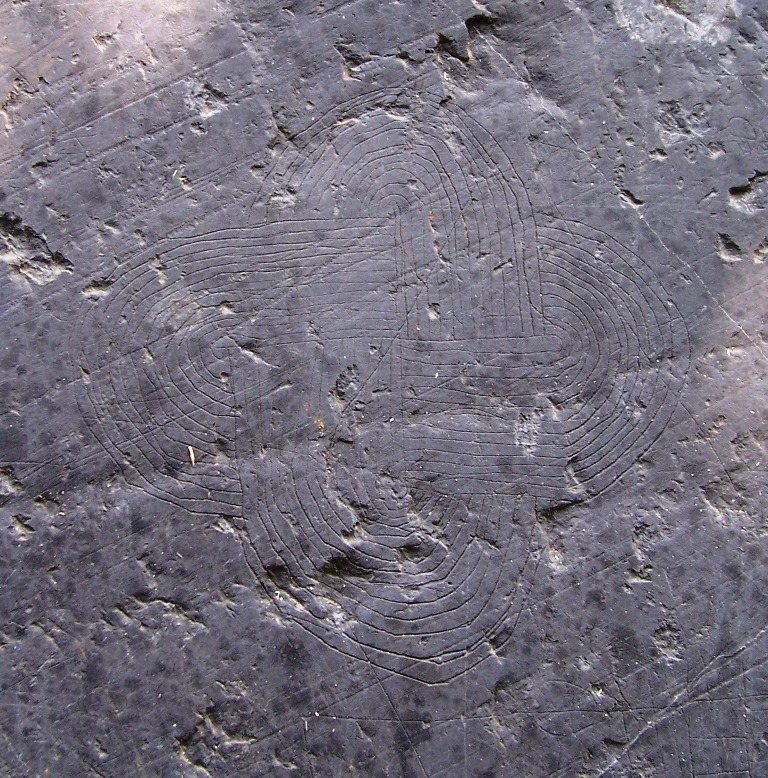
At Campanine, rock 6 bears a human figure holding keys alongside a Solomon’s knot.
Paspardo
The Paspardo rock-art areas include Plas, In Vall and Sottolaiolo. At Plas, rock 1 is identified as the “Two Pines Capital.”
Reconstructed and educational features
Prehistoric village
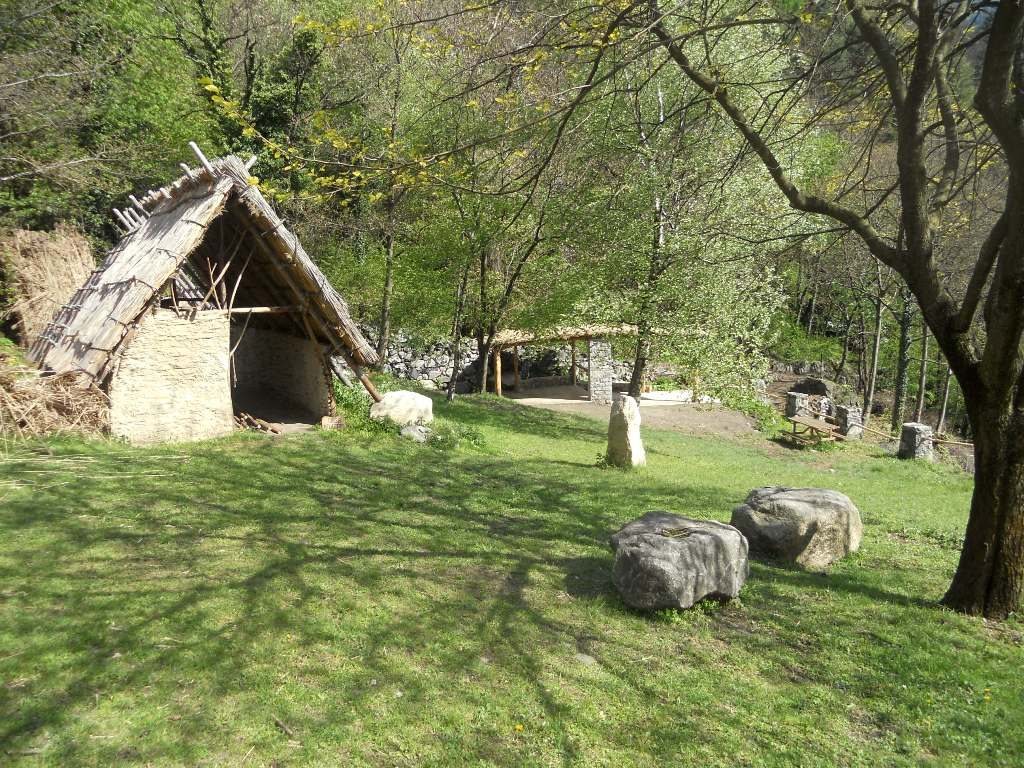
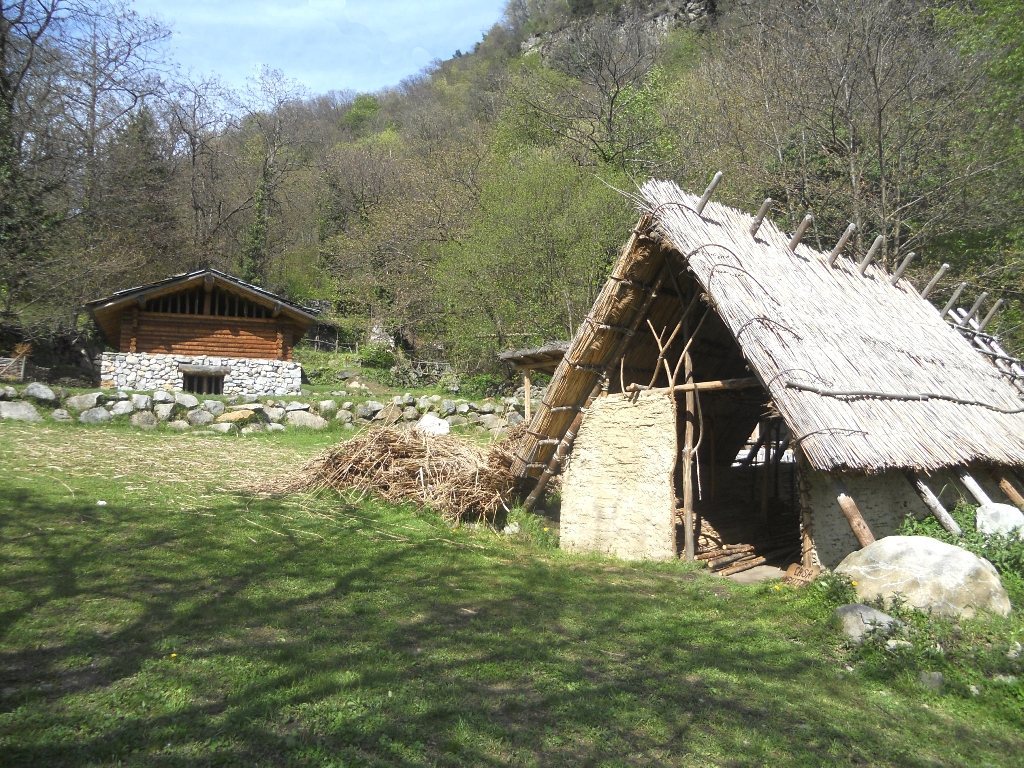
Foppe di Nadro also contains a reconstructed prehistoric village with a Mesolithic shelter, a Neolithic hut and an Alpine dwelling from the Iron Age. These are successive archaeological periods identified in part through changes in tools and material culture.
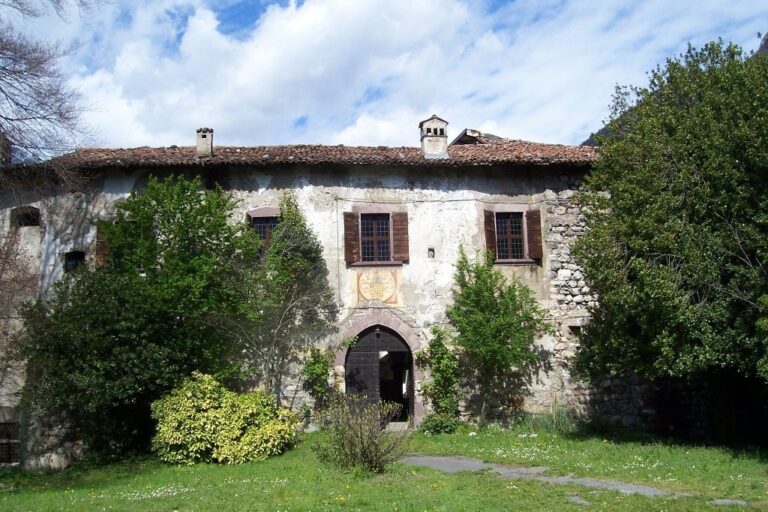
Museum at Nadro
In the hamlet of Nadro, Ceto, an educational museum occupies a complex dating to the sixteenth century. Its exhibition rooms contain reconstructions, panels and book collections devoted to the rock art of Val Camonica.