Tabuk Castle: An Ottoman Fortress on the Hajj Route
Site at a Glance
- Popularity
- High
- Country
- Saudi Arabia
- Primary era
- Early Modern
- Eras represented
- Early Modern, Modern
- Civilizations
- Ottoman
- Site type
- Military
- Remains
- Fort
On this page8 sections
History
Ottoman foundation and pilgrimage route
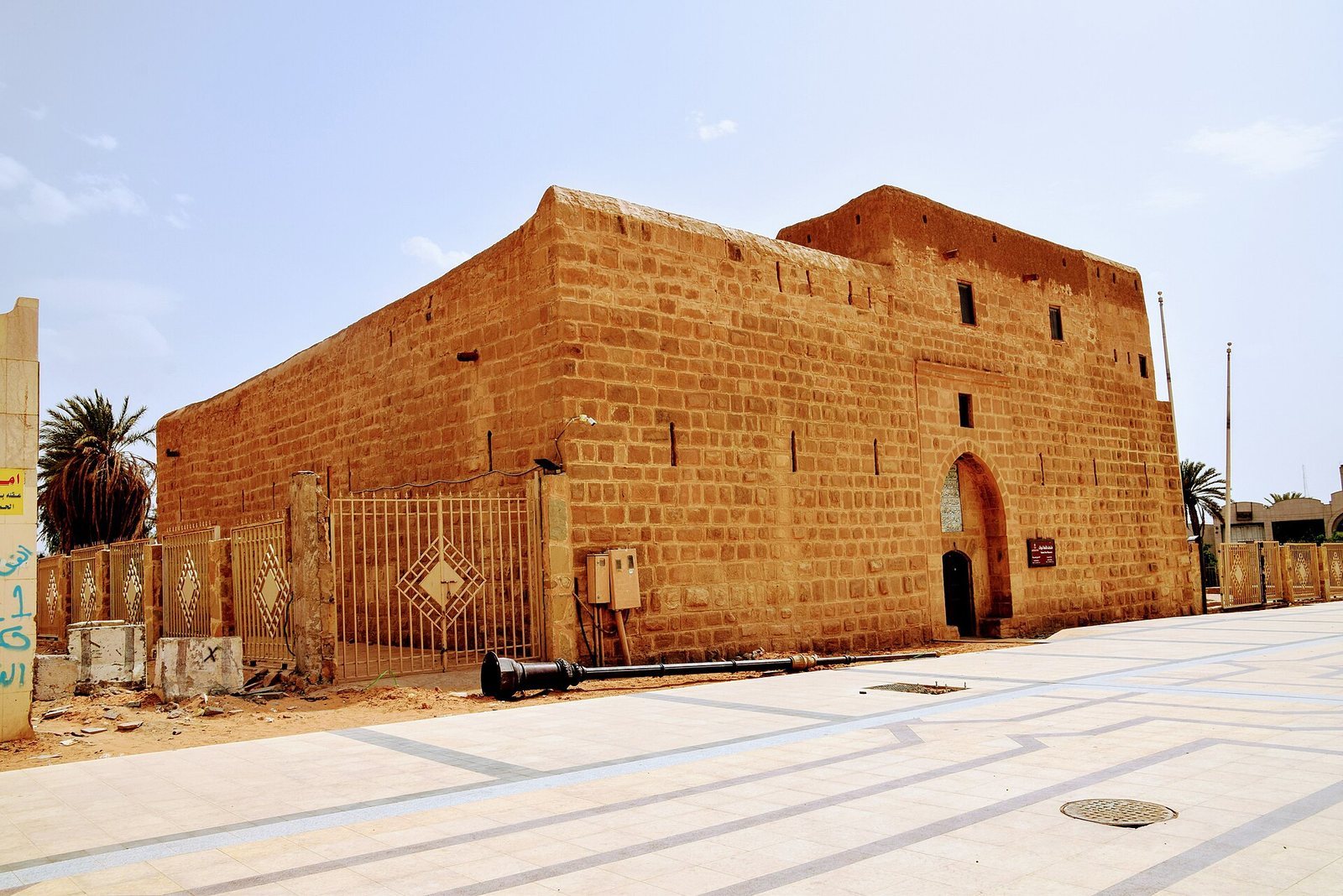
Tabuk Castle is an Ottoman fortress in Saudi Arabia, built in 1559 as a station on the route linking the Levant with the Hijaz and Medina. It protected a water supply and served as a security and observation post. The castle formed part of the Syrian Hajj route, which ran from the Hala Ammar Center in Tabuk to Medina. The Hajj is the pilgrimage to Mecca required of Muslims able to undertake it. Ottoman authorities administered the route, where fortified stations helped safeguard access to water.
Repairs and the water pools
The castle was restored during the reign of Sultan Mehmed IV, who ruled from 1648 to 1687. In 1844, during Sultan Abdülmecid I’s reign, it underwent a full renovation. A commemorative inscription was placed in the mosque’s mihrab, the prayer niche indicating the direction of Mecca.
Pools around the castle drew water from a spring called Ayn al-Sukkar. The earliest construction associated with the spring is attributed to the period of Umar ibn al-Khattab, the second caliph of Islam, who ruled from 634 to 644. The pool may later have been renewed and enlarged. By the early period of Mamluk rule, two pools near the castle were noted; both were repaired during the Ottoman period. The larger pool was rebuilt in 1901, during the reign of Sultan Abdülhamid II.
Modern restoration and use
The castle was renovated in 1950 and comprehensively restored in 1992 by the Antiquities and Museums Agency of the former Ministry of Education. It is now used as a museum, and the Ministry of Tourism is responsible for its preservation as a cultural and historical site.
Remains
Courtyard and rooms
The two-story fortress is arranged around an open courtyard. On the ground floor, eight rooms open onto the courtyard from its northern and southern sides; this level also contains a mosque, a well, and stairs to the upper floor. Above the lower mosque on the southern side is an open-air mosque. The upper level also has twelve rooms along its northern and western sides. Three stairways lead to the upper parts of the castle: two reach towers at the northwest and southwest, while the third leads to an open area above.
Towers and defenses
The northwestern and southwestern towers are built of mud brick and served as guard and observation posts. They also held cannons, which were fired to celebrate pilgrims’ arrival. Loopholes for archers run around the castle’s sides, reflecting its defensive function.
Entrance and water features
Decorative ceramic tiles added during restoration under Mehmed IV survive at the entrance. On the western side, a stone spout facing the courtyard carried water off the upper floor. The castle also has a well, while pools supplied by Ayn al-Sukkar lay around it, including the larger pool rebuilt in 1901.