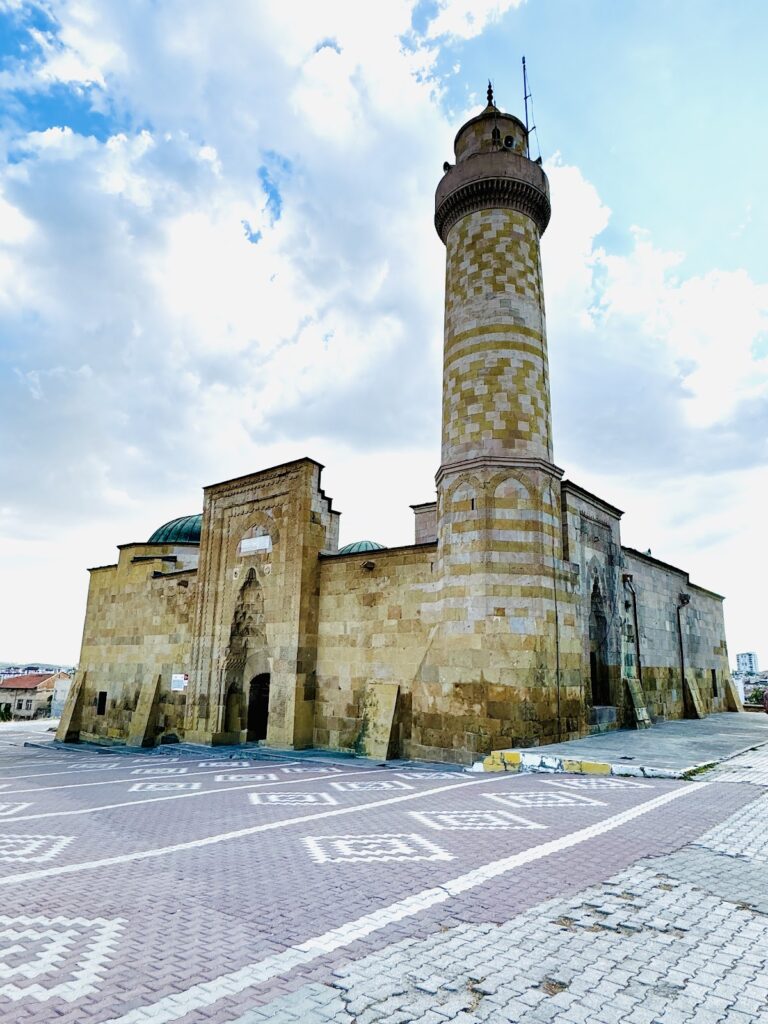
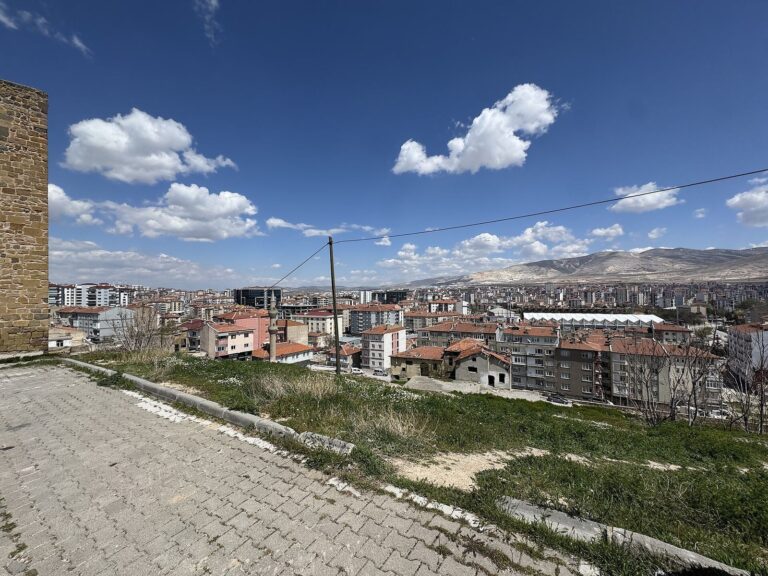
Tunna: An Ancient Anatolian Settlement and Hittite Cult Site
Site at a Glance
- Popularity
- Low
- Country
- Turkey
- Primary era
- Iron Age
- Eras represented
- Bronze Age, Iron Age, Classical
- Civilizations
- Achaemenid, Hittite
- Site type
- City
On this page9 sections
History
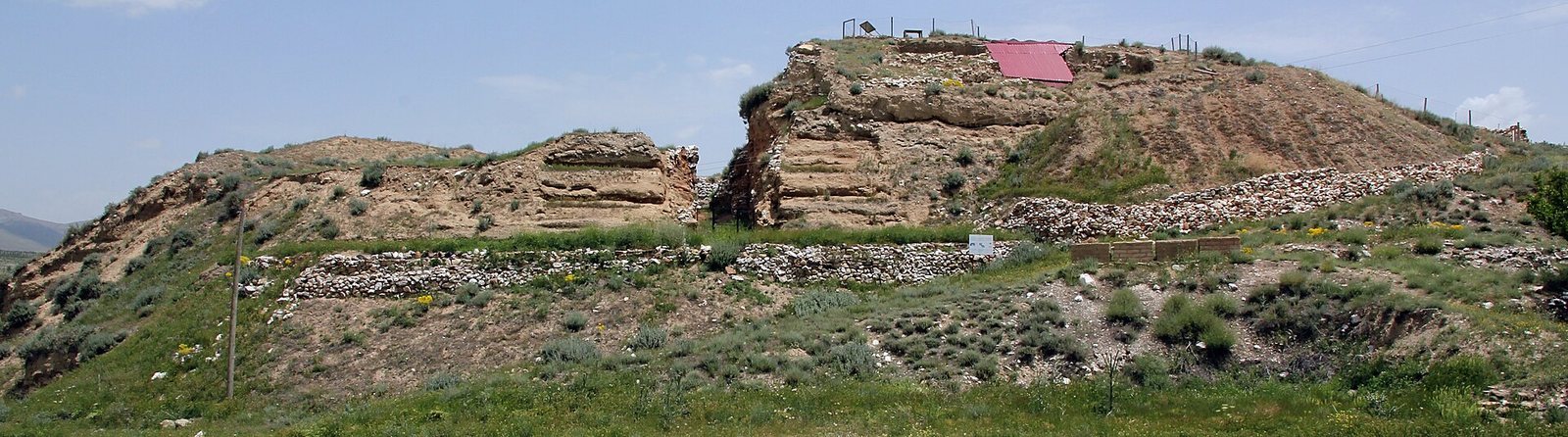
Tunna, an ancient settlement in Turkey, is tentatively identified with Porsuk Höyük, also called Zeyve Höyük, near Ulukışla in Niğde Province. Settlement began around 1600 BCE, and its origins may lie in the Hittite Old Kingdom, perhaps with a foundation by sons of the Hittite king Ḫattušili I. Six archaeological phases trace intermittent occupation from the Hittite era to Roman times, around the third century CE. Ancient records also call the settlement Dunna, while Greek and Roman writers used the name Tynna.
Hittite settlement and religious life
From the reign of the Hittite king Šuppiluliuma I, treaties identify Tunna as a cult site of Ḫallara, the leading goddess of its local pantheon. The same texts place it in Tarḫuntašša and the Ḫūlaya River Land, Hittite territorial regions. They also associate the area with Tarḫuntaš, a storm god, in a particular form called piḫaššaššiš, possibly meaning “Tarḫuntaš of Lightning.” A Hittite list groups Tunna with Ḫupišna and Zallara, and a Chief of the Cooks, a Hittite administrative official, was responsible for the settlement’s cult inventory.
Tunna lay on a route between the Anatolian Plateau and the Syro-Mesopotamian region, close to the Cilician Gates, a mountain pass linking Anatolia with Cilicia. A route between Tarsus and the Cilician coastal plain was in use by at least the second millennium BCE. Tunna is also listed as a place where people spoke Luwian and practiced Luwian religion. The Hittite magician Tunnawi may have come from the settlement, although this is uncertain; her name has been interpreted either as “woman from Tunna” or as “the mountain-god Tunna has sent her.”
Destruction and Iron Age rulers
A fire destroyed the settlement during the Late Bronze Age. After an interval of uncertain length, people resettled the mound in the Neo-Hittite period, when Iron Age kingdoms continued Hittite traditions after the fall of the Hittite Empire. An early Iron Age settlement was built directly over a Hittite settlement dating to the thirteenth century BCE. This sequence has led to the suggestion that the new settlers were responsible for the earlier settlement’s destruction.
In 837 BCE, Tunna was destroyed during a campaign by Shalmaneser III, king of the Neo-Assyrian Empire, in the Tabalian region. During the campaign, Shalmaneser visited a “silver mountain” called Tunni, which may have been Tunna, although the identification is uncertain. Tunna has also been tentatively equated with Tuna, a country named on lead strips from Tabal.
By the eighth century BCE, Tunna was a small Tabalian city-state under the authority of Warpalawas II, king of Tuwana. At Bulgarmaden, Tunna’s king Tarḫunazzas recorded that Warpalawas had granted him Mount Mudis in return for his service. Mudis was a rocky outcrop in the Taurus Mountains near the Cilician Gates. It may have been Mount Mulî, the “alabaster mountain” climbed and quarried by Shalmaneser III in 837 BCE. Mulî is the Akkadian form of the Luwian name Mudis, reflecting a change in pronunciation from “d” to “l.” The names Tunni and Mulî are associated with the northeastern end of the Bolkar and Taurus Mountains, near the silver mines of Bulgarmaden and the gypsum mine at Porsuk.
Another possible ruler of Tunna was Masauraḫissas, who may have been a vassal of Tuwana’s kings and ruled in the middle or later eighth century BCE. He is known through an inscription by his general Parḫwiras. His name may be a Luwian form of the Phrygian name Masa Urgitos.
Tunna has been proposed as the capital of Atuna, but that identification is considered unlikely. Atuna probably lay farther north, around Bohça, north of Šinuḫtu and west of Tabal. The territory around Tunna may instead have corresponded to Upper and Lower Tunnas, named in a Tabalian economic inventory concerning the transfer of goods.
Hellenistic and Roman periods
During the Hellenistic period, which followed Alexander the Great’s conquests and spread Greek culture across much of the eastern Mediterranean and Near East, Tunna became known as Tynna. The Greek-Egyptian geographer Ptolemy included it in his account of the ancient world. The settlement lay near Faustinopolis and remained inhabited in Roman times. A coin depicting Archelaus, king of Cappadocia, indicates that the Roman-period occupation level dates at least to the final quarter of the first century BCE.
Identification and excavation
William Mitchell Ramsay first mentioned the site in 1891 and published a description in 1903. Robert Forrer proposed in 1926 that the mound was ancient Tunna, an identification that remains tentative. J. Mellaart also identified the mound. Archaeological work took place in fifteen campaigns between 1968 and 2002, first under Olivier Pelon and later under Dominique Beyer; excavations resumed in 1985.
Remains
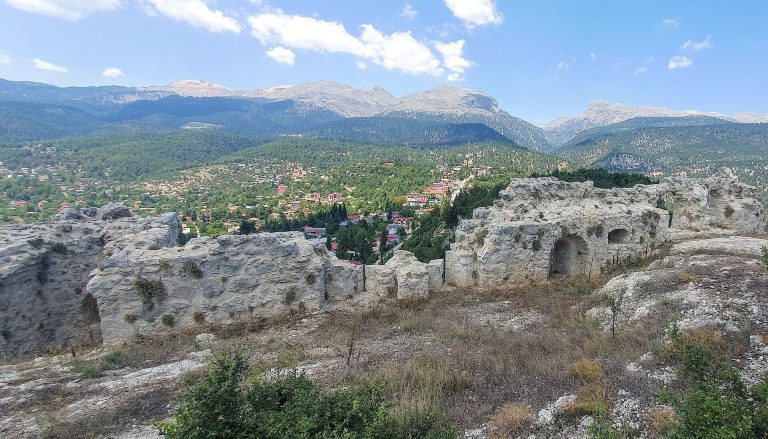
Mound and Iron Age settlement
The mound stands between two rivers at the foothills of the Taurus Mountains, close to the Cilician Gates. It has a table-like form, measures about 200 metres across and 450 metres long, and contains roughly eight metres of archaeological deposits. Iron Age levels III and IV were enclosed by a substantial defensive wall. Pottery from these levels is closely associated with the Cilician Iron Age, while imported examples include Phrygian, southwestern Anatolian, and Rhodian wares.
Inscription and dating evidence
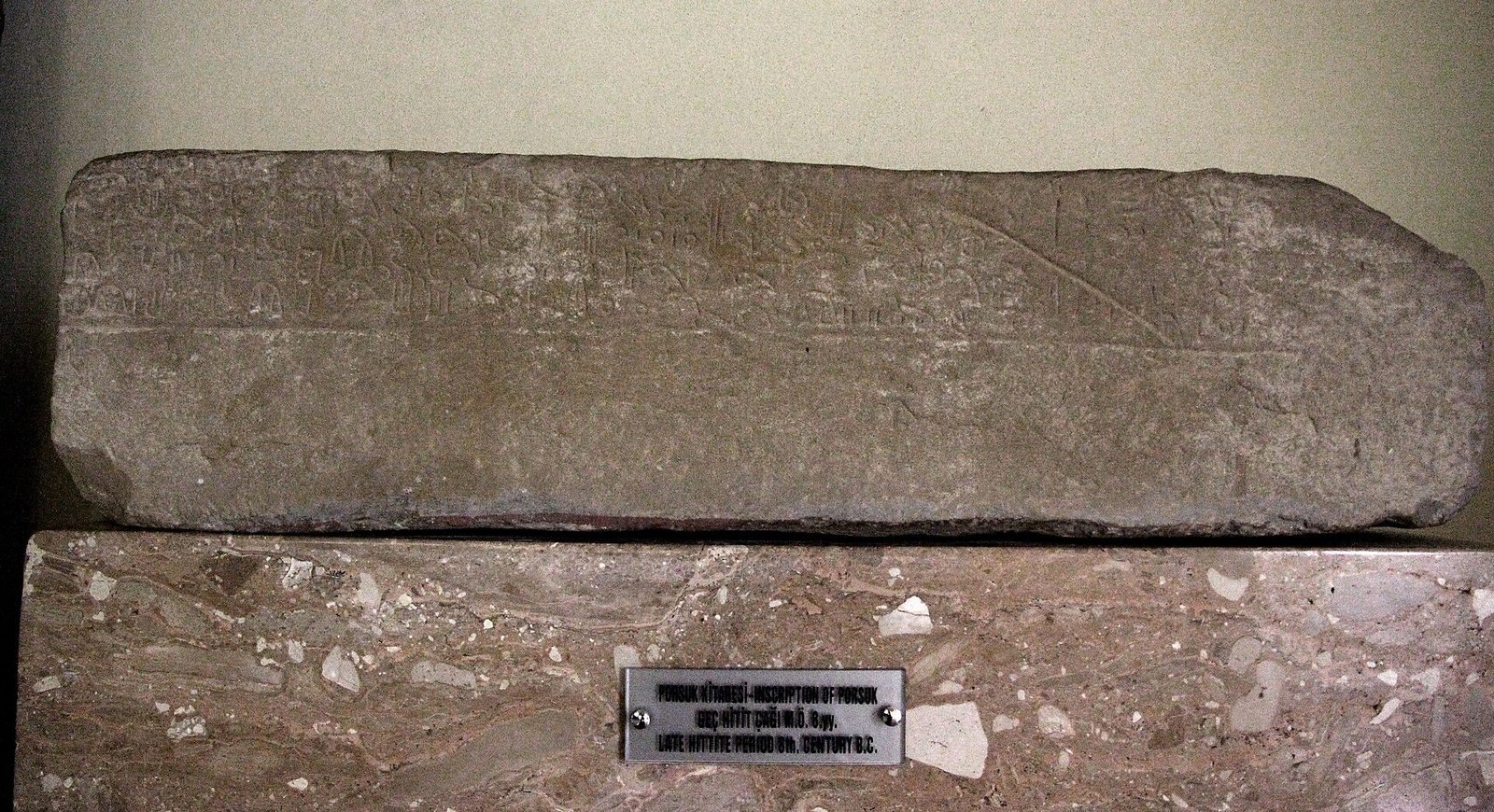
A Hittite hieroglyphic inscription from the eighth century BCE prompted archaeological excavations at the site. It is now held in the Niğde Archaeological Museum. A coin bearing the image of Archelaus of Cappadocia, a king of Cappadocia, helps date the Roman-period occupation level.
Cemetery and enclosure
A cemetery, probably Christian and dating to Late Antiquity, was built over the earlier settlement. An enclosure uncovered in 2022 is thought to date to the Achaemenid period, under the Persian dynasty of that name. If this dating is confirmed, Porsuk would be one of three Anatolian sites with evidence of Persian presence, alongside Dascylion and Gordion.