Falkenštejn Castle: A Medieval Rock Castle in Czechia
Site at a Glance
- Rating
- 4.7
- Popularity
- Medium
- Country
- Czechia
- Primary era
- Medieval
- External website
- Open
- Eras represented
- Medieval
- Civilizations
- Holy Roman Empire, Kingdom of Bohemia
- Site type
- Military
- Remains
- Castle
On this page12 sections
History
Origins and the Michalovci
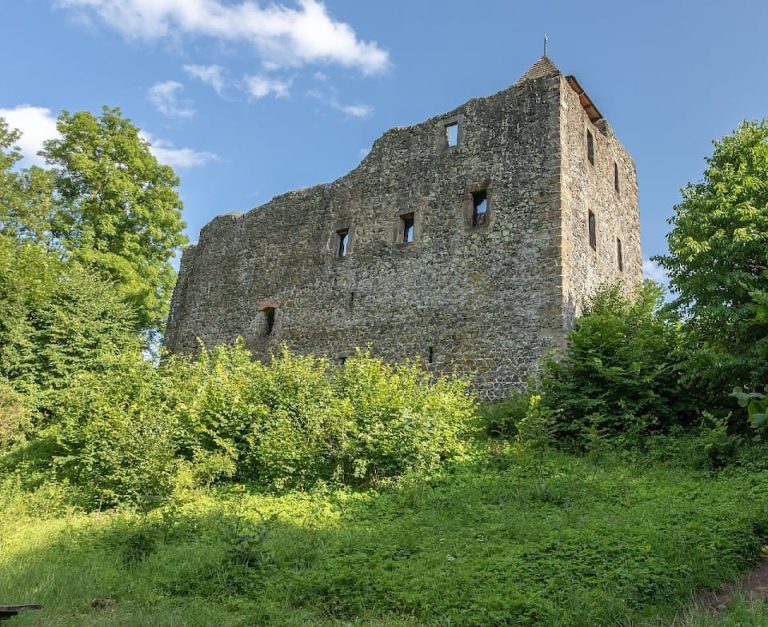
Falkenštejn Castle is a medieval rock castle in Czechia near Jetřichovice, in the Děčín district of the Bohemian Switzerland region. The castle was built in the first half of the fourteenth century, although its builder is unknown. The surrounding northern part of the Kingdom of Bohemia had been colonized during the twelfth and thirteenth centuries by the Michalovci, a medieval noble family involved in the administration of northern Bohemia.
Archaeological evidence places the use of the sandstone rock by the late thirteenth or early fourteenth century. The first written reference to Falkenštejn dates from 1395, when Nice Hokacker served as its captain under Jan III of Michalovice. Burgrave Mikeš Blejketa may also have used the castle as a base for raiding during the thirteenth or fourteenth century.
The Berka and Vartenberk lordships
From 1406, Falkenštejn belonged to Hynek Berka of Dubá and later passed to his sons, Jan Berka of Dubá and Jindřich Berka of Dubá. In 1423, the castle served as Jan’s seat, while Jindřich later resided there. Jindřich also took part in raids into Lusatia, the historic region east of Bohemia that included Upper Lusatian towns.
From about 1420, members of the garrison were active as raiders. During the Hussite Wars, the religious and political conflicts in Bohemia that followed the death of Jan Hus in 1415, Falkenštejn served as a base for expeditions into Lusatia. Traditions associate the castle with raids in 1427 and 1430.
In 1428, the Kamenice estate, which included Falkenštejn, was purchased by Zikmund Děčínský of Vartenberk. The Vartenberks, another medieval noble house active in northern Bohemia, did not live at the castle but maintained a garrison there during the Hussite Wars. They used Česká Kamenice as their principal seat rather than rebuilding Falkenštejn. The nearby rock castle of Schauenstein may also have taken over some of Falkenštejn’s former functions.
Destruction and abandonment
The castle’s final destruction cannot be dated with certainty. One interpretation places it during the Hussite Wars, followed by abandonment and gradual decay. Another records a siege and destruction by the Upper Lusatian League of Six Cities in 1444. Falkenštejn was not rebuilt after these events.
The castle was still mentioned in connection with inheritance claims in 1457 and 1460, the last recorded references to it. After abandonment, the rock was used as a fire-watch post.
Romantic revival and conservation
During the nineteenth-century Romantic movement and the development of Bohemian Switzerland as a tourist region, Falkenštejn was rediscovered as an excursion destination. Access to the castle rock was improved through the initiative of Princess Wilhelmine Kinsky, and the ruins became popular. Cultural events were held among the remains, with beer and souvenirs sold there. One such event is documented in 1863, while a less certain tradition places folk entertainments at the site as early as 1830.
Falkenštejn has been protected as a cultural monument in Czechia since 1966. In autumn 2017, its access infrastructure was renewed in response to severe foot erosion in the soft sandstone. The works, completed in 2018, were intended to protect the surviving castle remains and living natural features.
Remains
Outer defenses and approach
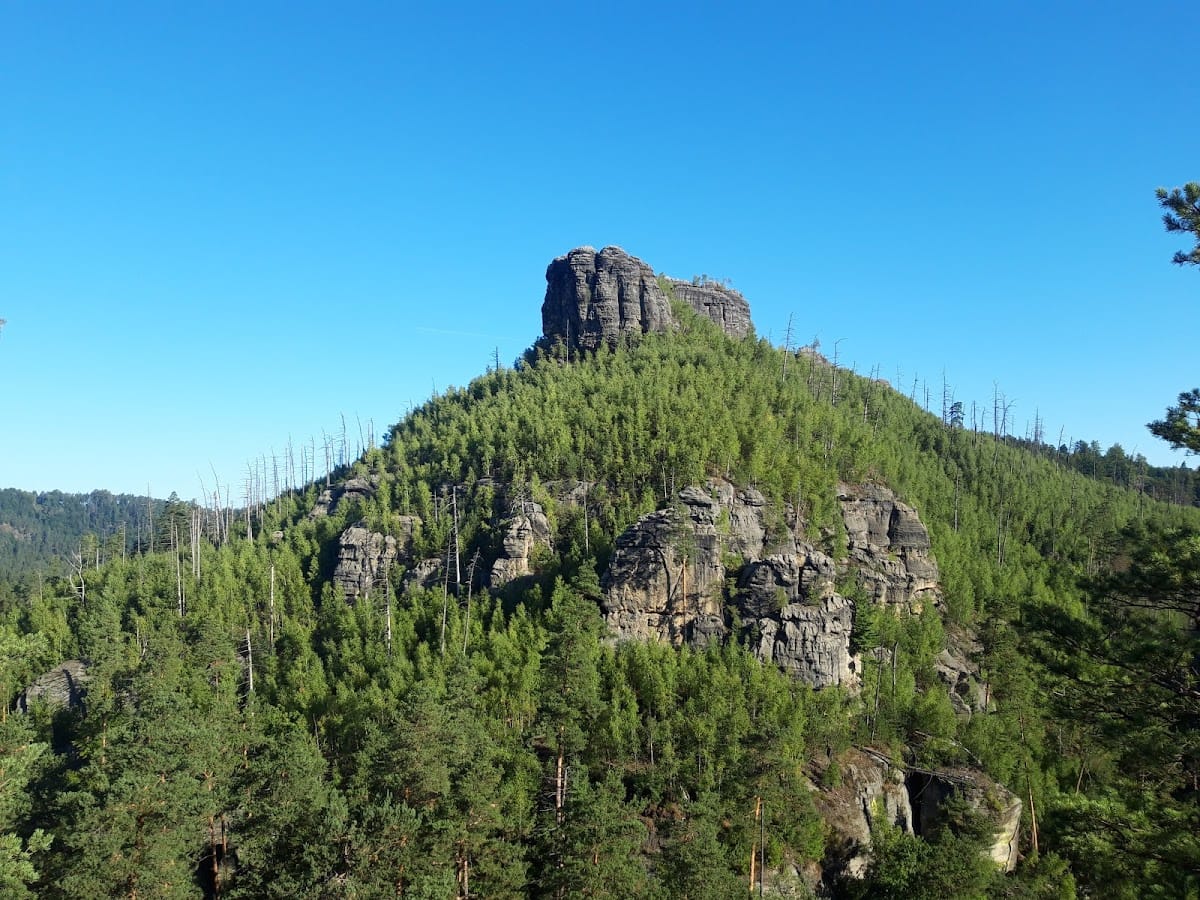
Falkenštejn occupied a sandstone rock above a fortified outer bailey, an enclosed area adjoining the main fortified position. The bailey lay below the summit and was protected by an earthwork rampart and ditch. Access to the upper castle led through a natural cleft that had been modified for defensive use.
Summit structures
Hall
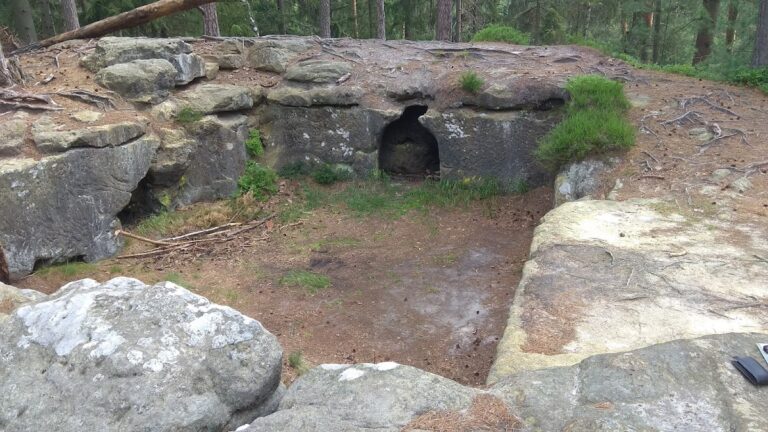
The summit platform contains the partly preserved hall, which measures approximately 6 by 12 metres. A window with stone seats originally lit the room. The hall forms part of the surviving upper-level remains on the sandstone summit.
Rock-cut chamber
An adjoining chamber was cut into the rock. It is generally interpreted as a chapel, although that identification remains uncertain. Several other rooms were also carved deeply into the sandstone, including a larger rock-cut space.
Wooden defenses
A wooden tower probably stood on the summit, whose perimeter was apparently protected by a palisade, a defensive barrier made from upright wooden stakes or logs. Numerous beam sockets in the rock preserve the positions of former wooden superstructures. Most of the other castle structures have disappeared.
Rock cleft and modern access structures
A notable cleft through the rock contained a well that was once approximately 25 metres deep. The cleft is part of the natural formation adapted for the castle’s use and access.
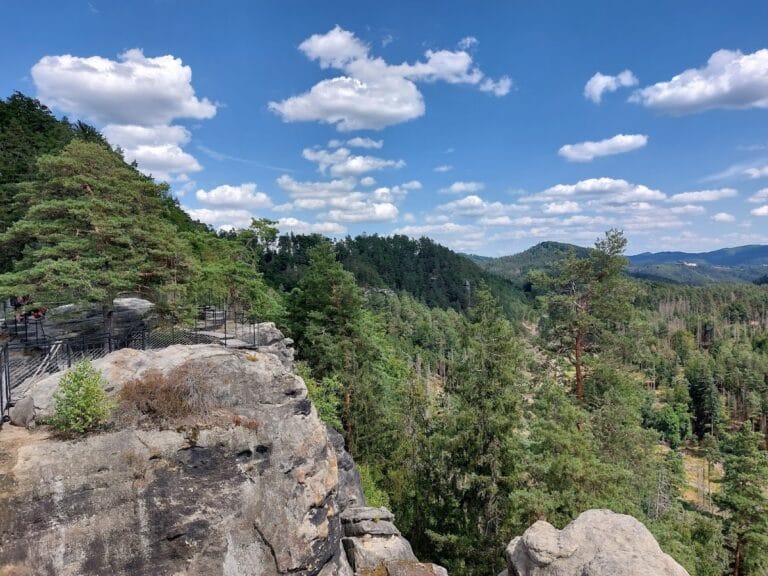
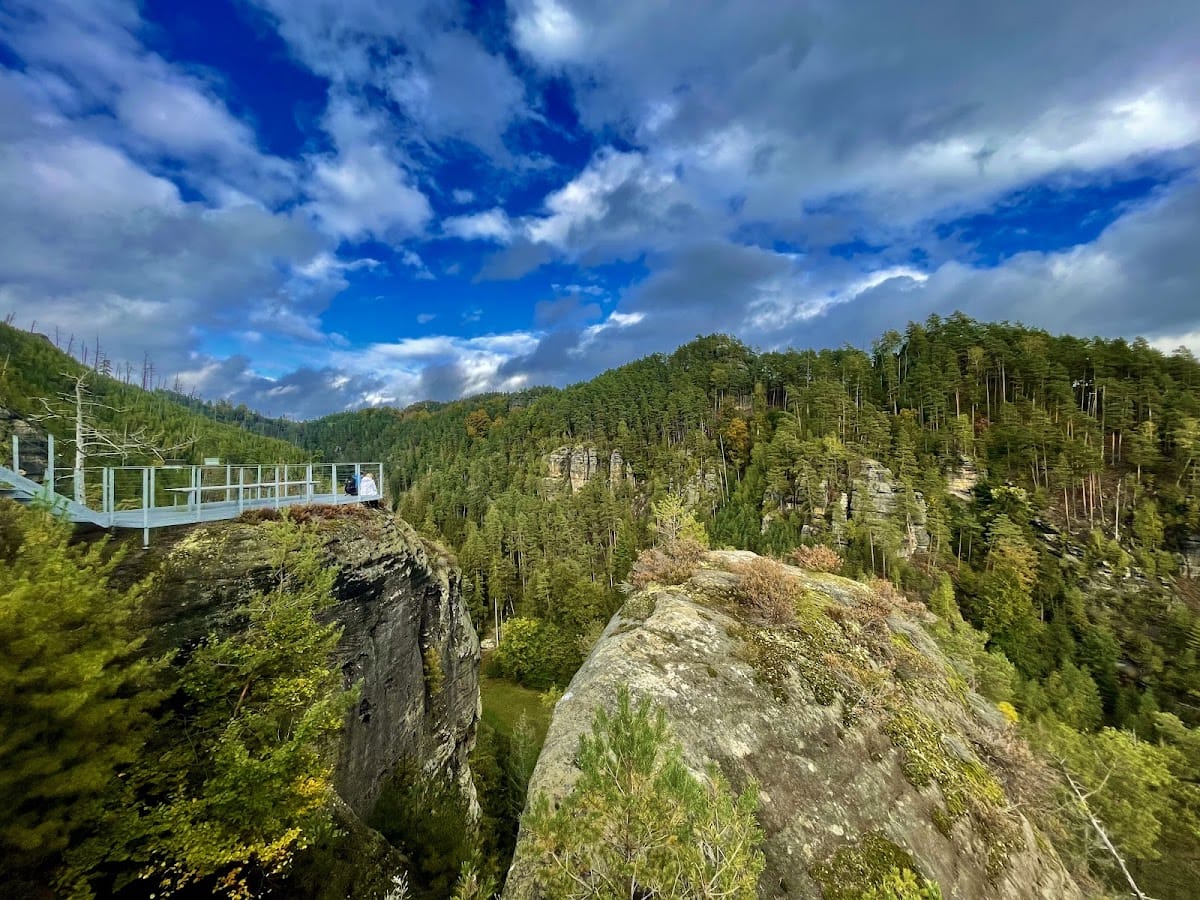
In autumn 2017, a staircase with metal grating was installed to reach the summit ruins. A viewing platform made from metal walking grates was also built on the summit. Its design protects the soft sandstone from further erosion while accommodating frequent visitors.