Fredevald: A Medieval Castle Ruin in Czechia


Site at a Glance
- Rating
- 4.7
- Popularity
- Very Low
- Country
- Czechia
- Primary era
- Medieval
- Eras represented
- Medieval
- Civilizations
- Holy Roman Empire, Kingdom of Bohemia
- Site type
- Military
- Remains
- Castle
On this page6 sections
History
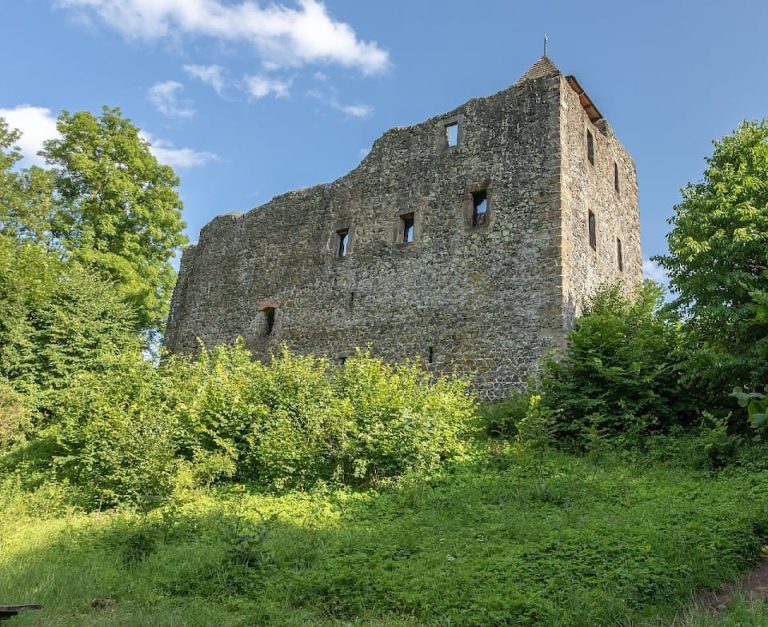
Fredevald is a medieval castle ruin in Czechia near Česká Kamenice, probably founded in the thirteenth century by the Lords of Michelsberg to protect a nearby trade route. The site is also known as Fredewald, Wüstes Schloss, meaning “Deserted Castle,” and Pustý zámek.
From Michelsberg to the Berka Family
The castle was first recorded in 1406, when it belonged to Hynek Berka von Dubá, a member of a medieval noble family. The Berka family of Dubá retained Fredevald until 1428, when Heinrich Berka von Dubá sold it to Siegmund von Wartenberg.
Wartenberg Rule and Destruction
The Wartenbergs used Fredevald and other castles in the surrounding area as bases for raids. In 1440, the League of the Six Upper Lusatian Towns, a medieval alliance formed to defend the political and economic interests of six towns, besieged and captured the castle. The troops then demolished it. Kempnitz Castle, also called Kamenický hrad, was later built on the nearby Schlossberg near Česká Kamenice as a replacement. In 1956, the castle rock and its immediate surroundings were declared a natural monument.
Remains
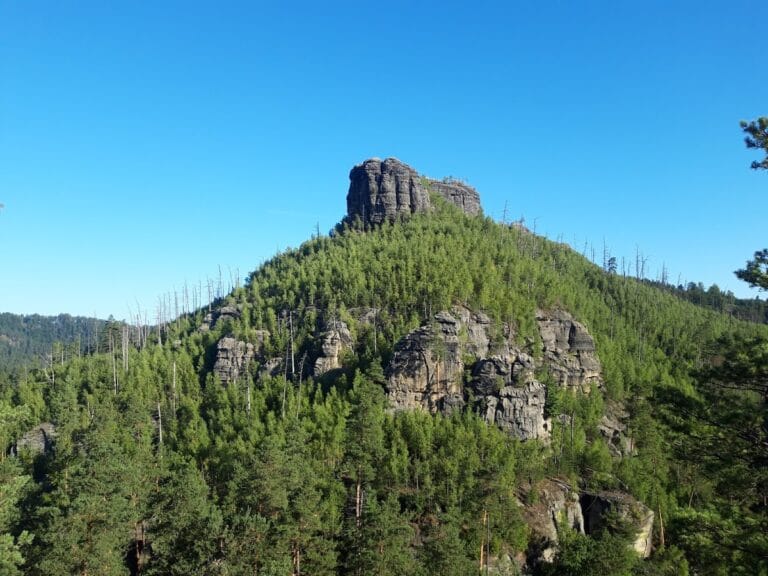
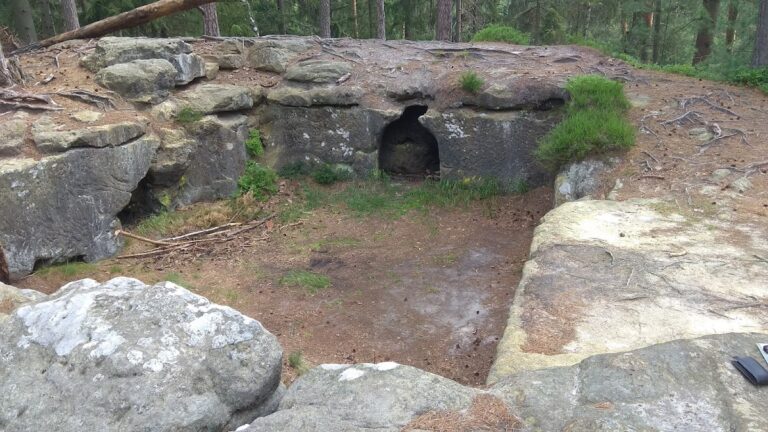
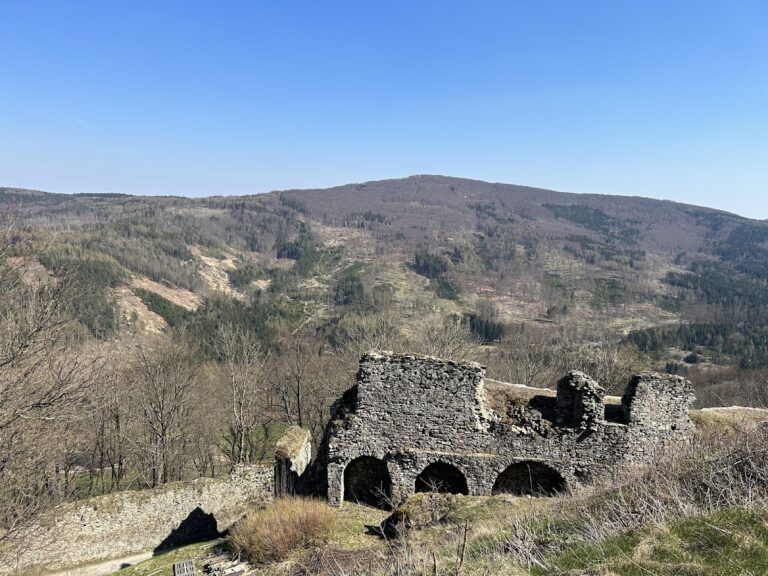
Fredevald occupies a steep phonolite rock in the Lusatian Mountains. Phonolite is a fine-grained volcanic rock that can produce a ringing sound when struck. Only parts of the castle walls remain substantially preserved, while the rock itself forms the dominant physical setting of the ruins.
Castle Rock and Surviving Walls
The rock is made up of massive phonolite columns arranged in a broad fan. Some columns reach lengths of up to 25 metres or more. In the nineteenth century, larger sections of the formation were blasted away to create space for a road, altering the immediate surroundings of the castle remains.
Geological and Botanical Features
The phonolite formation continues beyond the Kamenice River at Břidličný vrch, also called Schieferberg. It represents an unusual geological record of Tertiary volcanism in northern Bohemia, referring to volcanic activity during the Tertiary geological period. A varied plant community has developed on the castle rock, including goat’s beard, woodland ragwort, elder-leaved valerian, blue fescue, and alpine currant.
Nearby sites