Lielvārde Castle: A Medieval Archbishopric Stronghold in Latvia
Site at a Glance
- Rating
- 4.6
- Popularity
- Low
- Country
- Latvia
- Primary era
- Medieval
- Eras represented
- Medieval
- Civilizations
- Crusader
- Site type
- Military
- Remains
- Castle
On this page8 sections
History
Lielvārde Castle is a medieval stronghold in Lielvārde, Latvia, developed from a Liv settlement into a stone castle associated with the Archbishopric of Riga before 1248. It stood beside the Daugava, an important medieval waterway, and later served as the center of a bailiff’s district, an estate castle, and a storehouse for the archbishopric.
Liv origins and the stone castle
In 1201, Bishop Albert of Buxthoeven, the German church leader associated with Christian expansion in Livonia, granted the Lielvārde district as a fief to the knight Daniel von Banerow. The district’s elder continued to rule from an older Liv wooden castle. During the Autine uprising, a revolt against the expanding crusader territories, Crusaders burned this stronghold. In 1213, Lithuanian raiders captured the elder Uldevene, although the Order of the Sword Brothers secured his release by paying for it.
A stone castle was built before 1248 and is attributed to Daniel, the bishop’s vassal. It may have been established before 1229 on the site of the earlier Liv stronghold. After Daniel’s death, Bishop Nikolai of Riga granted Lielvārde to the Riga Cathedral Chapter in 1248 and formally recognized it as the chapter’s property in 1255. The chapter was the body of cathedral clergy that helped govern the Archbishopric of Riga, an ecclesiastical principality ruled by the archbishop.
Conflicts and administration
Lielvārde occupied a vulnerable position during the struggles that shaped medieval Livonia. In 1262, Samogitian forces, originating from the Baltic region of present-day northwestern Lithuania, defeated an army of the Order near the castle. The surviving troops took refuge inside it. Lithuanian forces later captured and plundered Lielvārde in 1361.
During the fourteenth and fifteenth centuries, the castle became the center of a bailiff’s district in the Latvian end of the Archbishopric of Riga. A bailiff, or fogt, was an ecclesiastical official who administered a territory and exercised judicial authority for a bishop or archbishop. Bailiffs recorded at Lielvārde include Heinrich Orghos, mentioned before 1372, Hinke Kastorp in 1391, and Stanislaus in 1556. Their administrative functions were later transferred to the bailiffs of Koknese Castle.
The castle also retained practical functions as an estate center and as a bread storehouse for the archbishopric. At the beginning of the fifteenth century, the archbishop pledged it to the Order, which held the pledge until 1435. From 1514 to 1534, a Bernardine monastery operated within the castle. The Bernardines were an observant branch of the Franciscan order associated with the reform tradition of Saint Bernardine of Siena. A stone church was built in the courtyard during this period.
War, restoration, and later development
During the Livonian War, the sixteenth-century conflict in which Livonia was contested by Russia, Poland-Lithuania, Sweden, and other regional powers, Lielvārde was pledged to the King of Poland under the 1559 pacta protectionis. This protective agreement placed the castle under Polish-Lithuanian military protection. Russian troops destroyed both the castle and its courtyard church in 1577. The 1582 Treaty of Jam Zapolski referred to Lielvārde as the district’s citadel.
Under Swedish rule in Livonia, Governor-General Nils Asersons Manneršeld partially restored the castle in 1633. The medieval building was not repaired again afterward, while a manor center developed beside it. A manor house in the Classicist style was built at the beginning of the nineteenth century. At the beginning of the twentieth century, architect Wilhelm Bockslaff rebuilt it for its owner, Baron Arthur von Woolf.
The Daugava became a front line for several years during the First World War. Artillery fire then completely destroyed the Lielvārde manor house, also described as the manor castle. Archaeological excavations in 1981 exposed defensive-wall remains, and the surviving medieval ruins were conserved in 1987 under a project by architect G. Erdmanis. The Lielvārde hillfort and medieval castle have been a state-protected cultural monument since 19 December 1998, listed as a locally significant architectural monument.
Since 1997, a wooden reconstruction has stood in Rembates Park near the Daugava. Created by artist Agris Liepiņš, it represents a possible reconstruction of the residence of Uldevene, the chief of the Lielvārde district.
Remains
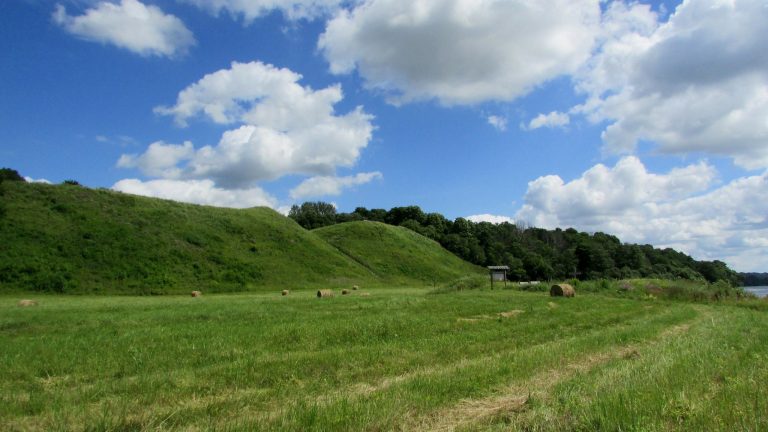
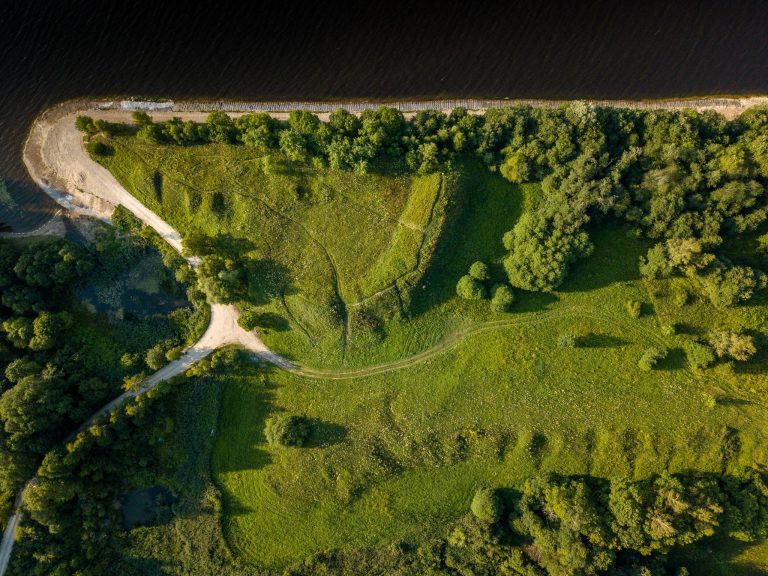
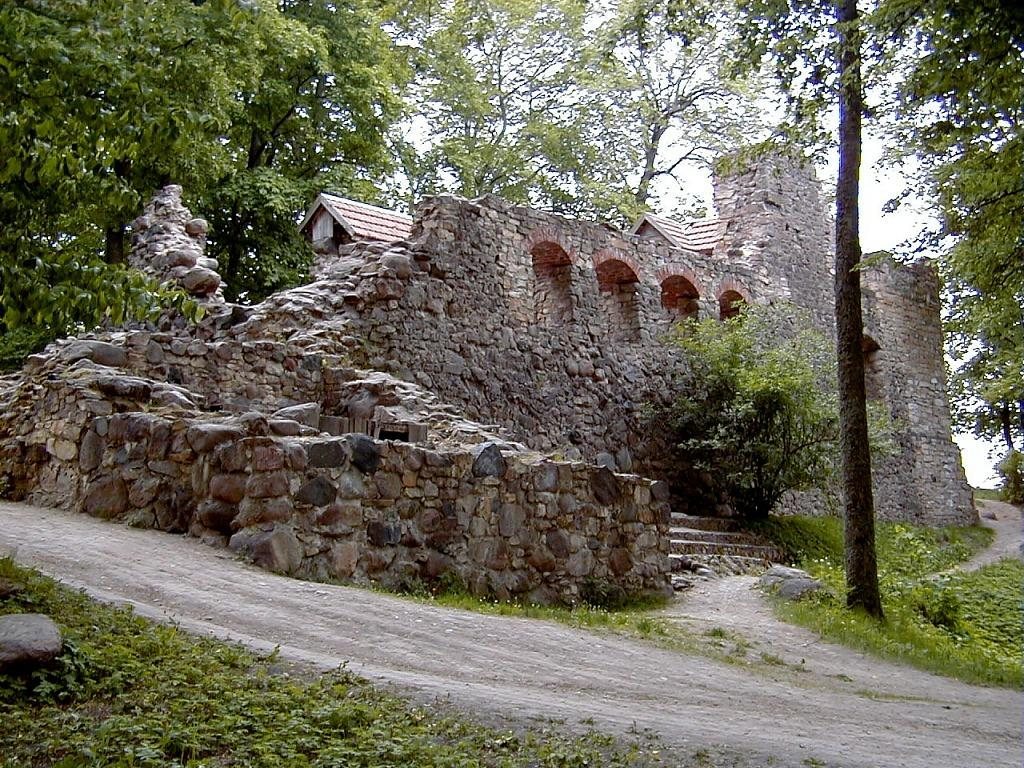
Lielvārde’s physical remains occupy a fortified plateau above the right bank of the Daugava. The steep riverbank and a deep river valley provided natural protection, while two ditches divided the plateau into sections. This arrangement formed a sectional fortification, a defensive complex separated into parts by ditches, embankments, or similar barriers. The site combines the hillfort and settlement area with the ruins of the later medieval castle.
Early Liv fortification
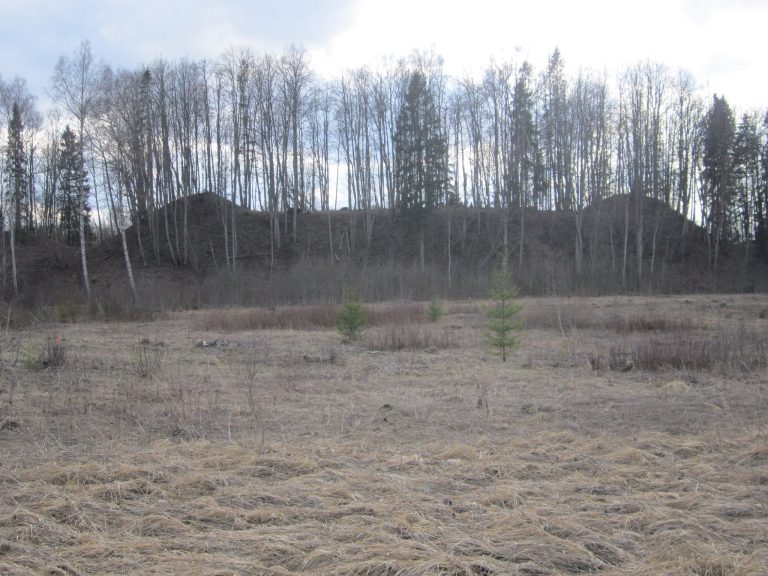
The first fortified complex stood on Livukalns and was built of wood. The later medieval ruins lie on the opposite hill from that original fortified area. A wooden reconstruction approximately one kilometre from the ruins presents a possible form of Uldevene’s residence and provides a separate architectural interpretation of the earlier Liv stronghold.
Medieval castle ruins
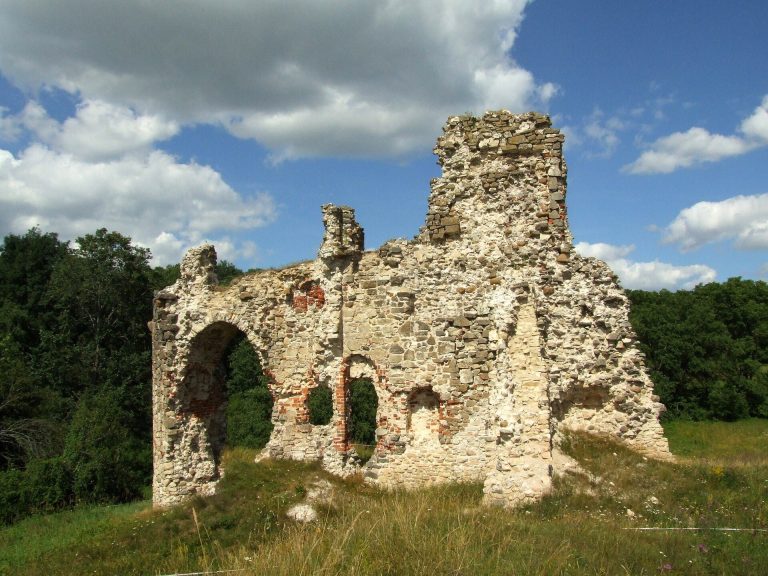
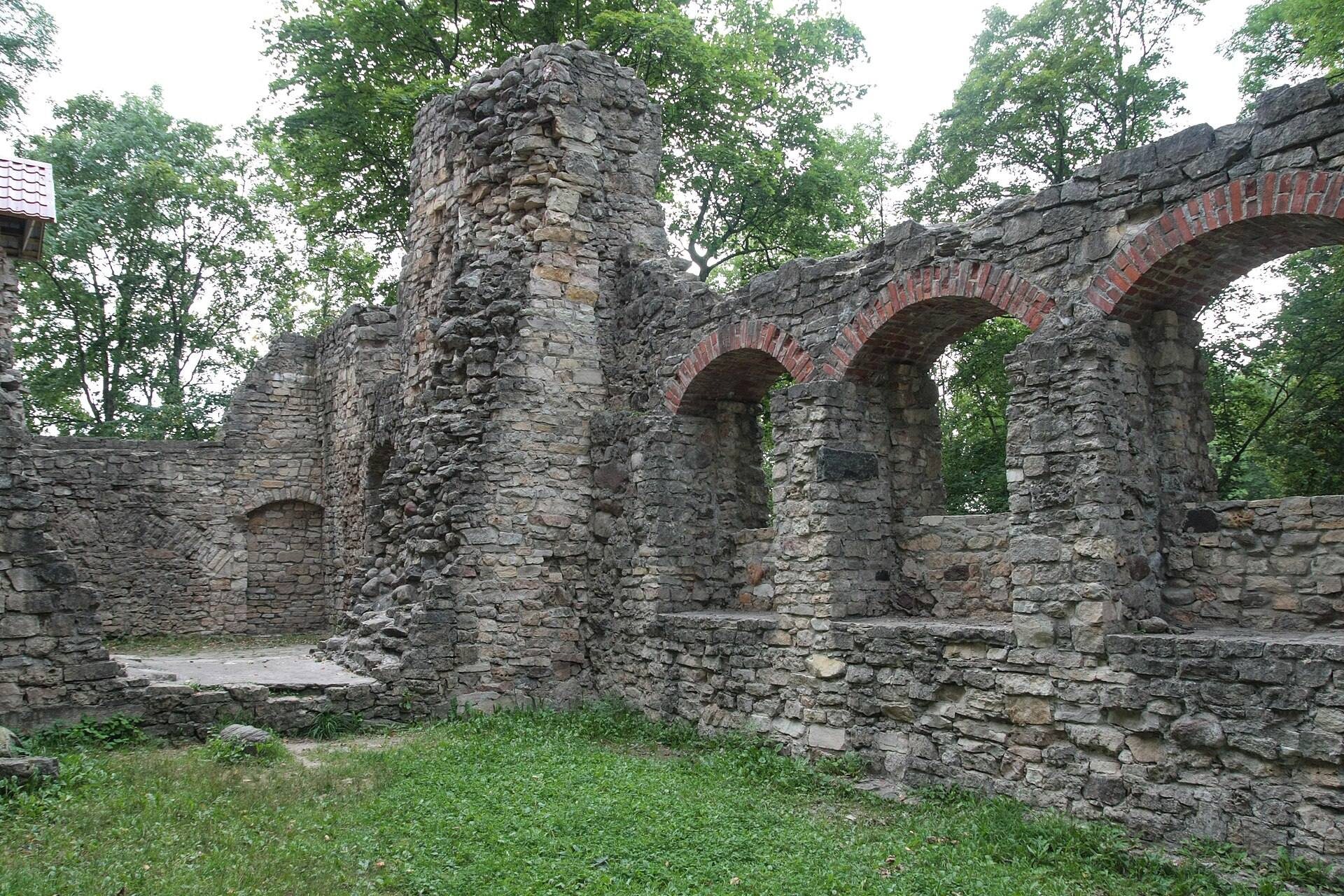
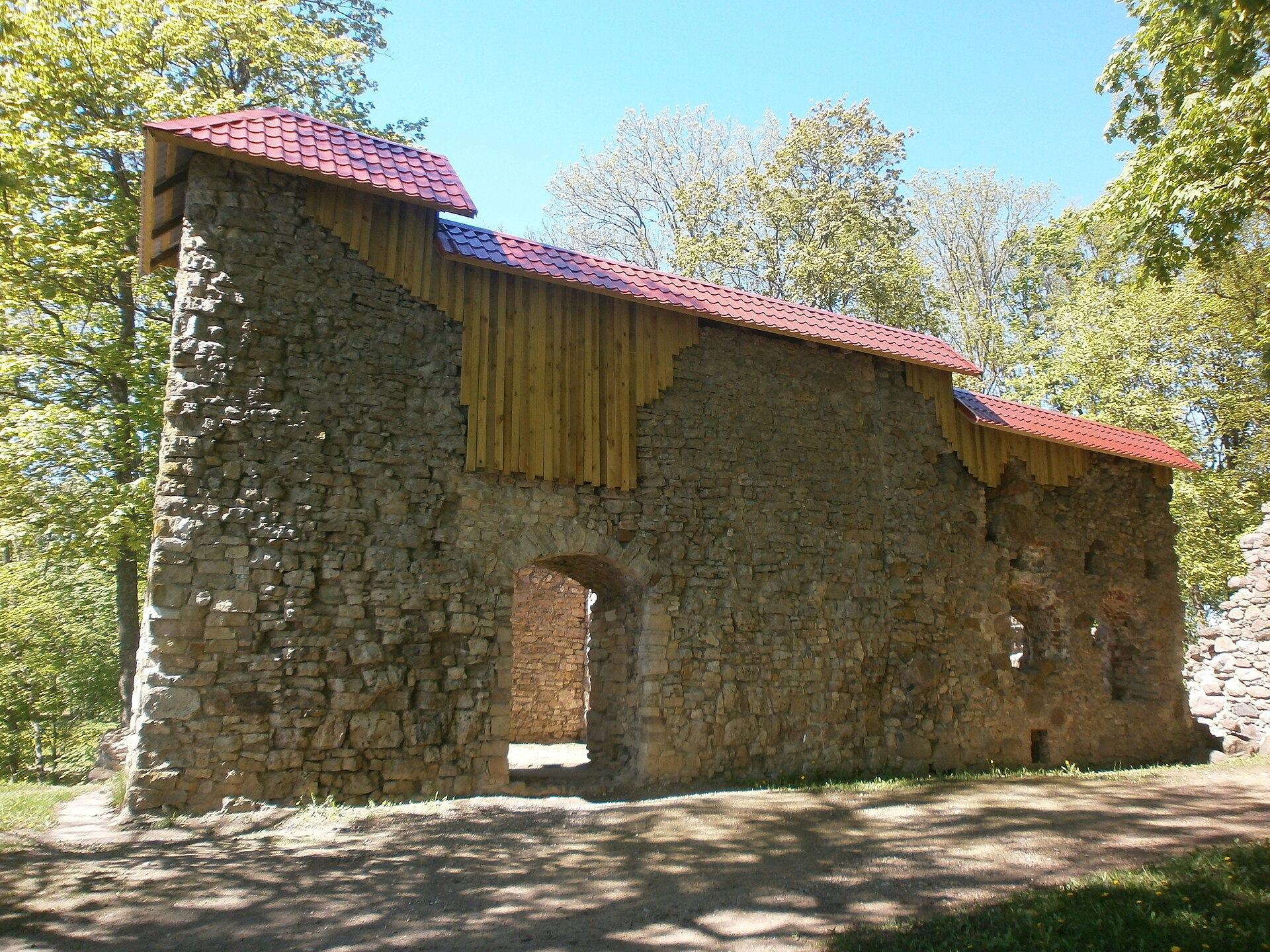
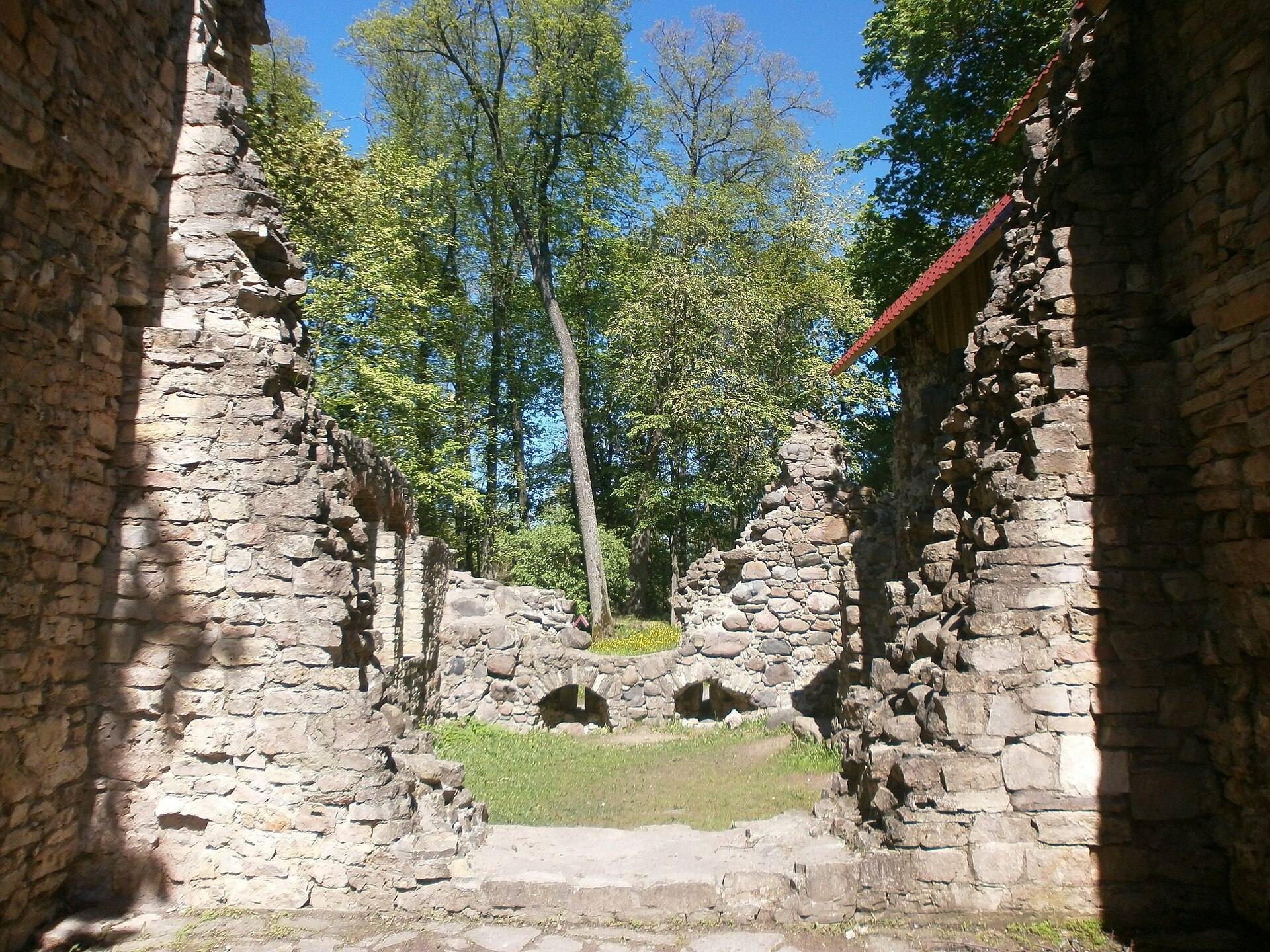
The surviving ruins in Lielvārde Park date largely from the fourteenth century and were constructed from dolomite. Excavation in 1981 revealed part of a defensive wall near the edge of the southeastern corner of the castle plateau. At a depth of one metre, the exposed section measured approximately 1.5 metres thick and four metres long.
A drawing from 1792 shows the medieval building with two storeys. About one and a half storeys survive today, while the row of second-storey windows has disappeared. The ruins therefore preserve part of the castle’s vertical form, together with the defensive construction revealed at the plateau edge.
Church and park setting
A stone church once stood in the castle courtyard. It belonged to the sixteenth-century phase of religious use associated with the Bernardine monastery and was destroyed with the castle by Russian troops in 1577. The ruins now stand within a park that also contains Lielvārde Evangelical Lutheran Church, carved-tree representations of the legend of Lāčplēsis, and a museum dedicated to the Latvian poet Andrejs Pumpurs.