Hagenwil Castle: A Medieval Water Castle in Switzerland
Site at a Glance
- Rating
- 4.6
- Popularity
- Low
- Country
- Switzerland
- Primary era
- Medieval
- External website
- Open
- Eras represented
- Medieval, Early Modern
- Civilizations
- Holy Roman Empire
- Site type
- Military
- Remains
- Castle
On this page16 sections
History
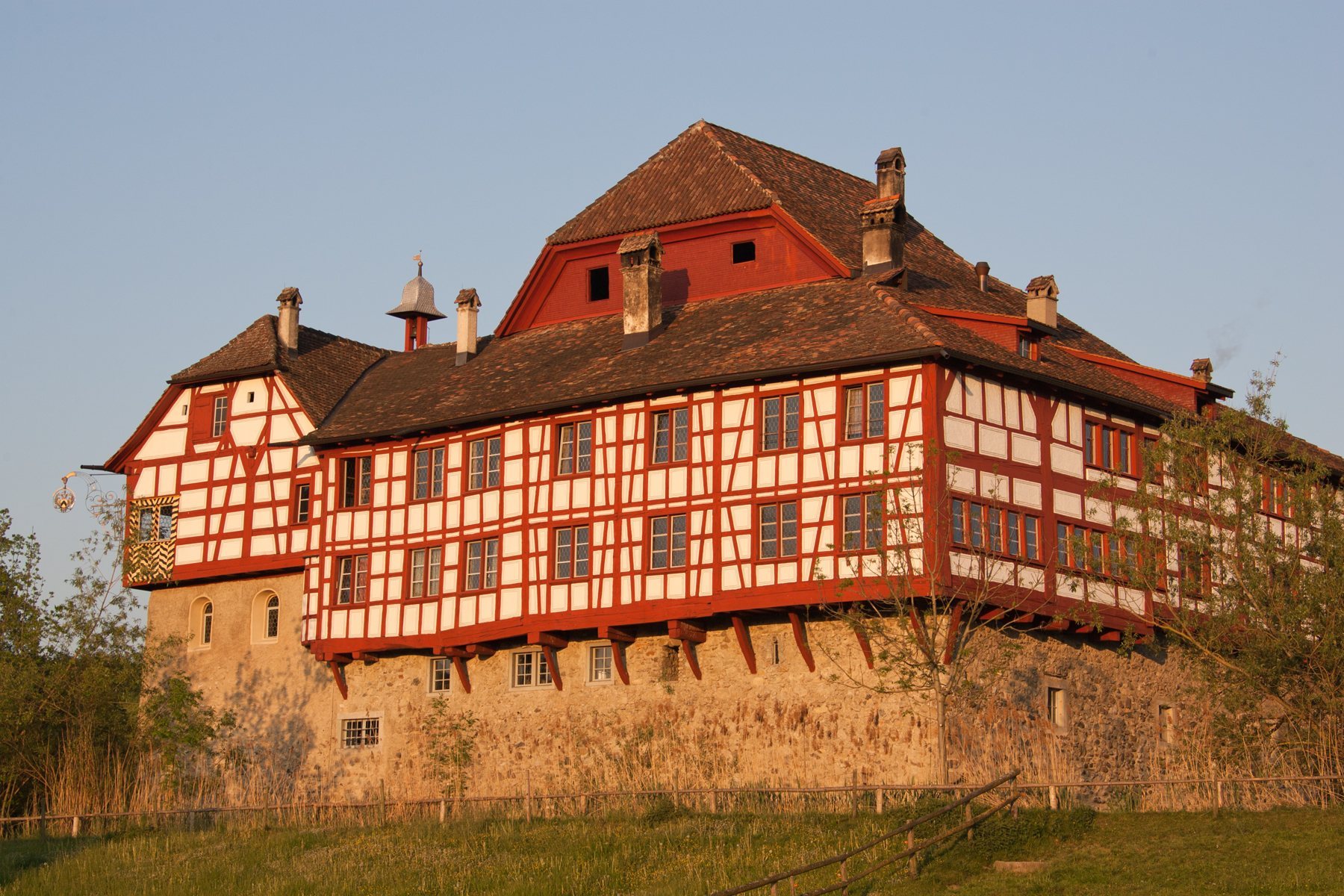
Hagenwil Castle is a medieval water castle in Switzerland, located in the municipality of Amriswil in the canton of Thurgau. Built in the early thirteenth century, it was first mentioned in 1264 and served as the hereditary seat of the Hagenwil family. The castle is recognized as a Swiss heritage site of national significance and is described as the only completely intact water castle in eastern Switzerland.
The Hagenwil Family and the Abbey of St. Gall
Rudolf von Hagenwil, a medieval nobleman, is said to have taken part in the crusade of Emperor Frederick II. In 1264, he donated the castle and much of his property to the Abbey of St. Gall, a major Benedictine monastic institution whose abbot could administer lands and dependent territories. Rudolf made the gift in gratitude for the abbot’s intervention after his sons-in-law imprisoned him at Heitnau Castle in an attempt to obtain their inheritance before his death. Rudolf and his family nevertheless retained the right to live at Hagenwil.
When Rudolf’s son Ulrich died without children, full title to the castle passed to the abbey. Hagenwil was then held as a fief by several noble families, including Hermann von Breitenlandenberg and the Paygrer family. The castle and village came to Konrad and Ulrich Paygrer in 1407. After Konrad died in 1446, his widow’s second husband, Burkhard Schenk von Castell, acquired the remaining heirs’ shares. Jakob Paygrer bought Hagenwil back from him in 1470.
Late Medieval and Early Modern Changes
Jakob Paygrer died in 1504, after which his sons-in-law Jakob von Reinach and Wilhelm von Bernhausen inherited the estates. Hagenwil then remained with the Bernhausen family for about 180 years. During the Appenzell Wars, late-medieval conflicts involving Appenzell, the Abbey of St. Gall, and other regional powers, an army passed through the area in 1405. No attack on the castle is recorded, although a major fire visible in the masonry and wooden beams dated to approximately 1414–1425 indicate that the complex was probably damaged during this period.
The village adopted the Protestant faith in 1529 but returned to the Roman Catholic Church in 1536. On 6 September 1633, during the Thirty Years War, a European conflict fought between 1618 and 1648 over religious, dynastic, and territorial issues, Swedish troops attacked and captured Hagenwil while besieging Constance. The castle suffered only minor damage.
Abbey Estate and Private Ownership
The last Bernhausen owner, a lieutenant in the Swiss Guards in France, sold Hagenwil to the Abbot of St. Gall in 1683–1684 for 25,000 gulden. The castle remained an abbey possession for more than a century. Successive overseers administered it, and the abbots increasingly used Hagenwil as a summer residence. Building work in 1786–1787 added eastern buildings, an entrance hall, a chapel, a great hall, and more comfortable residential rooms for the abbot.
After the French invasion of Switzerland in 1798, Hagenwil was nationalized along with the other estates of the Abbey of St. Gall. The Helvetic Republic, the centralized Swiss state established after the invasion, later collapsed, and the 1803 Act of Mediation restored a more federal political structure. Most former abbey lands became part of the new canton of St. Gallen. In 1805, the canton’s Grand Council decided to sell Hagenwil, and Benedikt Angehrn purchased it. His family has retained ownership through seven generations.
Restoration and Continuing Use
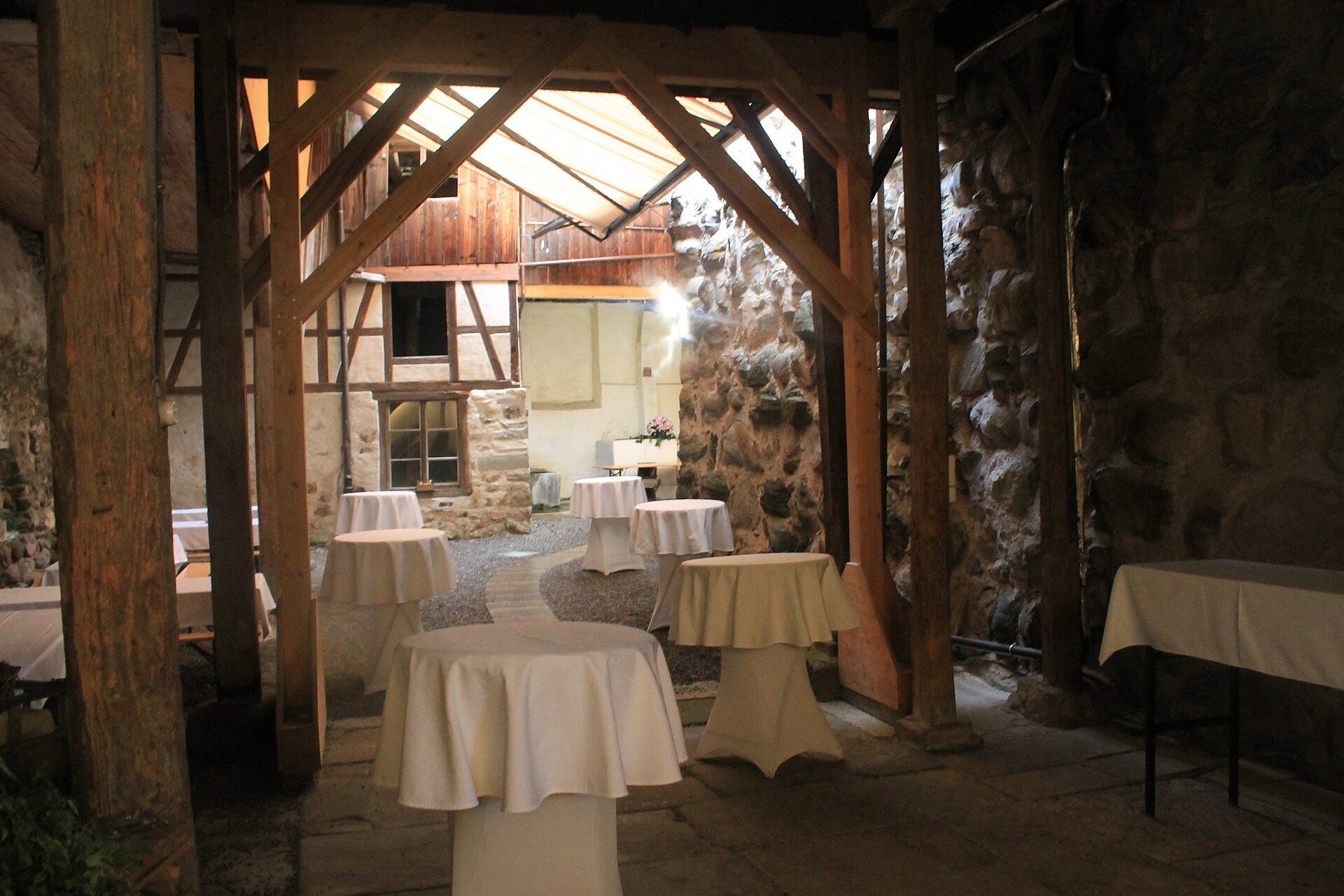
A restaurant was added in the courtyard in 1830. Repairs and restoration followed in 1937–1938 with assistance from the Swiss Federal Office of Civil Protection, and archaeological exploration took place in 1985. The old kitchen was replaced by a new three-storey building in 2003–2004. The Angehrn family still owns the castle, whose rooms serve residential purposes and accommodate a restaurant, meetings, events, and arranged tours.
Since 2010, the courtyard has hosted the annual Hagenwil Castle Festival during the summer months. The open-air theater was founded by director and actor Florian Rexer, marketing specialist Roman Bottlang, and castle owner Andi Angehrn. Its program includes classical plays, comedies, and theater for children and families.
Remains
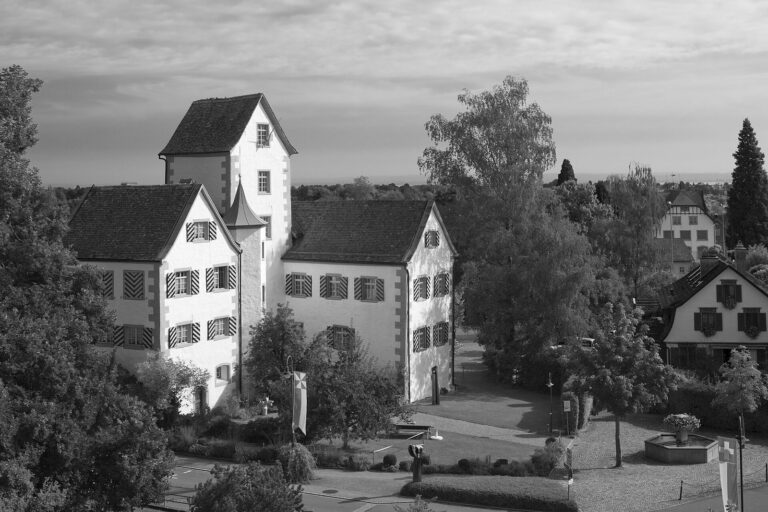
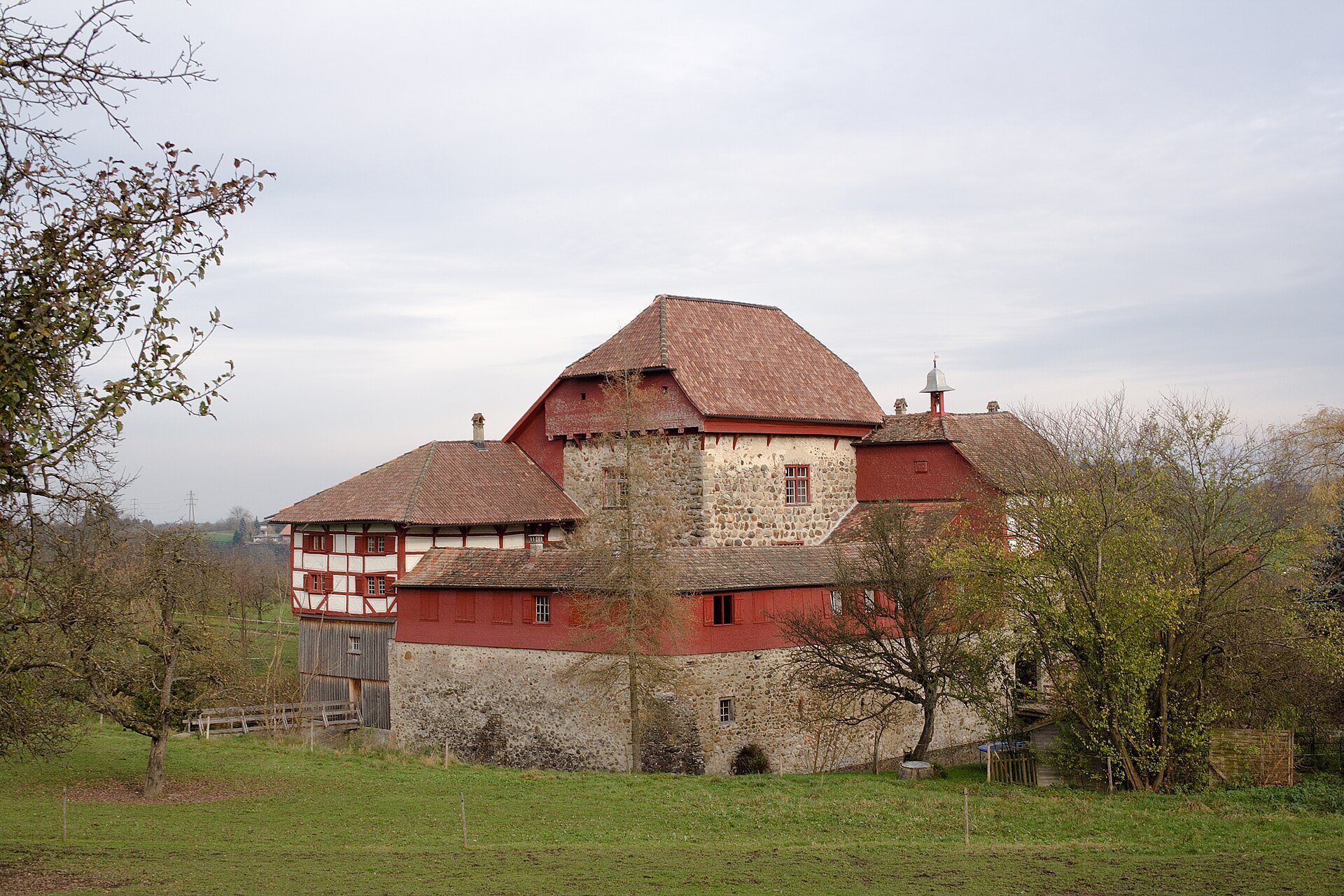
The castle forms a roughly square enclosure surrounded by a water-filled moat from the eighteenth century. The moat is approximately 3.2 meters deep and also serves as a fishpond. Within the enclosure, the thirteenth-century main tower forms the oldest central element, while later residential, religious, and entrance buildings complete the substantially preserved complex.
Central Tower and Enclosing Wall
Main Tower
The main tower measures approximately 13.2 by 10 meters. Its unfinished round-stone walls reach up to 1.7 meters in thickness. The original high entrance was positioned on the northern side of the tower’s east wall. It was filled in when ground-level entrances were opened on the west and east sides, probably in 1551.
Ring Wall
A ring wall was added during the thirteenth or fourteenth century. Much of the southern wall and the gate belongs to this early enclosure. The wall defined the castle’s inner boundary around the central tower and remains part of the surviving structure.
Residential and Entrance Buildings
Palas and Half-Timbered Residence
During the fifteenth century, a palas, the principal residential and representative building of a medieval castle, was constructed along the north wall and incorporated the older tower. The former northwestern corner of the ring wall was demolished, and a two-storey half-timbered residence was added.
Gatehouses and Drawbridge
A gatehouse was first erected near the southeastern corner in 1485–1486 and was later replaced. Another gatehouse carries the date 1741 carved above its entrance. The main approach crosses a drawbridge before reaching the castle entrance.
Eastern Buildings and Chapel
Eastern buildings, an entrance hall, and the chapel were added in 1786–1787. The same rebuilding campaign created a great hall and comfortable residential rooms for the abbot. The chapel continues to be used for weddings, while other rooms accommodate the restaurant, residences, meetings, and events.
Historic Route and Interior Features
Alte Konstanzerstrasse
Hagenwil lies along the historic Alte Konstanzerstrasse, a route known since the ninth century and used until the nineteenth century. Its position forms part of the castle’s historical setting and connects the surviving complex with a long-used regional route.
Old Cider Cellar
An old cider cellar survives within the complex and is used as a meeting room. Together with the castle chapel and the preserved rooms, it reflects the continued adaptation of the medieval enclosure to residential, religious, culinary, and communal uses.