Castello di Montecchio Emilia: A Medieval Lowland Fortress


Site at a Glance
- Rating
- 4.4
- Popularity
- Low
- Country
- Italy
- Primary era
- Medieval
- External website
- Open
- Eras represented
- Medieval, Early Modern, Modern
- Civilizations
- Unclassified
- Site type
- Military
- Remains
- Castle
On this page6 sections
History
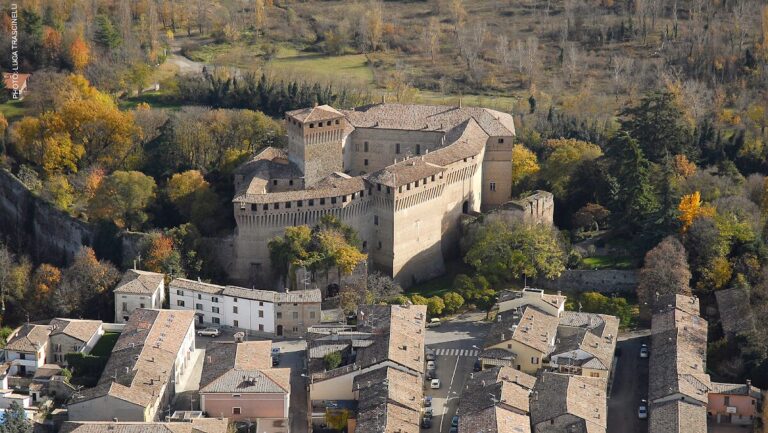
Castello di Montecchio Emilia is a medieval brick fortress in Italy, first mentioned in 1114 in a document signed by Matilda of Canossa. Its position beside the Enza River made it part of the defensive system organized by the Canossa family along the foothills.
Parma, the Vicedomini, and the Visconti
Parma occupied the castle during the thirteenth century, but neighboring lordships and bishoprics contested control of it. After Parma, previously aligned with the Ghibellines, came under Guelph control in 1247, Montecchio remained loyal to the emperor. The Guelphs generally supported the papacy, while the Ghibellines supported the Holy Roman Emperor. The Vicedomini, a medieval feudal family, then took command and retained possession until 1348.
In 1317, Giberto III da Correggio destroyed and dismantled the castle. In 1348, Obizzo III d’Este transferred it to the Visconti, the ruling dynasty of Milan. The Visconti removed the earlier feudal lords, appointed one of their vicars, and strengthened the stronghold. A vicar was an official governing a territory or fortress on behalf of a higher authority.
Este rule and the end of the military role
Agnolo della Pergola restored the fortress in 1426. Additional building work followed from 1440 to 1455, with further changes under Guido Torelli and the Este family. The Este, rulers of territories in northern Italy including Ferrara, occupied Montecchio permanently in 1486.
In 1638, Luigi I d’Este established himself in the castle as Marquis of Montecchio. His rule brought numerous alterations, including the closure of the surrounding ditches in 1649. The fortress’s strategic military function ended in the eighteenth century. Porticoes were added on the side facing the town square between 1813 and 1823. The Municipality of Montecchio Emilia now owns the castle.
Remains
Fortress layout and defensive fabric
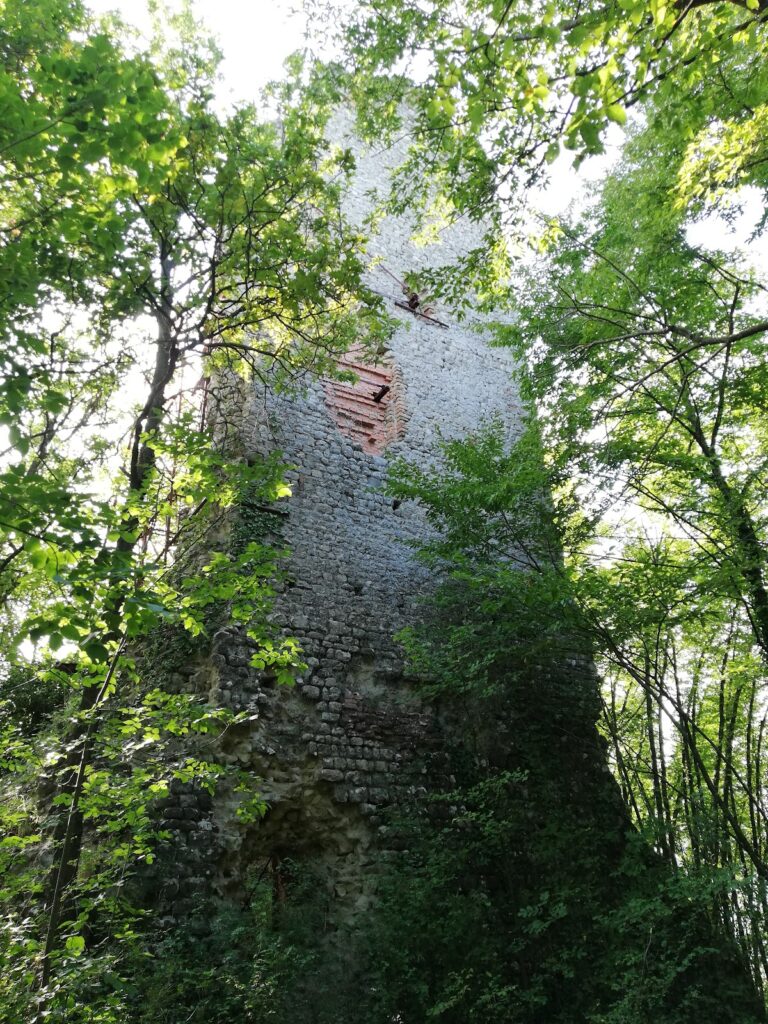
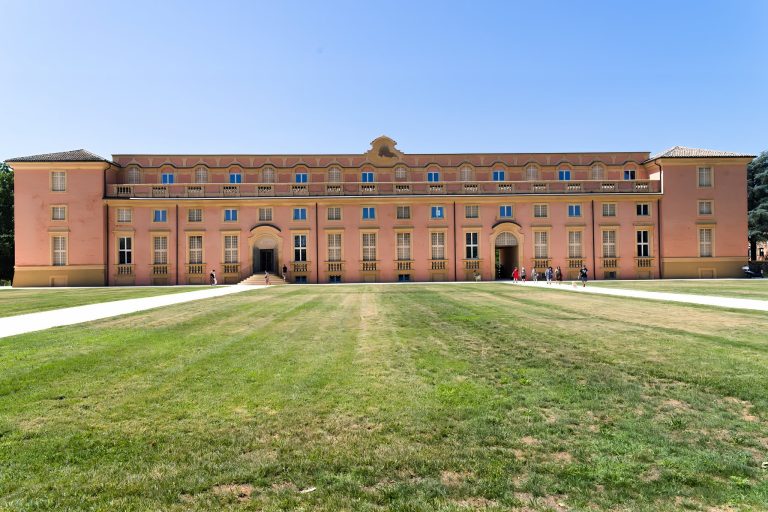
The castle is a lowland fortress, meaning a fortified residence or stronghold built on relatively level ground. Constructed in brick, it forms the western boundary of Montecchio Emilia’s historic center. Its plan is an irregular quadrilateral, shaped by the repairs and alterations carried out over successive centuries. The oldest section is the part containing the clock, which dates to the period of Matilda of Canossa. Both towers are roofed and retain a complete circuit of battlements, the raised and regularly spaced sections along the tops of defensive walls or towers.
Porticoes facing the town square
The side facing the town square is occupied by porticoes built between 1813 and 1823. These covered walkways or galleries are supported by columns or arches and represent a later change to the medieval fortress’s relationship with the town.