Staufenberg Castle: A Historic Hill Castle and Winery in Germany
Site at a Glance
- Rating
- 4.5
- Popularity
- Medium
- Country
- Germany
- Primary era
- Medieval
- External website
- Open
- Eras represented
- Medieval, Modern
- Civilizations
- German, Holy Roman Empire
- Site type
- Military
- Remains
- Castle
On this page8 sections
History
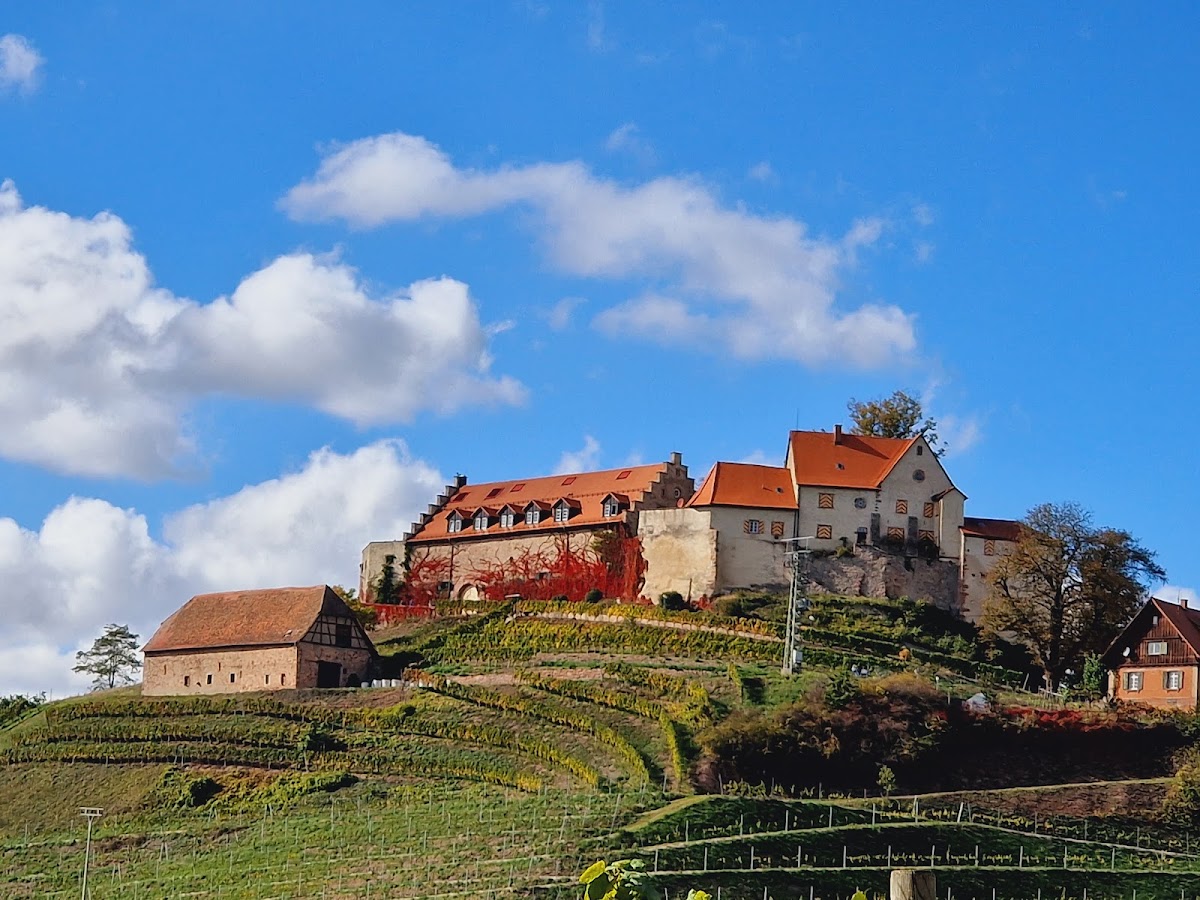
Staufenberg Castle is a hill castle in Germany, situated above Durbach in Baden-Württemberg. Built around 1000 to 1100, it developed through the medieval period as a fortified noble residence and later became a palace and winery associated with the historical Staufenberg lordship.
Origins and Medieval Lords
The castle’s builders may have been the Lords or Counts of Staufenberg, who appear in records from the late eleventh and twelfth centuries. Another possibility is that it was established by ministerials, members of the medieval German service nobility who served rulers or religious institutions in administrative and military roles. The surviving fabric cannot securely identify construction from the eleventh or twelfth centuries.
After the Staufenberg counts died out around 1148, the Zähringen rulers expanded the site into a medieval fortified complex. The Zähringen family was a ruling dynasty whose dukes controlled extensive territories in southwestern Germany. When the dynasty became extinct in 1218, Staufenberg passed through the Counts of Urach-Freiburg, the Eberstein family, and other noble houses before coming to the Margraves of Baden in 1366.
Destruction, Shared Ownership, and Baden Rule
The castle was razed in 1329 and again in 1350, followed by rebuilding. For a period it functioned as a Ganerbenburg, a jointly held castle occupied and administered by several co-owning noble families. Eight families used it as a residence under this arrangement.
Staufenberg suffered damage during the Thirty Years’ War, the seventeenth-century conflict that brought extensive military destruction across much of central Europe. French marauders plundered it in 1689. A proposal to turn the castle into a French fortress was abandoned because the site lacked drinking water.
In 1683, the Margrave of Baden granted the castle and lordship of Staufenberg as a fief to his court marshal Johann Christoph von Greiffen. Emperor Leopold I had raised Greiffen to the rank of Baron of Stauffenberg in 1678. Margrave Ludwig Wilhelm of Baden-Baden purchased the castle in 1693.
Palace Conversion and Modern Ownership
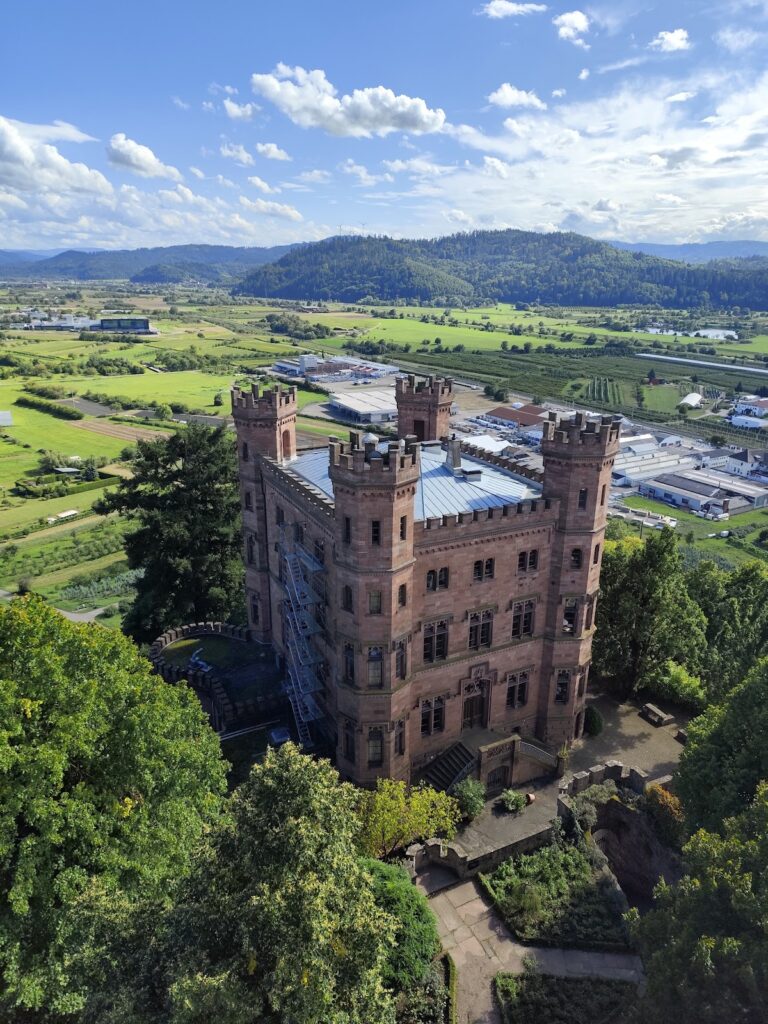
From 1832, the Margraves of Baden expanded the complex into a palace in the Romantic style. The property remained privately owned by the House of Baden and operated as the Margravial Baden Wine Cellar until June 2026. It was then acquired by Georg Prinz zur Lippe, a Saxon winegrower and entrepreneur from the Lippe-Weißenfeld branch of the House of Lippe. The castle is currently used as a winery.
A tradition associated with Schloss Staufenberg concerns Melusine, a figure of medieval European legend commonly portrayed as a woman linked with a serpent or fish-like form. The same legend is also connected with Stollenwald and Stollenburg.
Remains
Hill-Castle Layout
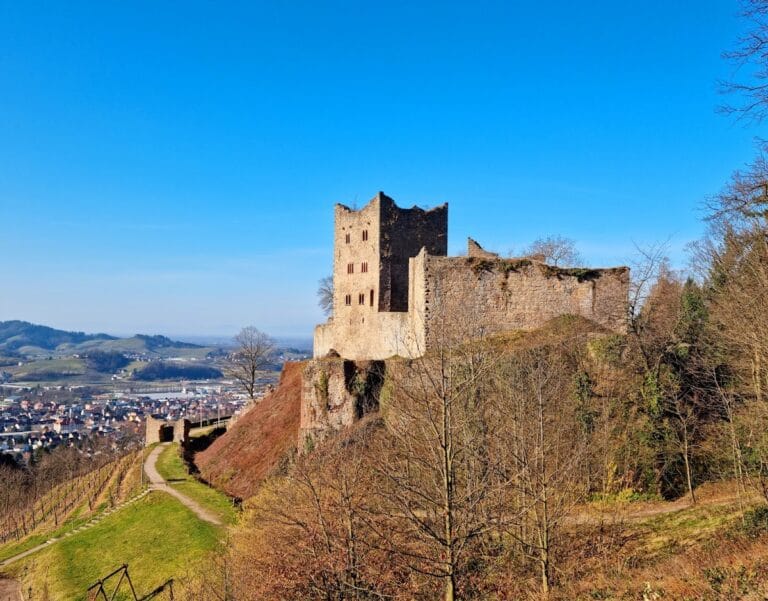
Staufenberg Castle stands at approximately 383 metres above sea level on a rocky spur north of and above the Staufenberg district of Durbach. The hill-castle complex rises about 10 metres above the Halsgraben, or neck ditch, which cuts across the approach to the spur. The ditch is now used as a car park, while the buildings occupy the elevated rocky site above it.
Rear Complex
The rear section is identified as the oldest part of the complex. It contains the Palas, the principal residential and representative building of a medieval castle, together with elements of the Bergfried, the main fortified tower. These structures belong to the castle’s surviving core and reflect its combined residential and defensive functions.
Western Platform
A castle tavern provides access to the western platform, which is now used as a terrace. This platform forms part of the later-used arrangement of the hill-castle complex and remains connected with the castle’s present winery function.