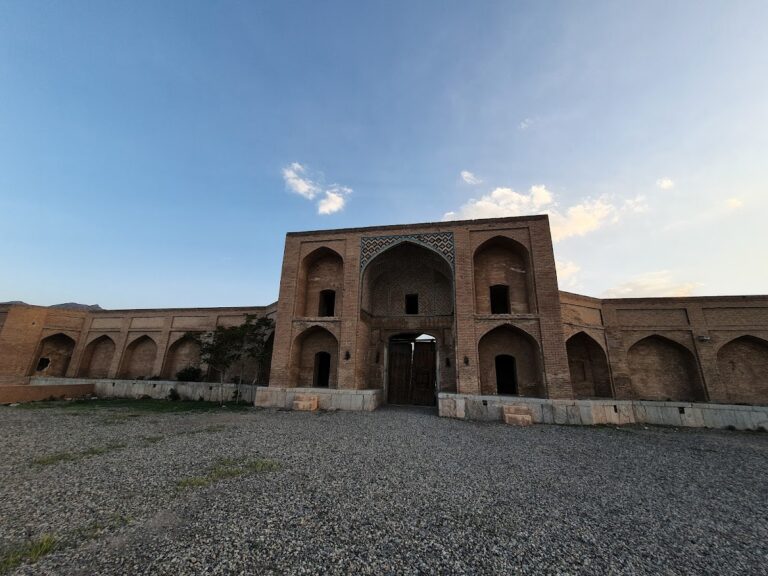
Maranjab Caravanserai: A Safavid Fortress and Roadside Inn in Iran
Site at a Glance
- Popularity
- Medium
- Country
- Iran
- Primary era
- Early Modern
- Eras represented
- Early Modern
- Civilizations
- Safavid
- Site type
- Economic
- Remains
- Caravanserai
On this page6 sections
History
Maranjab Caravanserai is a caravanserai, a roadside lodging and service complex, in Iran’s Maranjab Desert, in Isfahan Province. The Safavid dynasty, which ruled Iran from the early sixteenth century into the eighteenth century, built it in 1603 on the order of Abbas the Great, whose reign lasted from 1588 to 1629. It opened in 1604 and followed Safavid architectural style. The complex stood on a Silk Road route between Khorasan and Isfahan. The Silk Road was a network of trade routes linking Asian regions with Europe.
Safavid Foundation and Route Security
Alongside providing accommodation for travelers, the caravanserai served as a fortress. An armed garrison of 500 guards protected travelers from bandits and guarded against possible military attacks from the east, including from Afghanistan and Uzbekistan.
Restoration, Reuse, and Recognition
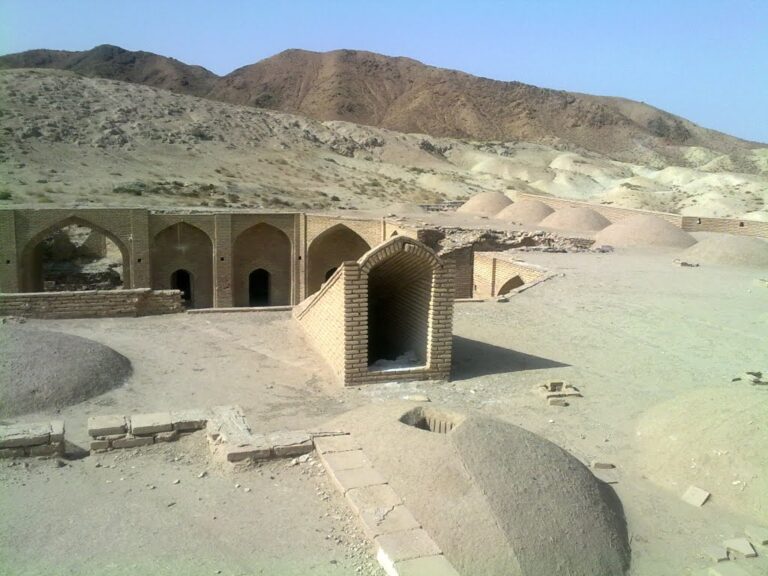
Before Iran’s cultural-heritage authorities acquired the property, it belonged to a private owner and had been used as a sheep pen. Many rooms had fallen into ruin before restoration work carried out from 2000 to 2004. Afterward, the site came under the Fund for the Preservation and Revitalization of Historic Places, which leases properties in its care to private investors for fixed terms through tenders. Iran registered the caravanserai as a national monument in 2005.
Since 2019, a cooperative of village councils in Aran and Bidgol has renovated and equipped the complex for use as a traditional hotel. In 2023, it became part of UNESCO’s World Heritage listing of Iranian Caravanserais, a group of 54 caravanserais across 24 Iranian provinces.
Remains
Setting, Plan, and Materials
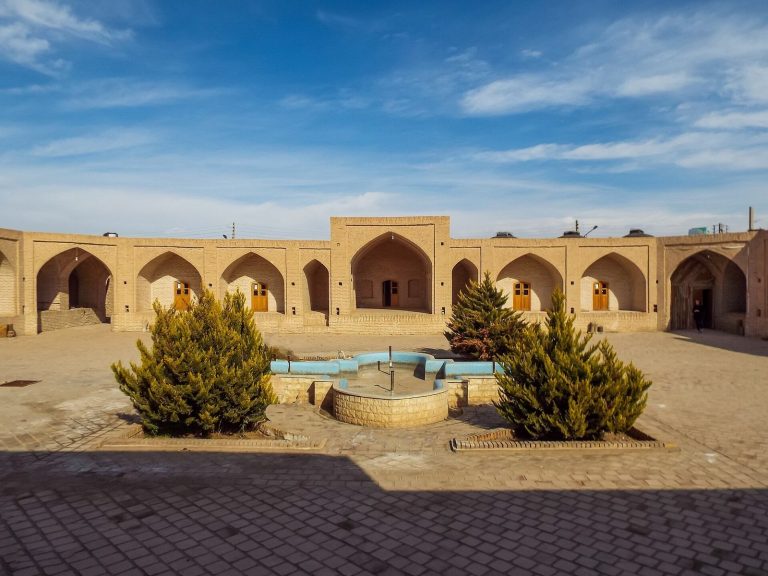
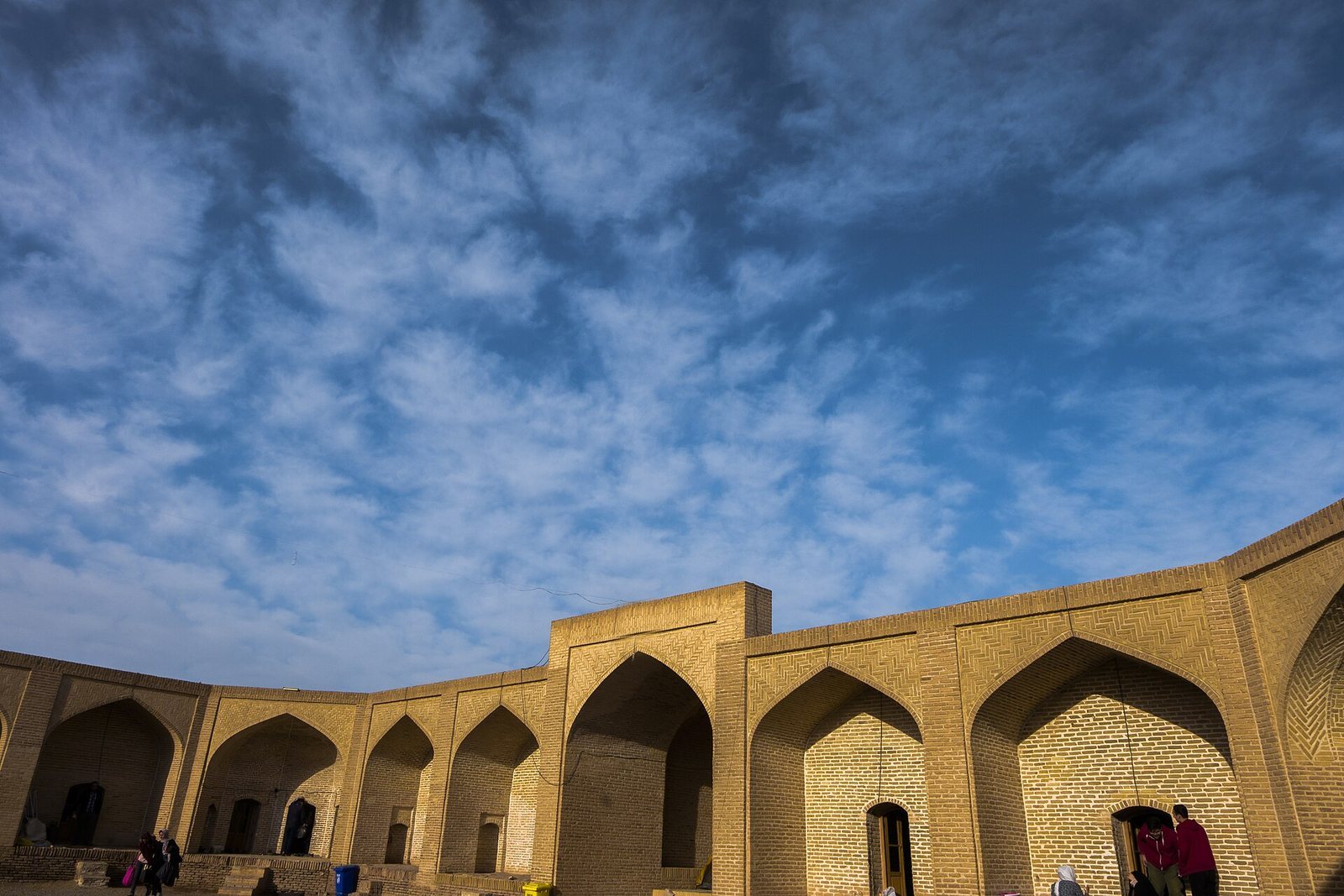
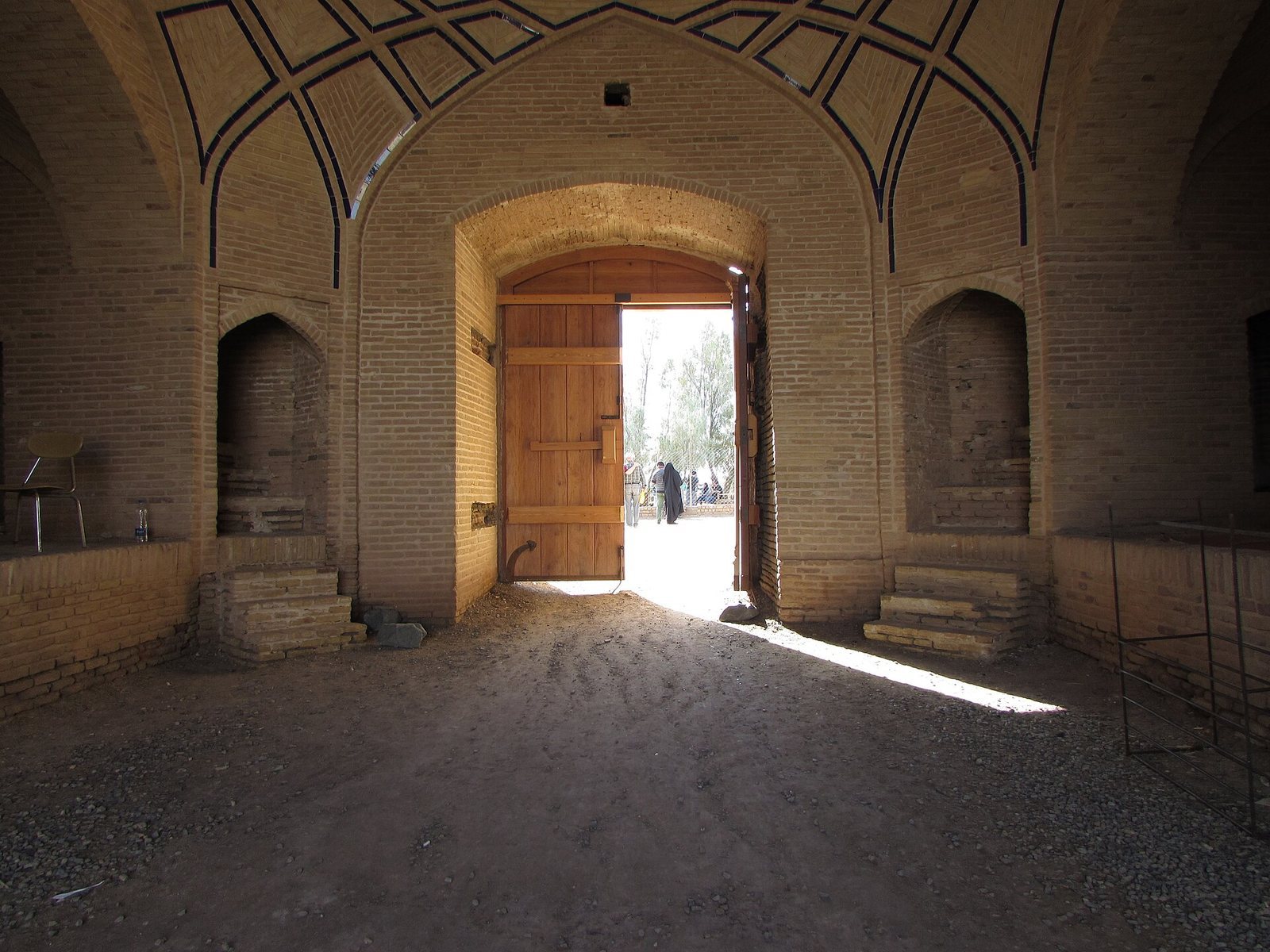
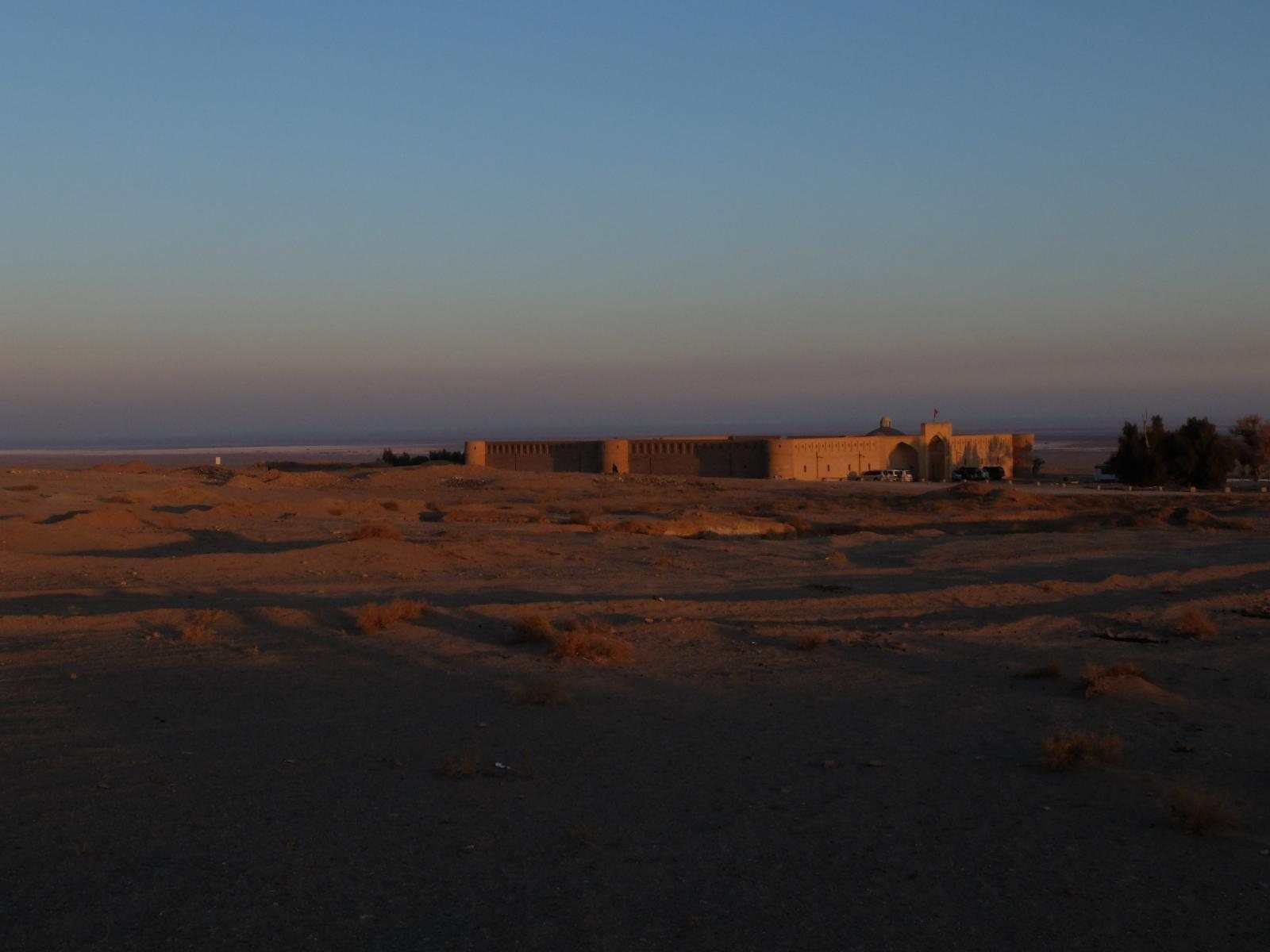
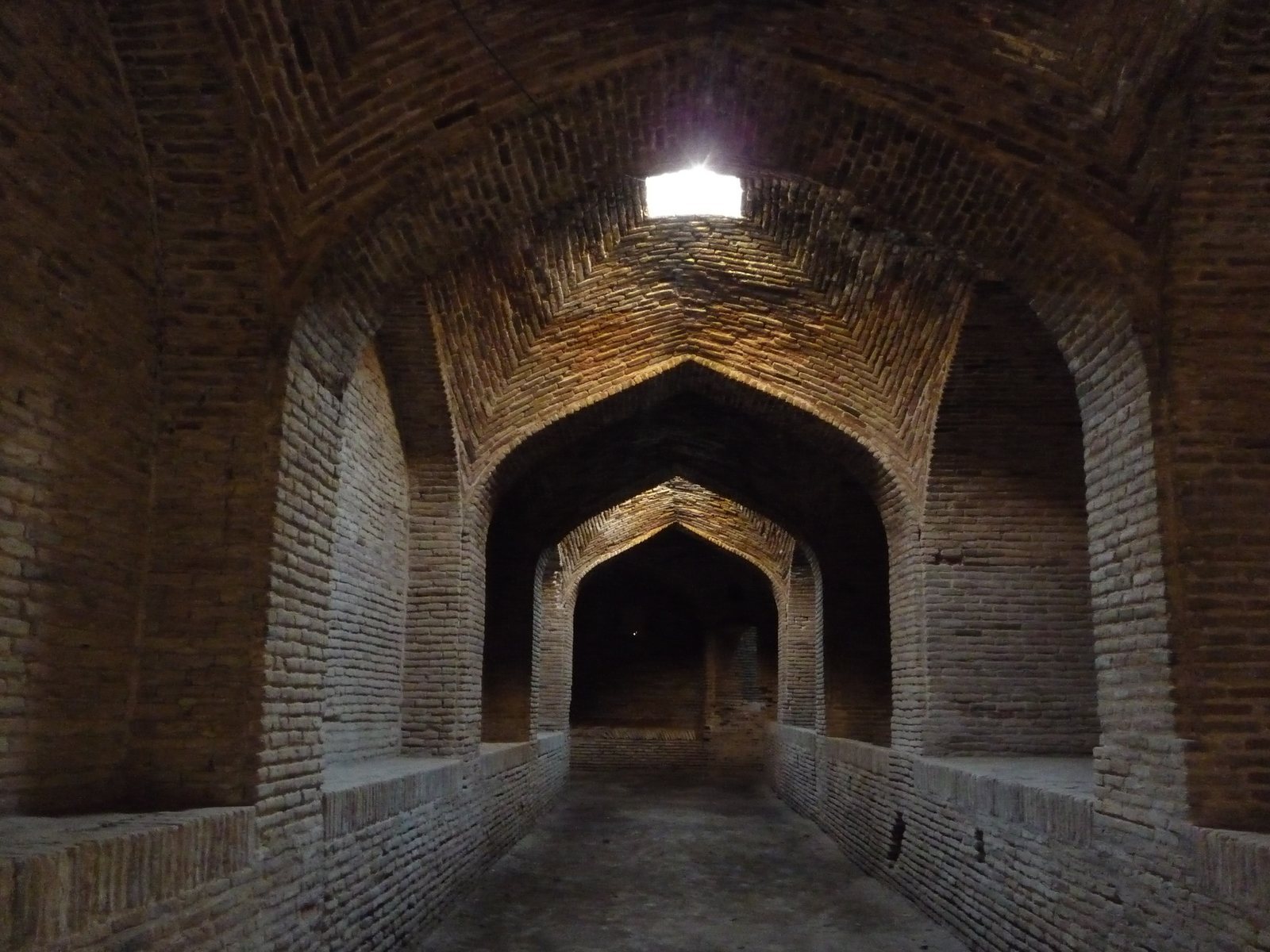
The caravanserai stands in the Maranjab Desert at the southern edge of Aran and Bidgol Salt Lake, about 40 km northeast of Aran and Bidgol. Its elevation is approximately 819–850 m above sea level. The rectangular building measures 72 by 64 m and contains 29 rooms. Stone foundations support a structure whose materials include brick, plaster, and cob.
Fortifications and Water Supply
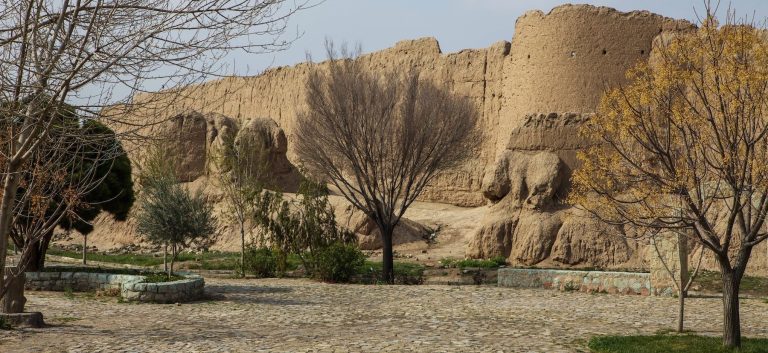
Fortified exterior walls enclose the building and include six watchtowers intended for archers and scouts. An iwan, a vaulted hall open on one side, is 7.45 m high, while a fortified tower reaches 6.3 m. A qanat, an underground channel system that carries water, supplies fresh, non-saline water to the caravanserai.