Mount Khajeh: A Sacred Hill and Archaeological Complex in Iran
Site at a Glance
- Popularity
- High
- Country
- Iran
- Primary era
- Classical
- Eras represented
- Iron Age, Classical, Medieval
- Civilizations
- Parthian, Sassanid, Scythian
- Site type
- Domestic
- Remains
- Palace
On this page13 sections
History
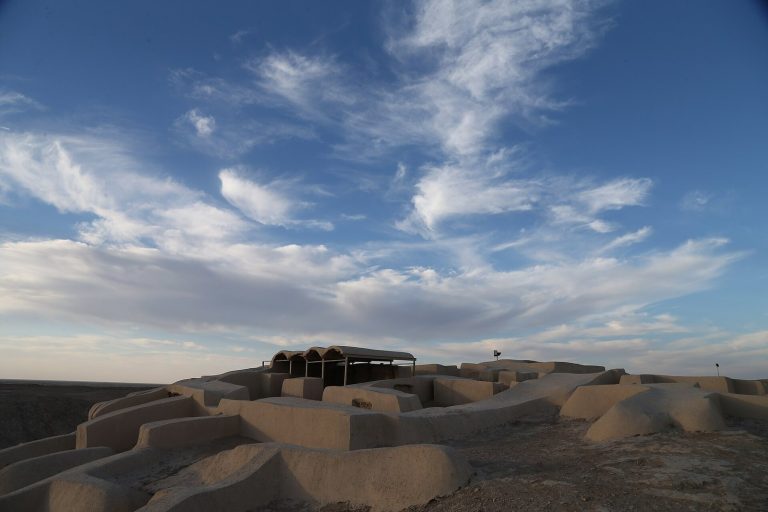
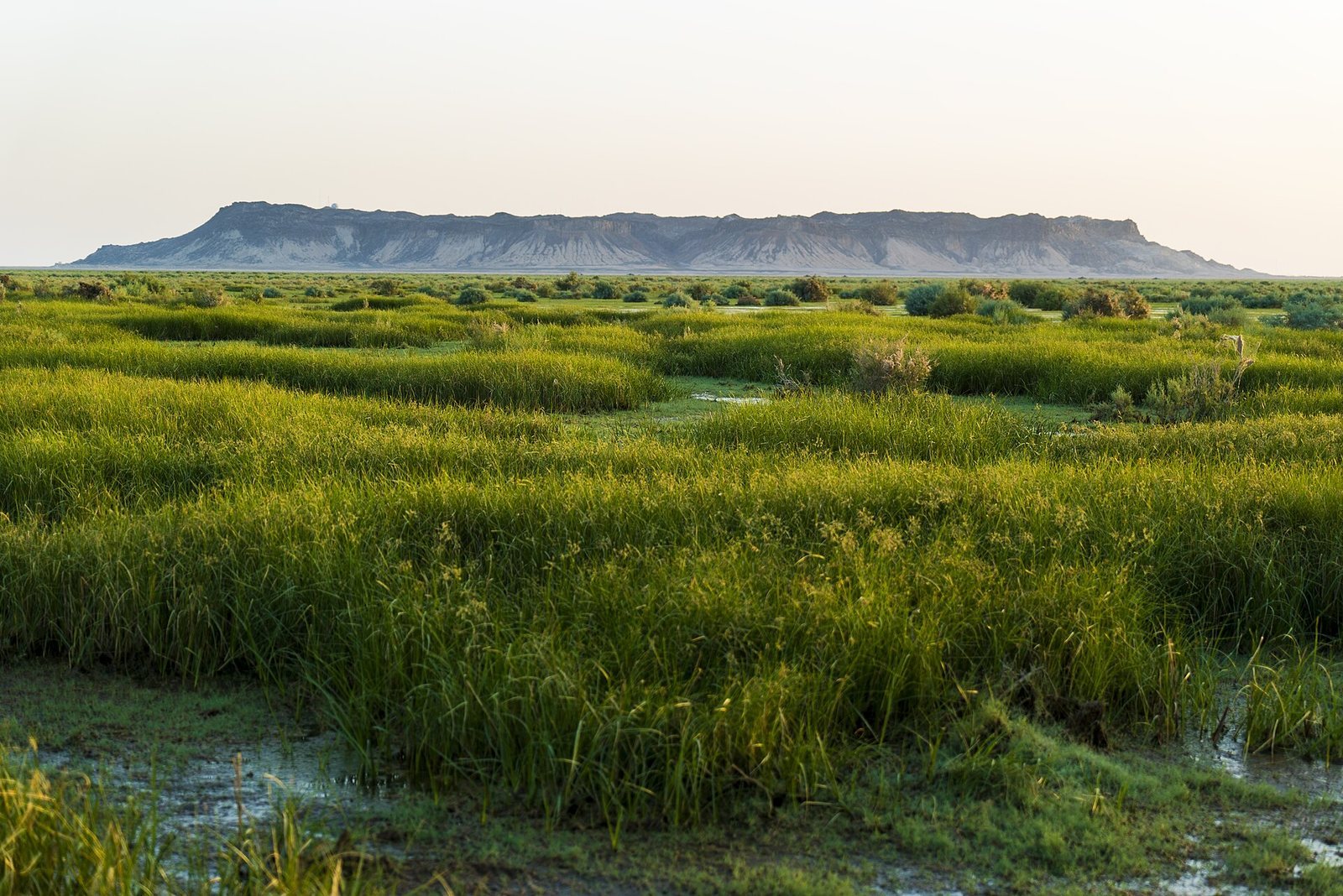
Mount Khajeh is a flat-topped basalt hill and archaeological site in Iran’s Sistan plain. Its remains are associated with the Saka people and the Parthian and Sasanian periods, successive Iranian empires. The hill is regarded as sacred by Zoroastrians, Christians, and Muslims, and the archaeological remains include a Buddhist temple.
Religious traditions
The hill is also called Oshida, meaning “eternal” in Middle Persian, a historical Iranian language. Its name, Mount Khajeh, comes from a shrine and tomb associated with Khwaja Ali Mahdi, a Muslim religious figure and descendant of Ali ibn Abi Talib. The tomb is a destination for Muslim pilgrims. A tradition also places the tomb of Rostam, a legendary hero of Persian epic, at the summit.
Zoroastrian tradition connects the hill with prayer and worship of Ahura Mazda, the religion’s supreme deity. In this belief, Lake Hamun preserves the seed of Zoroaster, the prophet associated with Zoroastrianism. As the world’s final renewal approaches, maidens who enter the lake are said to give birth to saviors of humanity.
Archaeological study and dating
The date of the palace and citadel complex remains uncertain. Ernst Herzfeld first proposed a tentative first-century CE date in the Arsacid, or Parthian, period, then revised his estimate to a later time. A Sasanian date is considered more likely.
Marc Aurel Stein investigated the citadel in 1915–1916. Herzfeld examined the site in 1925 and 1929, comparing the palace complex to Persepolis, the Achaemenid ceremonial center, with the descriptive phrase “mud-brick Persepolis.” Mount Khajeh entered Iran’s National Heritage List in 1931. Giorgio Gullini carried out a further, limited investigation in 1960.
Remains
Setting and layout
The site occupies a flat-topped, trapezoidal outcrop of black basalt that rises from Lake Hamun like an island. It reaches 609 metres above sea level and measures about 2 to 2.5 kilometres in diameter. It is the only natural elevation in the Sistan area. The citadel and palace complex lies on a southern promontory of the hill’s eastern slope, while separate buildings stand elsewhere on the plateau.
Citadel and palace complex
The ruins at the southern promontory are known as Ghagha-Shahr and include a citadel, palace, and fire temple. The temple is dated to the first century CE. Its central hall is encircled by corridors leading to a main entrance with four arches.
Other structures and finds
Castles and plateau buildings
The area contains several castles and fortifications, including the Castle of the Forty Girls, as well as a second tomb, another building, and a structure known in translation as the House of Satan. Several buildings on the plateau lie apart from the citadel complex. Their function is uncertain, and they probably belong to the Islamic period.
Excavated remains and early finds
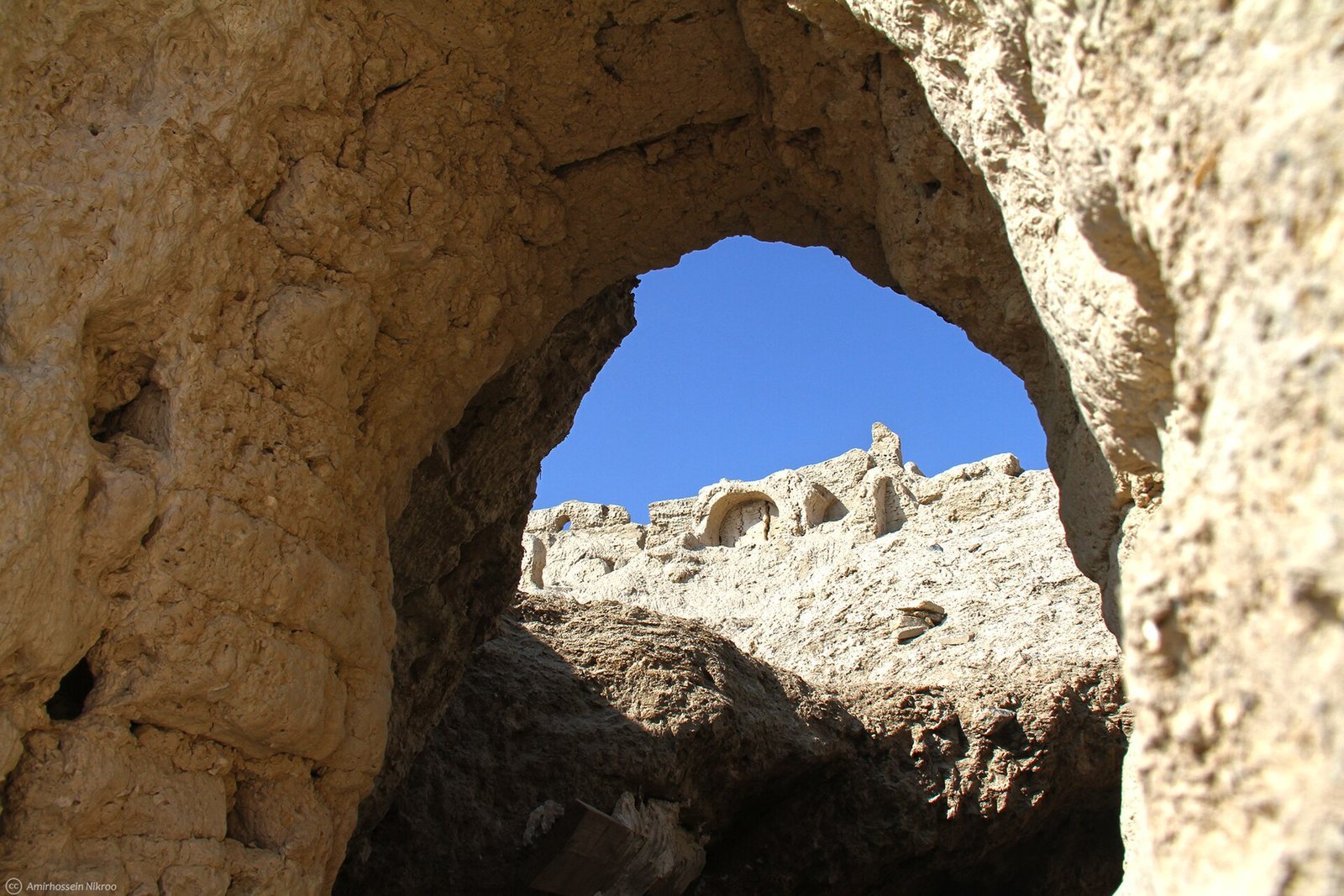
Excavations exposed brick walls more than a thousand years old, with heights reaching 40 metres. A cave is also present on the hill. The oldest finds are pottery fragments dating to the Achaemenid period, an earlier Iranian empire.
Architectural and figurative decoration
Column forms and motifs
Some castles and fortifications have rounded column tops with broad scroll-shaped forms and small lotus-flower motifs. Other decorative elements resemble Achaemenid and Mesopotamian art, as well as Greek architectural forms.
Wall paintings
Wall paintings depict rulers, court figures, and religious narratives, along with people making music, dancing, performing acrobatics, and walking tightropes. Identified scenes include three kings, a victory goddess riding a horse, a king and queen, and Parthian courtiers. A Sasanian painting dated to the seventh century CE shows a woman with her mouth covered.
Raised clay panels
Raised clay panels on outer walls portray mounted figures. One scene shows three riders following each other, while another depicts a lion attacking a person on horseback. These rider-and-horse panels belong to a later phase of the complex, probably the Sasanian period.