Holy Trinity Church, Stratford-upon-Avon: A Gothic Parish Church
Site at a Glance
- Popularity
- Very High
- Country
- United Kingdom
- Primary era
- Medieval
- Eras represented
- Medieval, Early Modern, Modern
- Civilizations
- British, English
- Site type
- Religious
- Remains
- Church
On this page18 sections
History
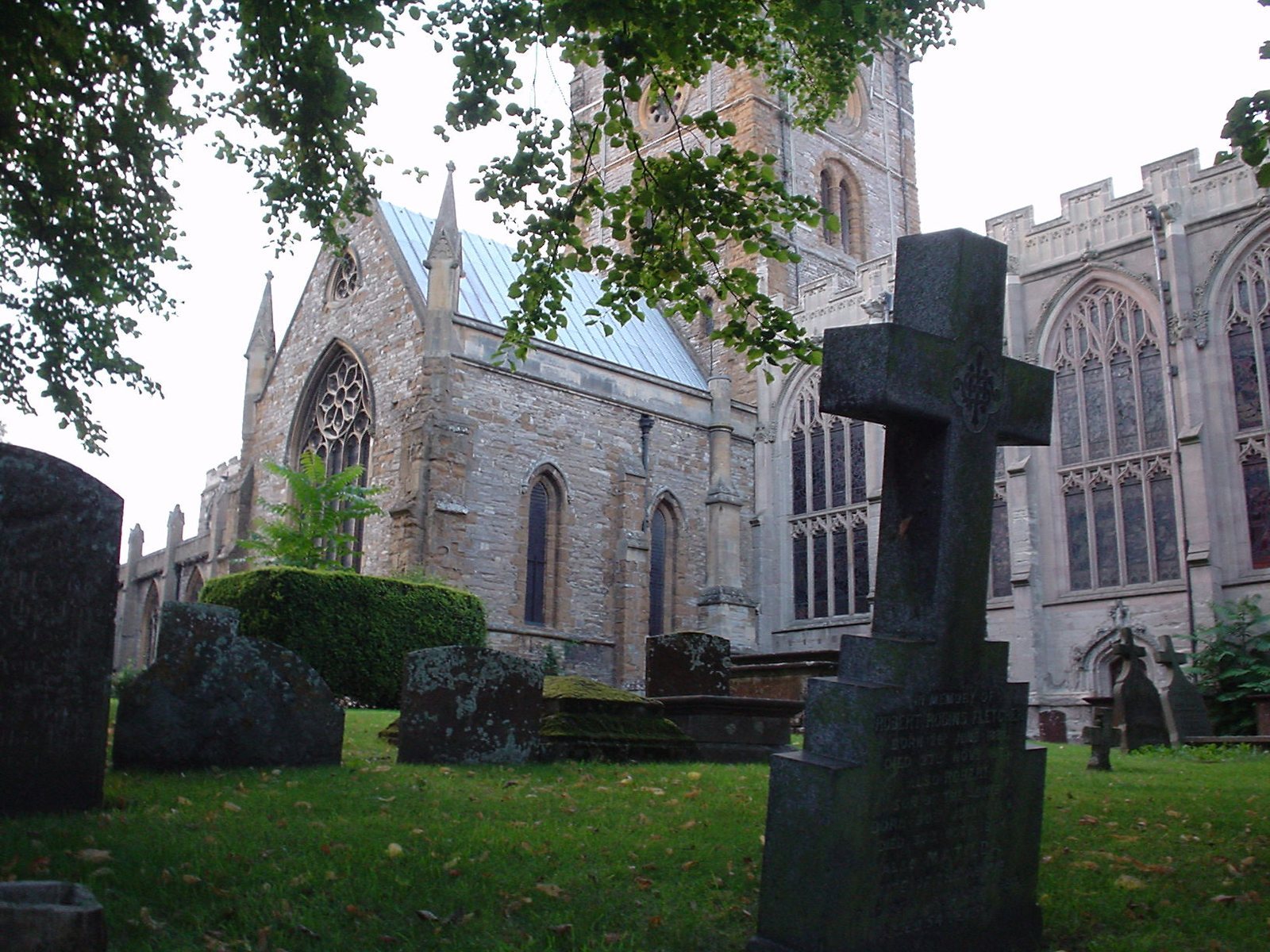
Holy Trinity Church, Stratford-upon-Avon, England, is a Church of England parish church in Gothic style, a medieval architectural tradition associated with pointed arches and elaborate window designs. Its first building was erected in 1210 on the site of a Saxon monastery, and the church is described as Stratford-upon-Avon’s oldest building.
Foundation and later-medieval rebuilding
In the 14th century, John de Stratford founded a chantry, an endowed foundation supporting prayers or services for the dead, at the church. De Stratford was also Archbishop of Canterbury, Bishop of Winchester, and Treasurer and Chancellor of England.
A major rebuilding began in 1465 under Thomas Balsall, dean, or senior cleric, of the collegiate church, a church served by a body of clergy. The work continued through the later 15th century. Balsall was buried at the church in 1491.
The Reformation and later changes
During the English Reformation, the religious and institutional break with Roman Catholic authority that established a Protestant church in England, the church’s religious affiliation changed from Roman Catholicism to the Church of England. Carved images of Christ, including scenes around Balsall’s tomb, were mutilated. The church has undergone repeated restoration.
Shakespeare and the church
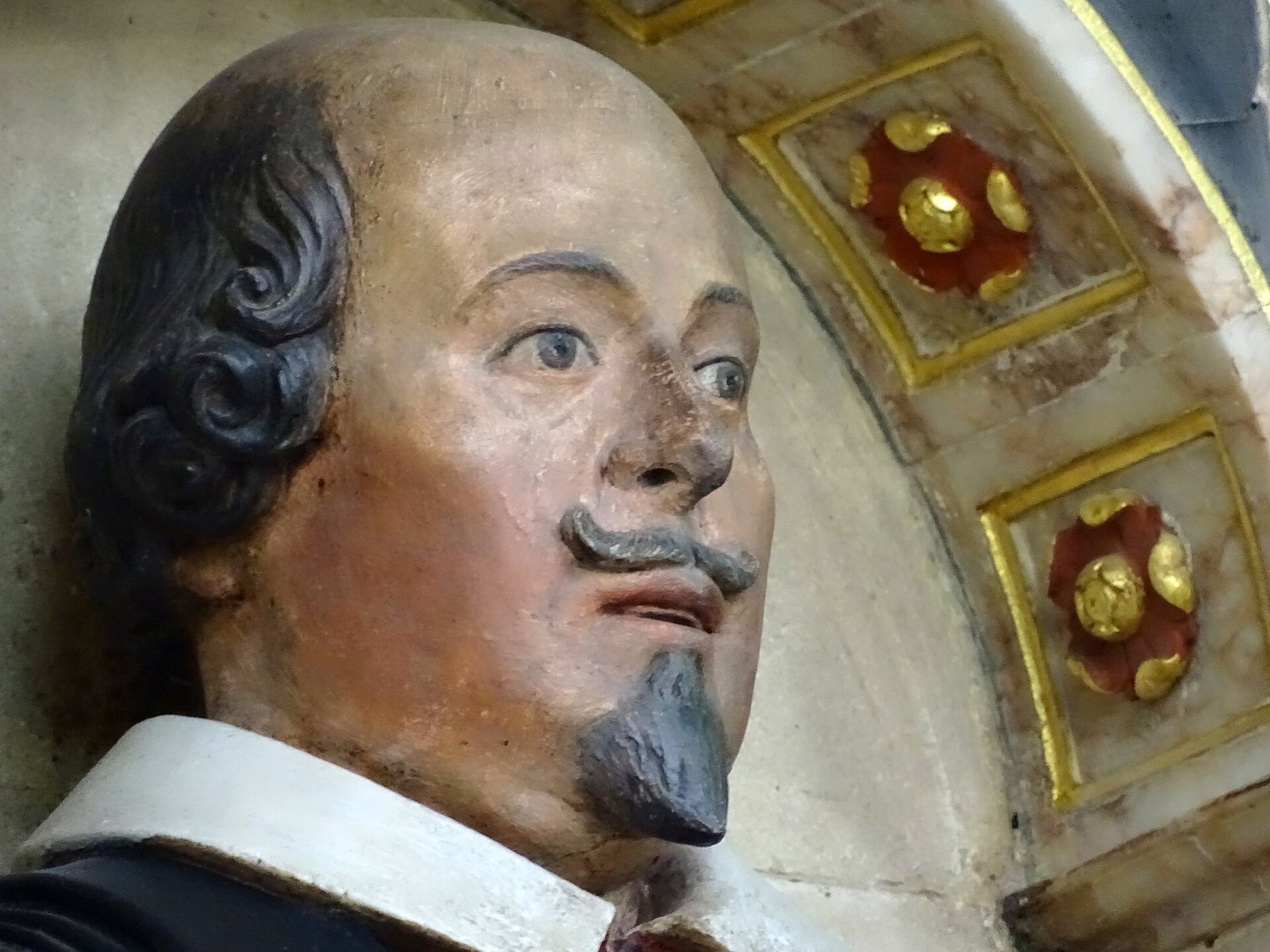
William Shakespeare was baptized at Holy Trinity on 26 April 1564 and buried there on 25 April 1616. He is thought to have attended services weekly as a child and after returning to Stratford-upon-Avon to live at New Place. His right to burial in the chancel came through his position as a lay rector, a layperson with rights to rectorial income, including tithes. He leased the church’s tithes, with the entitlement obtained either by him or on his behalf. His wife, Anne Hathaway, and eldest daughter, Susanna, were also buried at the church.
Events in the weeks before Shakespeare’s burial connected the church with his family’s private affairs. On 26 March 1616, the day after Shakespeare signed his will, his son-in-law Thomas Quiney was found guilty in the church court of fathering a child with Margaret Wheler; the child had recently died. Quiney was ordered to perform public penance in the church. Shakespeare died within a month, and his funeral and burial took place there on 25 April.
In 1746, Shakespeare’s funerary monument was renovated using proceeds from a performance of Othello, the first recorded performance of a Shakespeare play in Stratford-upon-Avon. During the Victorian period, a pre-Reformation altar slab was found hidden beneath the floor and reinstated as the high altar.
The modern parish
Holy Trinity was designated a Grade I listed building in 1951. Construction of an extension beside the south aisle began in 2015. The church remains an active parish church in the Diocese of Coventry and the Province of Canterbury, within the Broad Church tradition of Anglicanism, which accommodates a wide range of theological views. Its parish serves about 17,000 people.
Remains
Standing on the banks of the River Avon, the church is arranged around a nave, the main body of the building, with two aisles, a chancel, the area around the altar, and two transepts, crosswise sections of the church. Its medieval Gothic fabric incorporates a crossing tower and a range of chapels, carved furnishings, stained glass, and memorials.
Medieval fabric and chapels
Plan and early structure
The tower at the crossing dates to 1210 and is supported by four columns. The transepts and columns in the nave also include fabric of that date. The tower carries a pointed spire, believed originally to have been wooden; William Hiorne replaced it in 1763. The north and south aisles were added around 1300. Above the nave, rows of arches and a clerestory, an upper wall with windows, rise over a wooden ceiling. The lower transepts have windows with ornamental stonework, known as tracery, and stained glass.
Chancel and entrance
The chancel and its wooden choir seats date to the later 15th century. Beneath the folding seats are 26 carved misericords, supports decorated with religious, everyday, and mythical subjects. The church porch was built around 1500. Its inner door carries a 14th-century sanctuary knocker, a fitting associated with claiming protection within a church. Tradition holds that anyone who rang it received 37 days of sanctuary.
Chapels and stained glass
The 15th-century Clopton chantry chapel is one of the church’s chapels. A chapel in the south aisle, called the Thomas Becket Chapel, was dedicated to John de Stratford in 1331. Thomas Becket, Archbishop of Canterbury, was murdered in 1170 and later venerated as a saint. In the south transept, St Peter’s Chapel contains a stained-glass window unveiled in 1896. Donated by an American ambassador, it bears the inscription, ‘The Gift of America to Shakespeare’s Church.’
Large windows at the east and west ends depict English and biblical saints. Medieval glass also shows the Resurrection, the Ascension, and Pentecost. A face carved into a canopy over the clergy’s seats may represent Christ or, possibly, God the Father.
Tomb carvings and altar
Scenes from the life of Christ are carved around Balsall’s tomb. The high altar is formed from a pre-Reformation stone slab, discovered concealed beneath the floor during the Victorian period and subsequently put back into use.
Burials and records
Shakespeare family graves
Shakespeare’s grave lies in the chancel beneath a badly eroded stone slab bearing an epitaph that warns against disturbing his remains. A tradition holds that he was buried seven feet deep to deter grave robbers. The warning may also have prevented his body from being moved to Westminster Abbey and exhumed for examination. His funerary monument is fixed to a wall beside the grave.
Anne Hathaway’s grave is beside Shakespeare’s. Its inscription gives her date of death as 6 August 1623 and her age as 67; a Latin verse recalls the children she bore and expresses the hope that Christ will raise her from the tomb. Susanna is buried beside her parents.
Other memorials and parish records
The north aisle contains the tomb of Joyce Clopton, who died in 1635, and her husband George Carew, Earl of Totnes, who died in 1629 and served as a minister under James I. A baptismal font stands near the door. The church’s original Elizabethan register records Shakespeare’s baptism and burial and is kept by the Shakespeare Birthplace Trust for safekeeping; copies of the records are also associated with the church.
Later furnishings and additions
Pipe organ
William Hill built the three-keyboard pipe organ in 1841. Its case was designed by architects George Frederick Bodley and Thomas Garner, and the instrument has been restored by Hill, Norman and Beard, and Nicholson. Its divisions, groups of pipes controlled from keyboards or pedals, are arranged in two locations. The Great, Swell 1, and Pedal 1 divisions sit high on the wall above the arch into the tower crossing and face west. The Choir, Swell 2, and Pedal 2 divisions are at ground level between St Peter’s Chapel and the south aisle.
South aisle extension
The extension beside the south aisle provides a vestry and storage space. Designed by Stephen Oliver Architecture and built of local limestone, it incorporates a stained-glass window that had been hidden by the organ.
Cheshire memorial
A sandstone obelisk erected in 1858 commemorates William Cheshire, a printer and botanist.