Church of Santa Isabel de Portugal: A Baroque Catholic Church in Zaragoza
Site at a Glance
- Popularity
- Medium
- Country
- Spain
- Primary era
- Early Modern
- Eras represented
- Early Modern, Modern
- Civilizations
- Crown of Aragon, Spanish
- Site type
- Religious
- Remains
- Church
On this page10 sections
History
Foundation and construction
The Church of Santa Isabel de Portugal is a Baroque Catholic church on Plaza del Justicia in Zaragoza, Spain, built between 1681 and 1704. Its creation followed the spread of devotion to Isabel of Portugal after her canonization in 1625.
Isabel was the daughter of Pedro III of Aragón and was born in the Aljafería Palace. She became queen consort of Portugal through her marriage to Dionysius I and was the mother of Alfonso IV. The church is dedicated to her and to the Theatine saints Cayetano de Thiene and Andrés Avelino. The Theatines are a Catholic order of clerics.
In 1678, the Metropolitan Chapter of Zaragoza, the clergy body attached to the city’s metropolitan cathedral, proposed building a church in Isabel’s honor. The Theatines supported the plan, and their saints became co-patrons. Lorenzo Onofre Colonna, viceroy of Aragón and the monarch’s representative in the territory, approved the proposal. The Theatines had first sought the chosen plot for a convent, but agreed in 1681 to its use for the church. Viceroy Jaime Fernández de Híjar then authorized the project. The Diputación General, a representative governing institution of the Kingdom of Aragón, contributed a large share of the construction budget.
Ownership and remembrance
After the Diputación General was abolished in 1708, the Metropolitan Chapter took responsibility for maintaining the church. In 1835, the Mendizábal confiscation, a Spanish program for taking and selling church property, dissolved the Theatine order and placed its holdings on the market. The state transferred the church to the Provincial Deputation of Zaragoza in 1842. The provincial government body undertook to preserve it, while care of the building passed to the Brotherhood of the Blood of Christ. The brotherhood’s usufruct, or right to use and benefit from property owned by another party, was formally confirmed in 1898.
On 17 October 1914, the remains of Juan de Lanuza were moved from Zaragoza’s city hall to the church. Lanuza had held the office of Justicia of Aragón, a senior judicial position, and was executed during the Aragonese Alterations of 1591, a political uprising in Aragón.
Restoration and continuing role
The Chapel of St George was completed in 1963, and the Theatines returned to the church in 1964. The Provincial Deputation funded restoration when the building was in poor condition. A comprehensive restoration lasting ten years was completed in 1998. The church was declared an Asset of Cultural Interest, a formal Spanish heritage designation, on 6 July 1974.
Since its restoration, the church has hosted concerts, exhibitions, other cultural events, and religious observances. It is an important center of Zaragoza’s Holy Week, and the Holy Burial procession departs from it. The church is the canonical seat, or official headquarters, of the Coordinating Board of Zaragoza Holy Week Brotherhoods. It also serves as the seat of the Brotherhood of the Entry of Jesus into Jerusalem, the Brotherhood of Saint Joachim and Our Lady of Sorrows, the Brotherhood of the Seven Words and Saint John the Evangelist, the Brotherhood of Our Lady of Pity and the Holy Sepulchre, and the Very Illustrious, Most Ancient and Royal Brotherhood of the Most Precious Blood of Our Lord Jesus Christ and Mother of God of Mercy.
Remains
The church has a Baroque design and a Greek-cross plan, with four arms of roughly equal length. Its design drew on Madrid’s Church of San Cayetano and models of Roman churches.
Exterior
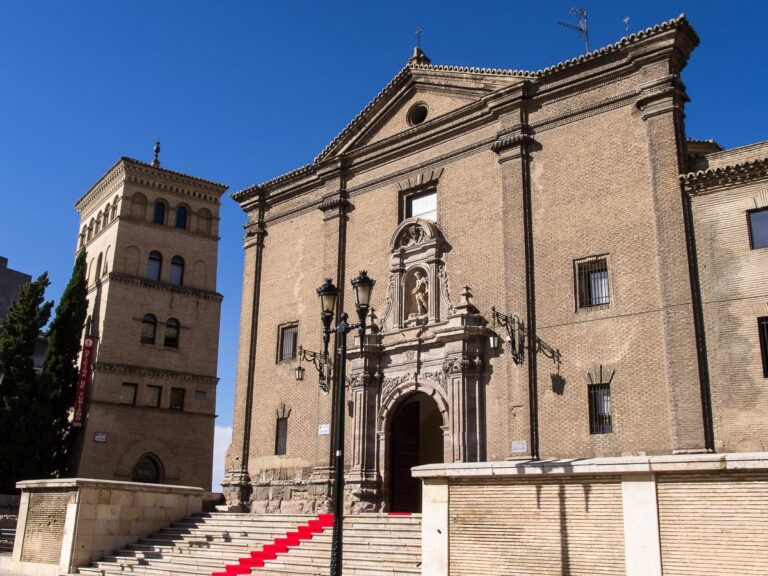
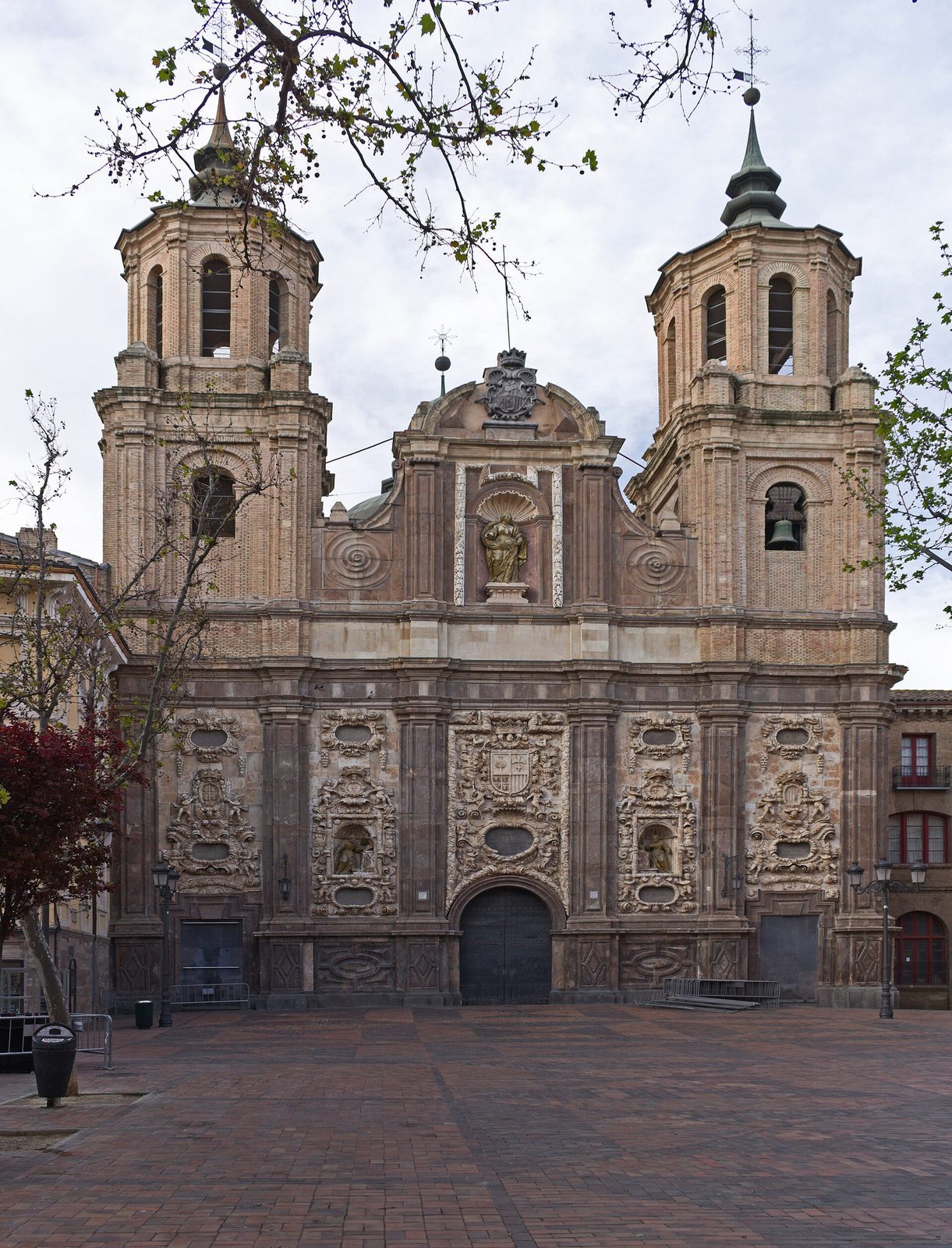
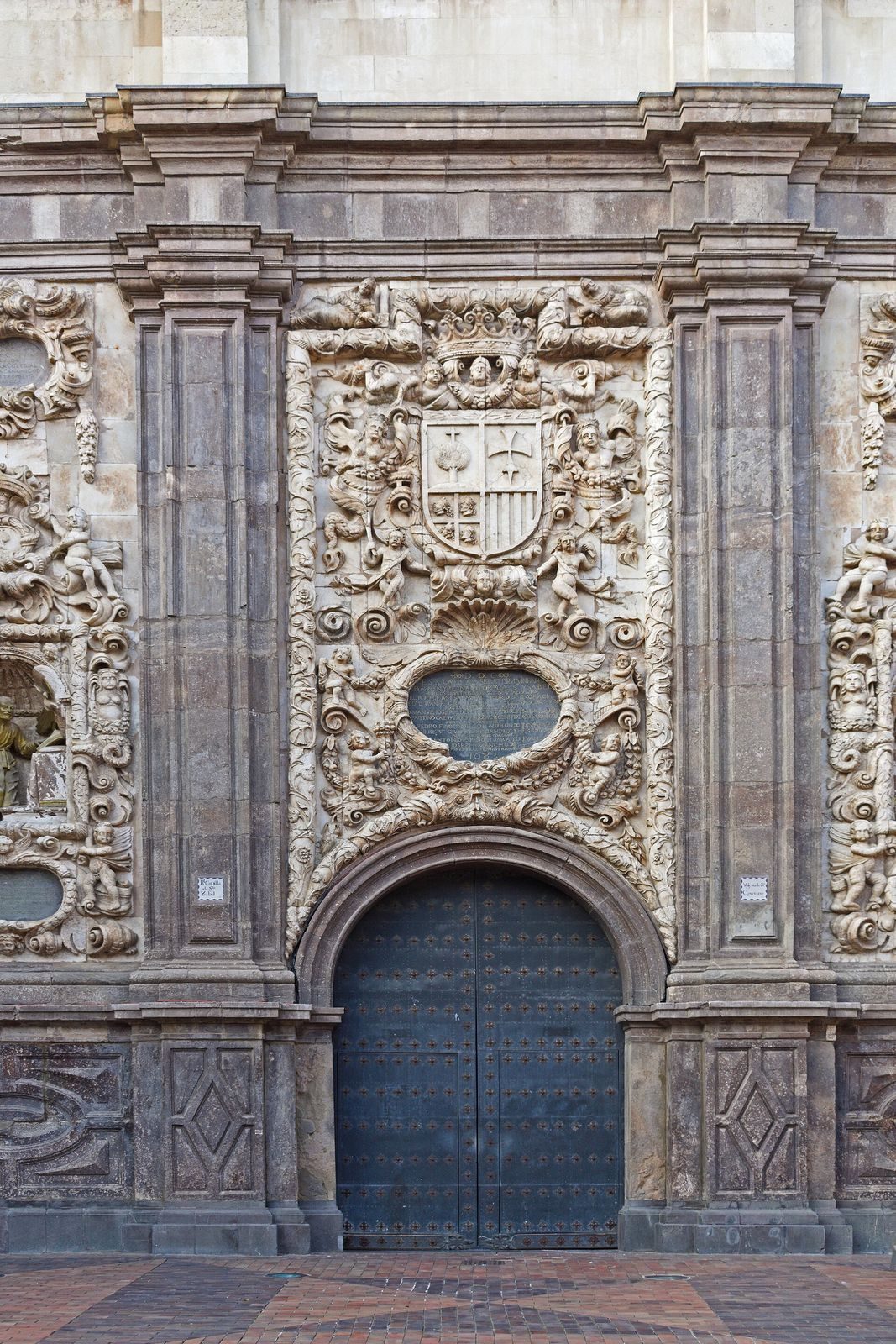
The richly ornamented façade combines white and dark alabaster with marble and plaster. Jaime Ayer and Francisco Pérez Artigas carried out its alabaster carving. Contrasting colors and elaborate lines reflect the emerging Churrigueresque style, an ornate form of Baroque architecture. A large, quartered coat of arms of the Kingdom of Aragón occupies the center. Its upper part includes the Tree of Sobrarbe and the Cross of Íñigo Arista, traditional emblems associated with Aragón. Below appear the Four Bars of Aragón and the Cross of Saint George with four Moorish heads, a heraldic design called Alcoraz. Gilded statues of the church’s co-patrons decorate the façade. Isabel of Aragón and Sicily stands in the upper niche, turned slightly outward so that the roses traditionally associated with her can be seen. Andrés Avelino and Cayetano de Thiene appear praying in two lower niches. Two plain brick towers rise above the façade.
Interior
Dome system
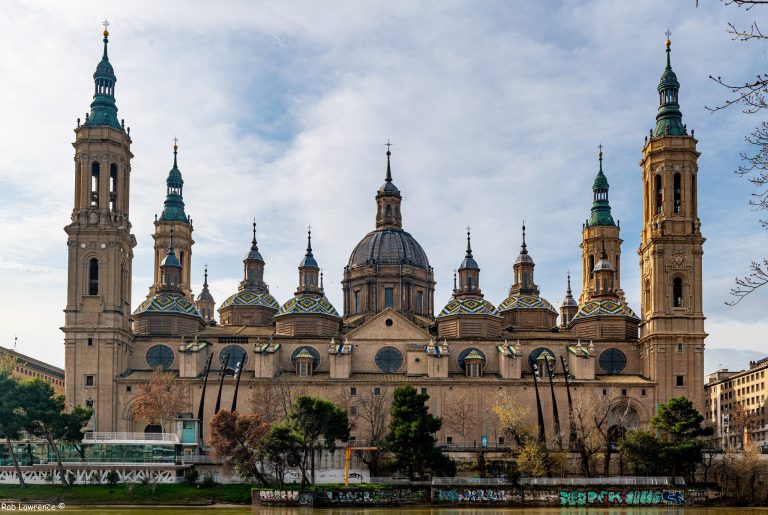
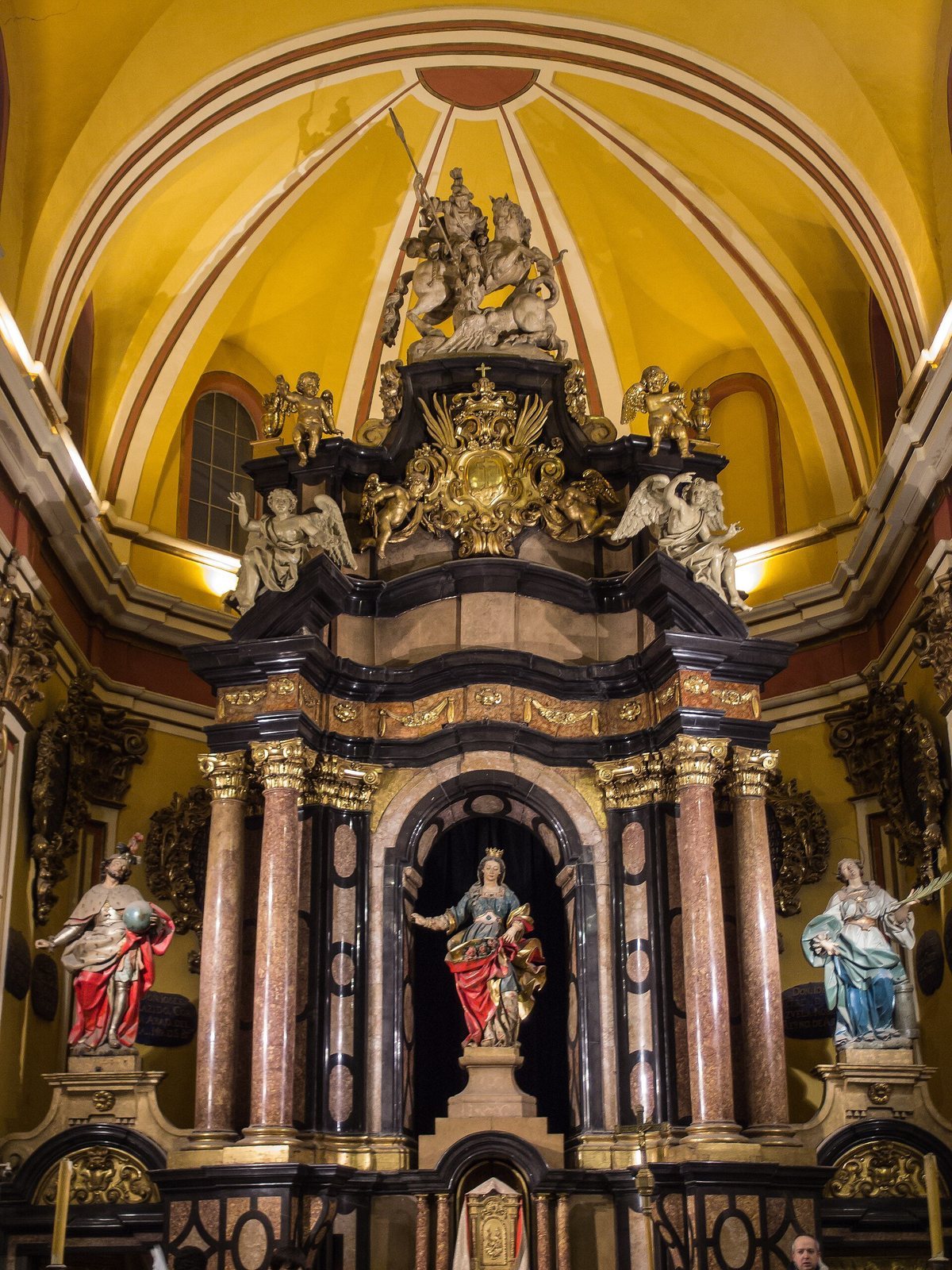
Gold ornament covers the interior ceiling. A central dome rises above a tall drum, the structure that supports a dome, and four smaller domes complete the arrangement. The system resembles that of the Basilica of the Pilar, Zaragoza’s major shrine to the Virgin Mary.
Main altarpiece
José Ramírez de Arellano made the central altarpiece between 1750 and 1760. Its polychrome decoration uses jasper, a decorative variety of quartz, marble, and painted stucco designed to imitate gold. An equestrian statue of Saint George that belonged to the altarpiece is now at the Provincial Deputation of Zaragoza.
Chapel and devotional image
The church contains the Chapel of St George and preserves the revered image of Cristo de la Cama.