Tarxien Temples: A Prehistoric Temple Complex in Malta
Site at a Glance
- Popularity
- Very High
- Country
- Malta
- Primary era
- Stone Age
- Eras represented
- Stone Age, Classical, Modern
- Civilizations
- Maltese Temple Culture, Roman
- Site type
- Religious
- Remains
- Temple
On this page14 sections
History
The Tarxien Temples are a prehistoric complex of large-stone buildings in Tarxien, Malta. They are associated with the Tarxien phase, a period in Malta’s prehistoric chronology, and date broadly from the fourth to the third millennia BC.
Prehistoric use and reuse
The complex was used extensively for rituals, which may have included animal sacrifice. Cremation remains found in the center of the southern temple indicate that the site was later reused for burials during the Bronze Age, when bronze became an important material for tools and objects.
Discovery and excavation
The site came to attention after large stones emerged as a field was being ploughed. In 1913, land tenant Lorenzo Despott informed Themistocles Zammit, director of Malta’s National Museum. Zammit ordered a test trench, where the recovered pottery indicated prehistoric activity, and began formal excavations in 1915.
With help from local farmers and townspeople, Zammit excavated through 1919. By 1920, he had identified four structures and undertaken restoration. Archaeologist Joseph (J. G.) Baldacchino led further excavations after the Second World War, followed by another excavation in 1963. Zammit’s careful methods helped advance scientific archaeological work in Malta.
The excavations also confirmed the presence of an ancient culture on the islands, strengthening Maltese national identity and prompting greater public concern for protecting historic remains. Calls for site management, protective laws, and conservation followed.
Heritage recognition
The temples entered Malta’s Antiquities List in 1925. They form part of the Megalithic Temples of Malta UNESCO World Heritage Site, inscribed in 1980 and extended in 1992 and 2015. Its cultural criterion (iv) recognizes examples of important building types and architectural or technological ensembles from human history.
Remains
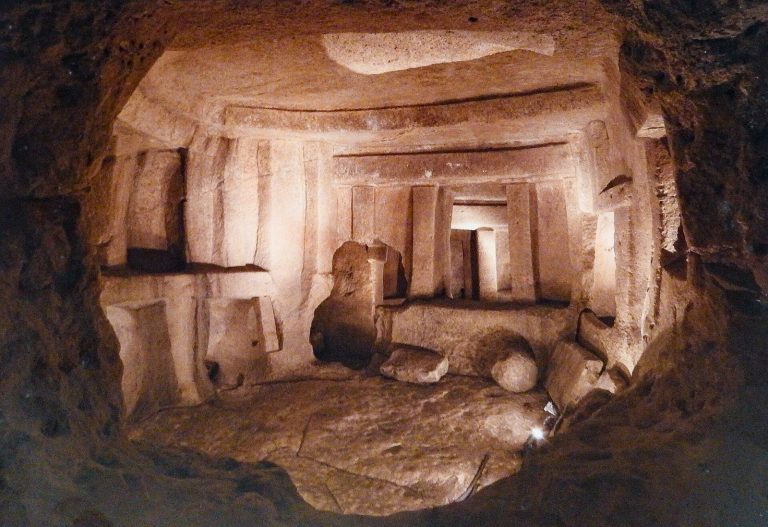
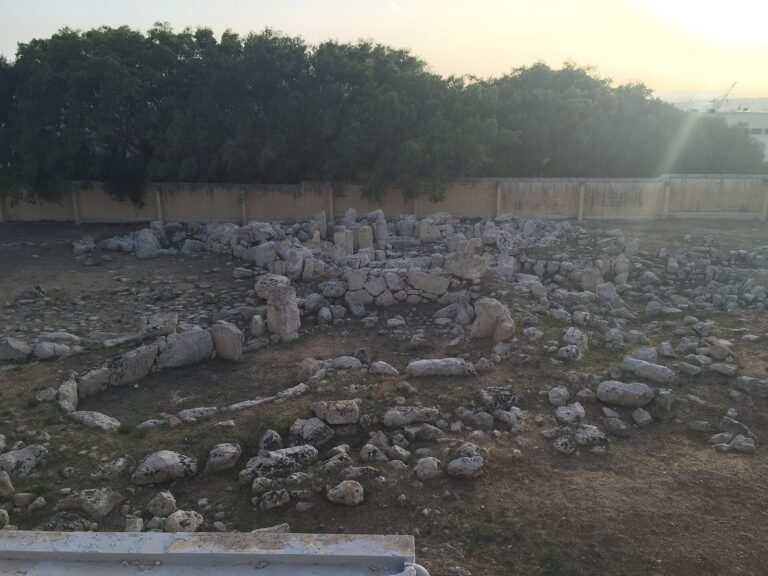
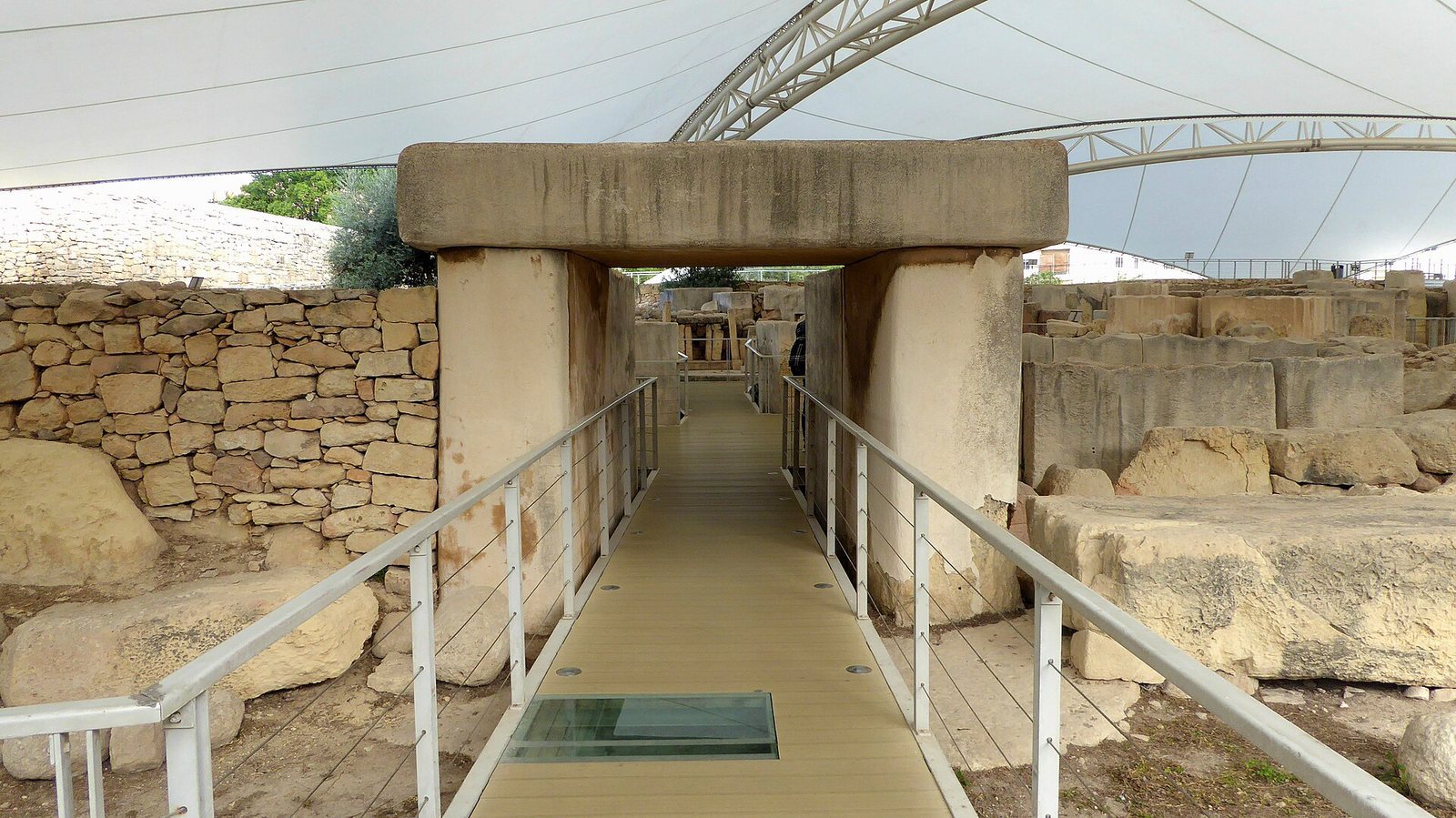
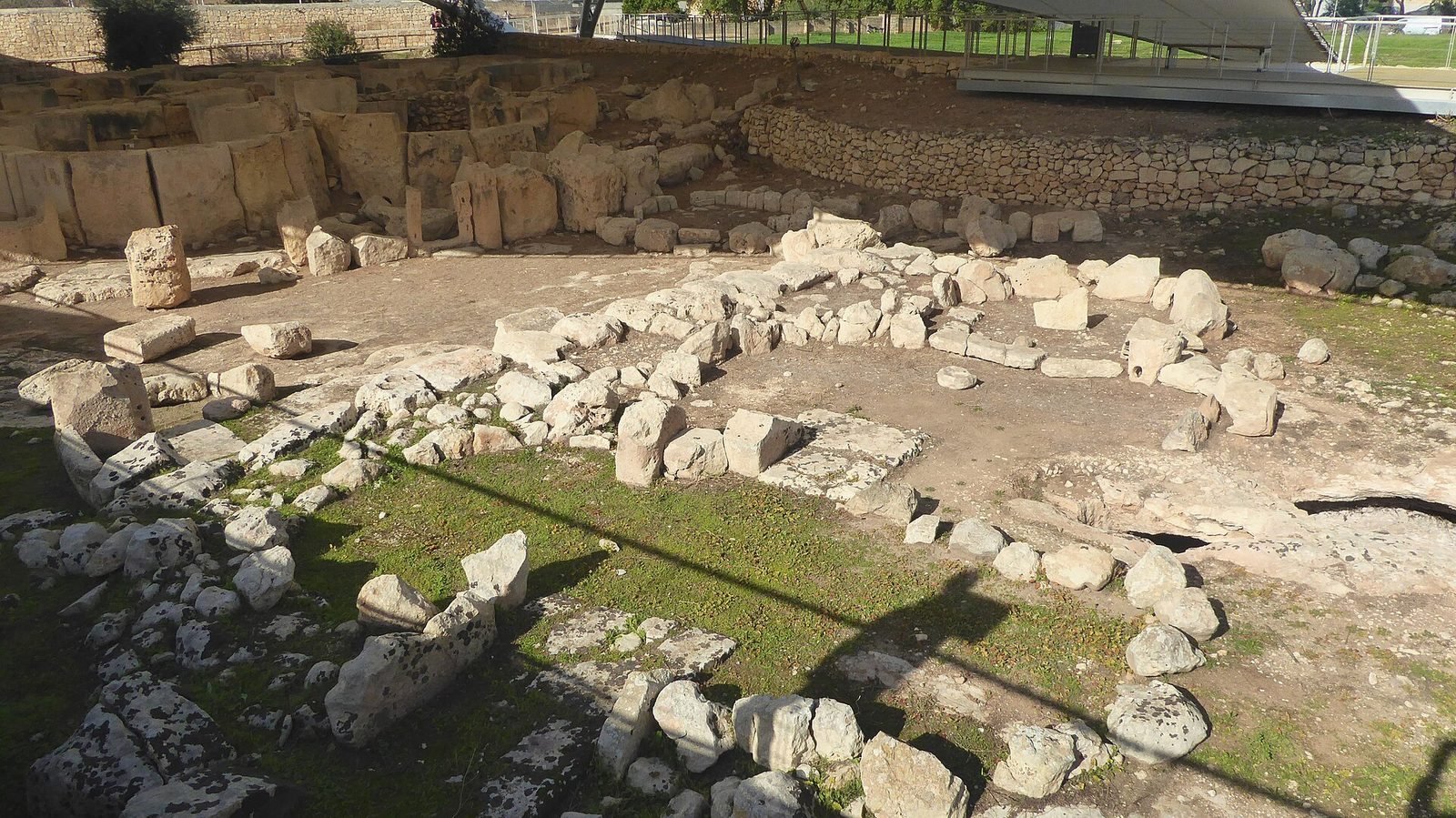
The complex consists of four associated but physically separate limestone structures: three principal temples and a smaller, older building farther east. The ruins are well preserved, and their remains reveal distinct plans, carved stonework, and later alterations.
The four temples
Southern temple
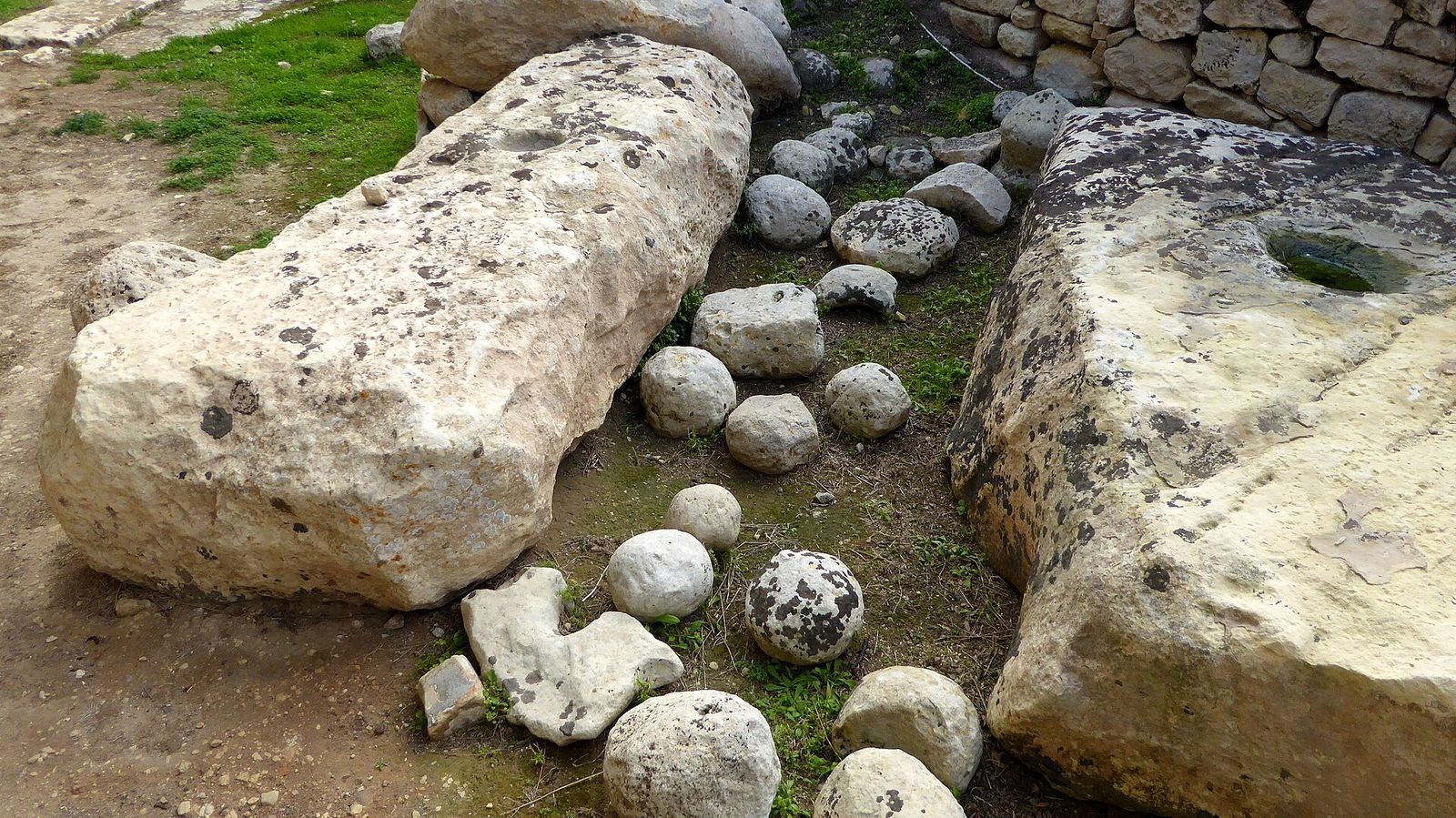
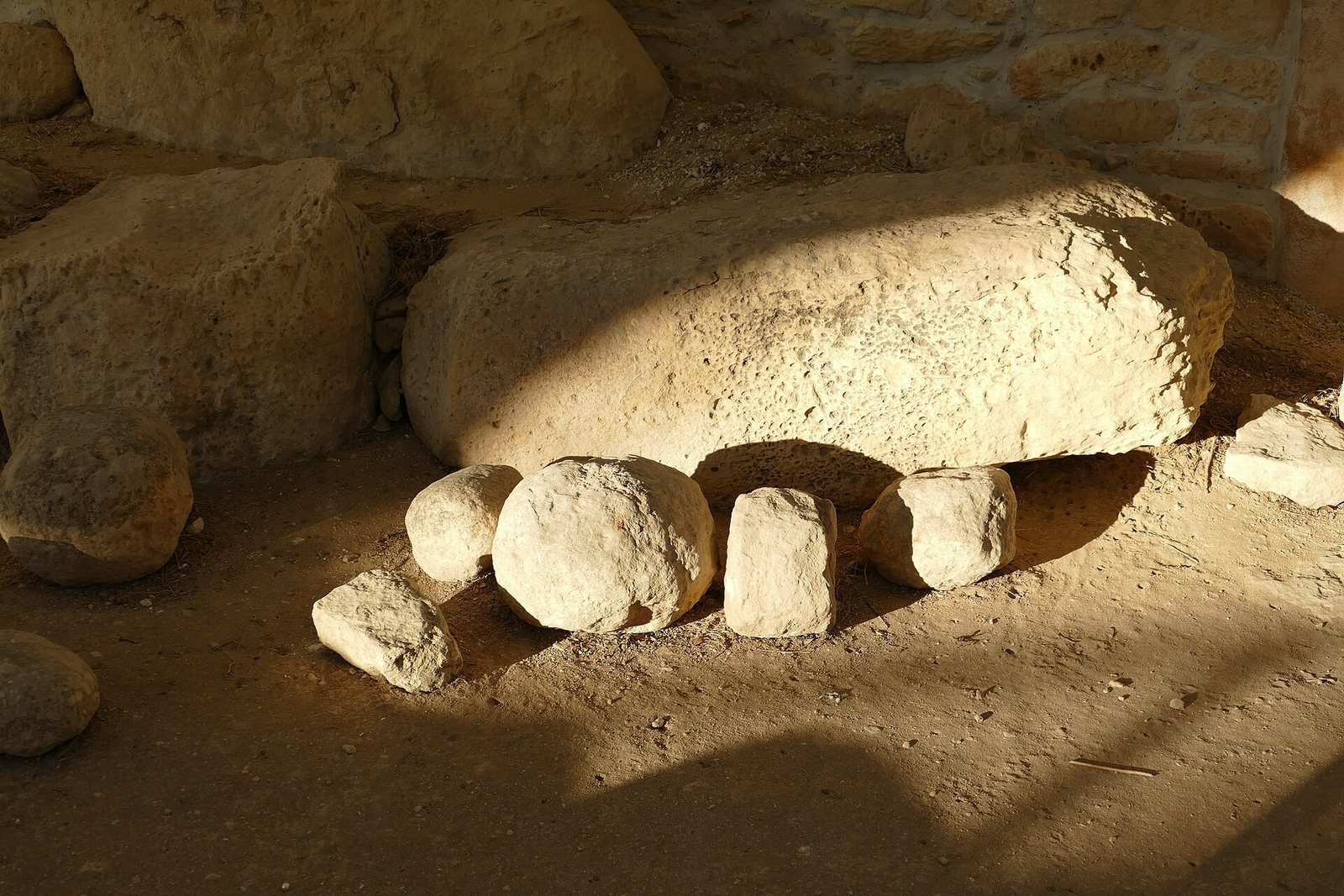
Dating to about 3100 BC, the southern temple, also known as the western temple, is among Malta’s most elaborately decorated large-stone buildings. Its surviving remains include the lower part of a colossal statue. A rounded stone roller outside the temple may have been used to move the large blocks used in construction.
Central temple
The central temple dates to about 3000 BC. Its plan has six rounded recesses arranged in three pairs, while other Maltese temples usually have two pairs. Evidence also points to a curved roof.
Eastern temple
The eastern temple dates to about 3100 BC and has walls made from stone slabs. Openings in the walls are called “oracle holes,” a label that does not establish their purpose. Roman-period alterations substantially changed the building’s shape.
Smaller eastern structure
The oldest building, dated to about 3250 BC, lies farther east. Its remains survive close to ground level, but its plan of five rounded recesses can still be seen.
Carved and sculpted remains
Relief decoration
Carvings of domesticated animals and ships appear alongside altars and stone screens or blocks incised with spirals and other patterns. A chamber within the thick wall between the southern and central temples contains a relief of a bull and a sow.
Colossal human figure
Excavations produced a large human figure known as the “Fat Lady,” described at the time as the largest known human representation from the Neolithic, the later part of the Stone Age. Its sex is uncertain. It may represent a mother goddess or fertility figure, but could depict a man or a woman; neither a beard nor male genitalia was identified.
Entrance and protection
The main entrance was reconstructed in 1956. Many decorated stone slabs recovered from the site were moved to the Museum of Archaeology in Valletta for protection from weathering. Tent-like shelters covering the temples were completed in 2015.