Dolmen D2: A Neolithic Portal Tomb in Westervelde, Netherlands
Site at a Glance
- Popularity
- Low
- Country
- Netherlands
- Primary era
- Stone Age
- Eras represented
- Stone Age
- Civilizations
- Unclassified
- Site type
- Burial
- Remains
- Tomb
On this page7 sections
History
Dolmen D2 is a Neolithic portal tomb, a megalithic burial structure with a stone chamber and an entrance formed by upright stones, in Westervelde, Netherlands. It is associated with the western group of the Funnel Beaker culture, a Neolithic culture named for its funnel-shaped pottery. Its construction dates broadly to the fourth and third millennia BCE.
Early records
The tomb was first mentioned in a letter from a mayor in 1869. Two years later, J. L. Tonckens donated it to the province of Drenthe. In 1874, curator Willem Pleyte and photographer Jan Goedeljee made a systematic photographic record of Drenthe’s megalithic tombs; Pleyte also produced lithographs based on their photographs.
In 1877, Rijksmuseum van Oudheden director Conrad Leemans made a separate journey to Drenthe, for which Hooft van Iddekinge prepared plans of the tombs. Leemans’s report was not published. From 1904 to 1906, physician and amateur archaeologist Willem Johannes de Wilde recorded surviving Dutch megalithic tombs through plans, photographs, and descriptions, but his records for D2 have been lost. In 1918, archaeologist Albert Egges van Giffen included the tomb in his atlas of Dutch megalithic tombs and described its condition as very damaged.
Conservation and later study
No systematic archaeological excavation has taken place at D2, so the contents of its burial chamber may remain intact. The tomb was restored in 1928, 1952, and 1965. It has been a Dutch National Monument since 1993, a designation recognizing its national heritage importance.
In 2017, the province of Drenthe and the University of Groningen included D2 in a photogrammetric survey, which uses overlapping photographs to record structures in three dimensions. The Gratama Foundation carried out the survey of surviving Dutch megalithic tombs. Cup marks on D2 were discovered the following year.
Remains
Chamber and entrance
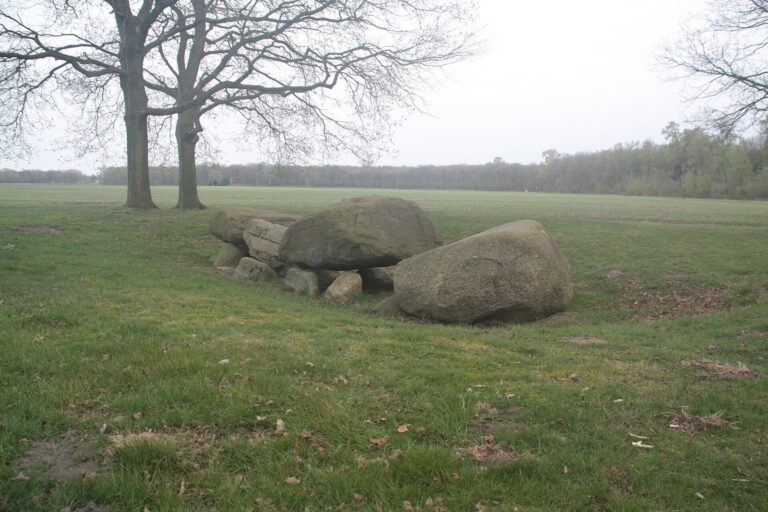
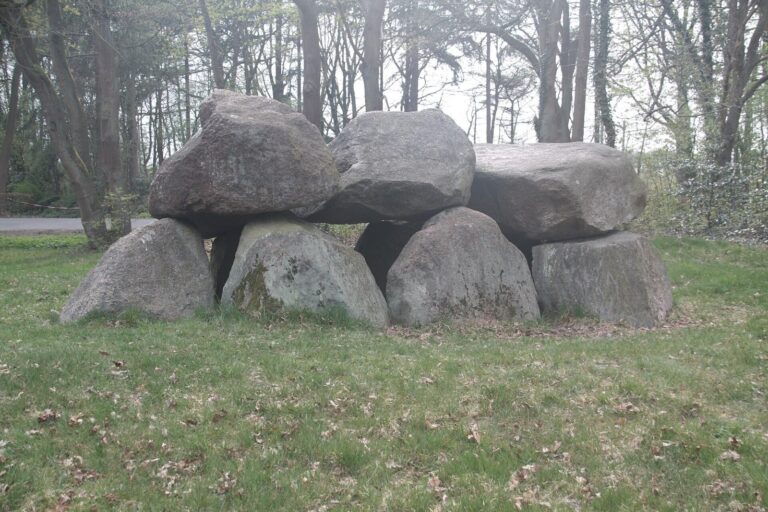
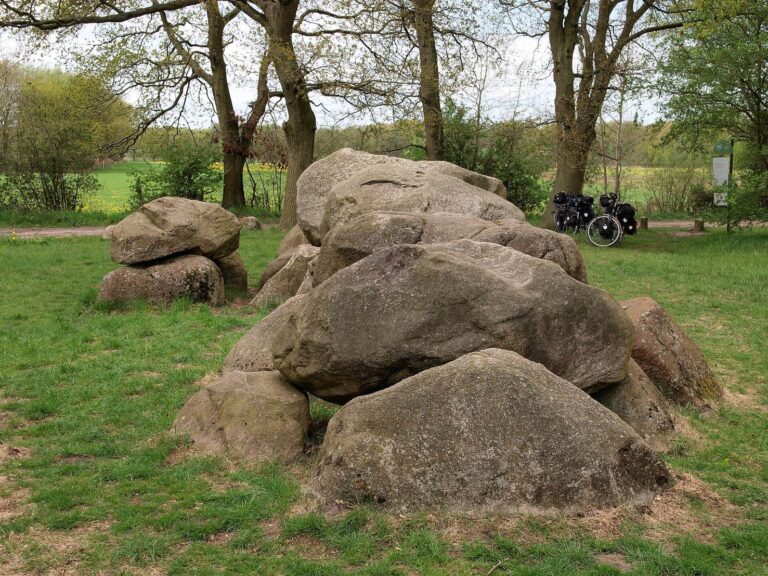
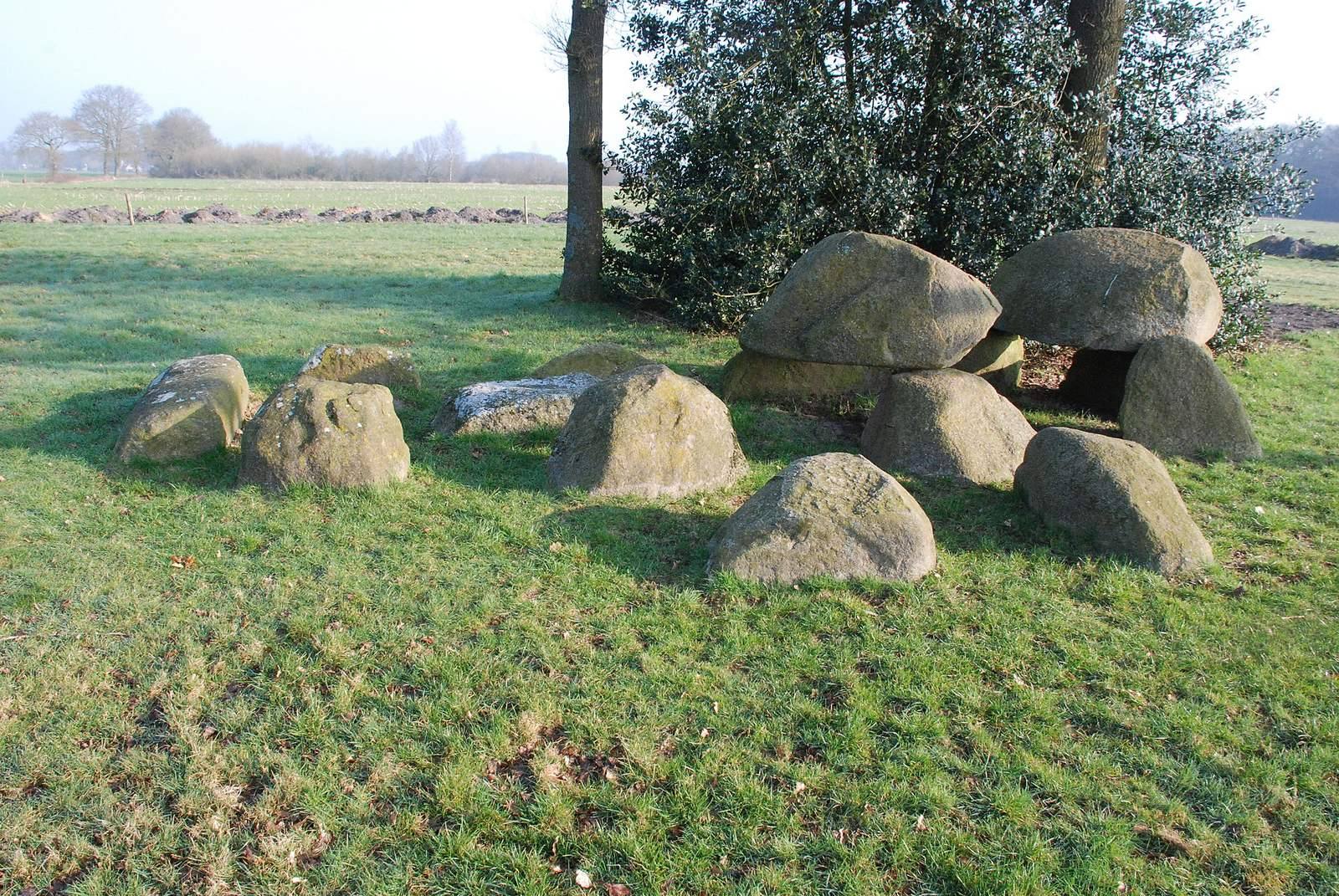
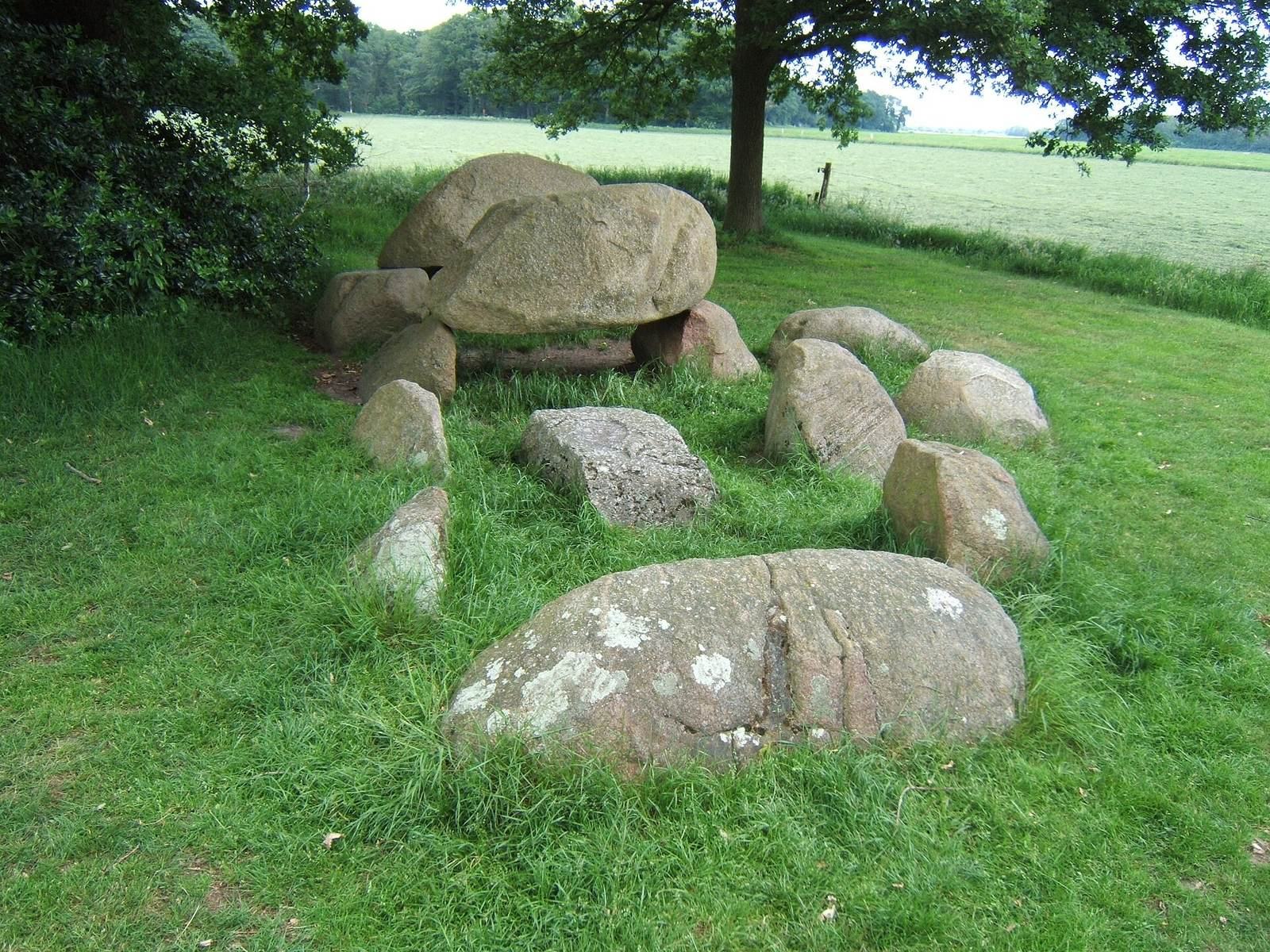
D2 stands in a field on the eastern edge of Westervelde, about 2 km south of Norg and near Norgerholt. The tomb is approximately 8 m long and 3 m wide, with its long axis running roughly east to west. Its chamber has four pairs of side stones and a closing stone at each end. An entrance midway along the southern side leads through a passage formed by two stones. The eight support stones and two end stones are complete, and two portal stones also remain.
Capstones and stone marks
The tomb originally had four capstones. The two eastern stones, which had fallen into the chamber, were later reset on their supports. A fragment of the third capstone lies inside the chamber. Its upper surface bears two cup marks, small hollows shaped like cups, as well as boreholes. These holes show that the stone was split using a method in which powder was placed inside and detonated. Broken stone was used as building material or for road surfacing.
Cremated remains
The tomb yielded 10.7 g of cremated human remains from one individual, whose age at death and sex could not be determined. It also yielded 6 g of cremated animal bone. Possible working marks on the animal bone fragments mean they may originally have served as tools.