Bourtzi: A Venetian Fortress in Nafplio Harbor
Site at a Glance
- Popularity
- Very High
- Country
- Greece
- Primary era
- Medieval
- Eras represented
- Medieval, Early Modern
- Civilizations
- Ottoman, Venetian
- Site type
- Military
- Remains
- Fort
On this page8 sections
History
Bourtzi is a small island fortress in Nafplio harbor, Greece, built by the Venetians in 1473 in the Renaissance style, which drew on classical antiquity. It formed part of defenses intended to protect the harbor and city from hostile ships. The Venetians constructed it after the Ottoman commander Mahmut Pasha had left Nafplio.
Venetian and Ottoman rule
In 1502, the Venetians fortified the southwest side of Akronafplia with the Five Brothers battery and linked Bourtzi to a wider system protecting the harbor. Ottoman forces captured Nafplio in 1540. Venice returned in 1686, and after the 1699 Treaty of Karlowitz, a peace agreement, the Venetians strengthened Bourtzi with a large tower and artillery bastions. The Ottomans retook Nafplio in 1715 and reinforced the fortress further.
War of Independence and early Greek state
During the Greek War of Independence, the uprising against Ottoman rule, French supporter of Greek independence Olivier Voutier made an unsuccessful attempt to seize Bourtzi in 1821. Nikitaras’s force attacked on December 3 or 4, and the fortress surrendered on June 18, 1822. The capturing force included 50 armed men and 150 artillerymen, led by four commanders, among them British naval officer Hastings and Greek officer Dimitrios Kallergis, under a French major. Greek forces then fired on Nafplio from the fortress and prevented an English ship from resupplying the besieged Ottoman garrison.
Nafplio served as the capital of the emerging Greek state during the revolution, and Bourtzi became a seat of the first provisional government. During internal Greek conflicts from 1823 to 1833, the government took refuge in the fortress on May 25, 1824, and July 2, 1827. The Venetians had called it Kastelli; during the independence struggle it was known as the Sea Tower. The name Bourtzi comes from an Ottoman Turkish word for “tower.”
Disarmament and later use
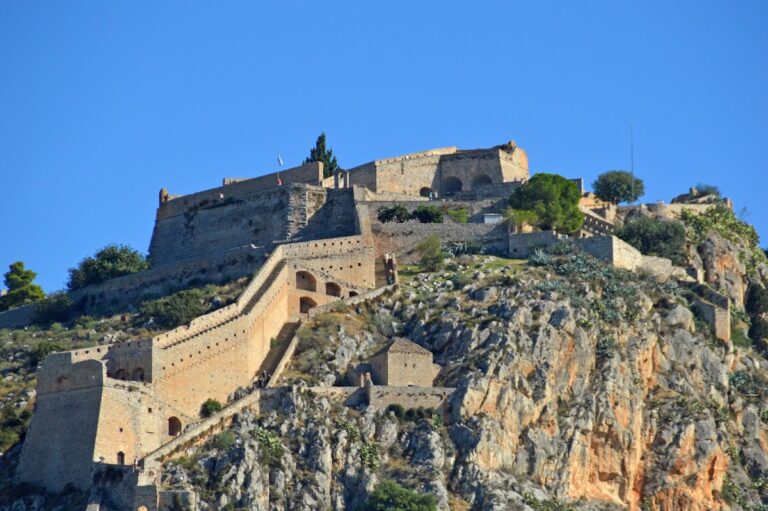
King George I ordered Bourtzi disarmed in 1865. It then housed the executioner associated with Palamidi, a fortress that became a prison after the revolution, and prisoners were executed there by guillotine. Restoration work in the 1930s adapted Bourtzi for tourism. A German architect converted it into a 12-room hotel in 1935, and the hotel and restaurant operated from that decade until the Greek military junta closed them. Later restoration returned the fortress to use as a tourist attraction. Bourtzi is recognized as an archaeological site and protected as a building under Greek law.
Remains
Island layout and construction
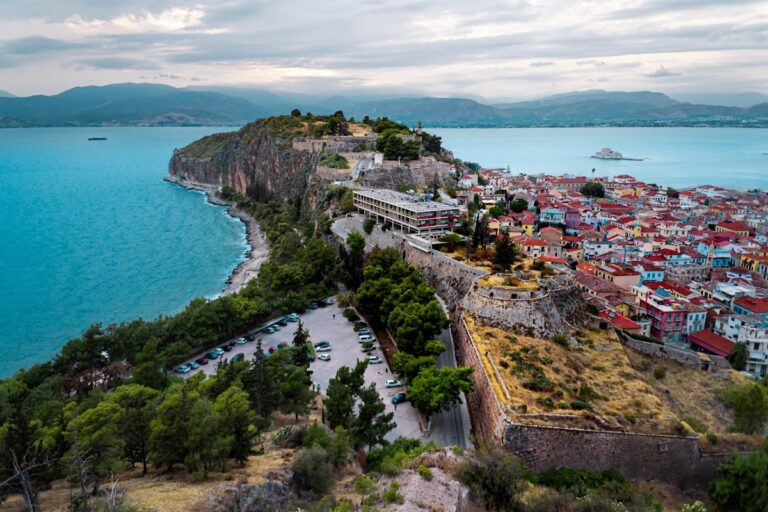
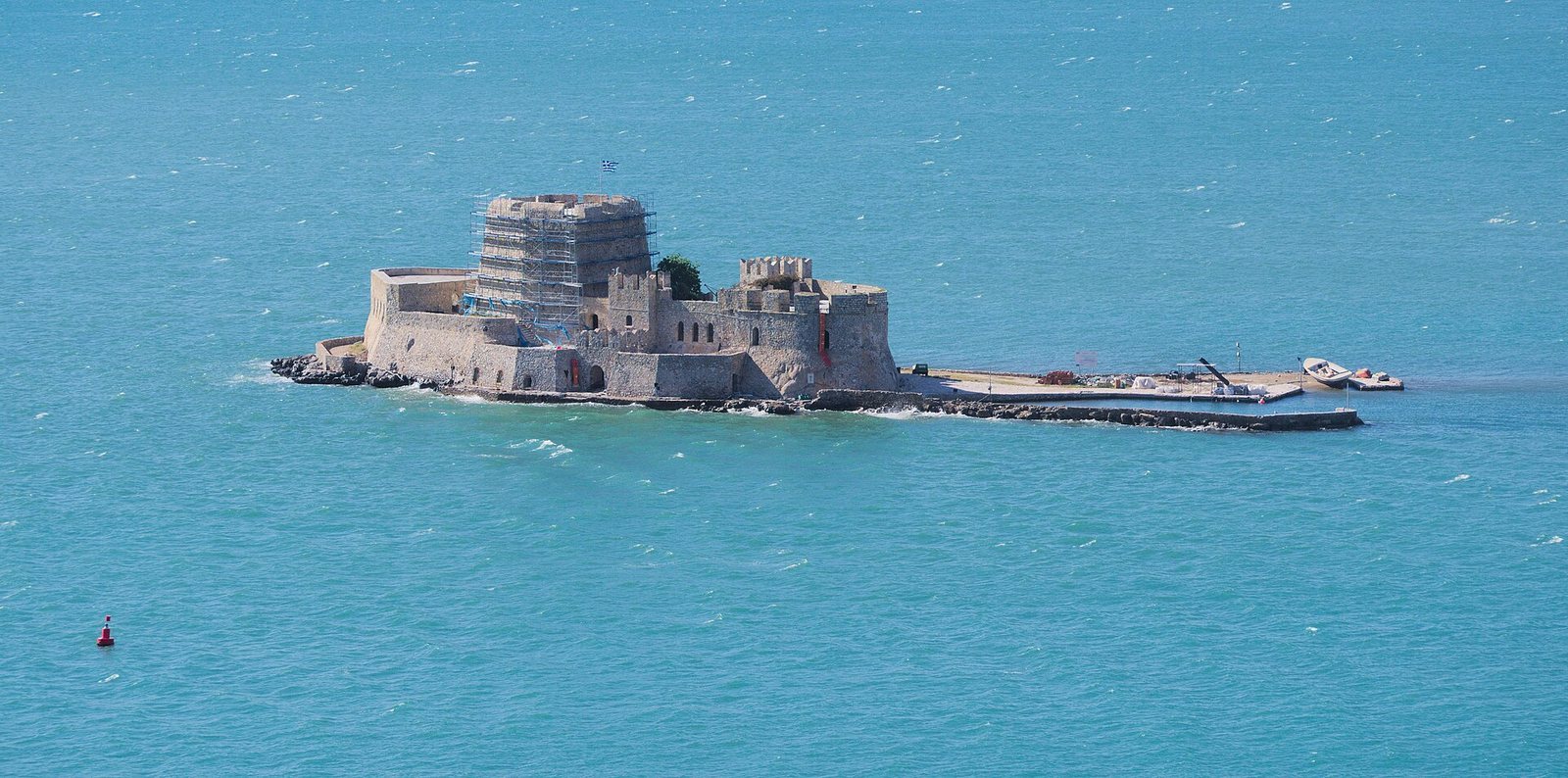
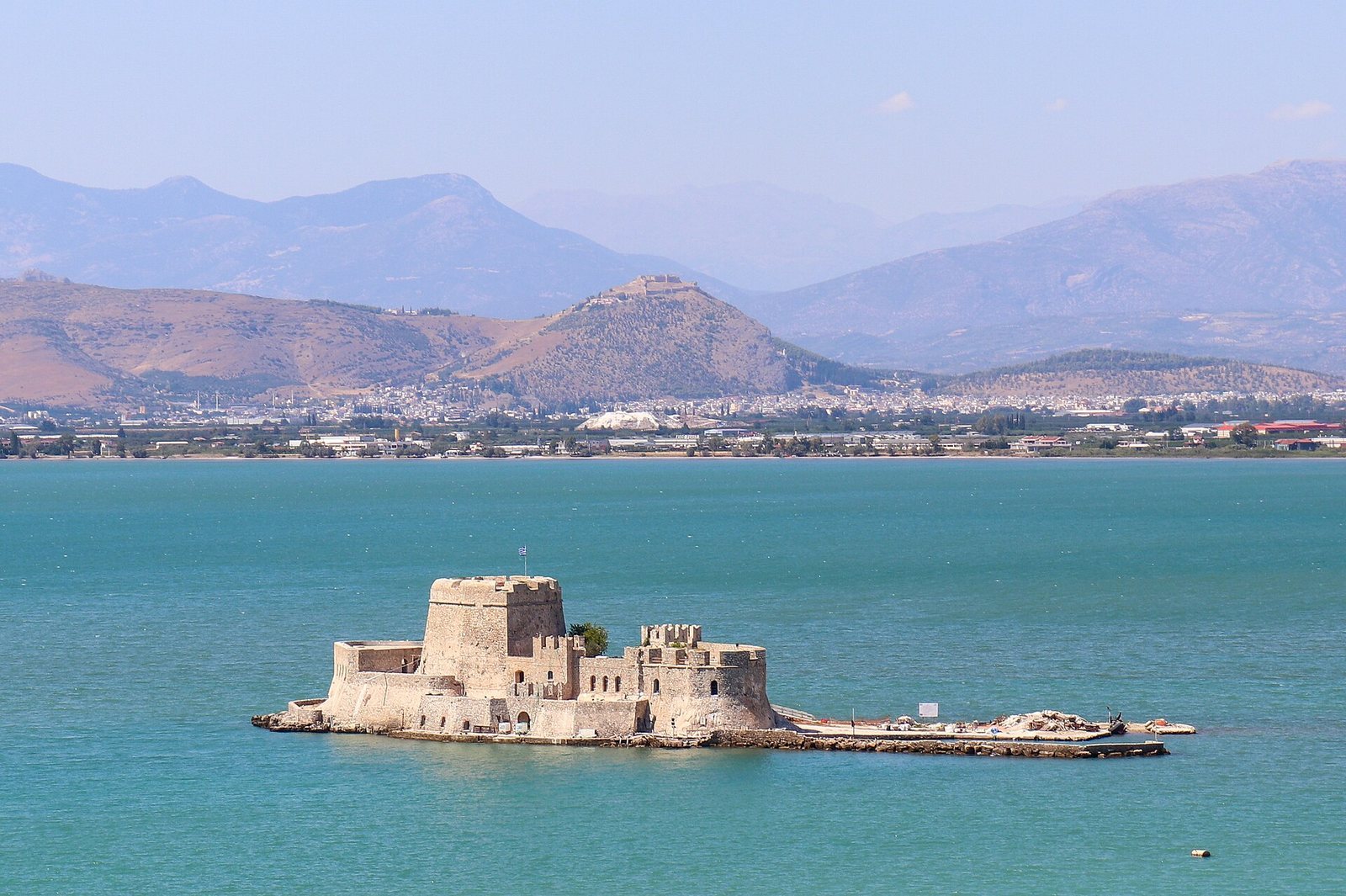
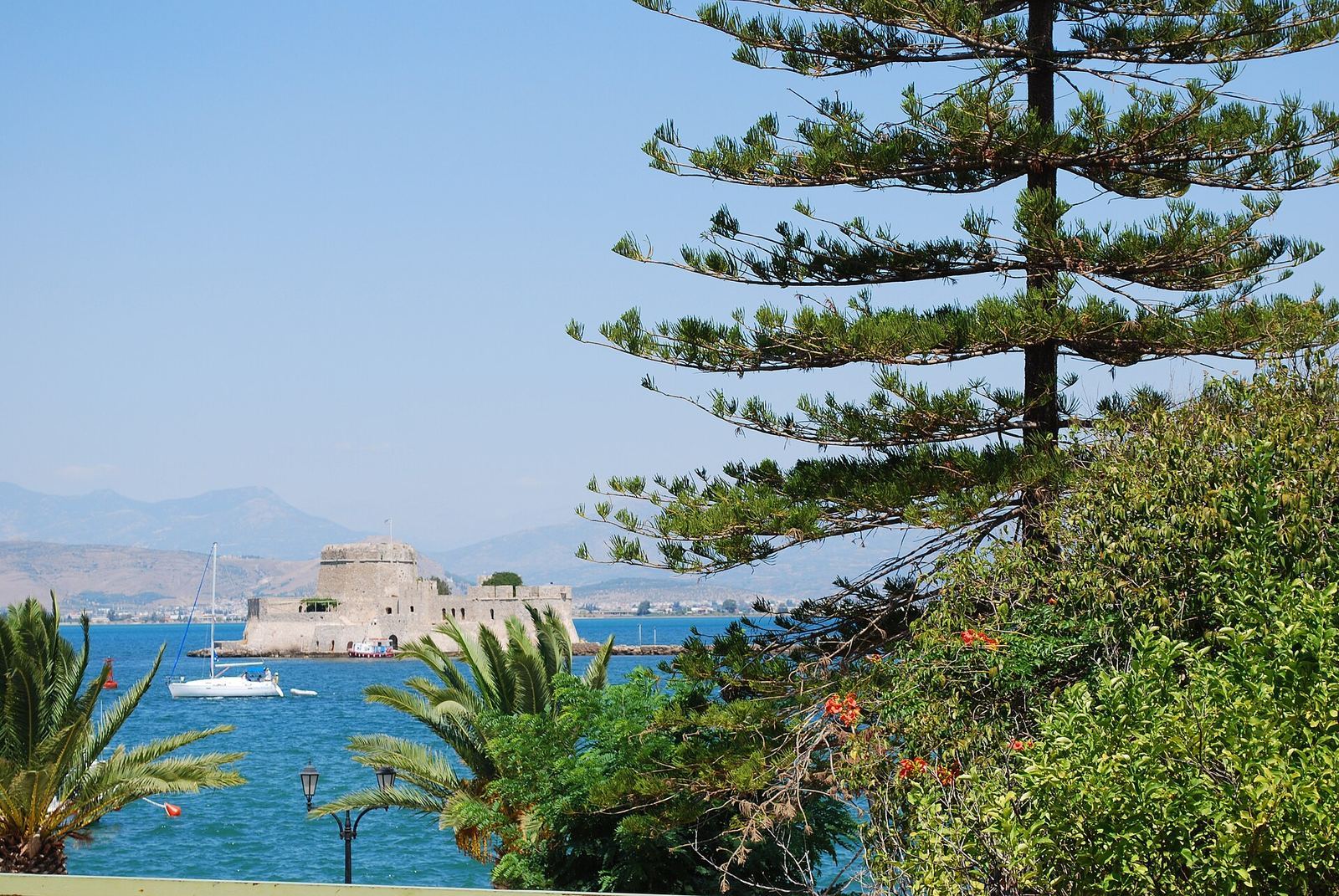
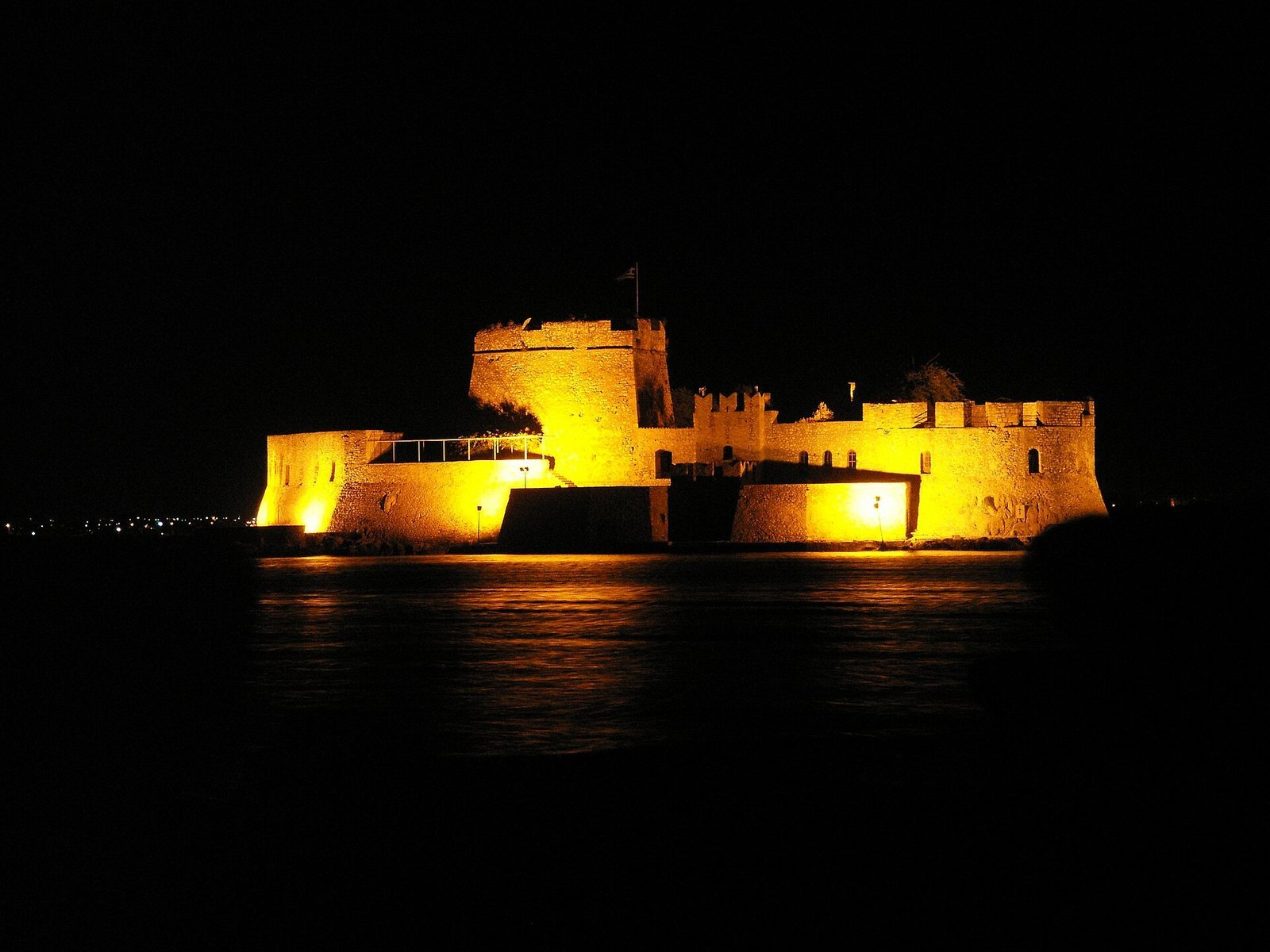
The fortress occupies nearly all of a small island near the entrance to Nafplio harbor, opposite the Five Brothers battery and Akronafplia. The island lies about 400 meters from the city quay and measures approximately 120 by 43 meters, with a stated area of 0.004 square kilometers. Bourtzi is a three-storey structure with an irregular hexagonal plan adapted to the island’s narrow shape. Its walls are built from carefully shaped stone blocks in ashlar masonry.
Central tower
The central tower has an irregular hexagonal form and a large water cistern beneath it. In the eighteenth century, the tower was raised. Enclosed positions for cannons occupy both sides of the lower level, while internal stairways could be raised to strengthen the fortress’s defenses.
Harbor defenses
A small harbor on the island’s northeast side provided sheltered access. A boulder-built artificial causeway connected the island fortress with the coastal defenses, and a chain stretched between Bourtzi and the mainland to obstruct hostile ships. Defensive positions extended across nearly the whole island.