Stadium at Olympia: Venue of the Ancient Olympic Games
Site at a Glance
- Popularity
- Very High
- Country
- Greece
- Primary era
- Classical
- Eras represented
- Iron Age, Classical
- Civilizations
- Ancient Greek, Roman
- Site type
- Entertainment
- Remains
- Stadium
On this page17 sections
History
Origins and early contests
The Stadium at Olympia is an ancient Greek athletic venue at Archaia Olympia, Greece, whose purpose-built form began to develop in the mid-sixth century BCE. The earliest known Olympic Games at Olympia are associated with 776 BCE, when celebrations for Zeus, the god linked with rule over the gods, were revived. Greek legend placed the Games’ origins as early as the tenth or eleventh century BCE.
The first track was a level course, and from 776 to 724 BCE the single-length footrace, called the stadion, was the Games’ only contest. Runners raced toward Zeus’s altar, where the winner kindled a sacrificial fire. Koroibos of Elis, identified as a cook, is named as the first victor in 776 BCE. The Games recurred every four years and were scheduled at the beginning and middle of a Great Year, a calendar reckoning that reconciled the solar and lunar years. Tradition credits Iphitos of Elis, Lycurgus of Sparta, and Cleosthenes of Pisa with establishing a sacred truce: participating cities were to avoid hostilities, and death sentences were suspended during the Games.
Expansion and changing character
The stadium developed through three successive locations. The first purpose-built stadium dates to the mid-sixth century BCE, and a second followed in the late sixth century. The third took its final position in the fifth century BCE. Relocation and enlargement accommodated the Games as they grew in popularity.
Olympia hosted running races, including single- and double-length events, long-distance running, and an armed race. Other contests included the pentathlon, long jump, javelin and discus throws, wrestling, boxing, and pankration, a combat sport combining wrestling and striking. The stadium also hosted the Heraia, women’s contests in honor of Hera, a goddess associated with marriage and queenship. In 472 BCE, two days were added to the duration of the Olympic Games. In the mid-fourth century BCE, the Echo Portico, a covered colonnade, separated the stadium from the Altis, Olympia’s sacred precinct. This change reflected the Games’ growing emphasis on sport rather than religious observance.
Roman era and archaeological recovery
During the Roman period, the stadium underwent repairs and renovation. The Games were last held in 393 CE, when the Roman emperor Theodosius I prohibited pagan and other sacred activities.
Systematic excavations brought the stadium to light in the early nineteenth century. It was fully excavated between 1952 and 1956 and restored to its present appearance. In 1989, the archaeological site of Olympia, including the stadium, was inscribed as a UNESCO World Heritage Site.
Remains
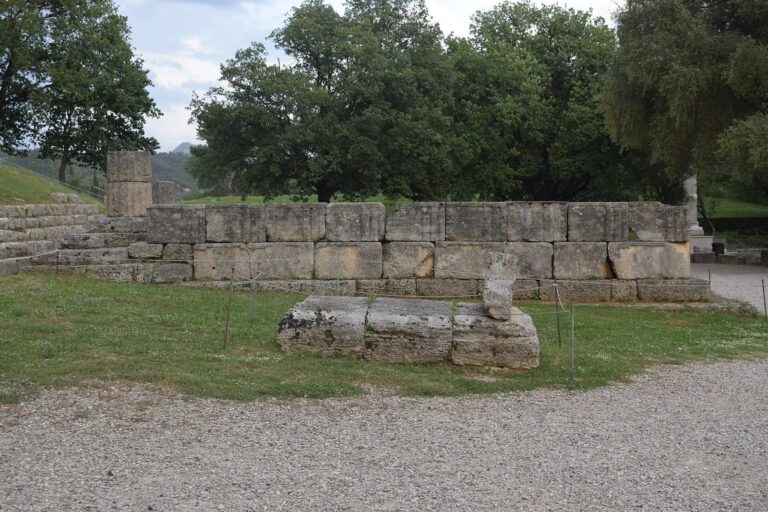
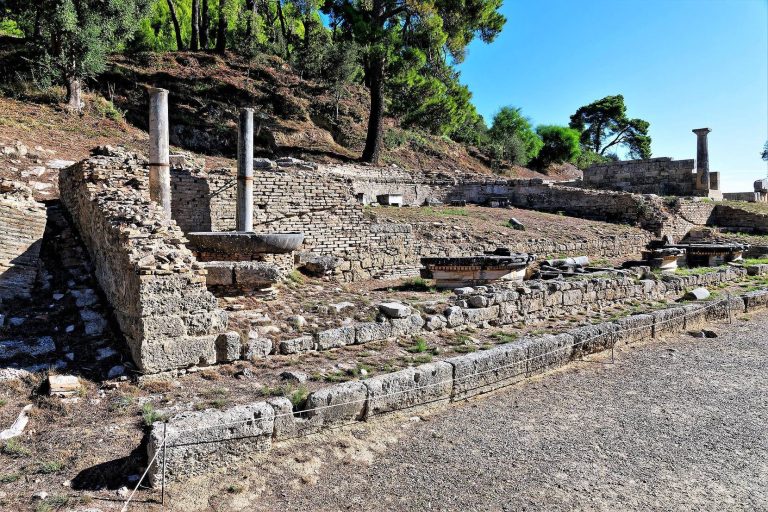
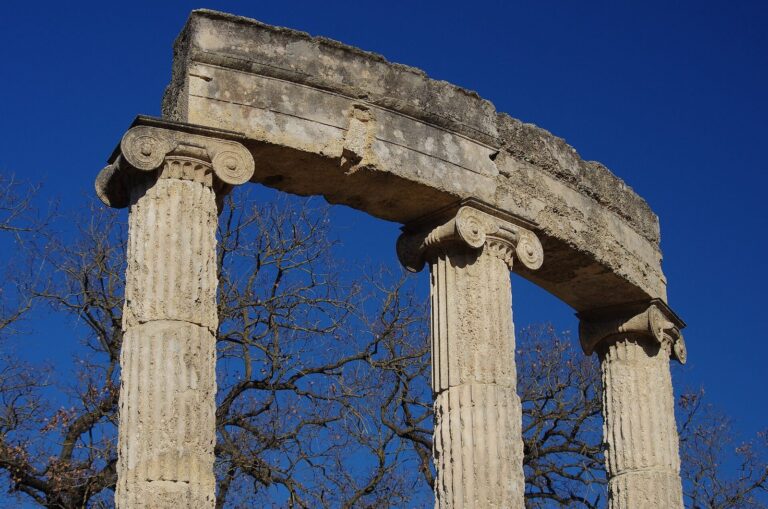
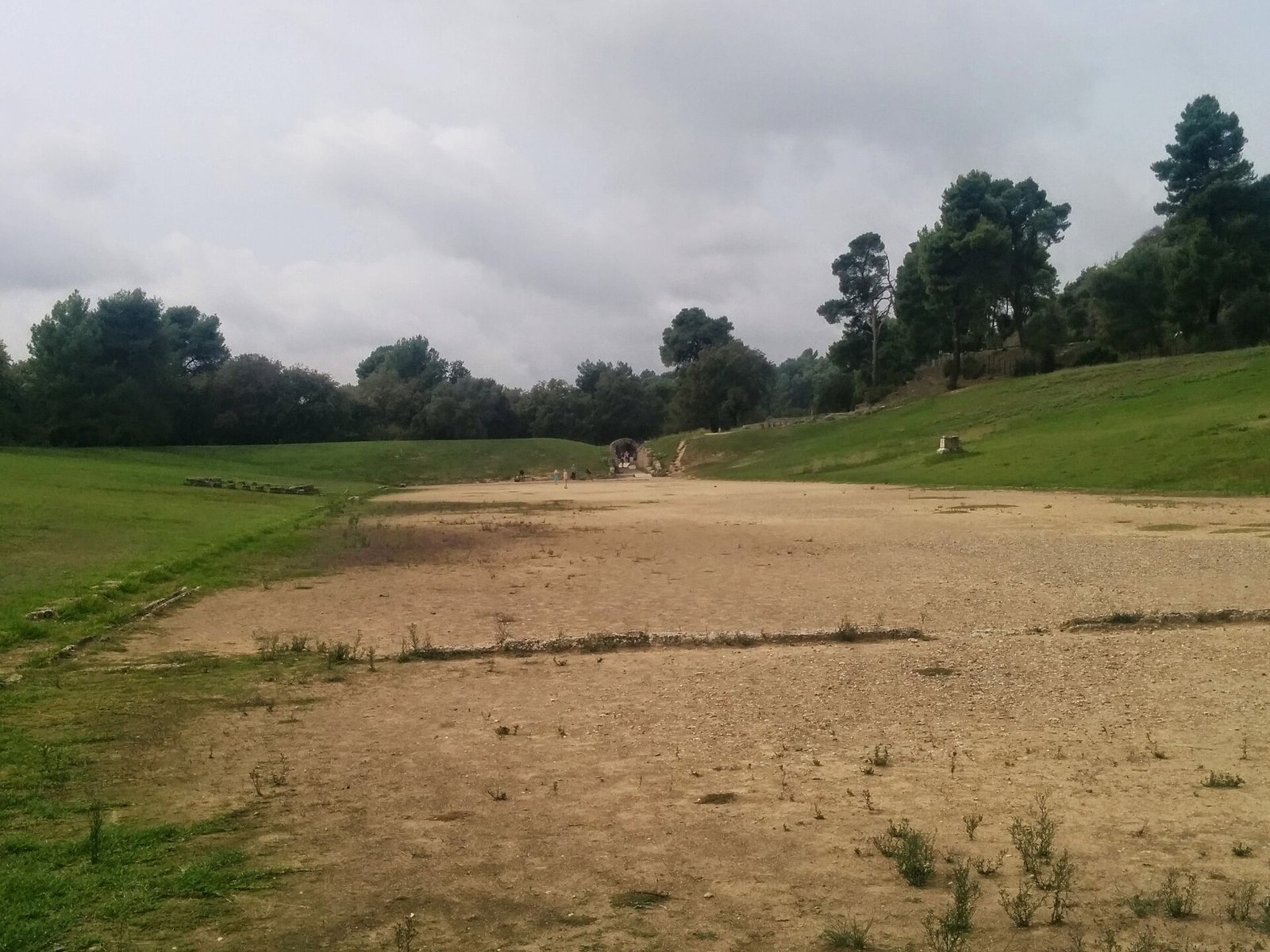
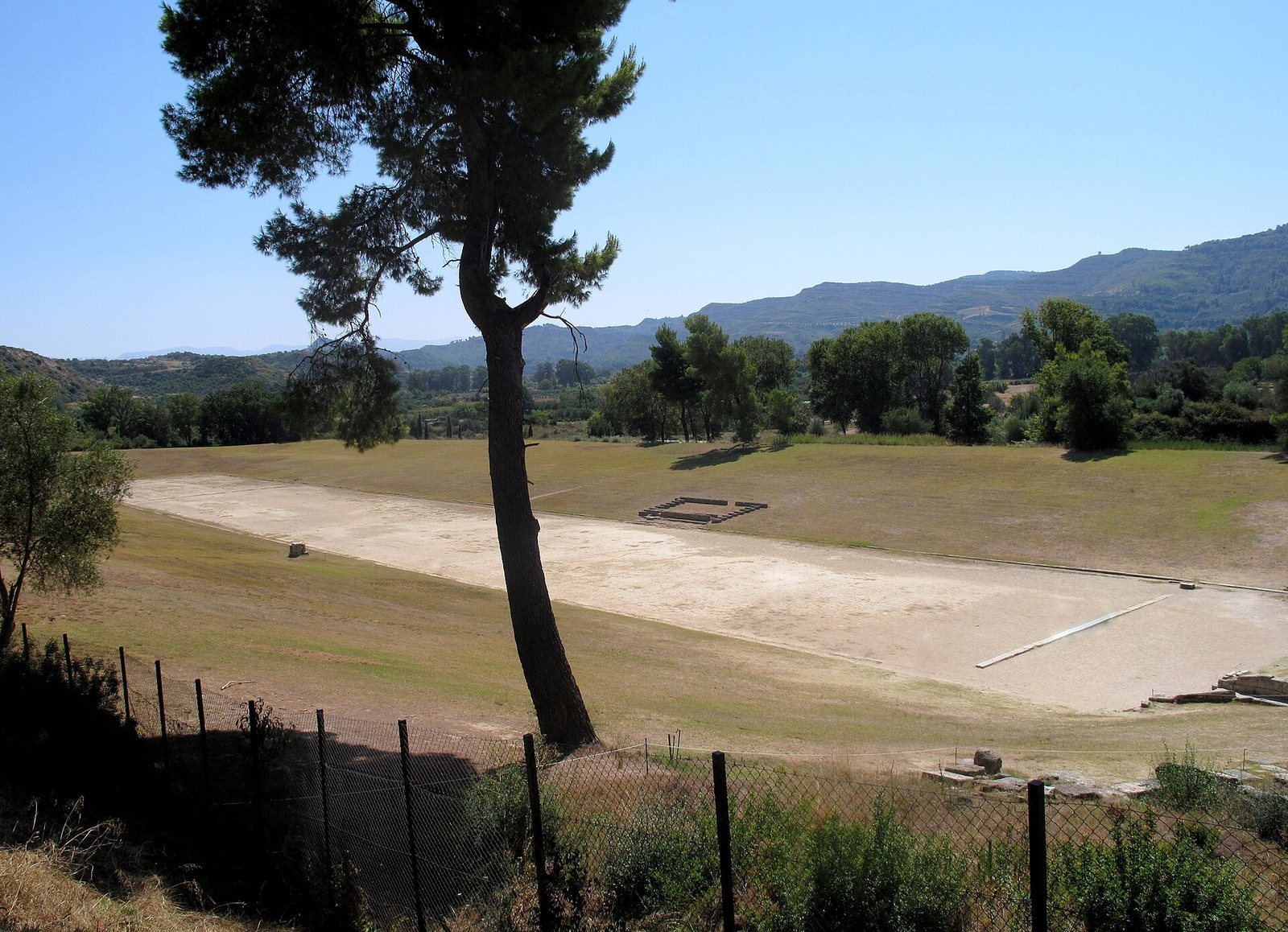
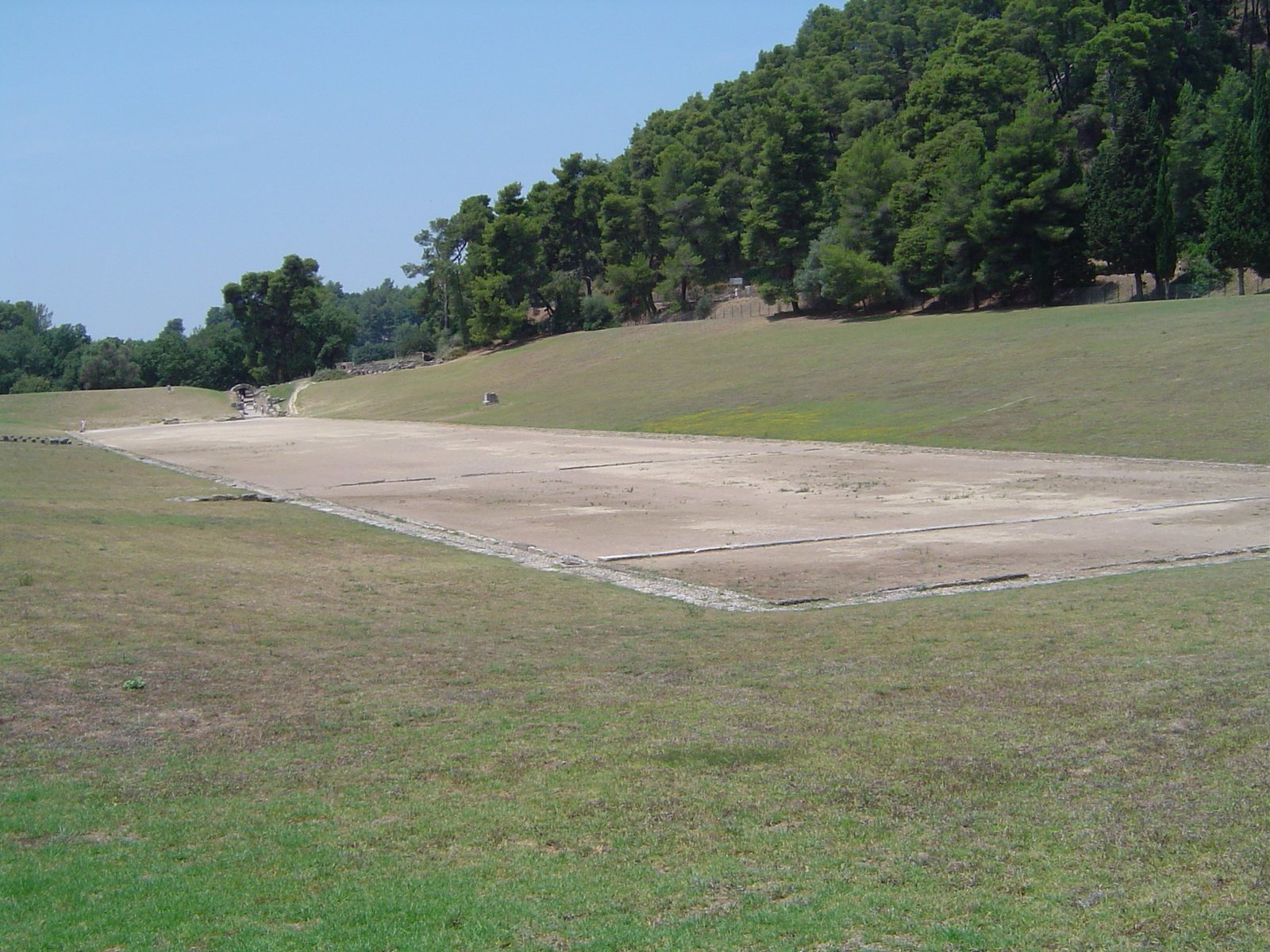
The surviving stadium lies east of the sanctuary of Zeus and outside the Altis. Its rectangular field runs approximately east to west, with sloping banks for spectators. The remains also include a stone-vaulted entrance passage, officials’ areas, and features connected with athletic ceremonies.
Stadium layout and running course
Earlier locations
The earliest track lay within the Altis, near the Pelopion and Zeus’s altar, with spectators watching from the slopes of Kronos Hill. Stadium I was formed by levelling ground south of the hill, with its western short end facing the altar. Stadium II stood farther east, beyond the treasuries. The hill’s natural slope provided seating on its northern side, while an artificial embankment about three metres high was built to the south.
Final stadium
Stadium III occupied a position 82 metres east and seven metres north of its predecessor, beyond the sacred enclosure. Gently sloping banks surrounded the field. The rectangular area measured 212.54 metres long and between 30 and 34 metres wide. Its running surface was hard-packed clay, with grassy ground around it.
Track markers and drainage
Stone markers set out the 192.27-metre running distance, equal to 600 Olympic feet. At Olympia, an Olympic foot measured 0.3204 metres. White stone starting blocks gave runners places to set their feet and line up. Curbs bordered the track, and a stone drainage system carried away rainwater. The earlier track measured about 186 metres.
Spectator and officials’ areas
Spectator banks
The stadium’s capacity is estimated at 45,000 to 50,000 people. Ordinary spectators sat on earthen or grass-covered slopes. Stone seats served important officials, and wooden benches may have been used during the Roman period.
Judges’ platform and altar
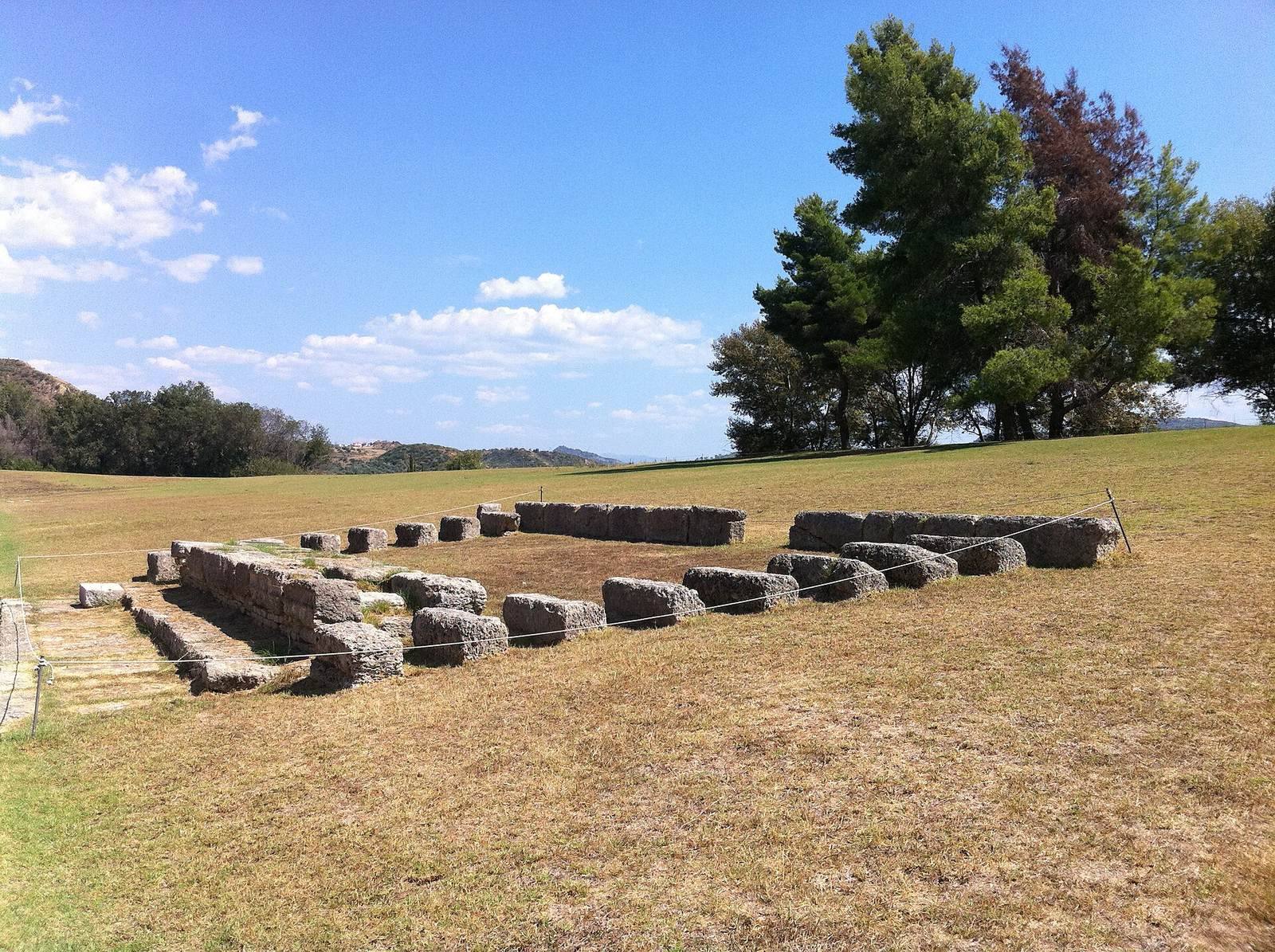
A stone platform on the southern slope served as the judges’ seating area. Opposite it, on the northern slope, stood a white-marble altar to Demeter, the goddess associated with agriculture and grain.
Entrance and archaeological features
Vaulted entrance passage
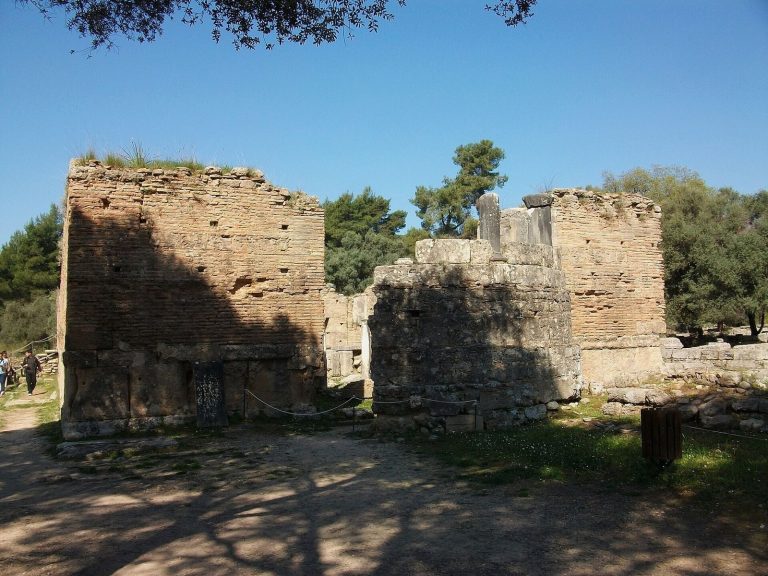
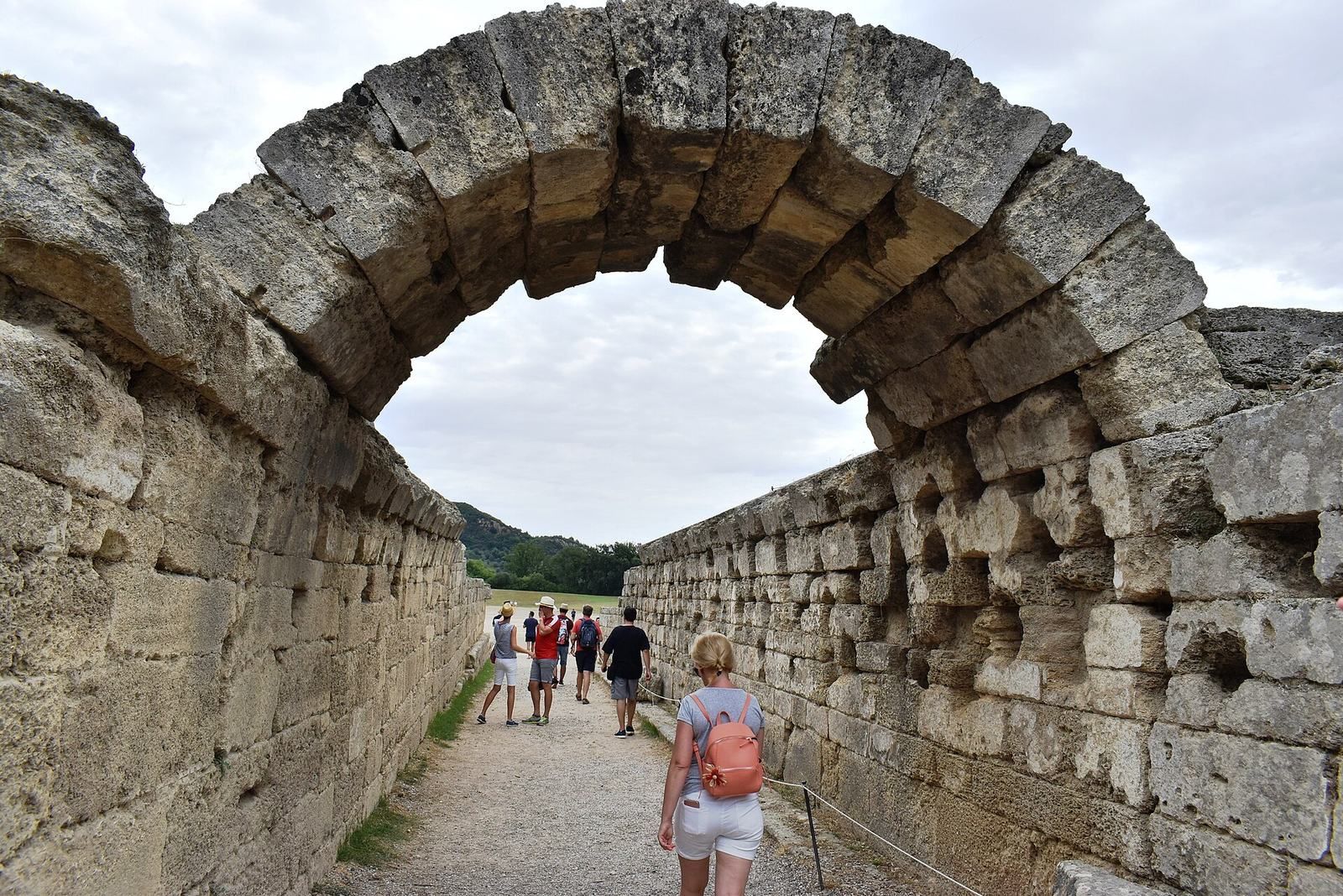
A narrow passage, 32 metres long and known as the Crypt, connected the stadium with the sanctuary. Its stone-vaulted route began at the Echo Portico and served as an entrance for athletes and judges. A monumental entrance was added at its western end during the Roman period.
Wells and offerings
Wells from an earlier stadium were moved to the final site and reused as pits for ritual offerings. Large quantities of objects, particularly bronze items, were placed in them.
Statues of Zeus and penalties
A row of sixteen pedestals stood at the stadium entrance for bronze statues of Zeus funded by fines imposed on athletes who cheated. The first statue is dated to 388 BCE, after the boxer Eupolos of Thessaly was fined for bribing three opponents. Inscriptions on the bases named offending athletes and their home cities, warning others against cheating. The sculptors included Kleon of Sikyon.
Tradition of Endymion’s tomb
At the end of the stadium where runners began, the second-century CE Greek travel writer Pausanias records an Elean tradition locating the tomb of Endymion, a figure of Greek mythology.