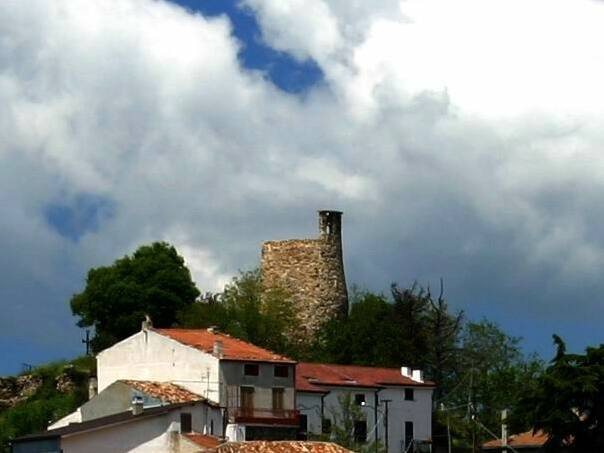
Timpone della Motta: An Oenotrian Settlement and Sanctuary in Italy
Site at a Glance
- Popularity
- Medium
- Country
- Italy
- Primary era
- Iron Age
- Eras represented
- Bronze Age, Iron Age, Medieval
- Civilizations
- Ancient Greek, Byzantine
- Site type
- Religious
- Remains
- Sanctuary
On this page16 sections
History
Timpone della Motta is an ancient Oenotrian settlement and sanctuary near Francavilla Marittima in southern Italy, with its earliest temple phase dated to about 720–650 BC. The Oenotrians were an ancient people of southern Italy, and the sanctuary’s later development was shaped by Greek influence.
Oenotrian settlement and sanctuary
The hill was inhabited during the Middle Bronze Age. By the ninth and eighth centuries BC, a large Oenotrian settlement occupied the site, while cultural influence from nearby Sybaris helped shape its development. Sybaris, a Greek colony in southern Italy, was founded around 720 BC.
In the last quarter of the eighth century BC, rectangular wooden temples dedicated to Athena replaced earlier Oenotrian dwellings, including a building used for weaving. Athena was a Greek goddess associated with wisdom, crafts, and warfare. The temples brought Greek design together with local building practices. Cooperation between Greeks and Oenotrians in their construction is considered likely, as Greek religious practices were spreading among the Oenotrians. These are the earliest known ancient Greek temples on the Italian Peninsula.
Sybarite control and abandonment
During the second half of the seventh century BC, the Sybarites took control of the sanctuary, demolished its wooden temples, and built smaller mudbrick temples on their sites. The replacement of earlier temple buildings by four temples with stone foundations is dated to 650–610 BC. A broad building program in the sixth century BC also brought large houses to the plateaux and further changed the sanctuary.
Timpone della Motta became an important center of worship dedicated to Athena, with large festivals held regularly. Attic pottery, made in the region of Athens, shows that activity continued around the time Sybaris fell in 510 BC, including the arrival of imports from Athens. The settlement and sanctuary were abandoned after the Bruttians, an ancient people of Calabria, conquered the region in the fourth century BC.
Later interpretations and archaeological work
Timpone della Motta has been proposed as the location of ancient Lagaria, although an earlier proposed location lies farther north near Valsinni. The proposal draws on ancient literary evidence and the mythological association between Athena and Epeius, the Greek hero said to have built the Trojan Horse. Finds connected with water-carrying and the goddess also inform the identification.
The site was discovered in 1879, and excavations are recorded for 1959 and 2008. Work at the Macchiabate cemetery began in 1963 under Italian archaeologist Paola Zancani Montuoro. After a rescue excavation on the acropolis in 1986–87, the Groningen Institute of Archaeology excavated the acropolis and terraces and surveyed the cemetery area from 1991 to 2008; excavations continued from 2009.
Illegal digging on the southern slope and in the cemetery during the 1970s and 1980s resulted in many objects being stolen and sold to private collectors and museums. Most were later identified and returned to the National Archaeological Museum of Sibaritide. Repatriated objects came from the Getty Museum, the Ny Carlsberg Glyptotek, and the University of Bern; finds from Timpone della Motta are exhibited at the museum.
Remains
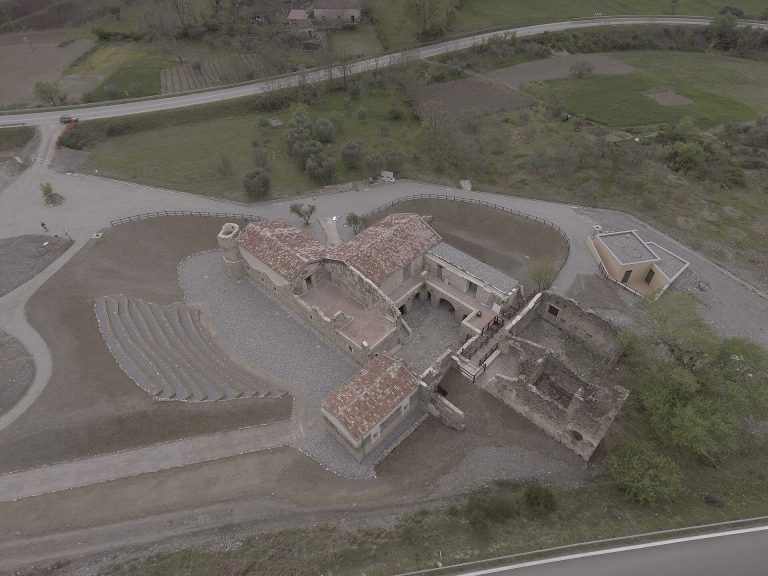
The settlement occupied a terraced hill, with an enclosed acropolis on its flat summit and traces of habitation extending down the slopes. The sanctuary included timber, mudbrick, and stone buildings, while the Macchiabate cemetery lay at the foot of the hill.
Landscape and settlement layout
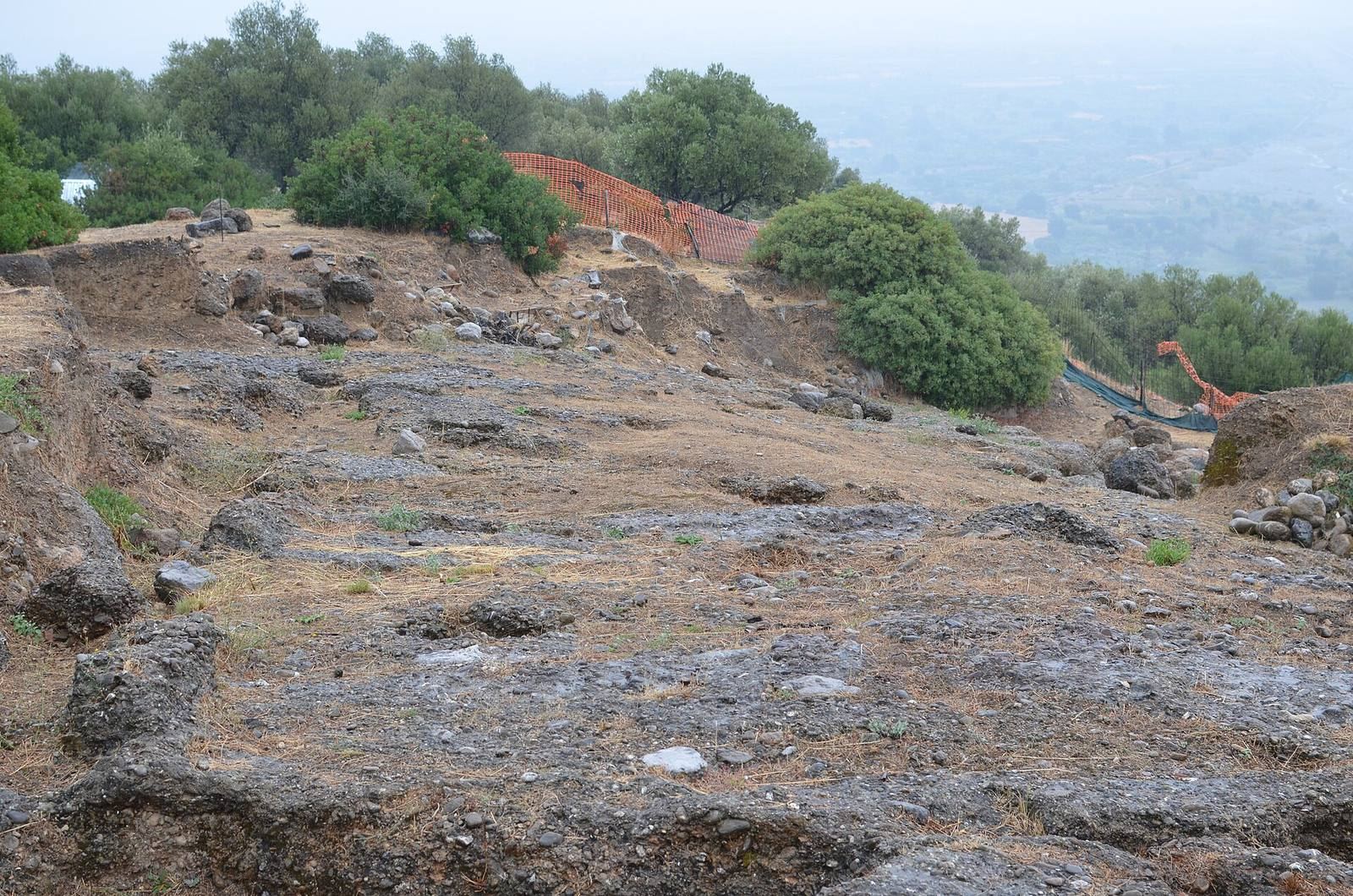
The hill lies about 2 km southwest of Francavilla Marittima, in the foothills of the Pollino range, at 280 m above sea level. It overlooks the Sibari coastal plain and the Gulf of Taranto and stands on the northern bank of the seasonal Raganello River. Its fan-shaped deposits formed where a stream entered standing water, and include thick layers of cemented river cobbles that create a cap at the summit and terraces along the slopes. The ancient city of Sybaris was about 15 km to the southeast.
The acropolis, an elevated center of an ancient settlement, stood near the hilltop and was enclosed by a defensive wall. Traces of settlement occupy lower terraces. Plateau I shows use from the Middle Bronze Age into the Archaic period, an era of ancient Greek history extending from about the eighth to the early fifth century BC.
Early buildings and ritual remains
Hut and weaving house
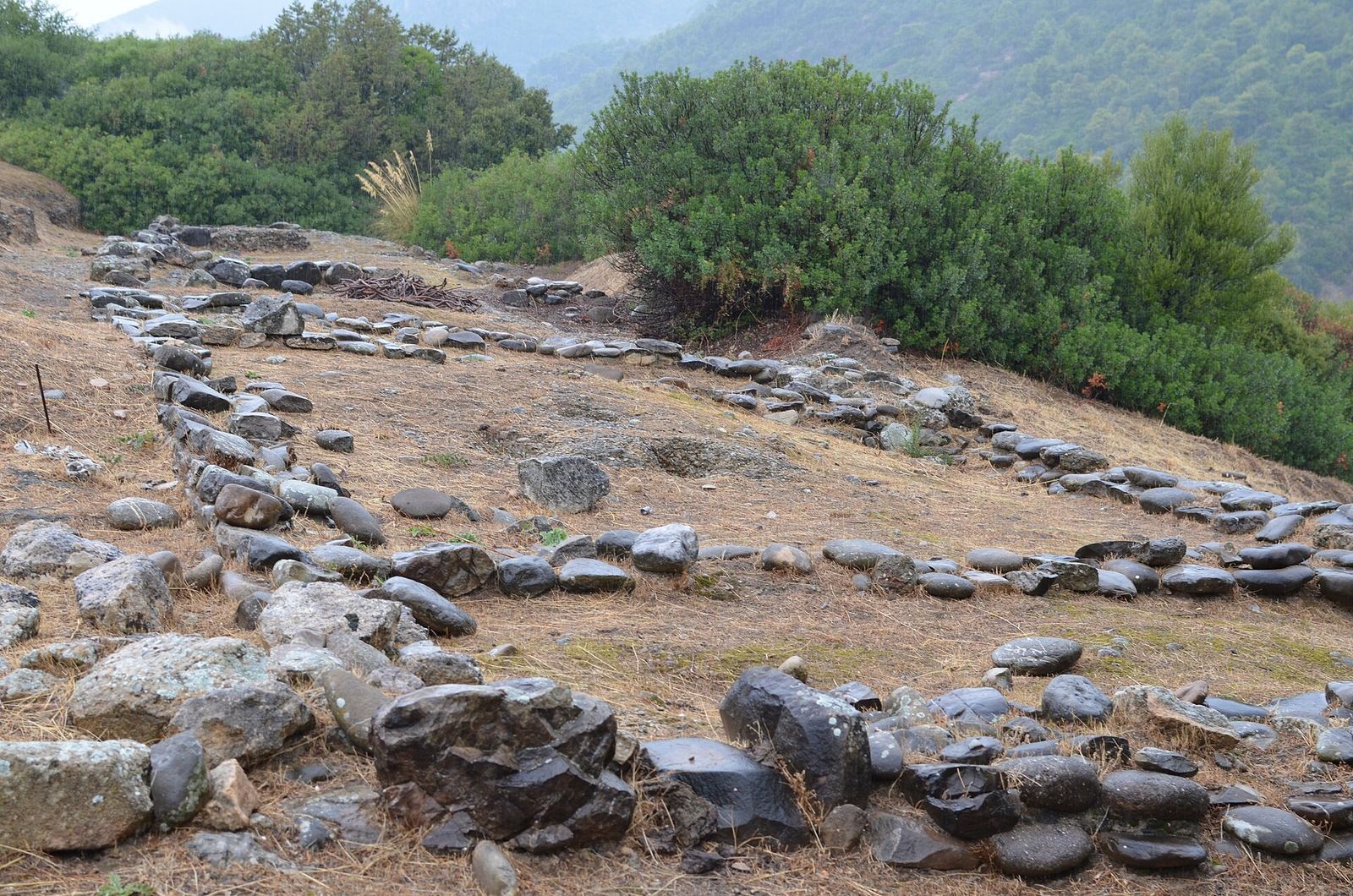
A horseshoe-shaped hut from the Middle Bronze Age stood where Temple V was later built. An eighth-century BC rounded-ended building at the same location contained a large loom, decorated loom weights, weights from smaller looms, and more than 300 spindle whorls, the weighted tools used to spin fibers into thread. The building was three times the size of a contemporary indigenous hut found on Plateau I.
Altar remains
Remains of an altar lay in the forecourt of the rounded-ended building. Ash that had accumulated against its south wall contained unburnt animal bones and pottery fragments. The altar and its deposits have been taken to suggest that the building may have had a cult function.
Temple precinct
Wooden temples
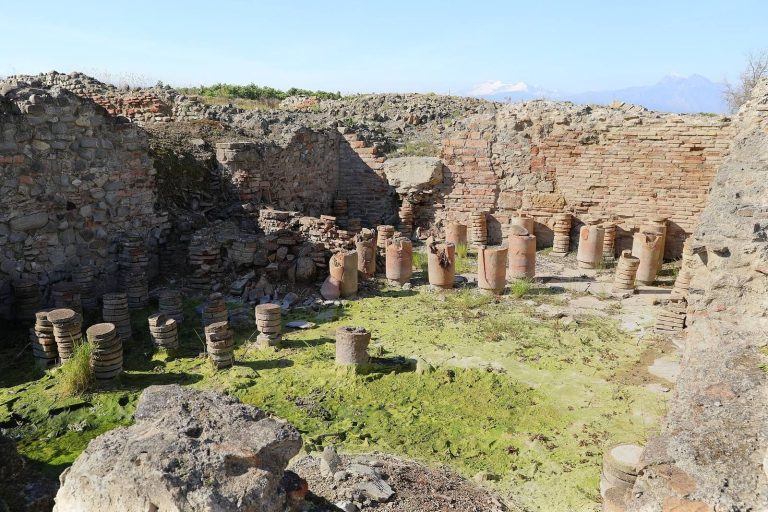
Three wooden temples stood around a central plaza. Temple I was northeast of the plaza and Temple V southwest; both ran parallel to its length. Temple III stood to the northwest, with its entrance facing the plaza. The structures were supported by rows of large posts set into holes cut in the rock.
Mudbrick and stone temples
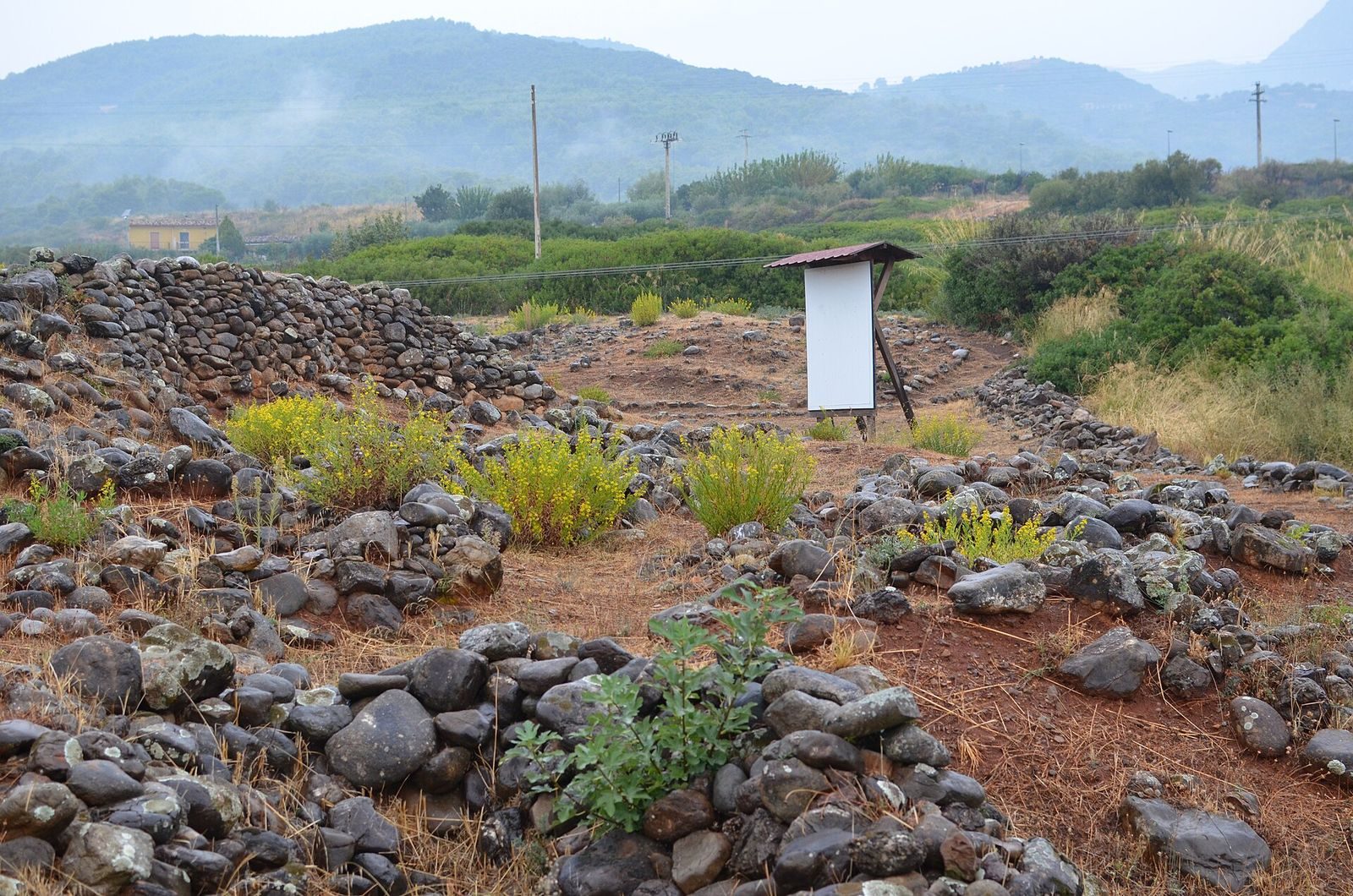
Mudbrick temples followed the wooden buildings. In a later building phase, Temple V was replaced by a stone temple, with gravel spread to level the ground at that location with the rest of the acropolis. Temples I and III also gave way to stone buildings set on foundations of riverbed cobbles. A later altar found during excavations in 2008 may indicate that a temple stood at that spot in the sixth century BC.
Byzantine chapel
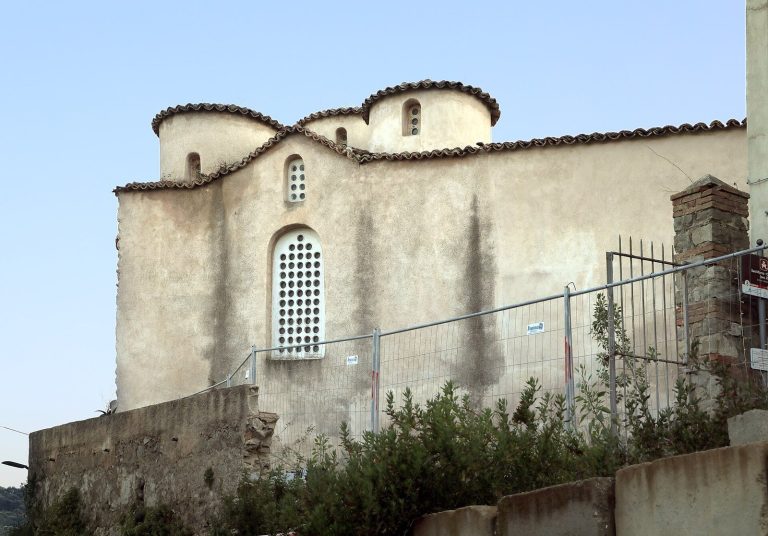
A chapel from the Byzantine period, the culture of the medieval Eastern Roman Empire, was built over the foundations of Temple V.
Cemetery and sanctuary finds
Macchiabate cemetery
The Macchiabate cemetery lies at the hill’s foot, separated from it by the Carnevale gully. It was in use from the eighth to the sixth centuries BC.
Water vessels and dedication
Thousands of water-carrying vessels were found on the acropolis, and pottery images show women carrying water in processions. A bronze inscription from the sanctuary records an athlete dedicating part of a prize to Athena.