Heraclea Lucania: A Greek Colony and Roman City in Italy
Site at a Glance
- Popularity
- High
- Country
- Italy
- Primary era
- Classical
- Eras represented
- Classical, Medieval
- Civilizations
- Ancient Greek
- Site type
- City
On this page11 sections
History
Heraclea Lucania was a Greek colony and city-state at Policoro in southern Italy, founded in 433/432 BCE within Magna Graecia, the Greek settlements and cultural sphere of southern Italy. The site’s Greek occupation began centuries earlier, and the city later became a meeting place for Greek communities in the region.
Siris and the foundation of Heraclea
Greek settlement at the site dates to the seventh century BCE. It was once understood as an outpost of Ionian Siris, but the place is now generally identified as Siris itself. Siris was destroyed around 550–510 BCE, after which its territory became disputed. Athens claimed the land, as did colonists from Thurii, an Athenian colony. Conflict between Thurii and Tarentum ended in an agreement to establish a colony there, incorporating people who remained from Siris. Antiochus of Syracuse assigns Thurii a role in the foundation, while Diodorus Siculus and Livy describe Heraclea as a Tarentine colony.
Tradition held that the settlers first established their community at Siris, then moved about 24 stadia, an ancient Greek measure of distance, toward the Aciris River and adopted the name Heraclea. Siris continued to serve as the port. Archaeological evidence places the two cities at the same site rather than confirming separate locations. The new city took its name from Heracles, the Greek hero and deity known to the Romans as Hercules, who was chosen as its protecting god.
Greek political role and conflict with Rome
Heraclea prospered under Tarentine protection, with the fertility of its territory contributing to its wealth. Tarentum fought the Messapians in the city’s defense. Heraclea also became the gathering place of the Italiot Greeks, the Greek communities of southern Italy, replacing Croton. The assembly began as a religious gathering and also took on political functions; it continued to meet at Heraclea until the 330s BCE. After taking the city, Alexander of Epirus, a king who campaigned in Italy, transferred the assembly to Thurii in an effort to reduce Tarentum’s influence.
Heraclea was drawn into Tarentum’s wars against the Messapians and Lucanians, peoples of southern Italy. It became increasingly dependent on Tarentum in practice while remaining nominally independent. In 280 BCE, during the war between Rome and Pyrrhus, a Hellenistic king of Epirus, the two powers fought their first battle between Heraclea and the Siris River. Pyrrhus defeated the Roman consul Publius Valerius Laevinus. Heraclea had joined Tarentum and the Lucanians against Rome, but in 278 BCE Rome secured its defection with a treaty that Cicero later described as almost unique in its favorable terms. The city retained a privileged position under the Roman Republic.
Roman rule and later history
Heraclea surrendered under compulsion to Hannibal in 212 BCE, during the Second Punic War. It suffered during the Third Servile War, the major uprising of enslaved people against Rome, and was badly affected by the Social War, a conflict between Rome and its Italian allies over citizenship. A fire during that war destroyed the city’s public records. Cicero nevertheless described Heraclea as a flourishing Greek city when defending the poet Aulus Licinius Archias, whom the city had made a citizen.
Heraclea developed into a Roman city during the first century BCE. In 89 BCE, the Lex Plautia Papiria, a law extending Roman citizenship to qualifying inhabitants of Italian communities, offered citizenship to its people, who hesitated before accepting. Under the Roman Empire, a branch road from Venusia joined the coastal road at Heraclea. The city appears in the Antonine Itinerary, a Roman route list, and the Tabula Peutingeriana, a map of Roman roads, although the second-century CE geographer Ptolemy does not include it. Heraclea existed at least into the fourth century CE; the date and circumstances of its eventual abandonment are uncertain.
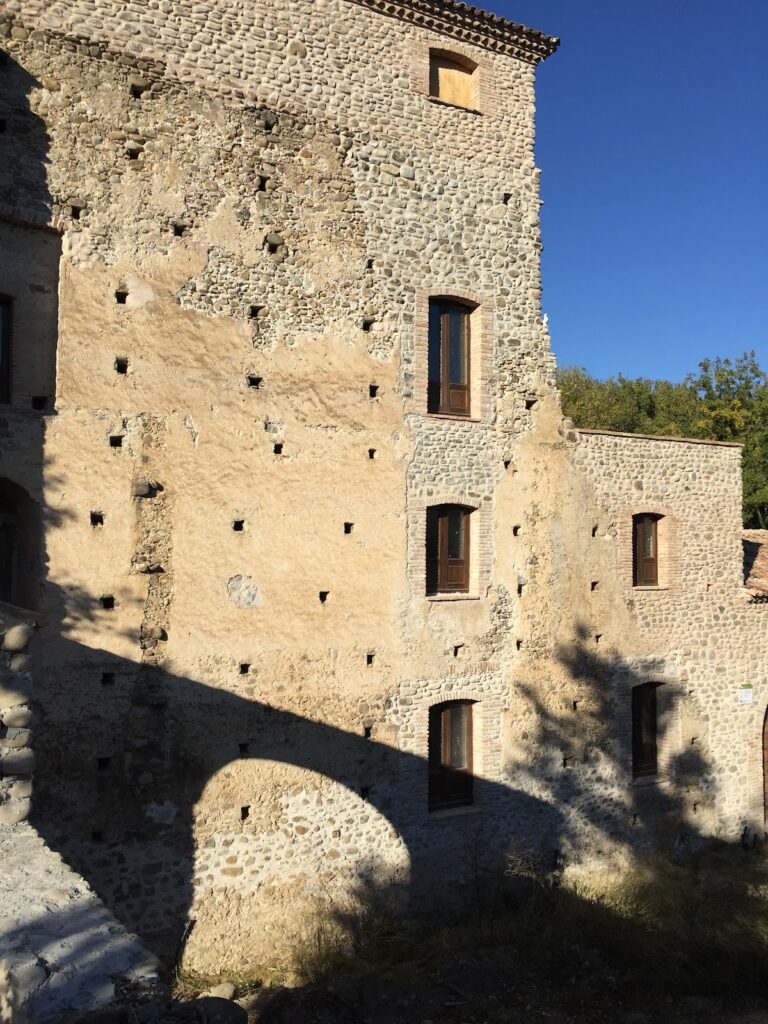
A medieval settlement called Anglona arose on or near the ancient site, became a bishopric, and later fell into ruin. Systematic archaeological excavation at Heraclea began in 1959. The city is sometimes identified as the birthplace of the painter Zeuxis, but that attribution is uncertain because several ancient cities were named Heraclea.
Remains
The ancient city occupied a low ridge running northwest to southeast between the Aciris River, now the Agri, and the Siris River, now the Sinni. It lay near the mouth of the Aciris and about five kilometres from the Gulf of Taranto. The urban area covered about 140 hectares, with an upper town and a lower town on a terrace to its south. A depression between them held the agora, the central civic space for public gathering and exchange, and several sanctuaries. Heraclea’s wider territory has been estimated at about 350 square kilometres; it included several villages and extended north to the Akalandros, now the Cavone, beside the territory of Metapontum. Agriculture was concentrated along the Aciris and Siris.
City layout and surviving remains
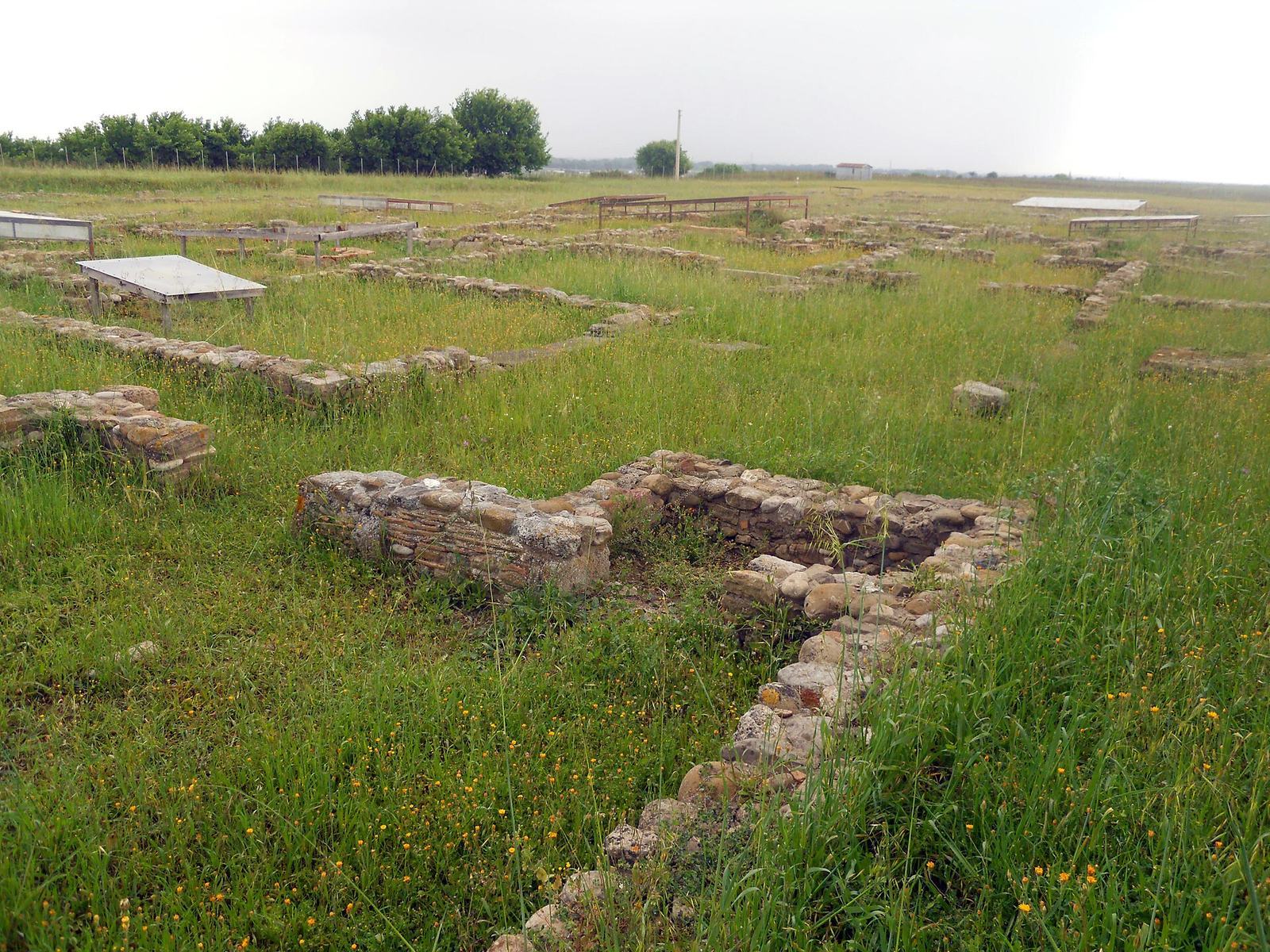
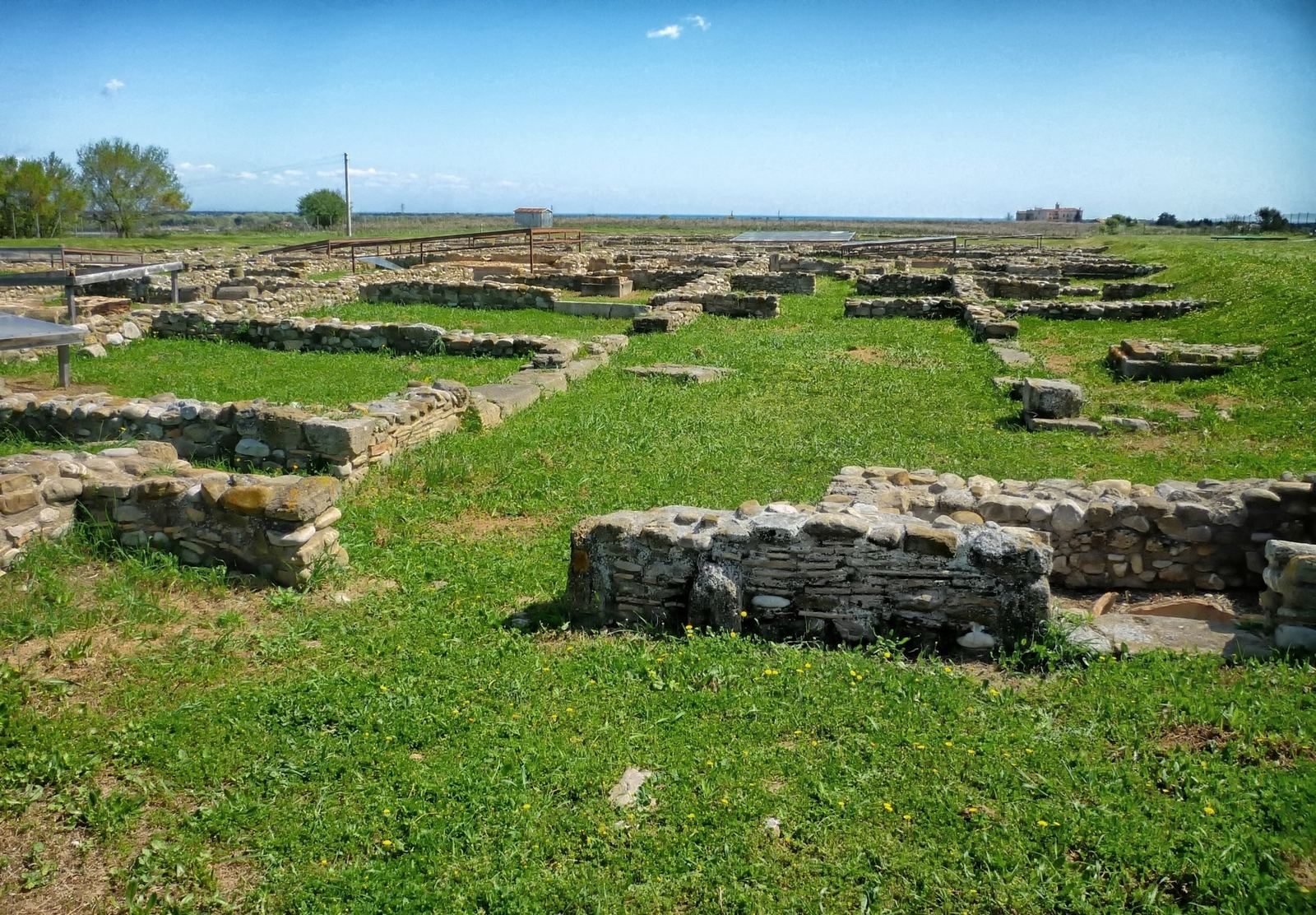
Heraclea followed a grid plan, portions of which have been excavated. Remains of the city walls have been found in several areas, and aerial photographs have helped trace much of their course. Excavations have also exposed urban blocks, building foundations, and cemeteries around the city. The surviving surface remains include rubble mounds and foundations, while pottery recovered from graves provides evidence of burial activity.
Sanctuaries
A temple dating to the fourth century BCE survives within the ancient city. Other urban sanctuaries are thought to have been dedicated to Artemis Soteira and Bendis, and to Athena Polias. Beyond the walls, an excavated sanctuary of Demeter and Kore yielded numerous religious offerings, including small vases and terracotta figurines. Sanctuaries of Athena and Dionysus were probably situated north of the city.
Excavated finds and inscriptions
Coins and other finds
Heraclea produced its own silver coinage from the time of its foundation. The range of designs and quality of workmanship reflect the city’s artistic activity. Excavations have also yielded bronzes, pottery, jewellery, and other antiquities. Objects recovered from the site are held at the Museo Nazionale della Siritide in Policoro.
Bronze legal tablets
Two bronze tablets, known as the Tabulae Heracleenses, were found a short distance from Heraclea, between the city and Metapontum. Their Latin inscription includes the Lex Julia Municipalis, a law enacted in 45 BCE to regulate public institutions in Italian towns. An earlier Greek inscription appears on the reverse. The tablets are important evidence for the study of Roman law.
Medieval Anglona
Ruins of an eleventh-century church survive among the remains of Anglona, the medieval settlement established on or near the ancient city.