Tyritake: An Ancient Greek City and Fishing Center
Site at a Glance
- Popularity
- Medium
- Country
- Russia
- Primary era
- Classical
- Eras represented
- Iron Age, Classical, Medieval
- Civilizations
- Ancient Greek, Bosporan Kingdom, Byzantine
- Site type
- City
On this page12 sections
History
Tyritake was an ancient Greek city in modern Kerch, Russia, founded around the middle of the sixth century BC by Ionian settlers from Miletus, a Greek city in western Anatolia. Their colony followed an earlier local settlement associated with the Cimmerians. In the fifth century BC, Tyritake became part of the Bosporan Kingdom, an ancient state centered on the strait between Crimea and the Taman Peninsula.
Bosporan and Roman periods
Craft production and grape growing formed part of the colony’s economy. From the first century BC, Tyritake came within Rome’s sphere of influence. Wine making and fishing became major economic activities in the first centuries AD, with fishing and the salted-fish trade especially important in the first and second centuries. Demand from Roman troops stationed in Asia Minor and Crimea helped sustain that trade.
Tyritake suffered partial destruction in the second century AD, possibly in an earthquake. In the third century, the Goths, an East Germanic people, sacked the city. The Huns, a confederation of nomadic peoples, caused further damage in the fourth century.
Later settlement and historical references
After the Hun attack, Tyritake was rebuilt and continued as an urban center. Settlement persisted into the Middle Ages, but the city had ceased to exist by the seventh or eighth century, during raids by Turkic groups. An Armenian colony occupied the site in the eighteenth century. Tyritake appears in the writings of Stephanus of Byzantium and Claudius Ptolemy, as well as texts attributed to Pseudo-Aelius Herodianus and Pseudo-Arrian. Pliny the Elder mentions a place called Dia in the area. Dia may have been a Roman-period name or may refer to one of two nearby settlements.
Excavation and heritage
A. E. Lutsenko began excavating Tyritake in 1859, and systematic work started under J. Marti in 1932. V. Gaidukievich led the Bosporan Expedition’s excavations from 1946 to 1957. Kerch Museum teams directed by D. Kirilin and O. Shevelev worked at the site in the 1970s and 1980s. The Bosporan City Tyritake project began in 2000 under V. Zin’ko, and a Polish Archaeological Mission from the National Museum in Warsaw joined the work in 2008 under Alfred Twardecki. Ukraine designates the archaeological complex as a cultural heritage monument of national importance. In October 2015, Russian authorities classified it as a cultural heritage site of federal importance.
Remains
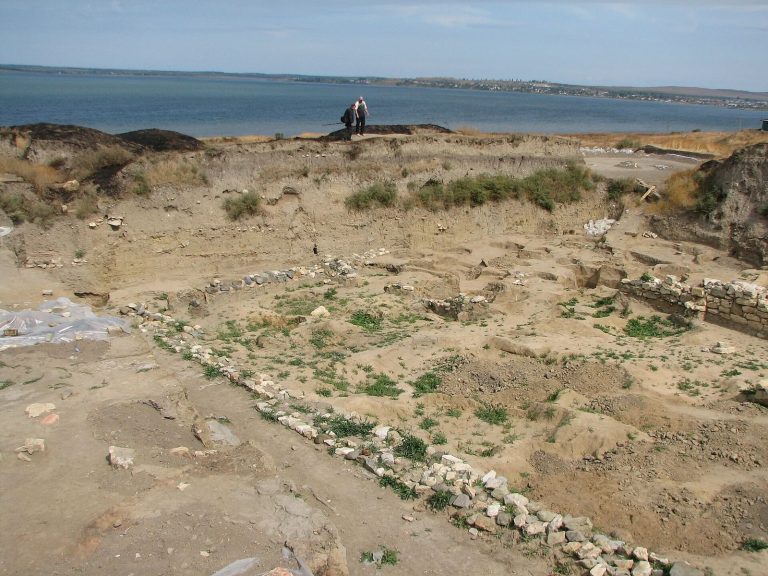
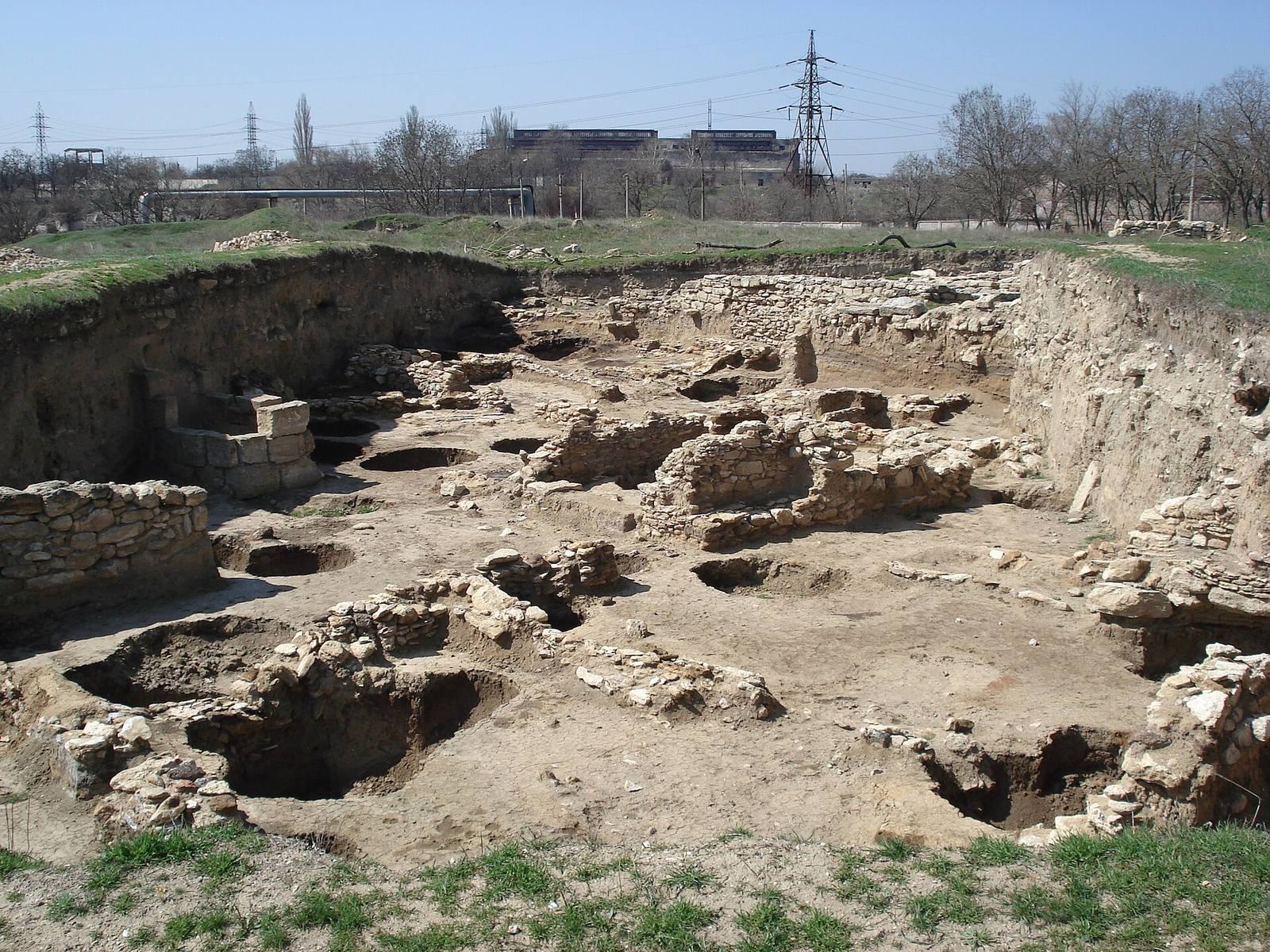
Tyritake occupied about 8.5 hectares on a high plateau near the Kerch Strait, around 11 km south of ancient Panticapaeum. The city had an irregular four-sided plan, with its pointed end facing south. It stood on the northern shore of a marine inlet, now part of the drained area of Lake Churubash. The ruins have been tentatively identified with remains in the Kamysh-Burun area.
Settlement and street plan
Early occupation and houses
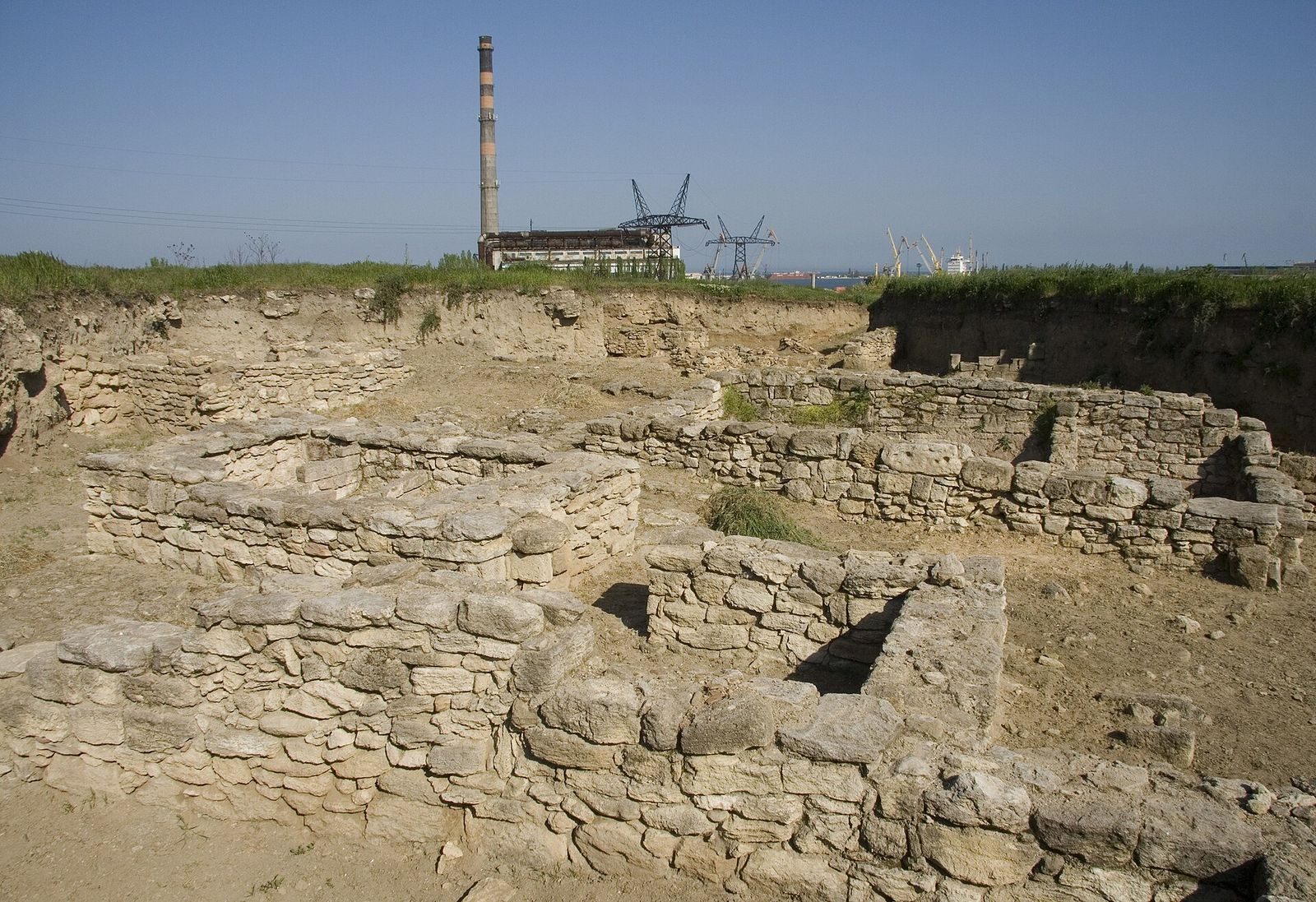
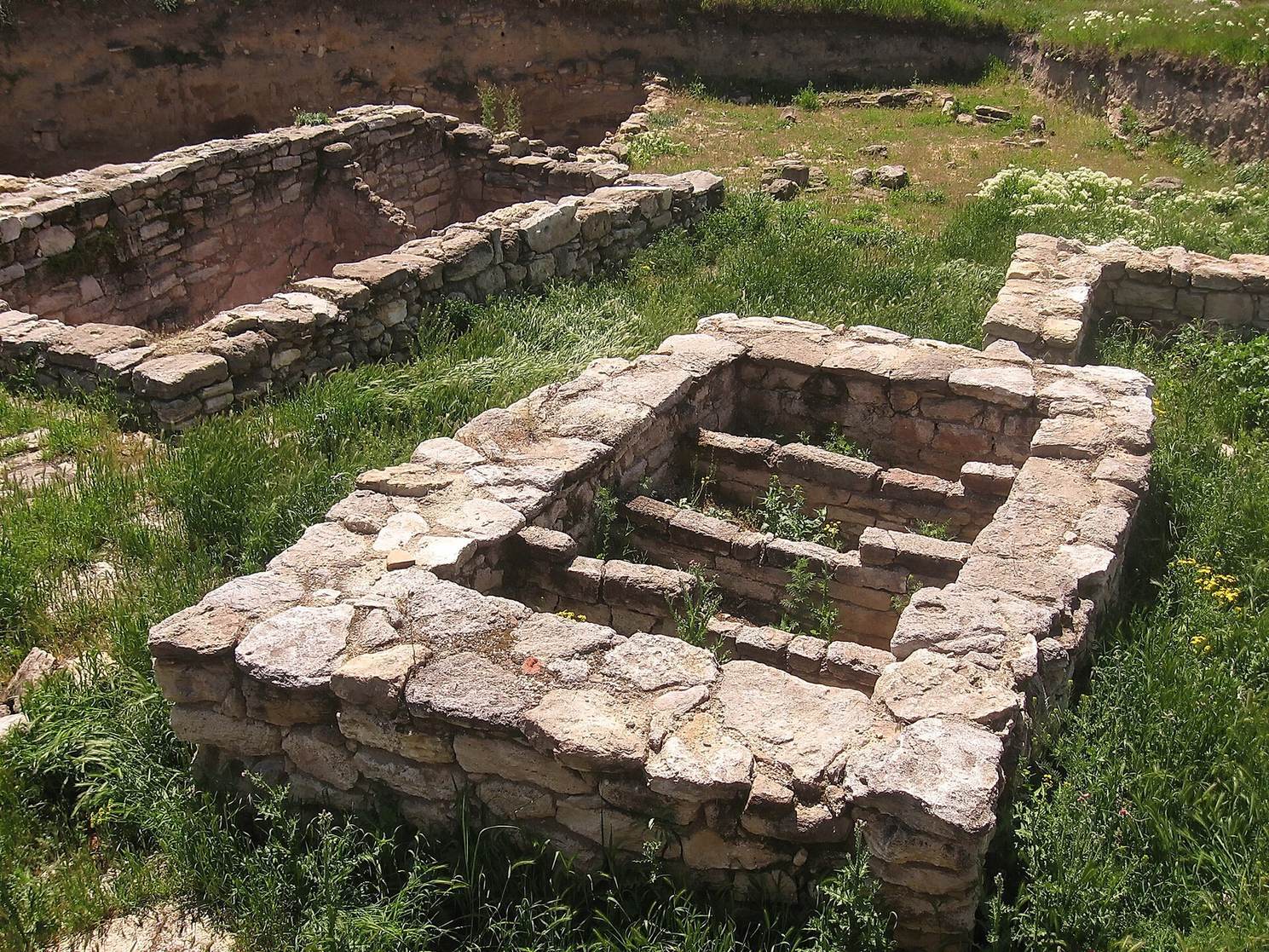
Polished stone-axe fragments and flint tools point to settlement in the Late Bronze Age, near the end of the second millennium BC. The earliest Greek-period dwellings were partly sunk into the ground; houses and streets developed later. In the western sector, two houses date to the second half of the sixth century BC. One had three rooms. A house from the third century BC, about 40 square metres in area, had two adjoining rooms. West of a southern street, a four-room house dating to the first century BC had a courtyard paved with stone slabs and remained in use until the second or third century AD. The structure known as the Fisherman’s House had eight rooms and a courtyard paved with large slabs. Fire destroyed it in the second half of the fourth century AD.
Streets
A street in the central southern area measured 4.7 to 5.3 metres wide and was surfaced with crushed stone and pottery fragments. Another street in the southern part of the city reached 5 metres in width. Large rectangular tanks for holding and selling fish stood in its northeastern section.
Defensive walls
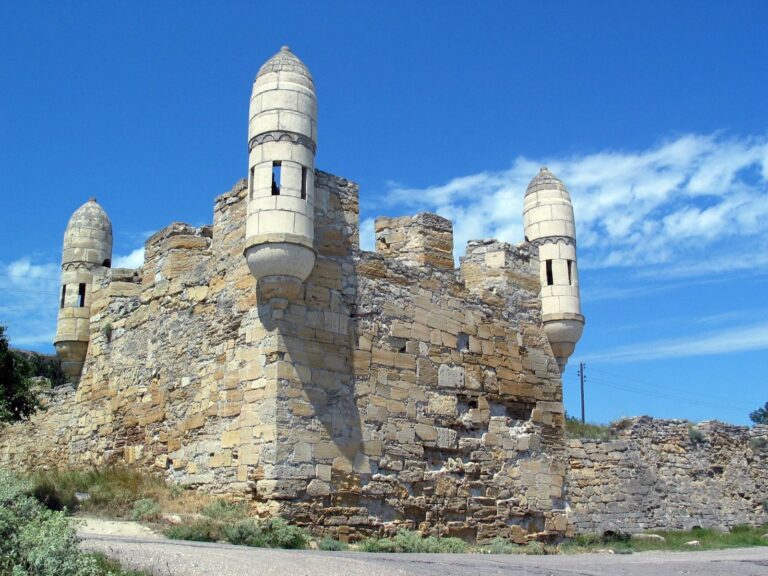
Tyritake’s defenses took shape during the Bosporan period. In the southern sector, two lines of wall measured 1.7 to 1.8 metres thick, while western sections were about 2 metres thick. Around the transition from the fourth to the third century BC, builders reconstructed the defenses with cut limestone blocks laid in regular courses and roughened faces. The walls then measured 2.4 to 2.7 metres across and were strengthened with towers. A northern tower had a narrow rectangular opening, 24 centimetres wide and 16 centimetres high. A separate building phase in the third century AD produced walls 1.8 metres thick, reaching 2.5 metres in places, with towers at the plateau’s corners. Sections of these later defenses survive.
Production and worship
Fish and wine production
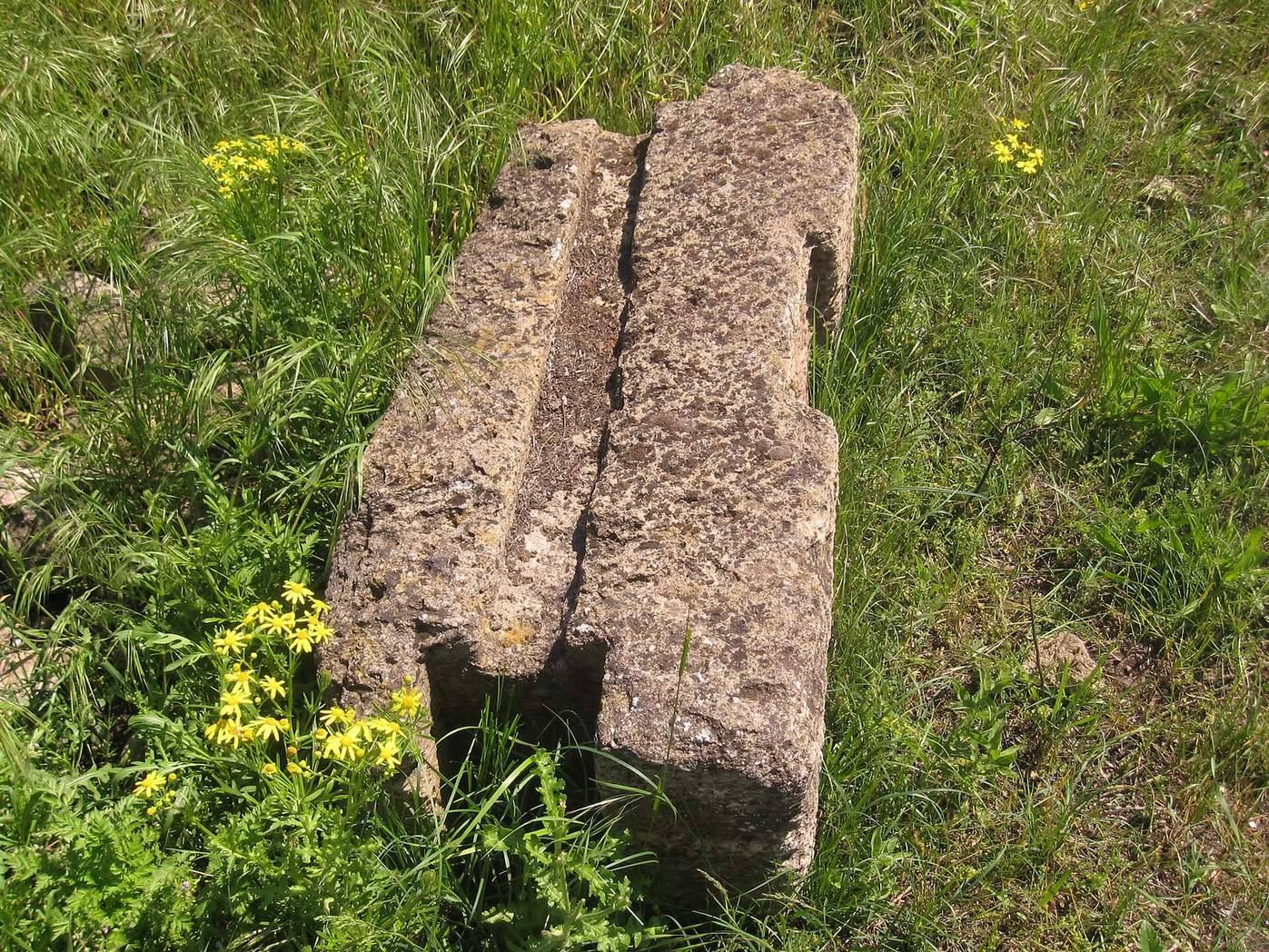
Fishing and wine making left substantial installations across the city. Excavations have revealed about 30 fish-salting vats, with a combined capacity of up to 1,600 centners, or 160 tonnes, at one time. Sixteen fish-holding tanks dating from the first to the third century AD could hold up to 160 tonnes. They were built into the inner face of the southern city wall, and similar installations lay in the eastern part of Tyritake. Seven wine presses have been found: two from the Greek period and five Roman examples dating to the second through fourth centuries AD.
Early Christian basilica
In the coastal part of the city, the remains of an early Christian basilica, a long building used for worship, date to the fifth or sixth century. A basilica was built there in the sixth century during the reign of Byzantine emperor Justinian I, who ruled from 527 to 565.