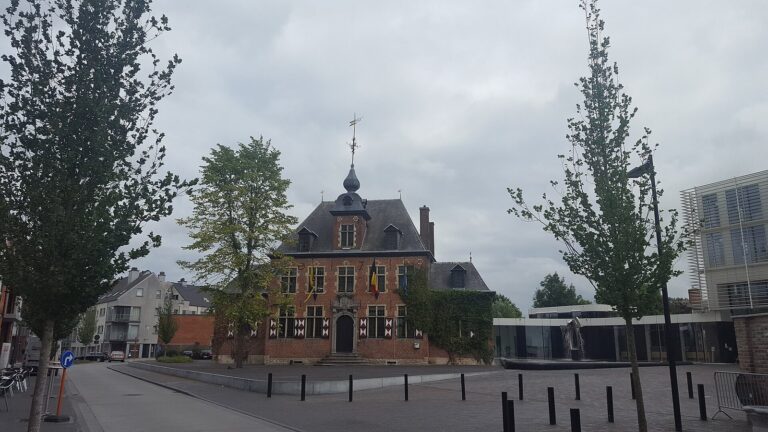
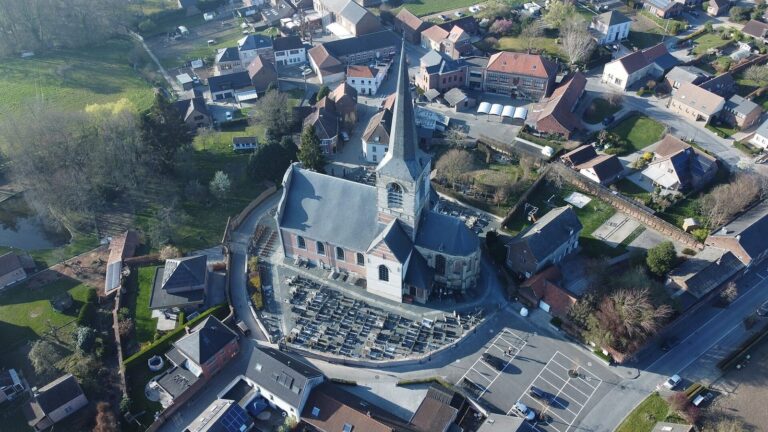
Affligem Abbey: A Benedictine Monastery in Belgium
Site at a Glance
- Popularity
- Medium
- Country
- Belgium
- Primary era
- Modern
- Eras represented
- Medieval, Early Modern, Modern
- Civilizations
- Belgian, Duchy of Brabant, Habsburg, Holy Roman Empire, Spanish
- Site type
- Religious
- Remains
- Monastery
On this page16 sections
History
Affligem Abbey is a Benedictine monastery in Affligem, Belgium. Its community’s traditional foundation date is 28 June 1062, and its first church, erected in 1083, followed the Romanesque style, a medieval form associated with rounded arches and massive construction. Affligem became the principal abbey of the Duchy of Brabant, a medieval principality in the Low Countries, and one of the region’s principal religious and intellectual centres.
Foundation and medieval prominence
The community began with six knights who had renounced a violent way of life. Wederic, a monk from Ghent’s Abbey of St Peter, persuaded them to settle together. In mid-June 1062, Anno II, Archbishop of Cologne, authorized their community on the estate of Hermann II, Count Palatine of Lotharingia, who was still a minor. Construction of the abbey began in 1074 with Anno’s approval.
On 31 March 1084, Hermann donated his estate to establish the abbey formally. The land had come from the undivided inheritance of Oda and Mathilde of Verdun, daughters of Gozelo I. The monks adopted the Rule of St Benedict in 1085, a set of principles for monastic life associated with Benedict of Nursia. In 1086, Henry III, Count of Leuven, added 200 hectares. Bishop Gerard II of Cambrai ceremonially dedicated the abbey on 24 August that year, and the dedication decree was proclaimed at a synod in Cambrai on 16 October.
After Hermann’s death in 1085, the counts of Leuven protected the community. Crusaders made substantial gifts, and Godfrey of Bouillon and his brother Baldwin of Boulogne visited in 1096. King Henry I of England favoured Affligem as a refuge and ordered a major expansion, finished in 1138, three years after his death. Under Godfrey I, Count of Leuven, the abbey developed into a centre of religious and intellectual life.
Its manuscript-copying room and library held works by Cicero, Horace, and Ovid. The monks also extended the world chronicle of Sigebert of Gembloux. In the second half of the thirteenth century, a scribe at Affligem made a Middle Dutch verse version of Thomas of Cantimpré’s account of the life of Lutgard of Tongeren. John Cotton, a monk and theorist of medieval music, is credited with an early treatise on music combining independent melodic lines.
Affligem established dependent monastic houses, or priories, at Wavre around 1093, Frasnes-lez-Gosselies in 1099, and Bornem in 1120. Its other foundations and affiliations included St Andrew’s near Bruges, Forest near Brussels, Groot-Bijgaarden, Maria Laach, and Vlierbeek near Leuven. By the fourteenth century, prayer associations connected it with 62 monasteries. Members of the ducal family were buried at Affligem: Godfrey I died there in 1139 after spending his final years at the abbey, and his daughter Adeliza of Leuven, Queen of England, died there in 1151. Marie of France, Duchess of Brabant and daughter of King Philip II Augustus of France, died at Affligem in 1224 and was buried there.
Bernard of Clairvaux visited in 1146 while preaching for the Second Crusade, a Christian military expedition. He tried unsuccessfully to persuade the monks to join the Cistercians, a reform order that followed the Benedictine Rule. A tradition written down around 1535–1540 tells that a statue of the Virgin Mary returned Bernard’s greeting. It was later destroyed during iconoclasm, the destruction of religious images.
Conflicts between Flanders and Brabant brought fires at the abbey in 1333 and 1356, but the community continued to develop. Abbot Jan t’Serjacobs, who died in 1429, became Chancellor of Brabant and helped establish the University of Leuven. Abbot Goswin Herdinck, who died in 1493, served as an envoy for Archduke Maximilian of Austria.
Commendatory rule, conflict, and suppression
In the early sixteenth century, Affligem entered the commendatory system, in which an abbot could receive the abbey’s revenues without personally governing the community. William de Croÿ held the abbacy from 1518 to 1521 and was succeeded by his brother Charles, who remained abbot until 1564. In 1523, Affligem joined the Bursfelde Congregation, a network of Benedictine monasteries.
A papal decision incorporated the abbey’s assets into the newly created Archdiocese of Mechelen in 1561. From 1569, the archbishops held the secular abbacy, while a provost exercised spiritual authority. This division of authority is dated through 1801, although French authorities suppressed the abbey in 1796. The transfer of revenues led to a prolonged dispute with Archbishop Matthias Hovius, who prevailed in 1602 with the support of Archduke Albert of Austria.
In 1580, troops of William of Orange, a leading figure in the Dutch Revolt, set fire to the abbey. The monks spent 27 years in exile. A sculptor from Mechelen made a replacement for the destroyed Marian statue in 1606, incorporating a surviving fragment. In the seventeenth century, Provost Benedictus van Haeften restored part of the abbey and commissioned Peter Paul Rubens and Gaspar de Crayer to embellish it. In 1627, he founded a federation of Benedictine monasteries that included Affligem and was linked to the Congregation of St Vanne; the federation ended in 1654.
Later seventeenth-century wars, including campaigns by the armies of Louis XIV of France, damaged the abbey. The community had about 30 monks in 1686. In the eighteenth century, its estate exceeded 8,000 hectares. It had 36 monks in 1763, and by 1787 its holdings included 8,262 hectares and 40 farms.
In 1720, Provost Odo de Craecker invited architect Laurent-Benoît Dewez to design a guesthouse. Dewez’s wider plans for the convent buildings were approved in 1768, and construction began in 1770, but the French Revolution interrupted the work. On 11 November 1796, the French regime suppressed the abbey and expelled its 28 monks. Its buildings, land, and property were seized and sold. Much of the complex became ruins, building elements were reused in Hekelgem and nearby, and the abbey lost its patronage over two priories and 45 dependent churches in the southern Low Countries. Many art treasures were also lost.
Restoration and the modern community
From 1801, a group of monks remained together under former abbot Beda Regaus. After Belgium became independent in 1830 and religious freedom was restored, the community re-formed in 1837 at a former Capuchin convent in Dendermonde. Eight monks were there at first. Church authorities recognized Affligem’s canonical restoration in 1841, and the community numbered 12 in 1846. The monks bought the former abbey ruins in 1868 and returned on 18 June 1870. The community’s property was divided between Affligem and Dendermonde, which thereafter had separate abbots.
Rebuilding followed the return. A new church was begun in the late nineteenth century and later replaced in 1972. A monk, Paul Luyckx, helped restore Affligem and founded Steenbrugge Abbey in 1878. Affligem established a monastery at Merkelbeek in 1892, and its later connections included a house in the Transvaal in South Africa and participation in the Pietersburg mission from 1910.
The abbey’s brewery, first mentioned in 1129, reopened in 1885. Copper fittings and fixtures were requisitioned during the First World War, and brewing resumed in 1921. The brewery was destroyed during the Second World War. In the twentieth century, Affligem also contributed to the Liturgical Movement, which sought to renew Christian worship and encourage understanding and participation in the liturgy. Its Dutch-language people’s missal appeared in 1915 for readers unfamiliar with Latin. Illustrated by Jozef Speybrouck, it went through 13 editions. The abbey’s liturgical journal began publication in 1919. The missal became less useful after the 1965 liturgical reform, when Mass began to be celebrated in Dutch. A cultural centre opened at the abbey in 1967.
Affligem has belonged to the Subiaco-Monte Cassino Congregation, a network of Benedictine monasteries, since 2012. By 2023, three monks remained, and the abbot resided at Dendermonde. The congregation assigned supervision of Affligem to the abbot there.
Remains
The surviving site brings together fragments of the medieval church, older buildings beside the present abbey, later monastic structures, and parts of historic gardens. Its buildings reflect successive medieval, classical, Neo-Gothic, and modern phases.
Medieval church and older buildings
Church remains
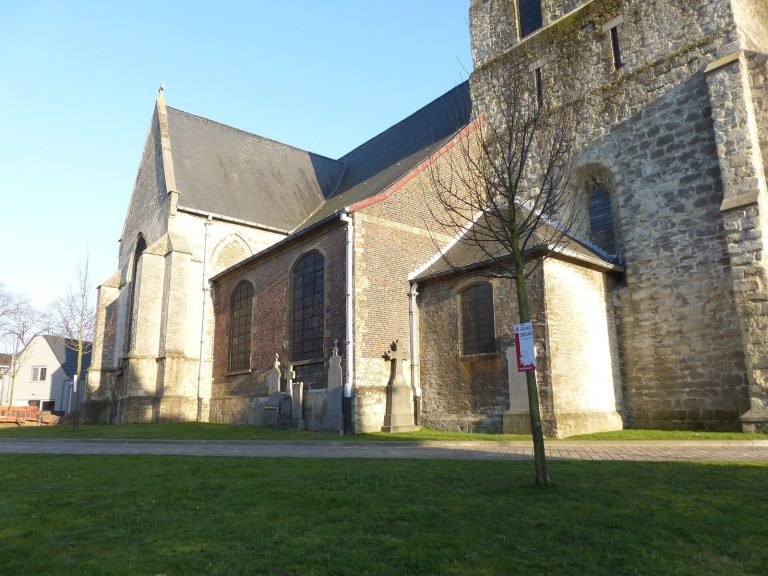
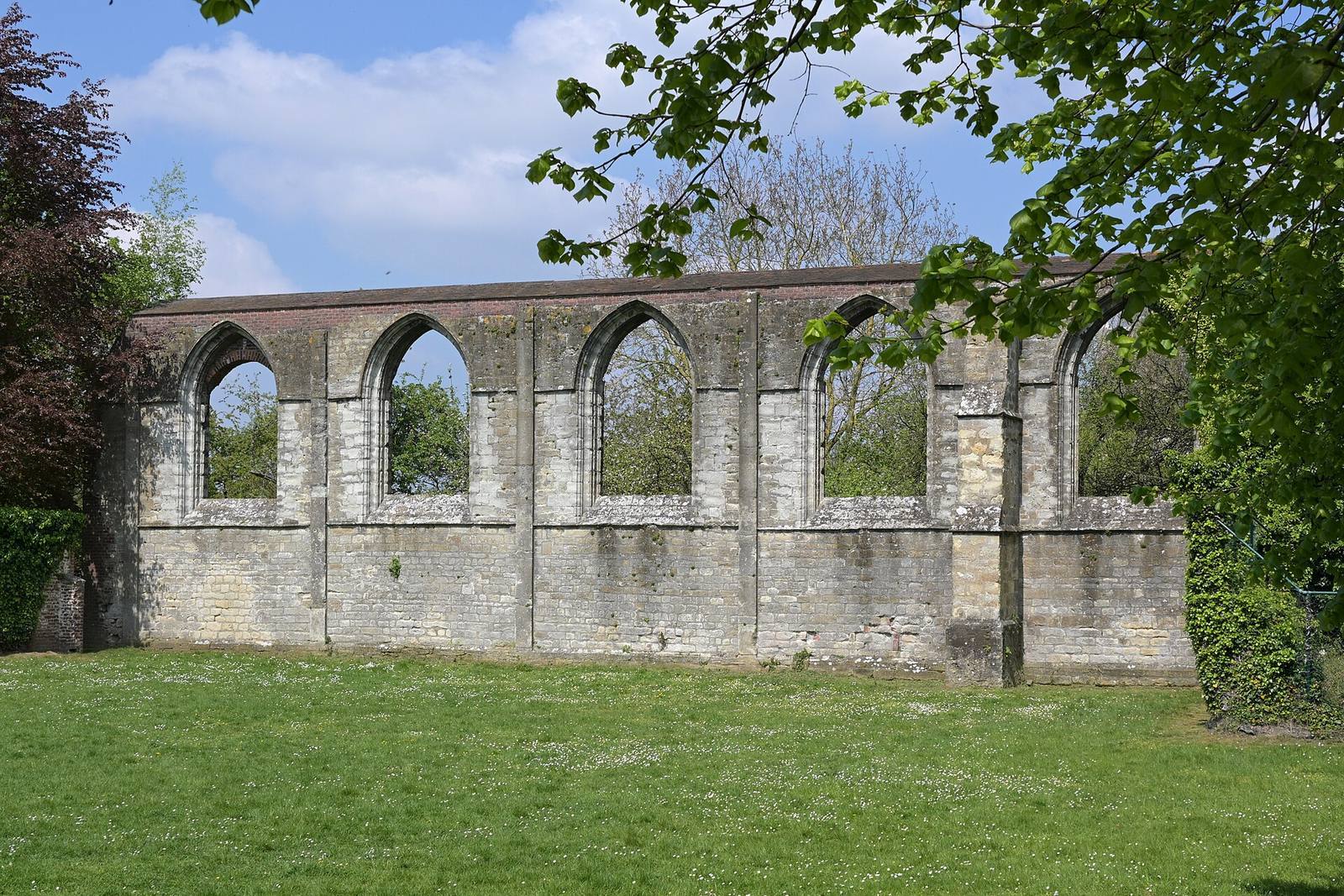
The original church was a Romanesque basilica with five towers. Medieval conflicts permanently destroyed three of them. Surviving masonry includes part of the north-side wall and a section of the nave, the central part of a church, with five pointed-arch openings.
Older buildings and gate
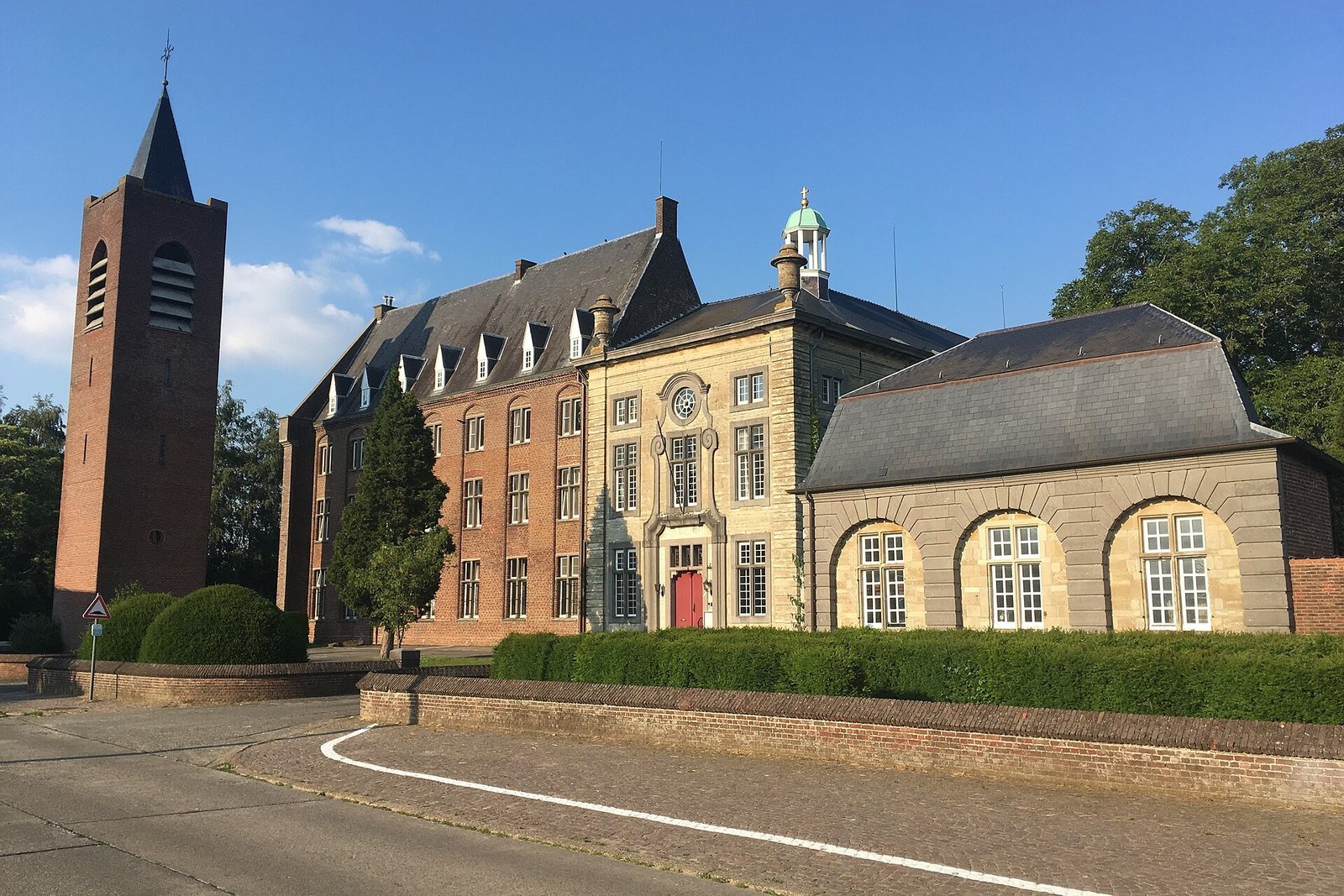
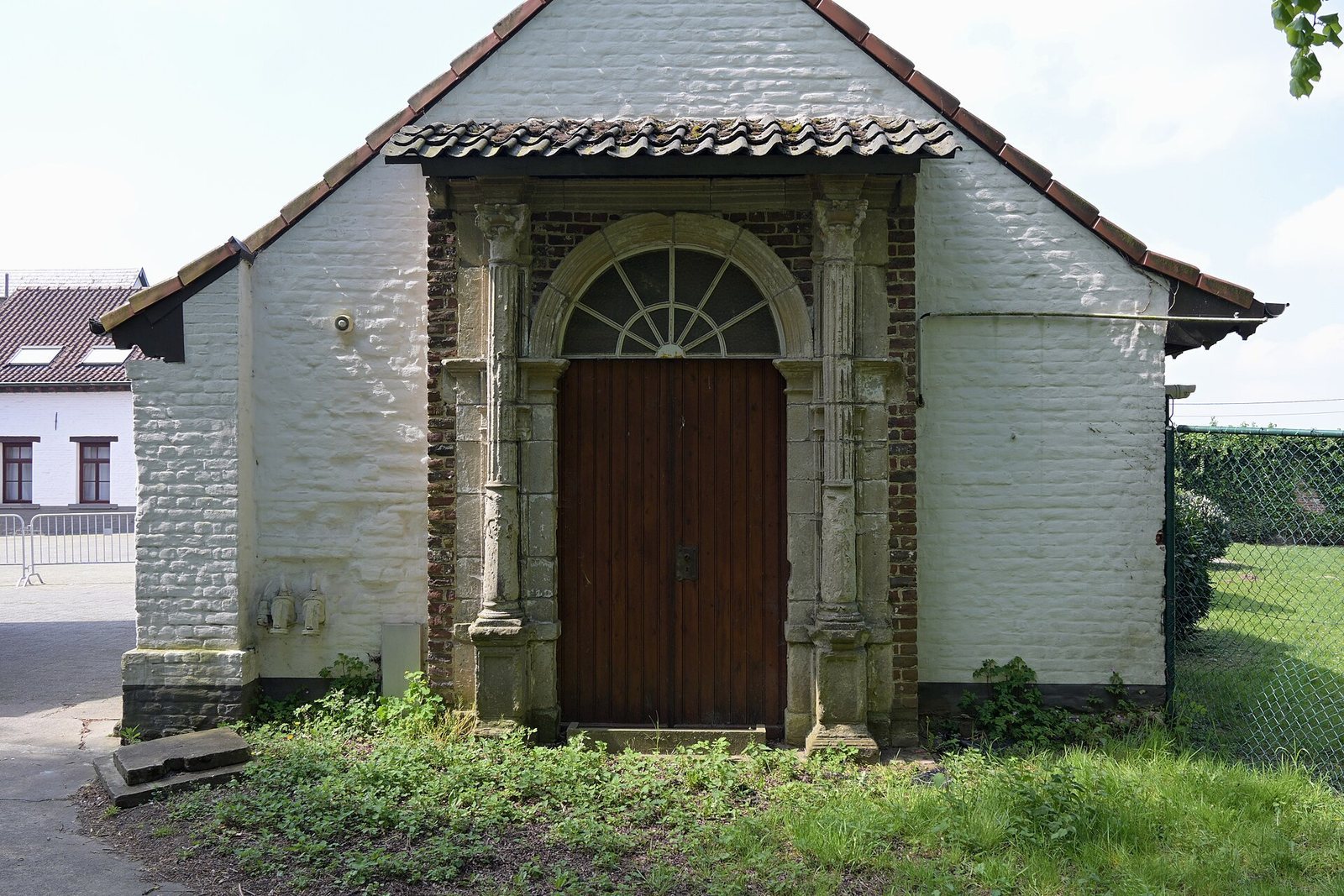
Beside the present abbey stand the Bishop’s House, a gate, and a pavilion. The Bishop’s House is Dewez’s guesthouse of about 1720, described as a late-Baroque building in a classical style drawing on ancient Greek and Roman forms. St Benedict’s Gate, one of the abbey’s seven gates, also survives.
Eighteenth-century plan and grounds
Dewez’s convent scheme
Dewez planned convent buildings around two square courtyards. In the scheme, the church’s altered west front would have formed the centre of a long, symmetrical façade, with two projecting sections beneath a triangular roof-front. Three convent buildings were removed to make way for the new construction. The French Revolution interrupted the project, and the larger plan remained unfinished.
Gardens
Parts of the abbey’s seventeenth- and eighteenth-century ornamental and vegetable gardens survive, along with orchards, ponds, and the cemetery.
Buildings of the restored abbey
Neo-Gothic church
The first convent buildings of the restored abbey followed the Neo-Gothic style, a revival of Gothic features such as pointed arches, and were designed by Dom Bellot and Stassin. Arthur Verhaegen designed a church built in 1880–1882. Its larger proposed tower scheme resulted in the construction of one bell tower.
Later monastic buildings
Alexander Kropholler’s expansion began in 1932 and produced a wing with a monumental cloister, a covered passage around an open court. Further work in 1933–1934 added a cloister, staircase, and library. The wider building plan was not completed.
Present church
The present abbey church, designed by Luc Van Den Broeck after the Neo-Gothic church was demolished in 1972, is a plain hall church with a single broad interior.
Art and associated objects
Van Haeften commissioned Rubens’s monumental 1634 altarpiece, Christ Falling with the Cross, for the abbey. Rubens portrayed himself in the painting as a Roman officer; the work is now in the Royal Museums of Fine Arts of Belgium in Brussels. The abbey’s associated treasures included liturgical vestments, ancient manuscripts, metalwork, and a chalice attributed to Bernard of Clairvaux. The staff and chalice linked to Bernard were safeguarded by Affligem’s last provost after the suppression and later held at Dendermonde.