Inverlochy Castle: A Medieval Fortress in the Scottish Highlands
Site at a Glance
- Popularity
- High
- Country
- United Kingdom
- Primary era
- Medieval
- Eras represented
- Medieval
- Civilizations
- Kingdom of Scotland
- Site type
- Military
- Remains
- Castle
On this page10 sections
History
Inverlochy Castle is a medieval fortress on the south bank of the River Lochy in the Scottish Highlands, United Kingdom, built around 1270–1280 for John “the Black” Comyn, Lord of Badenoch and Lochaber. Its position at the entrance to the Great Glen placed it beside a strategically important route through the Highlands.
Comyn Foundation and Destruction
The castle may have occupied the site of an earlier Pictish fort and settlement. The Picts were peoples who lived in parts of what is now Scotland during antiquity and the early Middle Ages. Scottish historian Hector Boece later described the earlier settlement as a “city” and attributed its destruction to Viking raiders.
After Robert the Bruce became king of Scots in 1306, he captured and burned Inverlochy the following year. The Comyns, his rivals for the throne, lost their lands, and the castle stood unoccupied for a period.
Clan Conflict and Royal Garrison
In 1431, clansmen of Alexander MacDonald, Lord of the Isles, defeated the larger royal army of James I in the first Battle of Inverlochy, fought near the castle. Inverlochy then came under the control of Clan Cameron, which held it until 1501.
In 1505, the partly ruined castle was granted to Alexander Gordon, 3rd Earl of Huntly. James IV ordered him to repair it for use as a royal garrison. Gordon’s brother William became Master of Inverlochy and was killed at Flodden in 1513 while commanding the Camerons.
Montrose’s 1645 Campaign
In 1645, Inverlochy was a stopping point for the Royalist army led by James Graham, 1st Marquess of Montrose, during its campaign against forces commanded by Archibald Campbell, 1st Marquess of Argyll. Royalists supported the monarchy; the Covenanters were Scottish Presbyterians who defended their religious covenants and church settlement. The campaign ended in a Royalist victory at the second Battle of Inverlochy on 2 February 1645.
Nineteenth-Century Estate and Preservation
In the nineteenth century, James Scarlett, 1st Baron Abinger, bought the estate and built a Scottish Baronial-style mansion northwest of the castle. This style drew on forms associated with older Scottish castles and baronial houses; the mansion is now the Inverlochy Castle Hotel. The castle is a Scheduled Monument, meaning it is protected by law, and is in the care of Historic Environment Scotland.
Remains
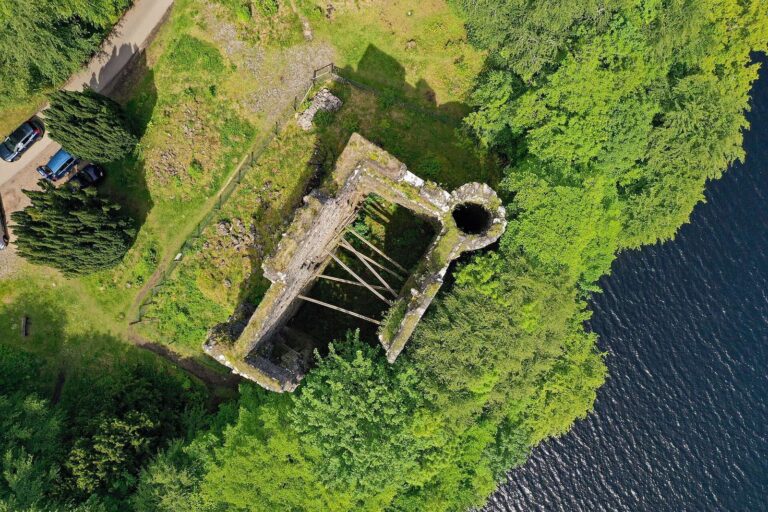
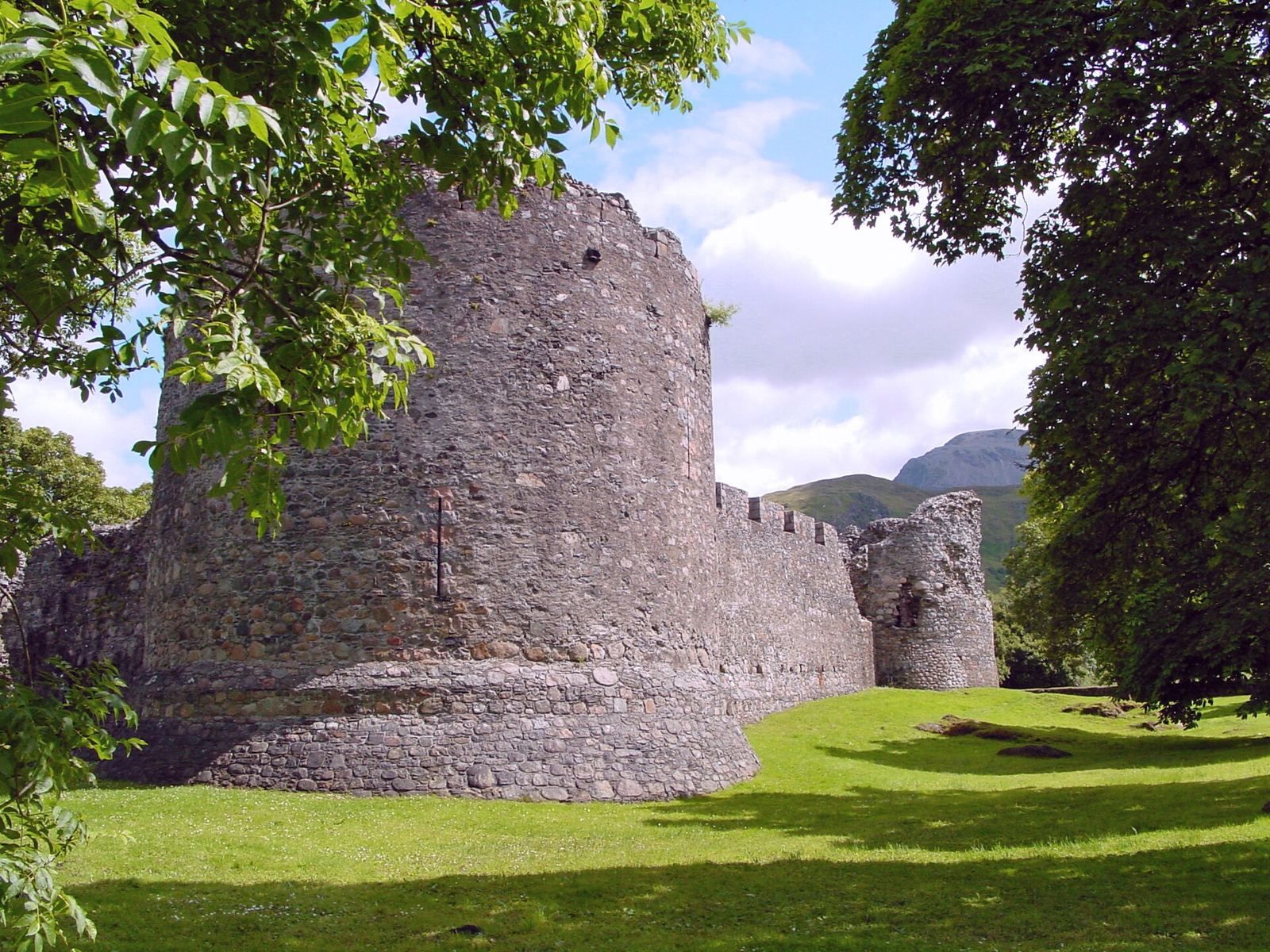
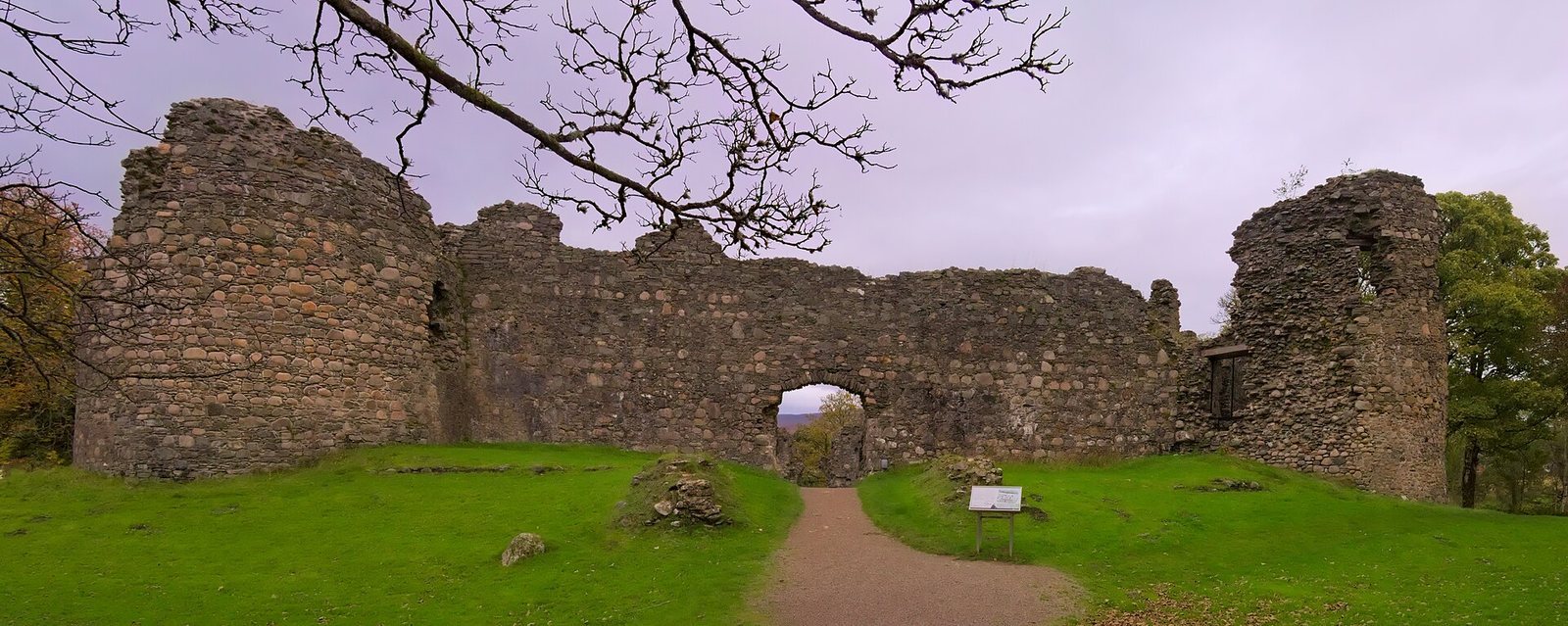
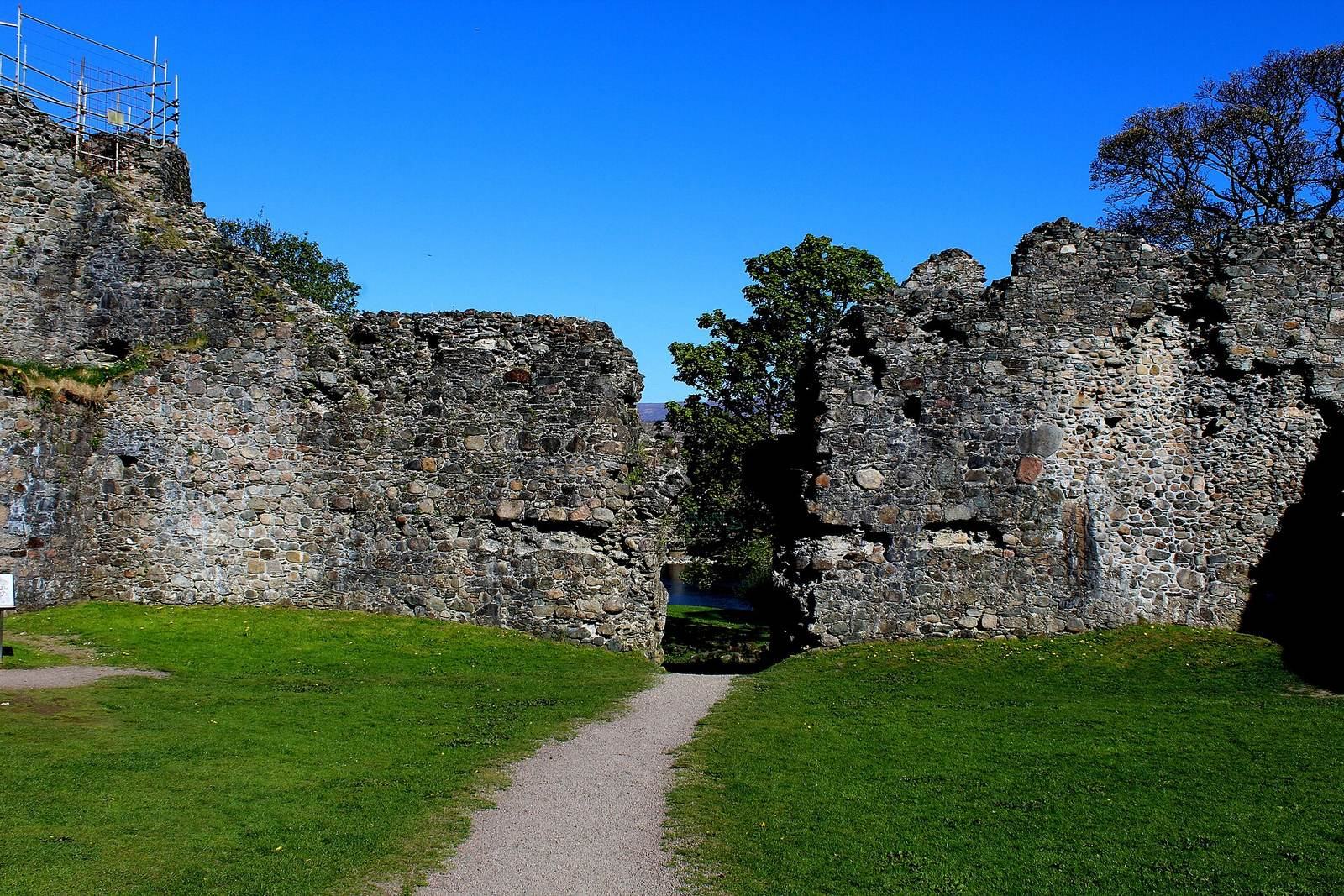
The surviving castle has a simple four-sided layout, with a courtyard enclosed by defensive walls and a round tower at each corner. It stands on the River Lochy’s south bank, which protected one side; a water-filled ditch once defended the other three.
Castle Plan and Defences
Courtyard and Curtain Wall
The courtyard measures 31 by 27 metres. Its enclosing curtain wall, the defensive wall around a castle courtyard, is up to 2.7 metres thick and 7.6 metres high.
Corner Towers
Four round towers occupy the courtyard’s corners. The largest, the Comyn Tower, has an internal diameter of 6.1 metres and served as the keep, the castle’s principal stronghold. Each of the other three towers measures 4.3 metres across internally. All four have stairways built within their thick walls.
Entrances
The main entrance is on the south side, while a northern entrance facing the river is known as the water gate. Both had portcullises, heavy grilles lowered across entrances. The southern entrance may also have included an inner gatehouse.
The castle has changed little since its thirteenth-century construction. In the nineteenth century, its narrow firing openings, known as loopholes, and its battlements, the defensive raised sections along the wall tops, were restored before Queen Victoria’s visit in 1873.