St. Martin’s Church Großdrebnitz: A Historic Lutheran Church in Germany
Site at a Glance
- Popularity
- Very Low
- Country
- Germany
- Primary era
- Medieval
- Eras represented
- Medieval, Early Modern, Modern
- Civilizations
- Electorate of Saxony, German, Holy Roman Empire, Kingdom of Saxony, Margraviate of Meissen
- Site type
- Religious
- Remains
- Church
On this page10 sections
History
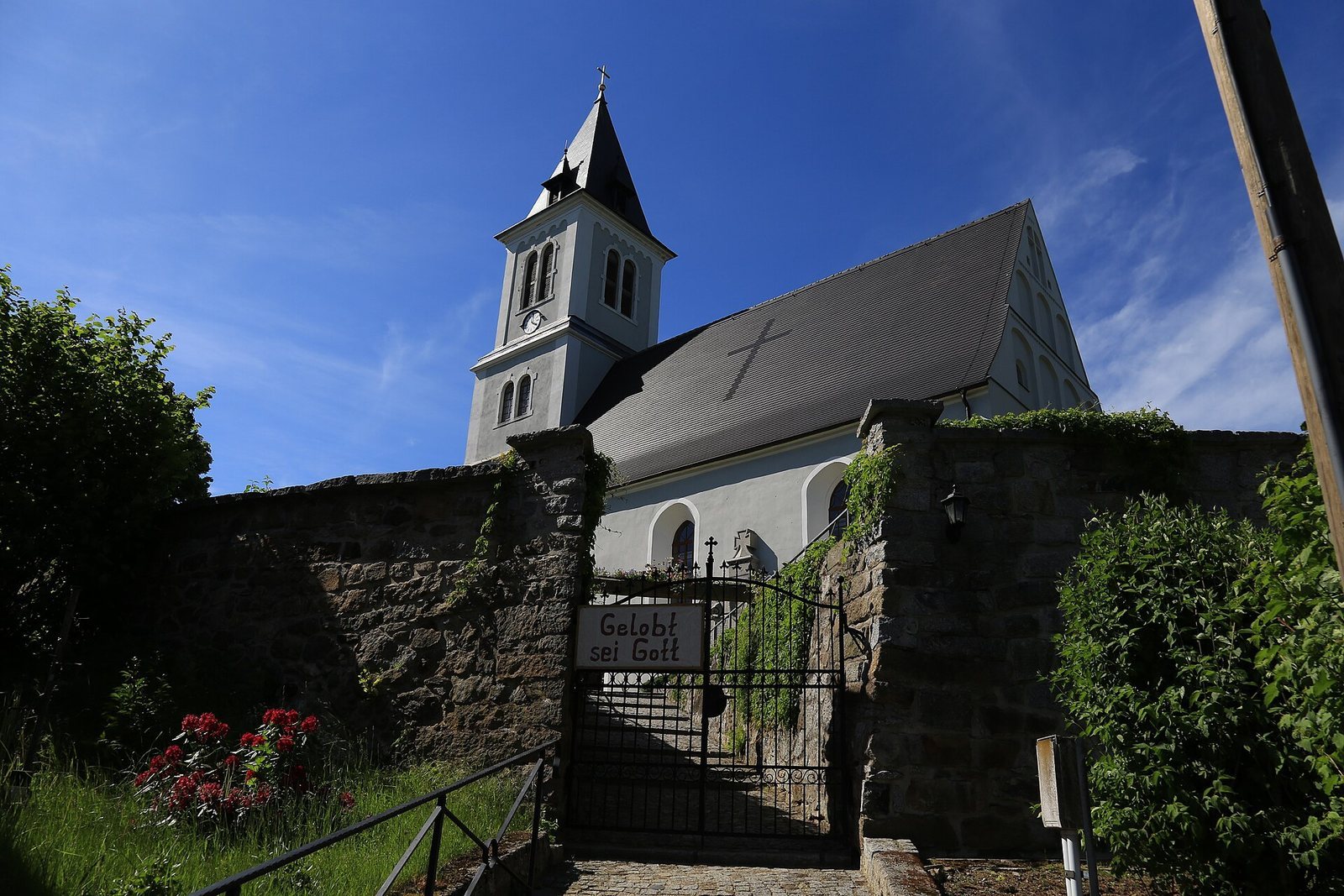
St. Martin’s Church Großdrebnitz is a church in Großdrebnitz, Germany, first mentioned in records in 1346. Its early architecture belonged to the Romanesque-Gothic transitional style, combining features of both traditions. The church has never been destroyed, and its masonry probably survives from its original construction, although the building has been changed repeatedly.
Alterations and church furnishings
A major remodeling in 1852 reshaped the church and replaced its earlier winged altar, an altarpiece with hinged panels, with a pulpit altar. The first known organ dated to 1735. In 1779, Fischer, the pastor’s widow, donated an earlier instrument that preceded the present organ.
Christian Gottfried Herbrig built the present organ, which was dedicated on Exaudi in 1828. Exaudi is the Sunday between Ascension and Pentecost. Herbrig’s son Wilhelm Leberecht probably assisted with its construction. The Eule organ-building company of Bautzen extensively renewed the instrument in 1938 and inspected it in 1955 and 2006.
Name and modern history
In 1909, the church council gave the church its present name, honoring Martin Luther, the German theologian and central figure of the Protestant Reformation. The naming also marked the 350th anniversary of the Reformation’s introduction in Großdrebnitz. The church belongs to the Evangelical-Lutheran parish of Bischofswerda and the Evangelical-Lutheran Church of Saxony, the regional Lutheran church body.
The church’s roof and exterior walls were renovated between autumn 2003 and spring 2005. Its sacristy, a room for preparing worship and storing church furnishings, had served for many years as a heating room before returning to its original use in 2005.
Remains
Plan and exterior
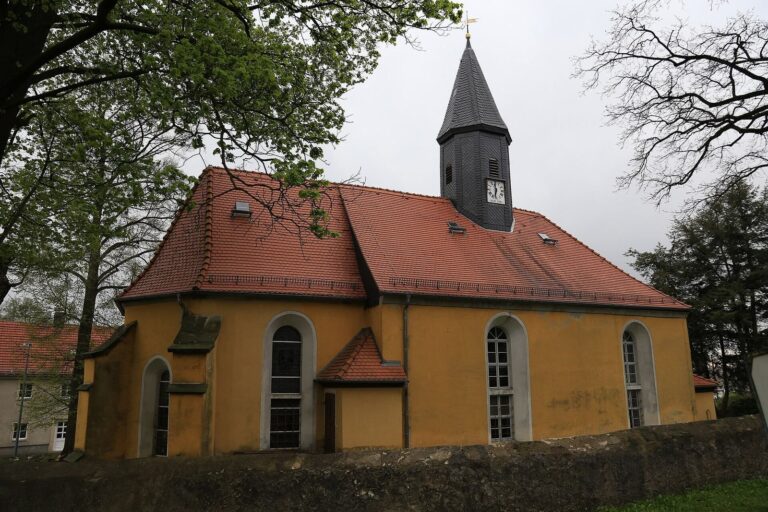
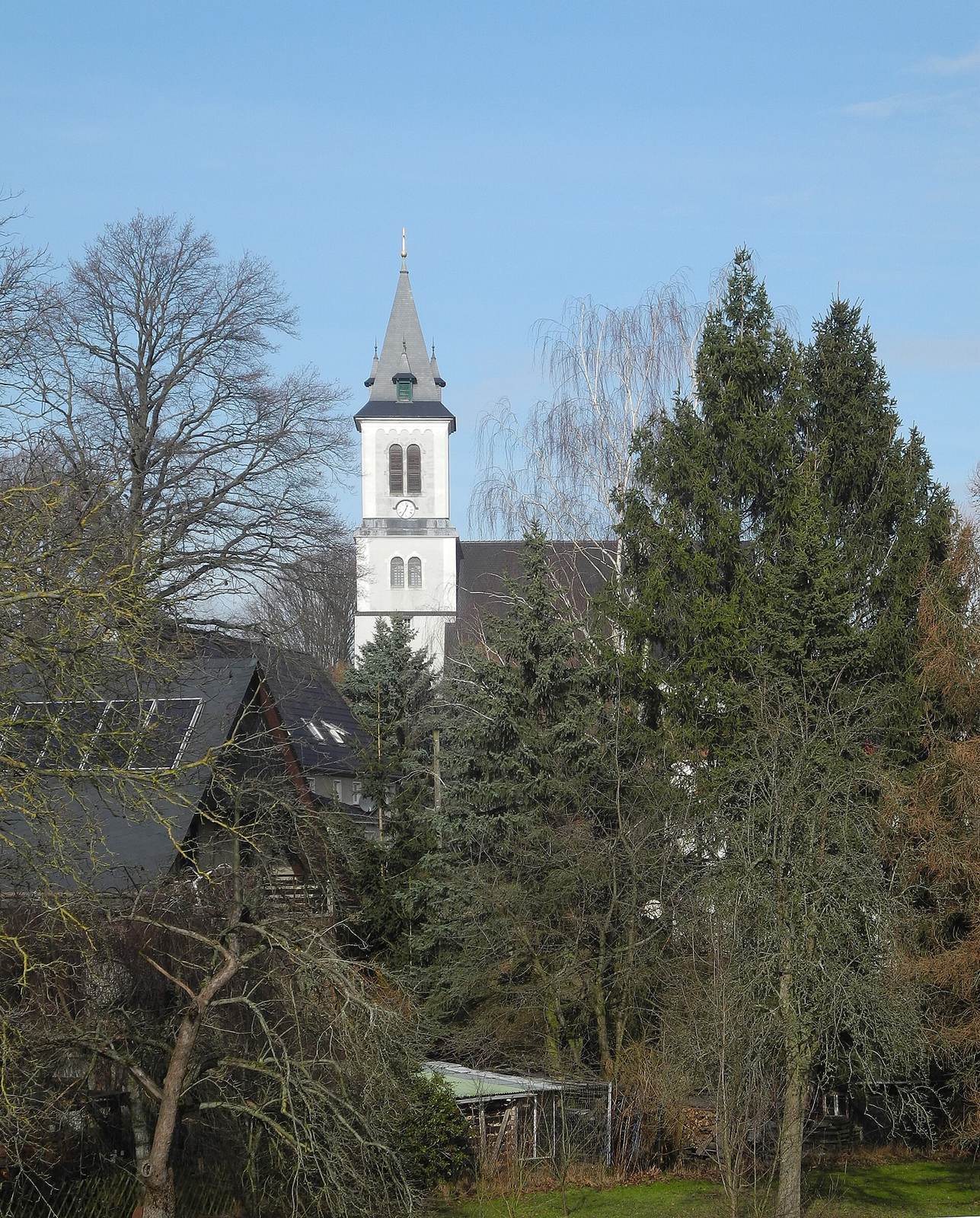
The church stands on a hill in the historic center of Großdrebnitz. It is a single-room hall church with a flat wooden ceiling. Wooden shingles covered the roof until 1795, when roof tiles were introduced; the roof was covered again in 1977. The tower originally rose only a little above the church roof. A small roof turret remained in place until 1818, and the tower was raised in 1894.
The 1852 remodeling added windows on the north side and enlarged the south-side windows to match. It also added an entrance and a window to the tower. Inside, granite slabs replaced the original brick floor, while wooden flooring lies beneath the pews installed during the work.
Interior
Altar and fittings
The present pulpit altar combines an altar with a pulpit and dates to the 1852 remodeling. It replaced an earlier winged altar that probably dated to 1669 or before. A key above the altar’s crucifix represents the authority Jesus Christ gave the church to forgive and retain sins, as described in Matthew 16:19. Two large pewter altar candlesticks bear the date 1670. The church also has a sandstone baptismal font from 1909 and a chandelier received in 1852.
Floor and galleries
Galleries added on the south side form another part of the remodeled interior. Symbols on the wall of the second gallery correspond to words on the wall of the first.
Organ
The organ has one manual, a keyboard played by the hands, and a pedal keyboard played by the feet. Its mechanical action carries key movement through linkages, while sliding boards in its slider chests control the flow of air to the pipes.
Bells and burial features
A set of four bronze bells hangs in the bell chamber beneath the tower hood. The bells were cast at different times by different bell founders. Beneath the altar area, a clergy crypt, a burial chamber under the church, served until 1742 and is now sealed. A grave monument at the church commemorates Ehregott Bruno Barthel, born on 23 April 1856 in Langhennersdorf and deceased on 18 January 1933 in Kleindrebnitz, and his wife Asta Clementine, née Leipnitz.