Raschenberg Castle: A Medieval Court and Administrative Center in Germany
Site at a Glance
- Popularity
- Low
- Country
- Germany
- Primary era
- Medieval
- Eras represented
- Medieval
- Civilizations
- Duchy of Bavaria, Holy Roman Empire
- Site type
- Military
- Remains
- Castle
On this page4 sections
History
Origins and Salzburg administration
Raschenberg Castle stood on Schlossberg, south of Oberteisendorf in Germany, and was probably built in the 12th century by the Counts of Plain, a medieval noble family. The castle passed to the dukes of Bavaria in 1219 and to the Archdiocese of Salzburg around 1275. Its name first appears in 1275 alongside references to the Plain family.
The change in authority is reflected in the careers of local officials. Pilgrim von Pernhaupt served as a judge at the castle in 1258 and appears as a witness in 1274. Heinrich von Staufeneck held the offices of burgrave, a castle officer with governing and defensive duties, and judge in 1299. Heinrich von Nopping is named in 1309 and 1311, while records from the 14th century mention both administrative officers and district judges, including Eberl von Oberteisendorf in 1370.
The castle housed a court, offices, prison rooms, and an archive. Its court and administrative district combined judicial and local administrative duties under an administrator. It remained an independent court seat and administrative center into the 16th century, serving the Archdiocese of Salzburg, an ecclesiastical principality whose archbishops also held secular authority, until 1575. That year, it was abandoned under the archiepiscopal administrator David von Nussdorf.
Relocation and later use
During the 15th and 16th centuries, administrators lived at Vachenlueg, Adelstetten, or Wiedenreut near Petting rather than at the castle. The names Haunsberger, Trauner, Wintreit, and Pettinger Hof are associated with this arrangement, and Balthasar von Thannhausen is linked with Petting.
In 1678, the court and administrative office moved to a newly built building in Teisendorf. By the end of the 17th century, workers had repaired the castle’s well chamber and defensive wall-walk, and military personnel lived there. In 1751, five floors were installed in the tower, which became a gunpowder store. The castle’s iron parts were removed in 1758, and in 1761 its ruins were handed to the private Achthal-Hammerau ironworks for dismantling and salvage. Raschenberg passed to Bavaria in 1816.
Remains
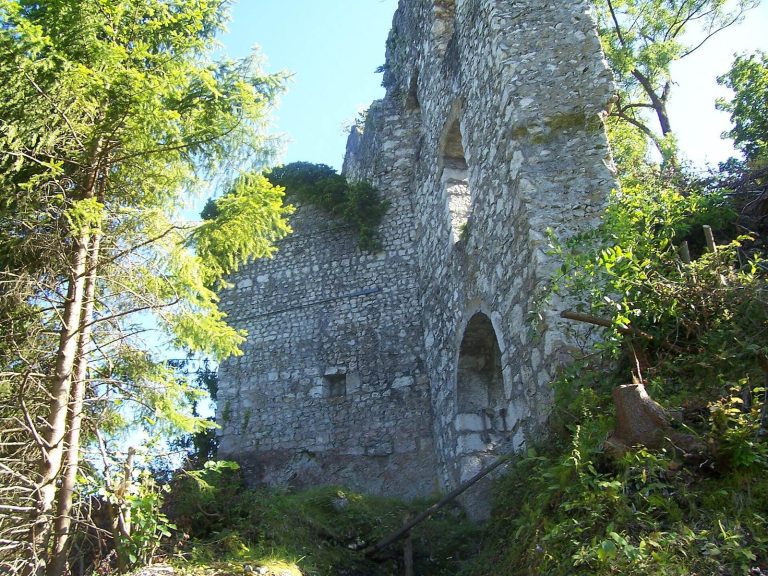
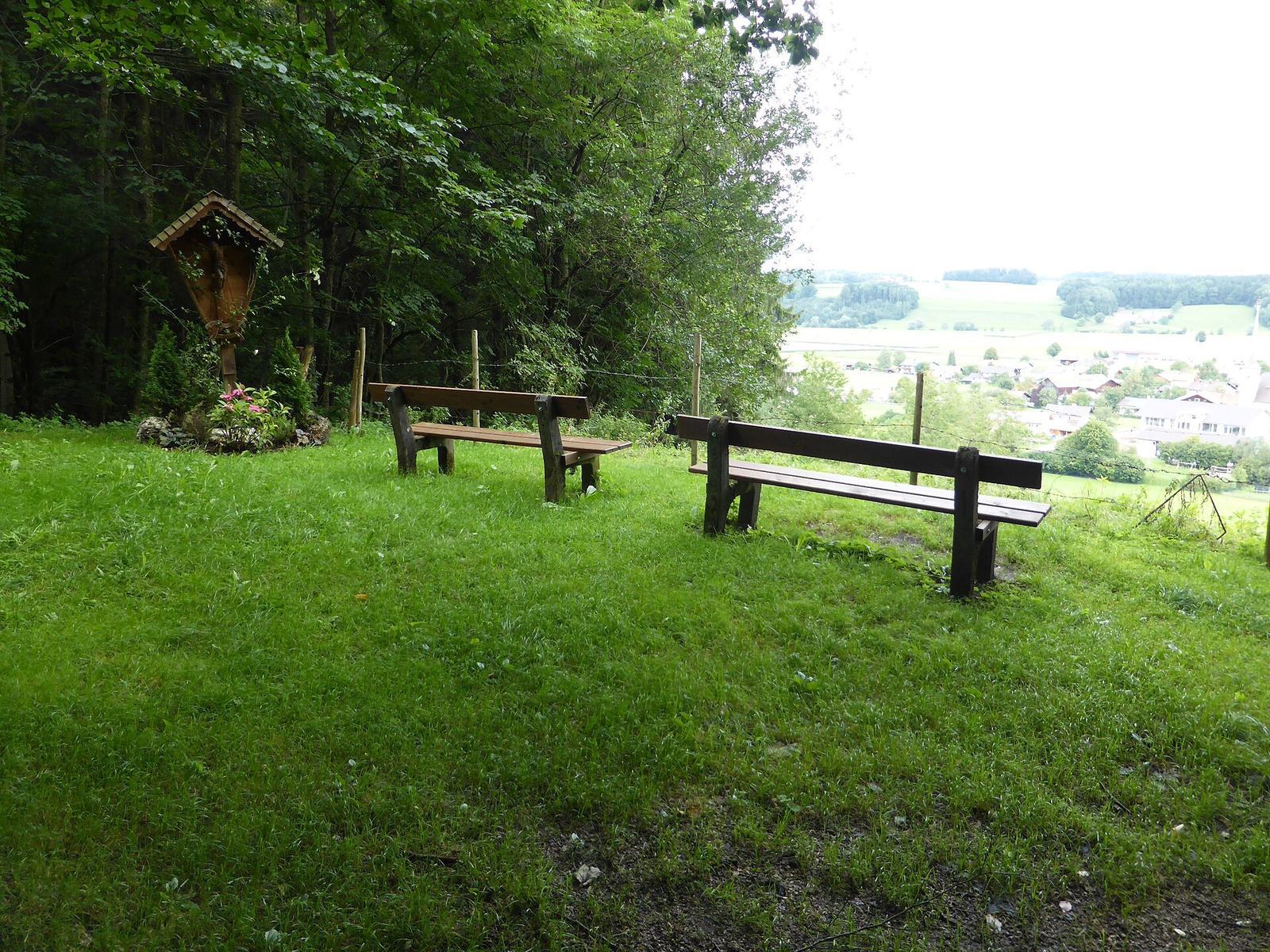
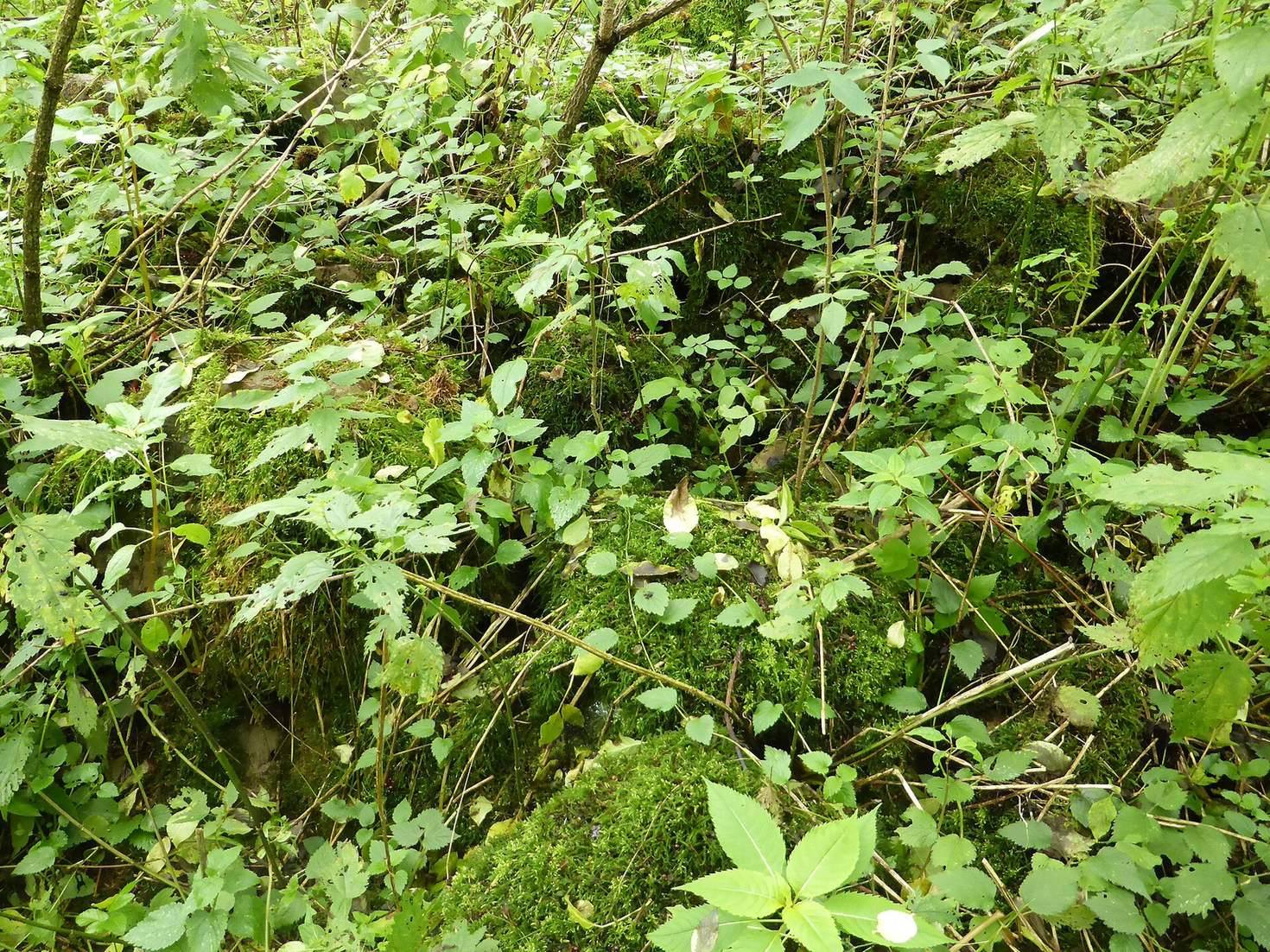
The hilltop castle occupied a spur on Schlossberg at an elevation of 583 metres. A description from 1613 presents it as intact, with a wall, tower, gate, wine cellar, well, and judge’s residence. Wall remains survived until about 1880. Today, scattered rubble and stone mounds mark the collapsed keep, the castle’s principal defensive tower. A well shaft in the middle of the western castle area is capped with a concrete slab. An eastern neck ditch, a defensive trench cut across a narrow spur to separate a castle from higher ground, remains visible. The ruins are heavily overgrown, and archaeological remains beneath the surface date to the medieval and early modern periods.