Lindisfarne Priory: An Early Medieval Monastic and Missionary Center
Site at a Glance
- Popularity
- Very High
- Country
- United Kingdom
- Primary era
- Medieval
- Eras represented
- Medieval
- Civilizations
- Kingdom of Scotland
- Site type
- Religious
- Remains
- Monastery
On this page12 sections
History
Foundation and religious center
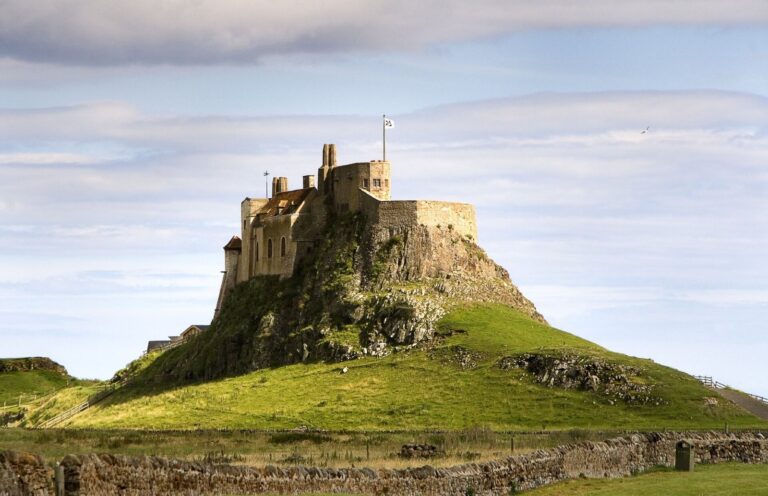
Lindisfarne Priory is a monastic site on Holy Island, off the northeast coast of England in the United Kingdom, founded in the mid-630s by Aidan and monks from Iona. In 635, King Oswald of Northumbria asked the monastery on Iona, an important early medieval religious center in the Inner Hebrides, to send missionaries to the recently united kingdoms of Bernicia and Deira. An initial mission failed, and Aidan arrived the following year. Oswald gave him Lindisfarne, a small island near his stronghold at Bamburgh.
Lindisfarne grew into a leading religious and missionary center in Northumbria, an Anglo-Saxon kingdom in northern England. Its monks also helped spread Christianity in Mercia, a kingdom in central England, and their missionary work sometimes brought them into conflict with missionaries sent directly by the pope. The community first followed Irish-Scottish church practices. At the Synod of Whitby in 664, a council that addressed differences between Irish-Scottish and Roman Christian traditions in Northumbria, it adopted Latin practice, and the Irish-Scottish community departed. In 678, Archbishop Theodore of Canterbury restored the monastery and bishopric after King Ecgfrith expelled Bishop Wilfrid from Northumbria.
Cuthbert, a monk and abbot at Lindisfarne, later became a bishop and was revered as Northumbria’s patron saint. After his death, the monastery became a place of pilgrimage. Lindisfarne also flourished as a center of learning and art, with a renowned writing school producing manuscripts in Latin and Anglo-Saxon from the early eighth century. In 737, King Ceolwulf gave up his rule and entered the monastery; he died there in 764.
Viking raids and the departure of the community
On 8 June 793, Vikings raided and plundered Lindisfarne. The attack is often treated as the beginning of the Viking Age in Britain, a period of Scandinavian raiding, migration, and expansion, although earlier attacks had taken place at Burghead Fort in 742 and in Dorset in 787. Bishop Higbald held office at Lindisfarne from 781 to 803.
Fearing further raids, Bishop Eardulf and the monks left the island in 875. They carried the remains of Cuthbert, Aidan, Eadberht, Eadfrith, and Æthelwald, along with the Lindisfarne Gospels. The bishopric remained vacant for seven years. In 882, Eardulf and the community settled at Chester-le-Street, which became the bishops’ seat.
Return and medieval refoundation
After King Æthelred II secured peace through payments to Danish and Norwegian rulers, Bishop Aldhun sought to restore the monastery on Lindisfarne in 995. Tradition relates that he received a divine message directing that Cuthbert’s remains should rest at Durham. Around 1000, the bishopric and the remains were transferred there, and the bishops’ title changed to Bishop of Durham.
Benedictine monks, members of an order that follows the Rule of Saint Benedict, returned briefly from 1069 to 1090 at the instigation of William of St Calais, the Norman bishop of Durham. The monastery was re-established as a Benedictine house in 1093. A new monastery was founded on the island in the twelfth century beside the remains of the earlier one.
Lindisfarne had initially been connected with the kingdom of Scotland. Edward I conquered it in 1296, after which the island was developed as an English border stronghold. Despite its frontier position, the priory remained prosperous and continued to expand. In 1385, the monks asked Richard II to have the fortifications demolished because they had been made responsible for the costs of the royal garrison.
Dissolution and later history
Following Henry VIII’s break with the papacy, the priory was dissolved in 1536 as part of the suppression of English monasteries. It was not demolished at that time. The island was fortified with earthworks in 1542–1545; Holy Island Castle was renewed in 1565–1571, and another fortification was built later.
By the eighteenth century, the ruins had attracted tourist interest, captured in Thomas Girtin’s 1797 painting of the abbey church. A private owner began efforts to preserve the buildings, and excavations and stabilization work followed in the early twentieth century.
Remains
Priory buildings
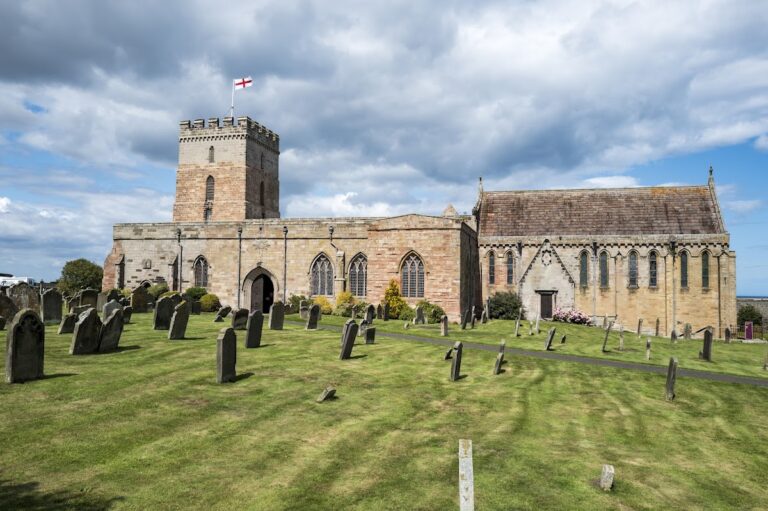
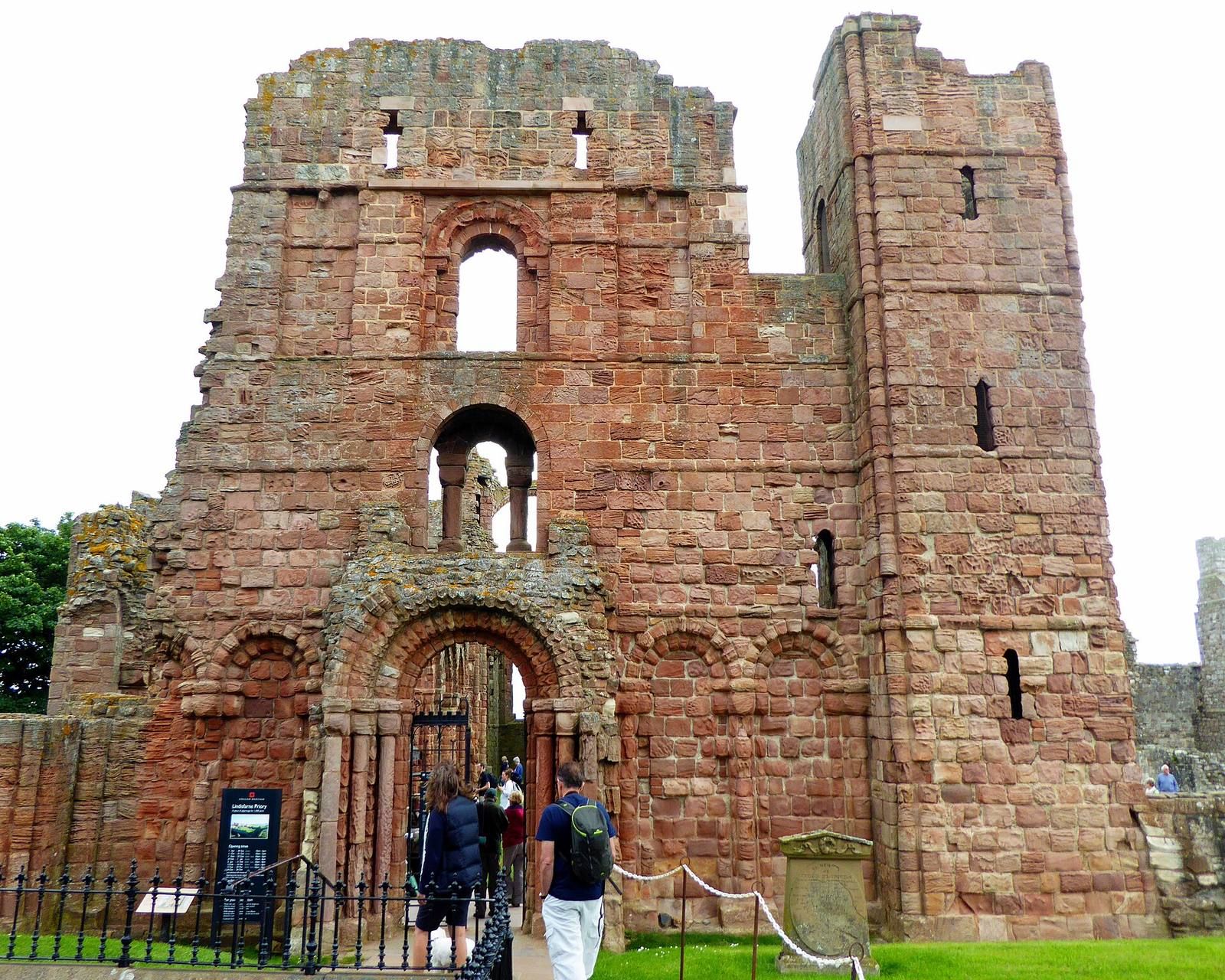
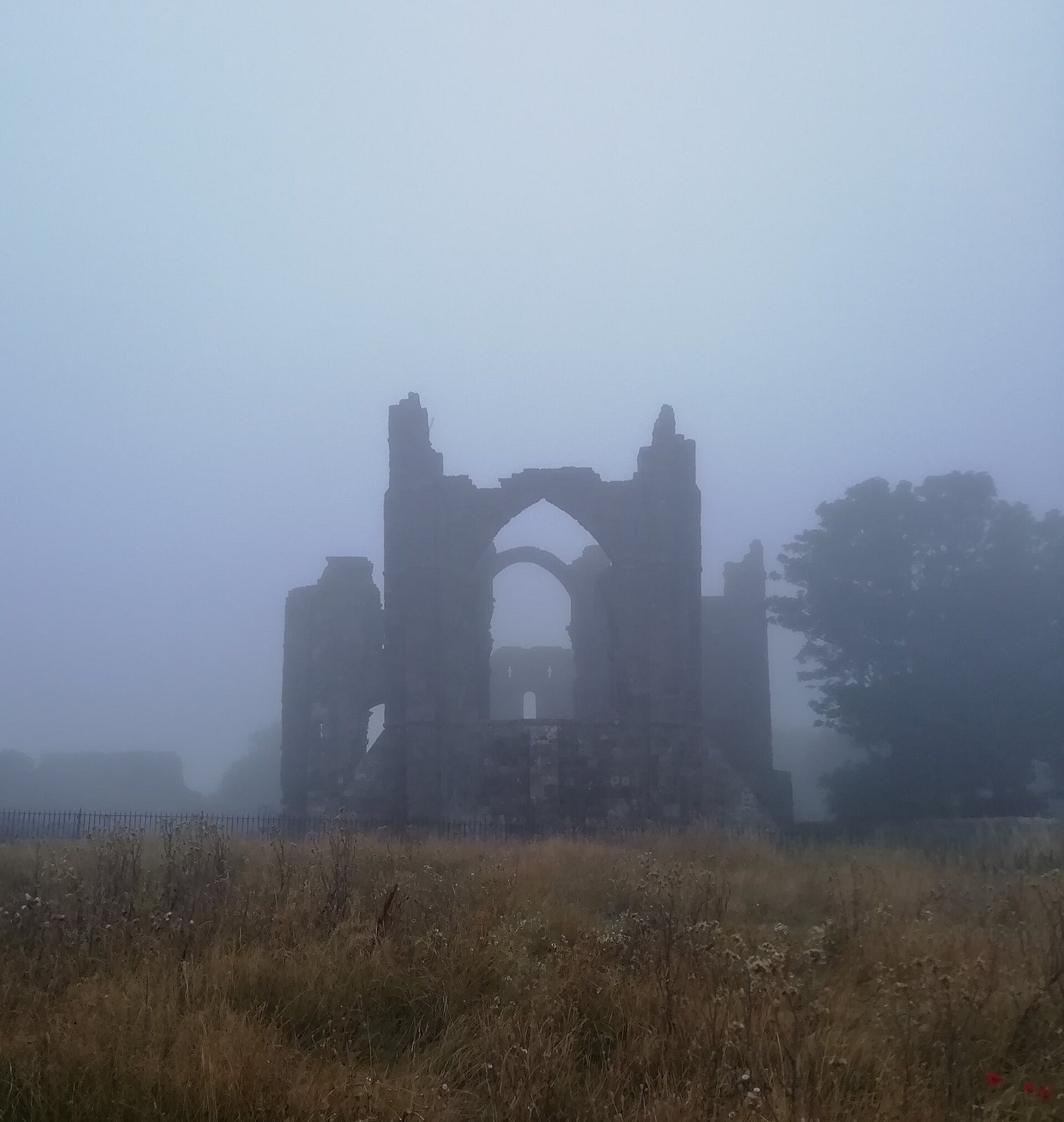
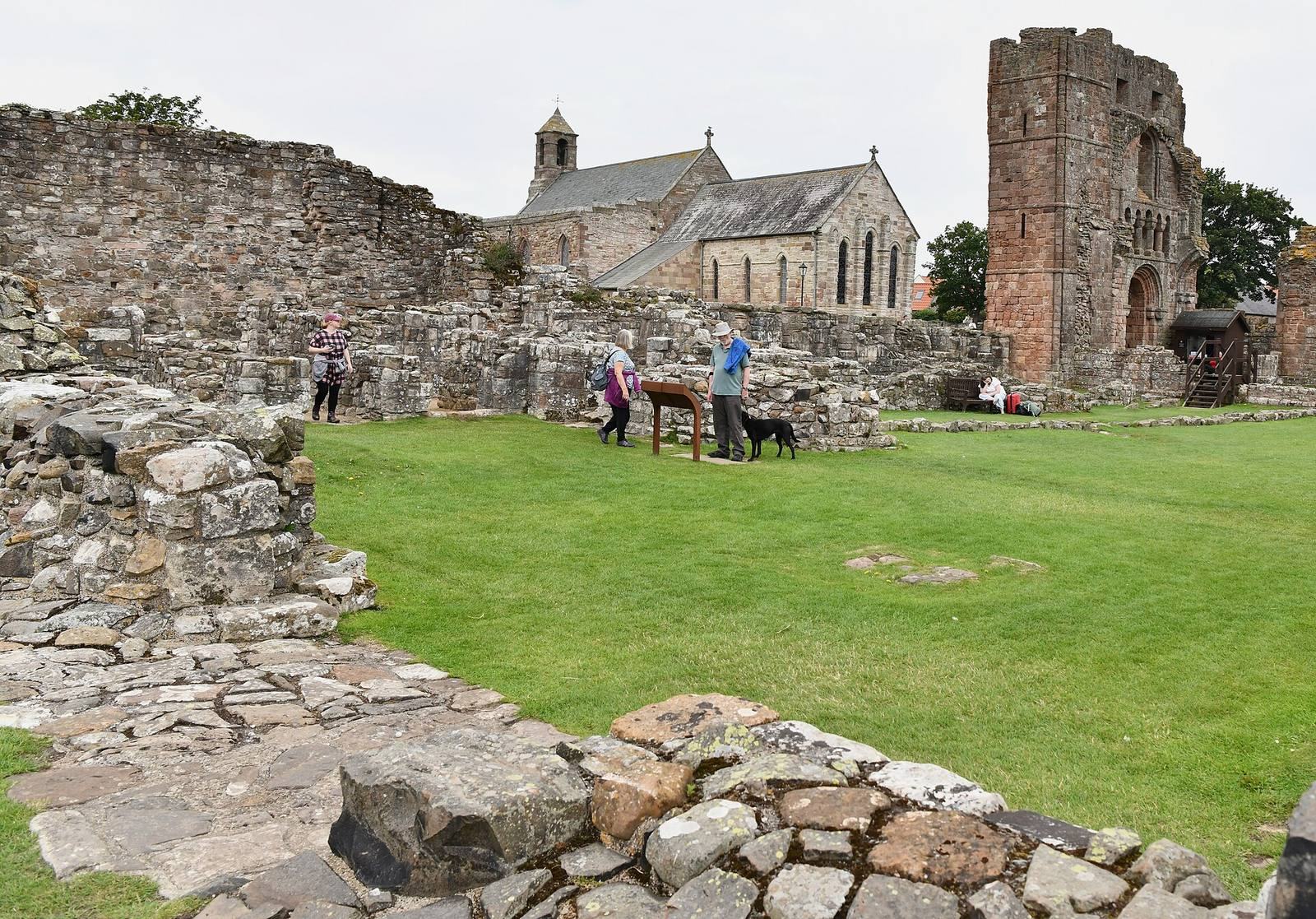
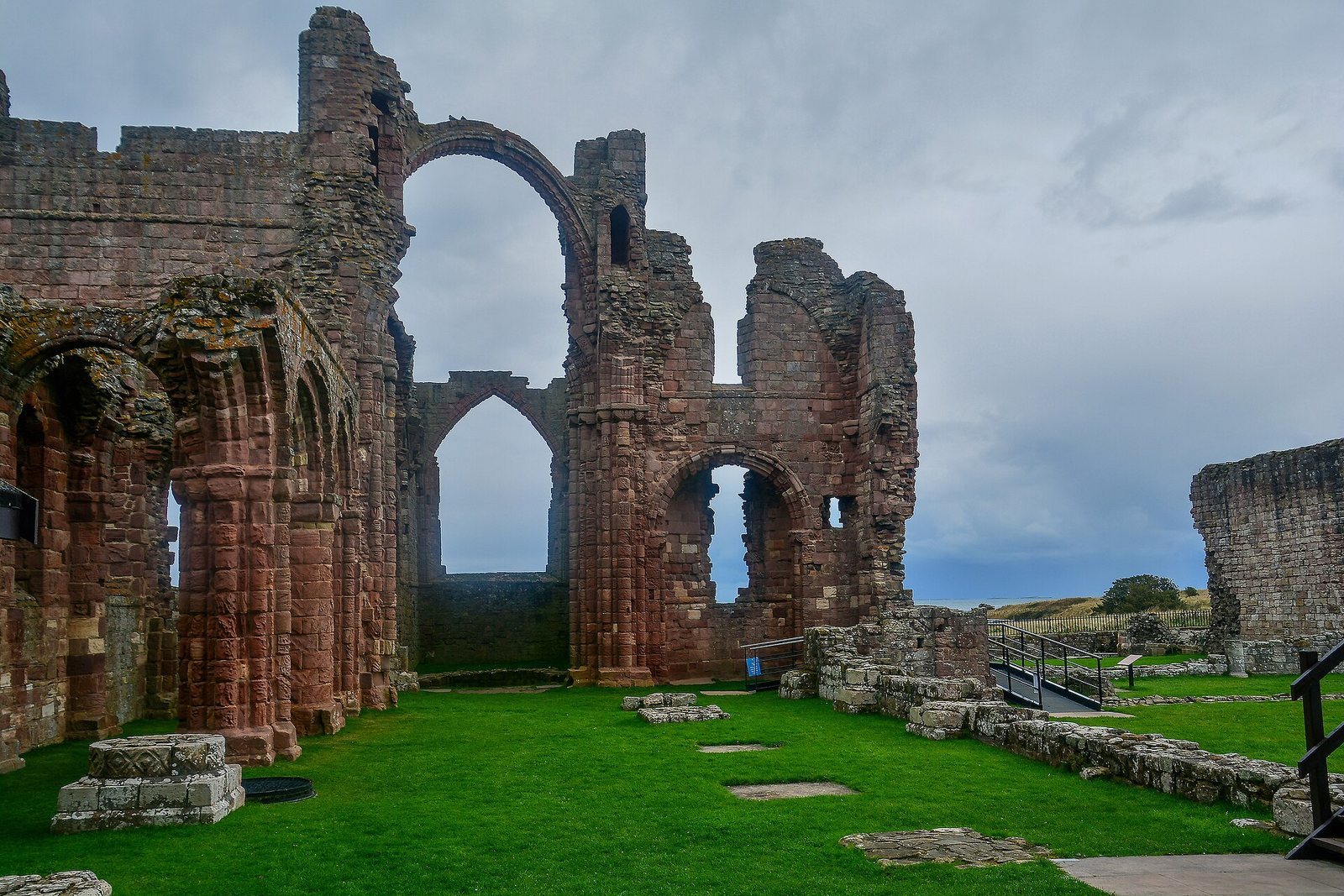
The priory ruins stand on Lindisfarne, also known as Holy Island, and are in good condition, giving an impression of the former complex. The surviving buildings include the abbey church and St Mary’s Parish Church, which stands on the site of the original monastery.
Abbey church
The abbey church was built in the twelfth century, around the time the new monastery was established. Its crossing tower, which rose above the meeting point of the church’s main body and transepts, collapsed in 1820, when parts of the buildings remained intact externally. The west façade fell in the 1850s.
St Mary’s Parish Church
St Mary’s was built in the twelfth century, at approximately the same time as the abbey church, on the site of the first monastery.
Manuscript and memorial stone
Lindisfarne Gospels
The Lindisfarne Gospels is an illuminated manuscript containing the four Gospels, probably made on the island between about 715 and 721. Eadfrith, a monk who later became a bishop, is thought to have produced it. In the tenth century, the monk Aldred added an Old English translation alongside the Latin text, and the hermit Billfrith embellished it with fine metalwork. Its decoration combines Celtic, Germanic, and Roman elements. The original is held by the British Library, while a copy is exhibited in Durham Cathedral.
Lindisfarne Stone
The Lindisfarne Stone, also called the Viking Domesday Stone, survives as the upper fragment of the original. Seven figures carrying weapons appear on its reverse and are intended to represent the Viking attackers; the other side is understood to depict the Last Judgment, the Christian belief that God will judge humanity at the end of time. The stone was probably erected to commemorate people killed in the 793 raid.