San Francisco Castle: A Spanish Fortress in Las Palmas de Gran Canaria
Site at a Glance
- Rating
- 2.8
- Popularity
- Very Low
- Country
- Spain
- Primary era
- Early Modern
- External website
- Open
- Eras represented
- Early Modern
- Civilizations
- Crown of Castile, Spanish
- Site type
- Military
- Remains
- Castle
On this page8 sections
History
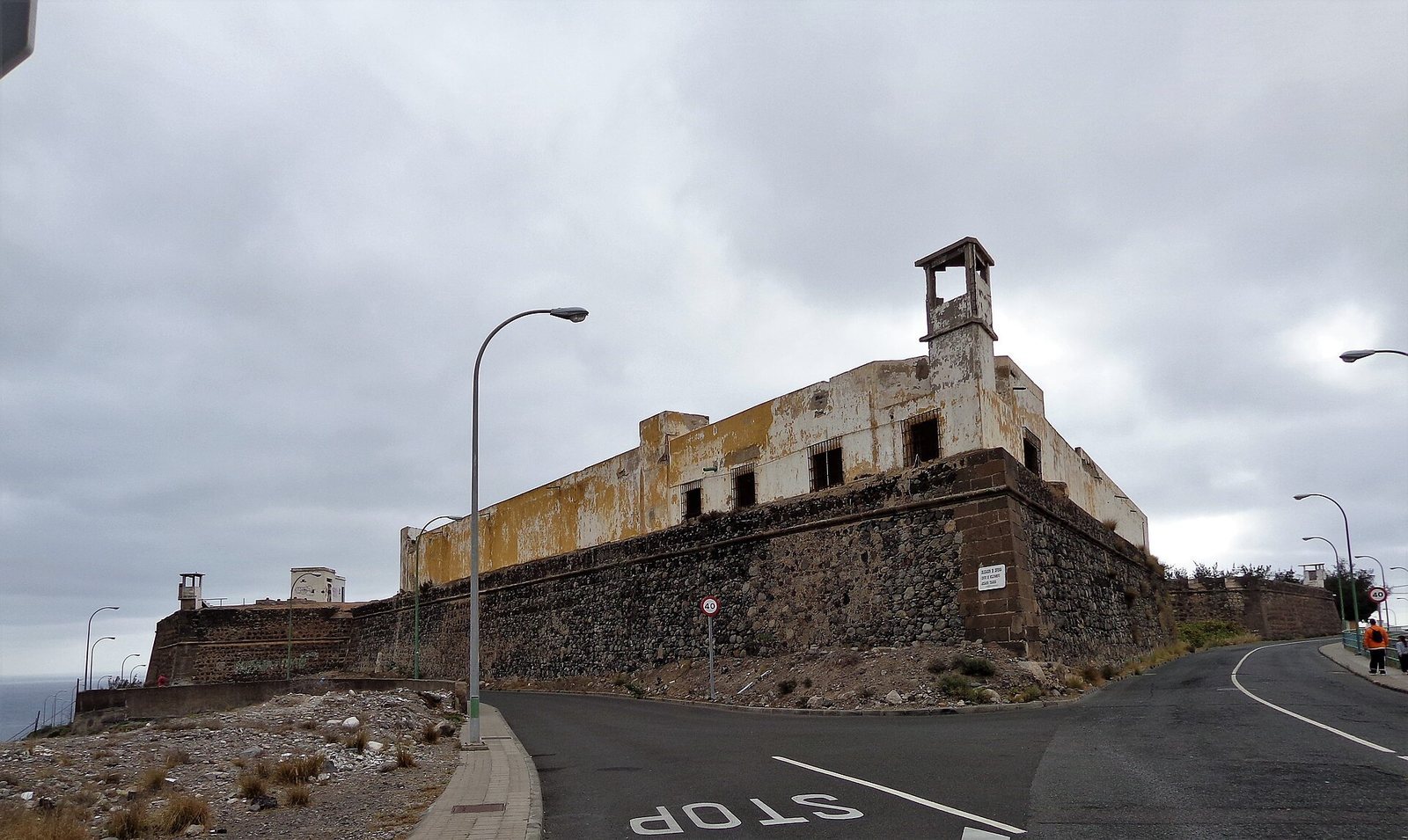
San Francisco Castle is a Spanish fortress on San Francisco Hill in Las Palmas de Gran Canaria, Spain. Its foundations were laid in 1601, and it was regarded as complete by 1625. Planned as an additional defense for the city, it became part of a network protecting Las Palmas and its approaches.
Plans and the need for stronger defenses
The hill’s strategic position attracted successive proposals for a stronghold. Around 1568-1571, military engineer Agustín Asmodeo may have been sent to assess the Canary Islands’ defenses against piracy. He proposed a refuge and defensive work on the hill, supported by two towers on the coast. Juan Alonso Rubián later designed a triangular fortress for the site. In 1575, Francés de Álava recommended a temporary fortification at Paso Angosto until the main castle could be built.
In 1587, Philip II commissioned military engineer Leonardo Torriani to inspect the proposed location and consider how it could defend the city, port, and landing places. Torriani retained a castle in his plans as an auxiliary defense, rather than as a refuge. The 1595 attack on Gran Canaria by English commanders Francis Drake and John Hawkins strengthened calls for better defenses. That year, Gran Canaria’s Cabildo, the island’s governing council, and Governor Alonso de Alvarado asked the king to build the San Francisco fortification.
Construction and defense of the city
In May 1599, during the Netherlands’ revolt against Spanish rule, Dutch admiral Pieter van der Does was commissioned to attack Spanish territories. On 25 June, after four failed attempts to land, his forces came ashore unexpectedly, sacked Las Palmas, and advanced inland. They were driven back at the Battle of Batán. Anticipating an attack, local defense councils had ordered inspections of the city’s forts. During the defense, Governor Pamochamoso positioned three cannon on the site later occupied by the castle. Their strategic position contributed to the loss of 300 Dutch soldiers over the three days the city was defended.
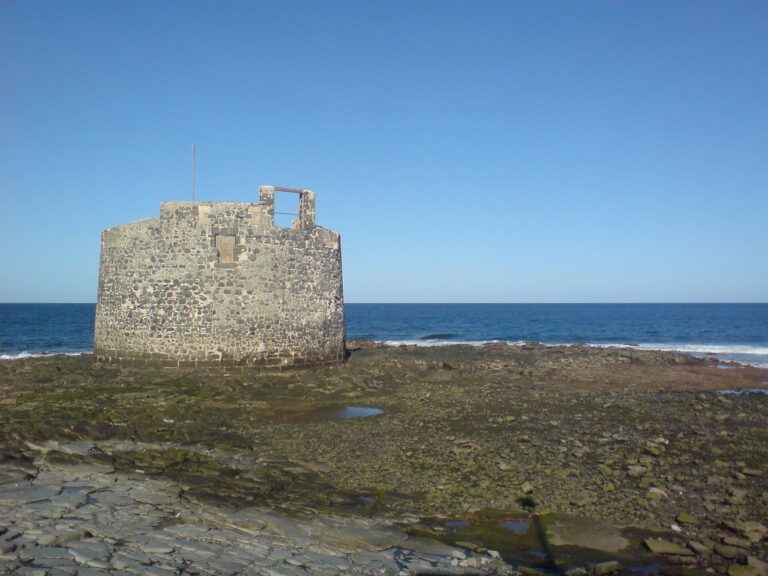
In October 1600, Philip III issued a royal decree, a formal order from the monarch, allocating slightly more than five million maravedis, a Spanish currency unit, for Las Palmas’s fortifications. The decree prioritized repairs to Santa Ana Castle and the beach defenses, then called for San Francisco Castle to be built under engineer Próspero Casola. Work on the broader defenses proceeded in stages. Punta de Diamante, also called the Platform Battery, was built at one end of the esplanade in 1607. Castle of Mata replaced a small earlier fortification in 1612, and a moat was dug around San Francisco Castle in 1621, with a drawbridge needed to cross it.
By 1686, the castle was operating normally with nine bronze and iron artillery pieces, a soldier on guard at all times, and a castle governor. Castle of Mata also came under that governor’s authority. In the mid-eighteenth century, San Francisco continued in defensive service and stored cannon, ammunition, other military equipment, and disused materials from other fortifications. It was reconstructed in 1779-1780. In 1785, military engineer Miguel Hermosilla described its two platforms as defending the city and guarding its western rear.
Storage, prison, and protection
By the mid-nineteenth century, the castle no longer served as a fortification and was used only for storage. Its governor had stopped living there. An order to demolish it was issued on 1 April 1898 but was not carried out; instead, the building became a military prison, a use that continued into the twentieth century.
A 1949 decree provided general protection for Spanish castles. San Francisco Castle received Bien de Interés Cultural status in 1993, Spain’s designation for protected cultural property, and became part of the municipal heritage of Las Palmas de Gran Canaria in 1997.
Remains
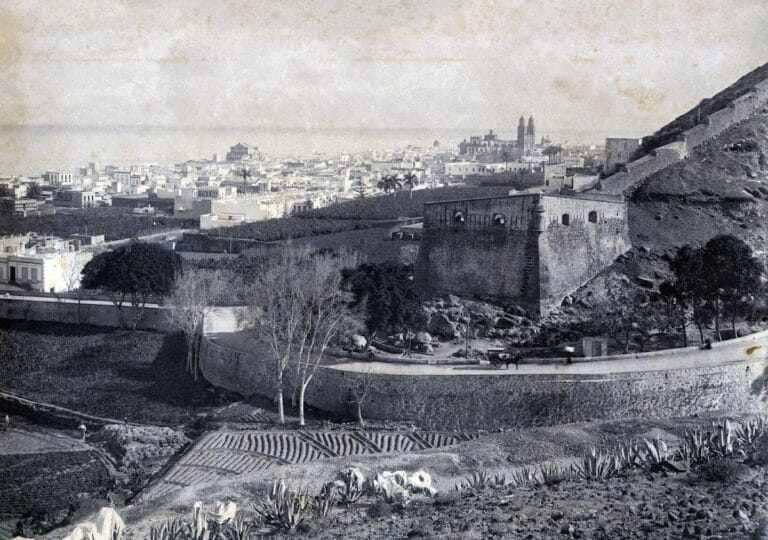
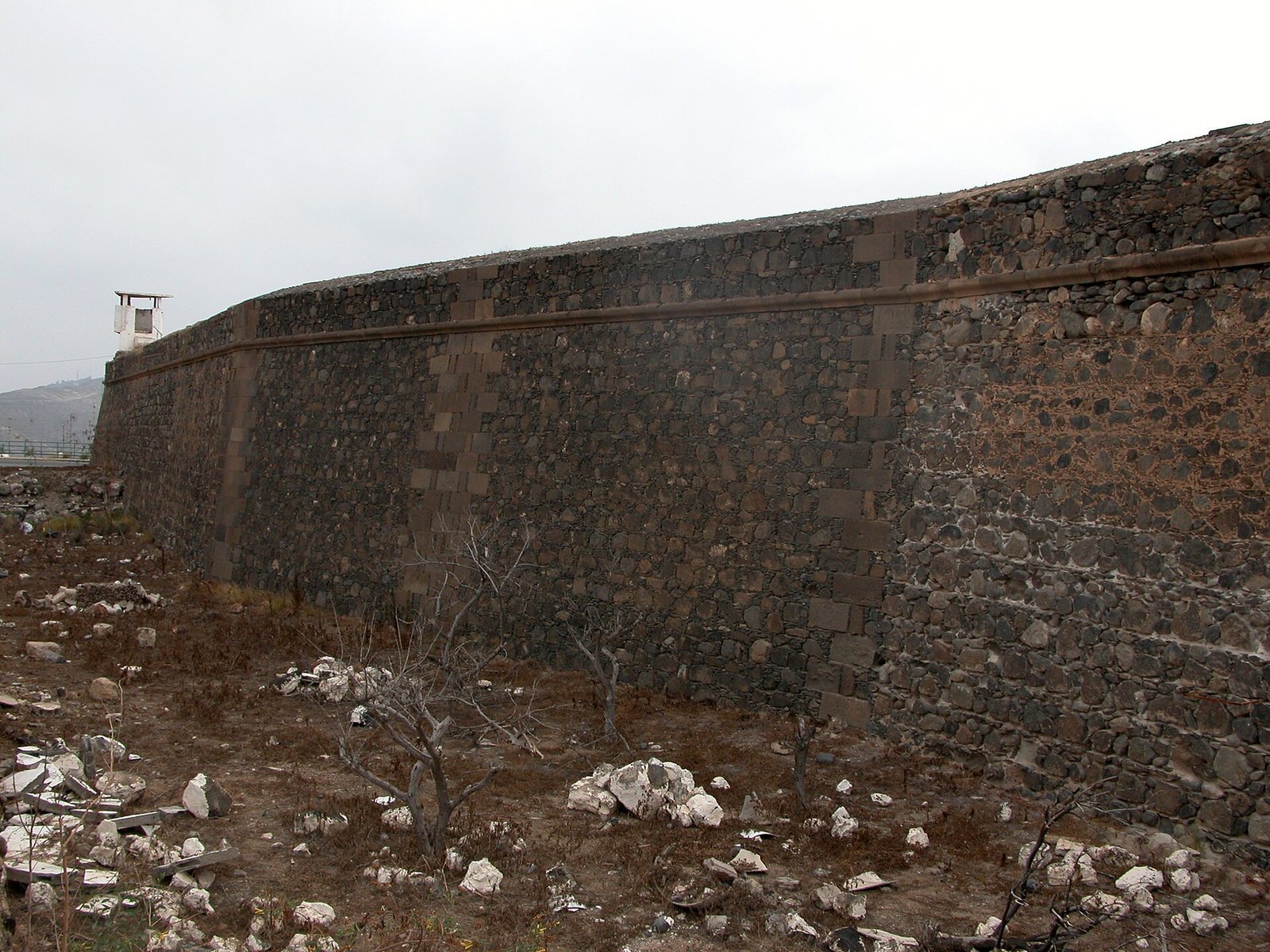
The castle stands at the summit of San Francisco Hill, behind the Triana district, at an elevation of 104 metres. Its irregular plan follows the terrain, and the site covers 5,750 square metres. The Canary Islands cultural-property register describes it as the island’s largest defensive platform. The hill overlooks the city. At the end of the plateau, Paso Angosto, meaning “narrow passage,” marks the route toward the island’s interior; it is 15 to 21 metres wide.
Castle and defensive system
Walls, moat, and artillery platforms
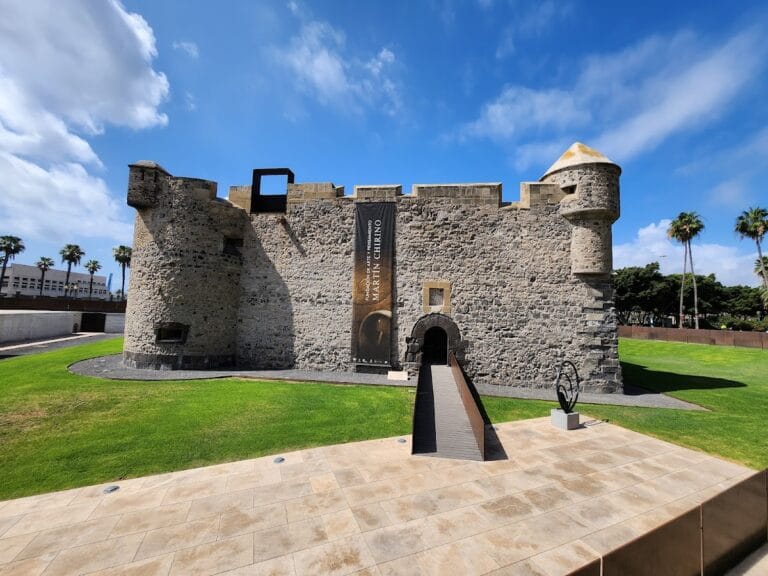
The castle formed part of Las Palmas’s wider defenses. A northern section of city wall linked it to Castle of Mata, while another defensive wall ran south toward Punta de Diamante. An exterior wall is also identified. The moat surrounded the castle, and a drawbridge provided passage across it. The fortress had two platforms for artillery. One, the Platform Battery or Punta de Diamante, occupied an end of the esplanade; a battery is an emplacement for guns.
Main entrance and royal arms
Above the main entrance, a stone inscription sits with the coat of arms of Philip IV. The shield has four sections, with castles and lions arranged in alternating pairs. The Golden Fleece, a chivalric order whose insignia appears in heraldry, surrounds the shield, which is topped by an open royal crown rather than an imperial crown. An animal appears at the base beside the inscription, which reads, "Built by order of Philip IV, King of the Spains." The castle is abandoned but remains in good condition.