San Juan Bautista de Corias: A Benedictine Monastery in Asturias
Site at a Glance
- Popularity
- High
- Country
- Spain
- Primary era
- Early Modern
- Eras represented
- Early Modern
- Civilizations
- Crown of Castile, Spanish
- Site type
- Religious
- Remains
- Monastery
On this page8 sections
History
San Juan Bautista de Corias is a monastery in Corias, Asturias, Spain, founded in 1032 by Piñolo Jiménez and Aldonza Muñoz. Its Romanesque construction, in a medieval style marked by substantial masonry and rounded forms, was completed in 1043. A community of Benedictine monks, whose religious life followed the Rule of Saint Benedict, arrived the next year.
Foundation and medieval influence
The founders were wealthy aristocrats of the Kingdom of León. Their relative Arias Cromaz became the monastery’s first abbot. After 19 years in that office, he was appointed bishop of Oviedo by King Alfonso VI of León and Castile. In its early decades, the abbey also faced disputes over land with regional powers. Around the turn of the 12th century, Count Fernando Díaz and Abbot Munio reached agreements that included exchanges of towns.
During the 12th and 13th centuries, the abbey’s holdings extended across western Asturias and into León. Its monks shaped local agriculture and land use, promoting viticulture and cereal cultivation, creating high-altitude pastures, and developing practices for raising cattle, hunting, fishing, and managing their estates.
Royal burial traditions
The monastery is informally called the “Asturian Escorial” because of a tradition linking it to the burial of Bermudo I of Asturias and his family. The Spanish chronicler Ambrosio de Morales wrote that Bermudo, his wife Uzenda Nunilona, and their daughter Cristina were first buried at the hermitage of Ciella. He said King Alfonso VII of León later ordered their remains moved to Corias. The medieval First General Chronicle, however, places Bermudo and his wife at Oviedo. The remains attributed to Bermudo at Corias could no longer be individually identified after the fire; those attributed to him at Oviedo likewise became unidentifiable after an early-18th-century remodelling of the Chapel of the Chaste King.
Fire, rebuilding, and later uses
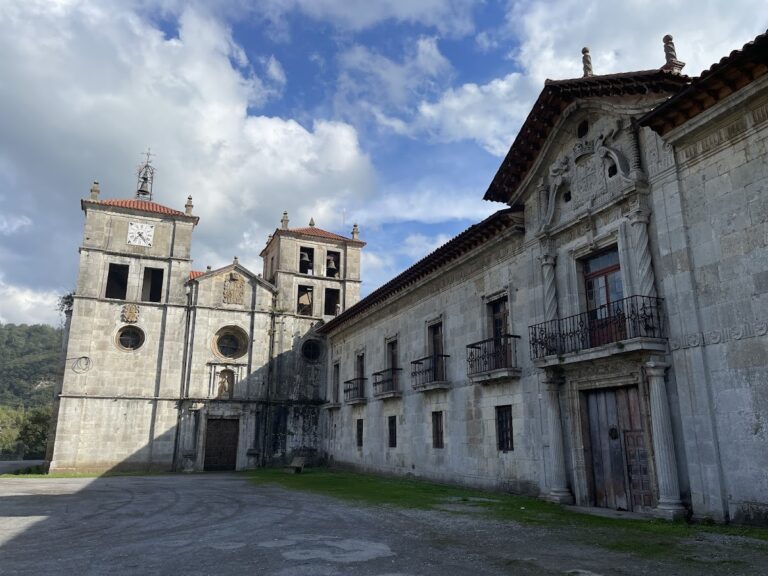
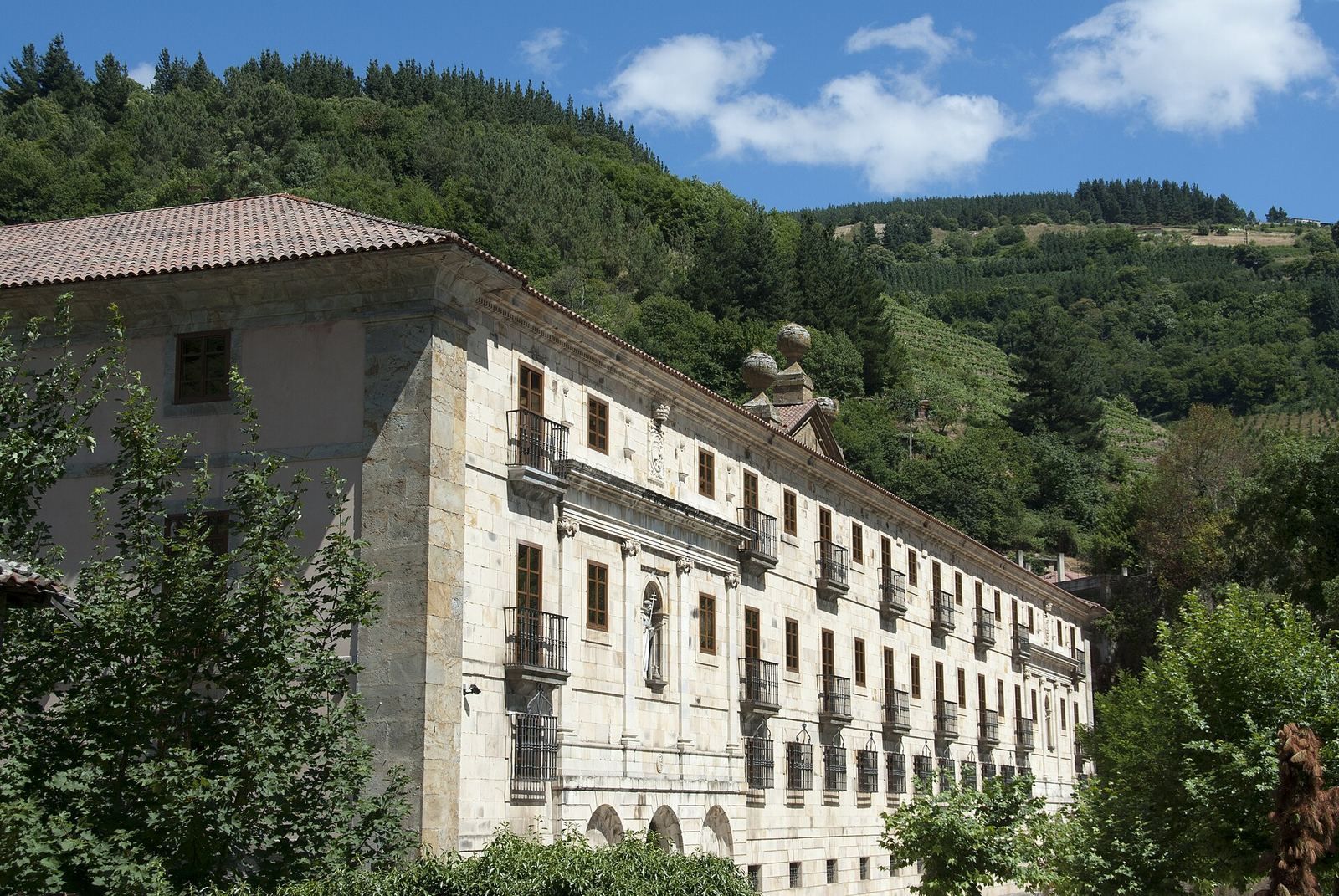
A fire in 1763 destroyed most of the monastery. Plans for its reconstruction were prepared by Lucas Ferro Caaveiro, and work began in 1774 under the direction of Ventura Rodríguez. The rebuilding gave the complex a Neoclassical design, drawing on Greek and Roman forms.
In 1835, the building was converted into a school and prison. It passed to the Dominicans in 1860; this religious order, founded for preaching and teaching, used the monastery as a convent and a school for training missionaries. During Spain’s Civil War, several Dominican brothers were arrested at the convent in August 1936 and later murdered in Sama de Langreo. The convent subsequently closed.
From 2006 to 2012, the complex was restored for use as a Parador, a hotel in Spain’s Paradores network, and it now also houses an interpretation center for a natural park. In 1982, the monastery received National Historic-Artistic Monument status; it is also classified as an Asset of Cultural Interest, a Spanish heritage-protection designation.
Remains
The monastery’s rectangular plan organizes its buildings around two courtyards, while the church occupies a side wing. The complex reflects its Neoclassical rebuilding, alongside earlier structures and objects that survived from its medieval and early modern history.
The church and chapels
The 16th-century church and its sacristy survived the 1763 fire. Inside the church are chapels dedicated to Saint Peter, the Holy Christ, Saint Peter of Verona, Saint Joseph, and Saint Thomas Aquinas.
Romanesque crucifix
A 12th-century crucifix known popularly as the “Christ of the Cantonada” is among the monastery’s surviving treasures. It is considered one of Asturias’s finest works of Romanesque art.
Traditional burial place
The burial tradition places Bermudo and his family before the altar of Saint Martin, within three stone arches. The epitaph said to have been set above the burials has disappeared.