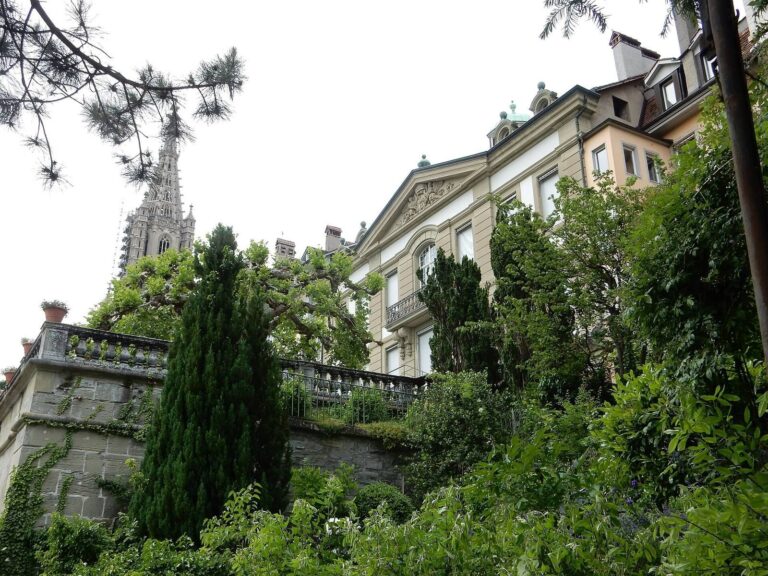
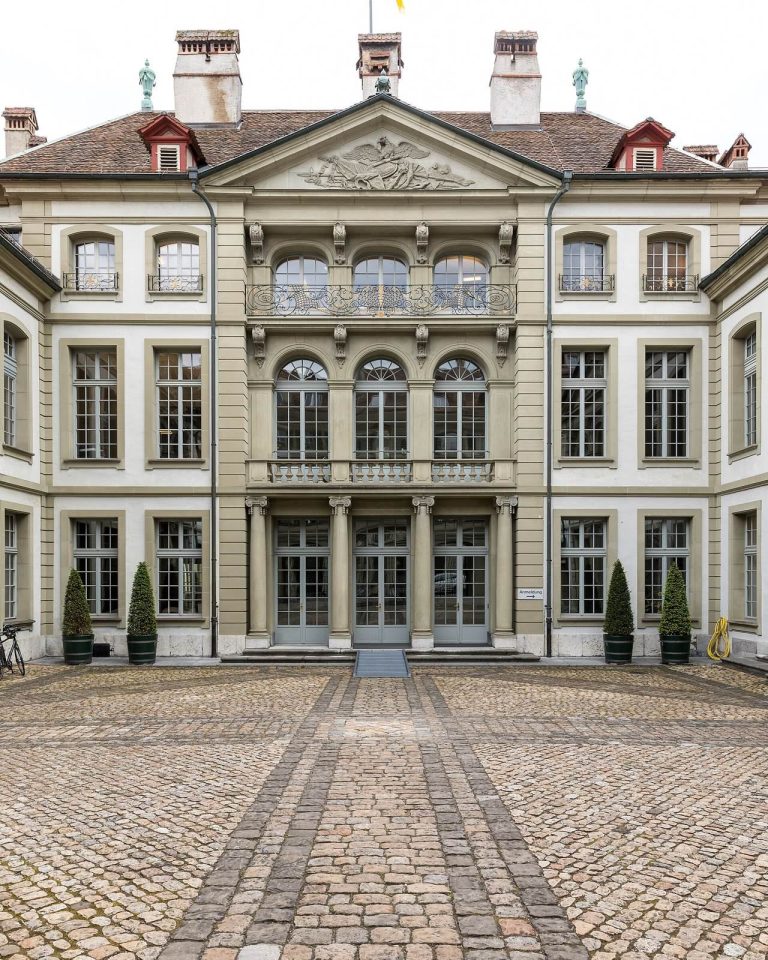
Köniz Commandery: A Religious and Administrative Complex in Switzerland
Site at a Glance
- Popularity
- Low
- Country
- Switzerland
- Primary era
- Medieval
- Eras represented
- Medieval, Early Modern, Modern
- Civilizations
- Crusader, Holy Roman Empire, Swiss, Teutonic Order
- Site type
- Religious
- Remains
- Monastery
On this page12 sections
History
The Köniz Commandery is a former religious and administrative complex in Switzerland, established as a collegiate centre for Augustinian Canons in the early 11th century. Parts of its church are Romanesque, a broad Western architectural style. The community and its later Teutonic Knights held religious and territorial authority across parishes around Bern.
Church and Augustinian canons
Tradition places the church’s foundation between 922 and 937 and credits the Burgundian rulers Rudolph II and Bertha. The college of Augustinian Canons, clerics who lived in a religious community, is first recorded in 1208. Its members held extensive lands and rights: they governed five large parishes between the Aare and Sense rivers, while their head served as dean, a senior church official, over 29 more parishes in the Diocese of Lausanne, an area under a bishop’s authority.
Teutonic Knights and regional authority
In 1226, Henry VII, king of Germany, and his father, Emperor Frederick II, granted Köniz to the Teutonic Knights, a religious-military order. A commandery was a local unit through which the order administered land and property. Local nobles and religious leaders challenged the transfer, and the ownership and rights of the monastery were disputed for nearly 20 years. A bishop’s court ruled for the Knights in 1243. Bern’s population then boycotted services at Köniz until 1253.
During the 13th and 14th centuries, the commandery gained authority over Bern’s parish and other nearby parishes. Few knights or lay brothers lived at Köniz, and most of its knights came from Swiss noble families.
Bernese control and the Reformation
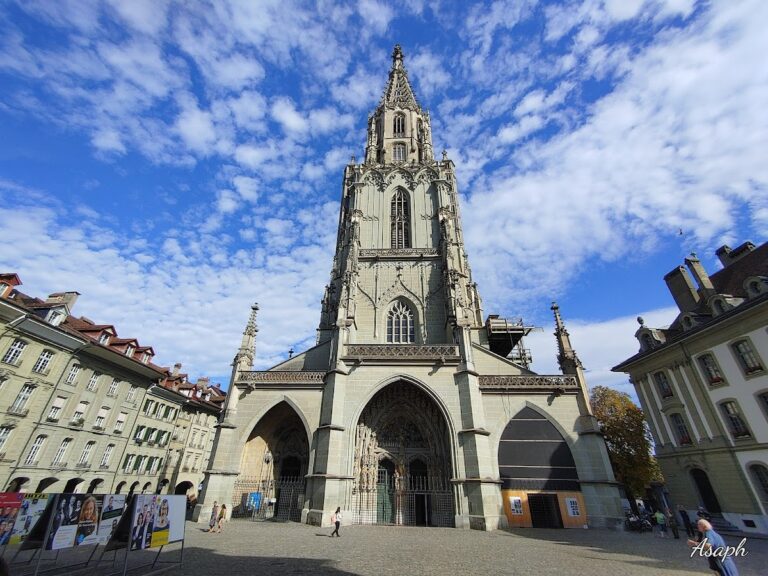
Bern took control of Köniz, within the county of Aarburgund, in 1388. The commandery kept religious authority over Bern, while the city held secular authority over Köniz and the commandery. Bern sought to recover religious control of its own parish, beginning with construction of Bern Minster in 1421. In 1485, it established the College of Canons of St. Vincent, separating it from the commandery.
After Bern adopted the Protestant Reformation, the 16th-century movement that formed Protestant churches, in 1528, it sought to secularize religious houses across the canton. The Teutonic Knights left Köniz but maintained their claims to its buildings and estates. Bern took over the commandery buildings in 1529, but the Order secured their return in 1542. The Knights offered to sell them to Bern in 1552, but the city rejected the price. The Order continued to collect land rents, though it lost its military and judicial authority.
Administration and later institutions
Bern acquired the complex in 1729 and used it as a district administration centre until the French invasion of 1798. The district was dissolved after the invasion and the creation of the Helvetic Republic. The buildings subsequently housed a boys’ educational institution from 1836 to 1875, a girls’ institution from 1875 to 1889, an institution for the blind from 1890 to 1919, and a girls’ home and school from 1925 to 1994.
The community bought the complex in 1994. Part became the Kulturhof, an arts space, gallery, and meeting centre; since 2000, the remaining buildings have served as a parish community centre. The Swiss Reformed parish uses the commandery church as its parish church, and the complex also houses a restaurant, music school, Bern School Museum, and Kulturhof. In 2011, the municipality approved a mixed-use zone covering the church, castle buildings, cemetery, and green spaces, intended to support business development and help pay for the historic buildings’ restoration and upkeep. The complex is designated a Swiss cultural property of national significance.
Remains
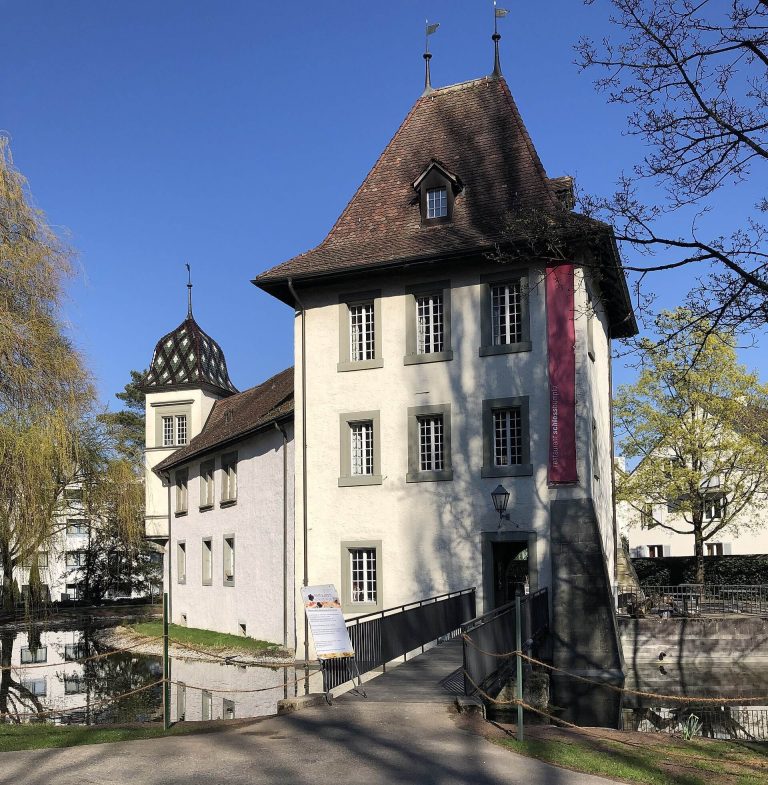
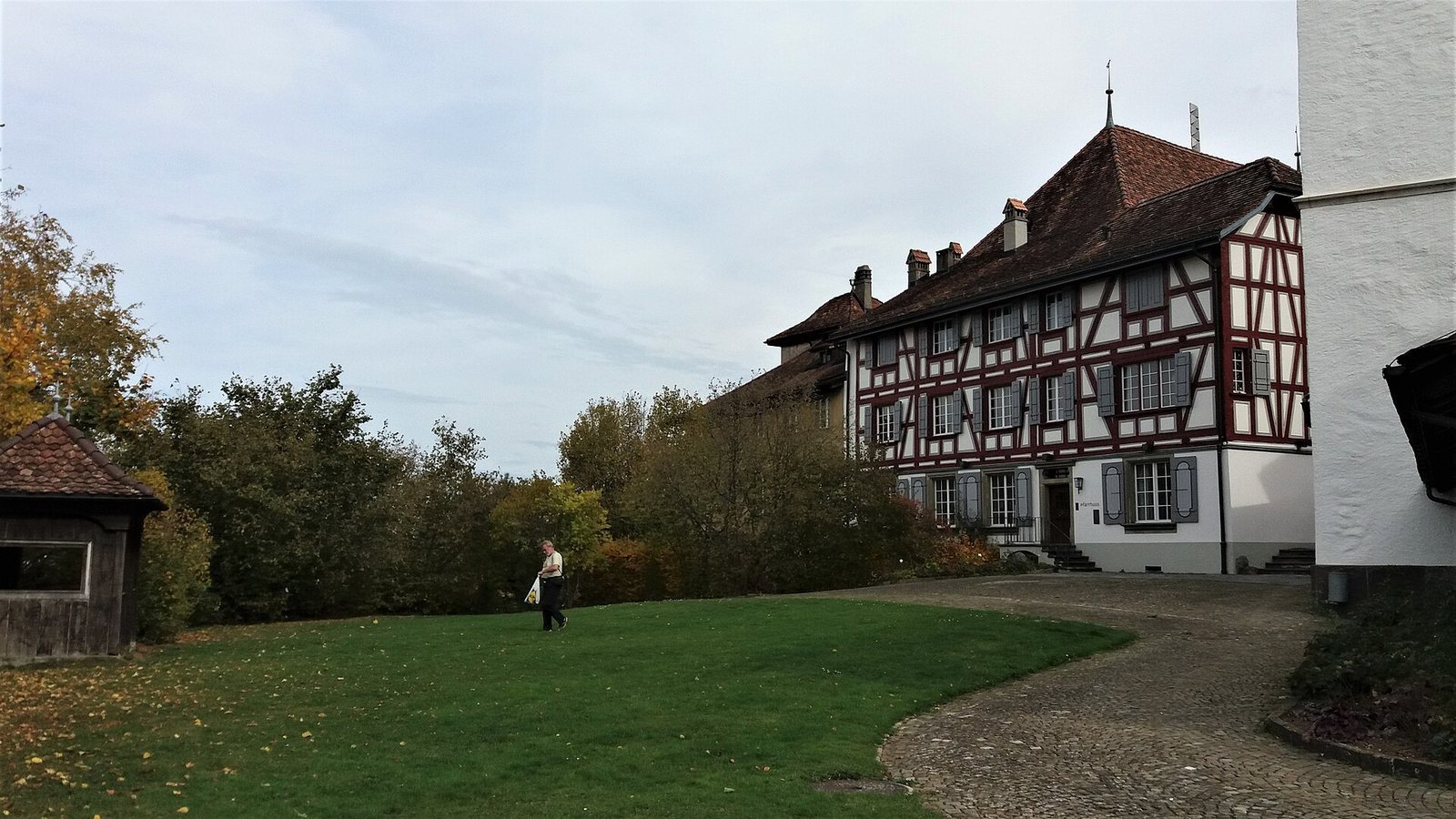
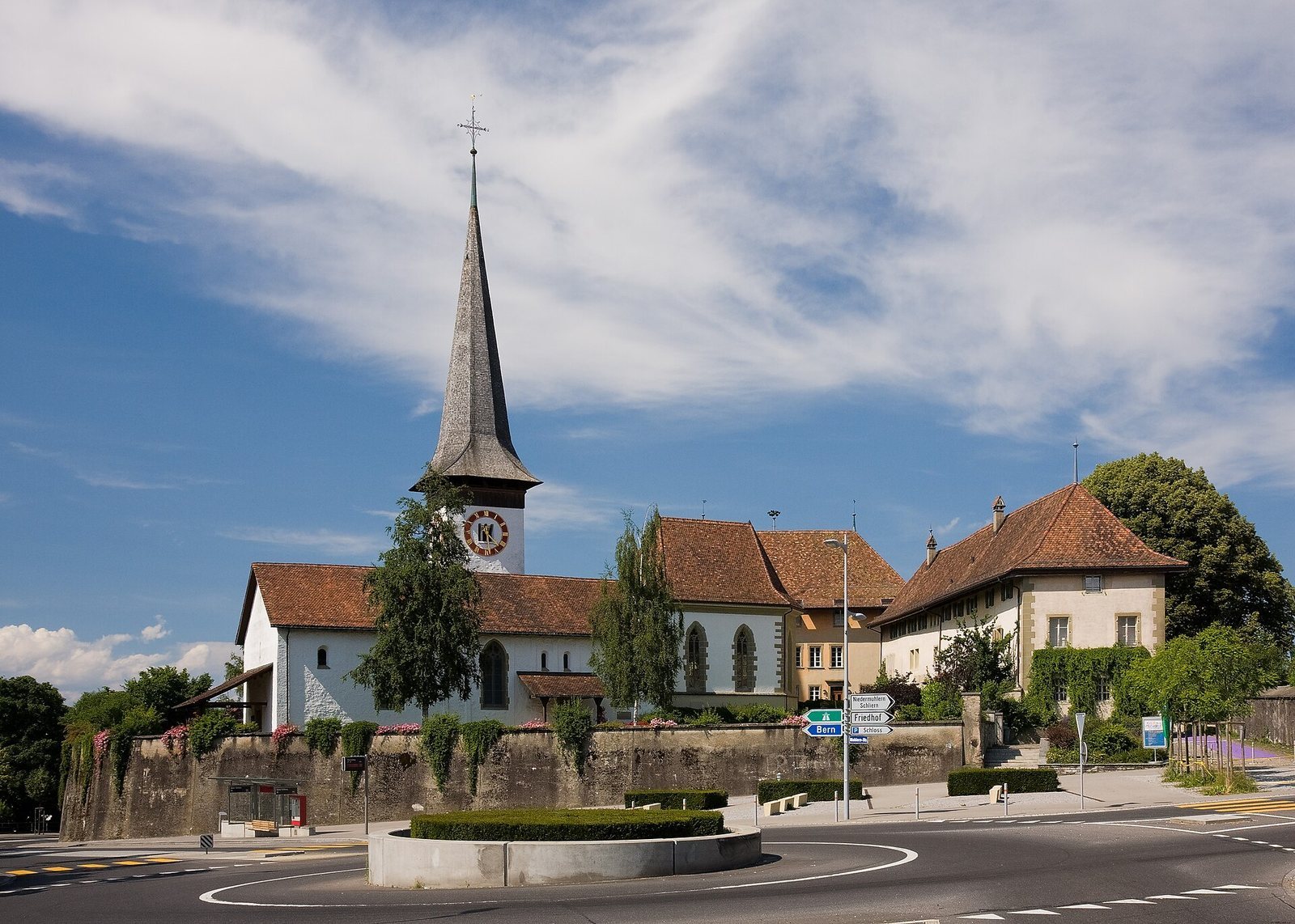
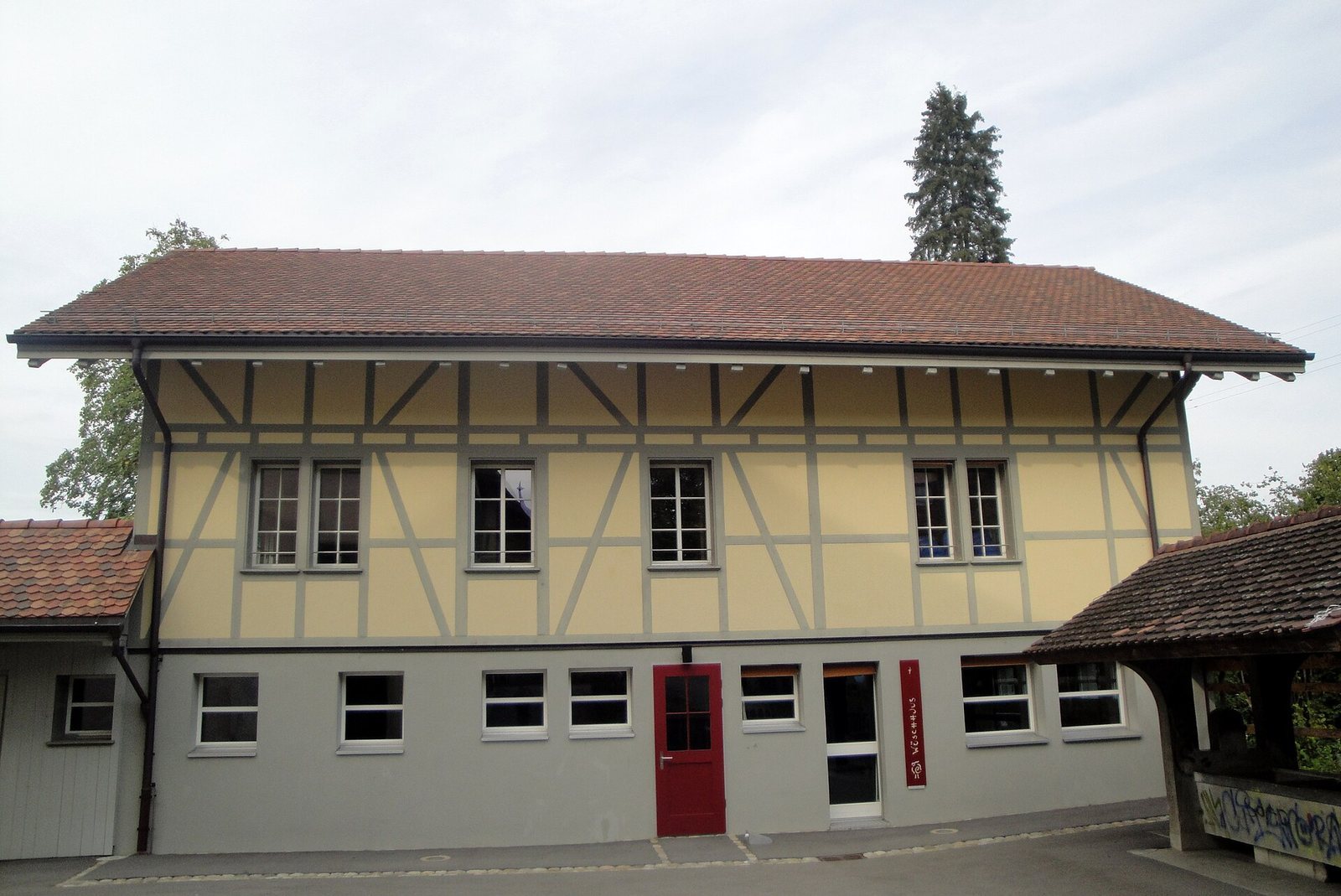
The complex began as a walled collegiate building and developed into a group of church and commandery buildings, with a courtyard, cemetery, and green spaces. Its oldest surviving parts date to the 11th century, while later additions reflect the changing functions of the site.
Commandery buildings
Collegiate building and courtyard
The early 11th-century complex was built for the Augustinian Canons as a collegiate building, serving as the community’s institutional centre and residence. Around 1261, a residence for the Knights and a courtyard were added. Further buildings followed during the 14th and 15th centuries.
Later additions
The main building was remodeled in 1610 in a post-Gothic style, which adapted Gothic forms in later architecture. A west wing was added in 1664 and a granary in 1724. The complex underwent renovation in 1785–87; from 1825, the west wing served as the parsonage for the former monastery church.
Commandery church
Medieval structure
The church stands above evidence of an earlier medieval church. Portions of the nave, the church’s main body, date to the 11th century. The nave was lengthened in the 13th century, when a bell tower was built on its north side. A new choir, the area around the altar reserved for clergy, followed in 1310.
Later alterations and furnishings
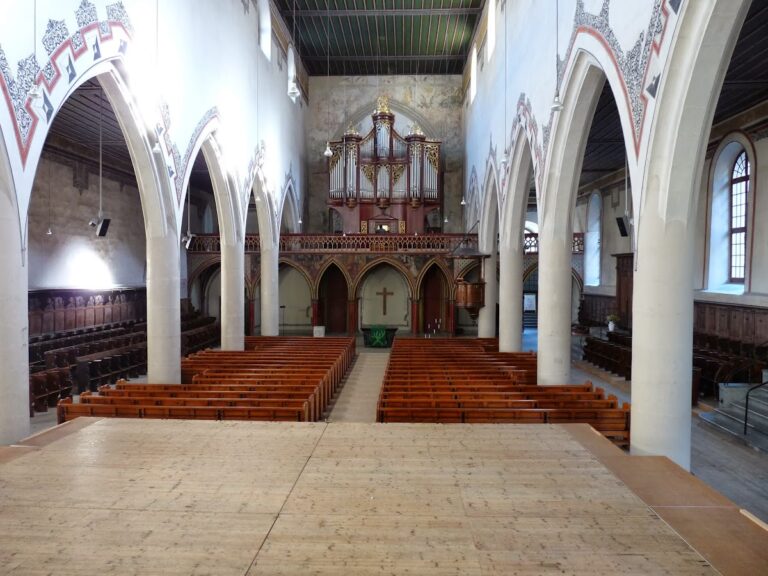
The church was rebuilt in a late-Gothic style, a later phase of medieval Western architecture, during the 16th century. Windows were inserted in the nave’s south wall and the ceilings were renewed; a painted strip showing three saints from this work remains visible. Before 1729, the choir was remodeled in the Baroque style, a broad style in Western architecture and art. Renovation in 1781–87 added an organ loft and a five-part case, the housing for an organ’s pipes, designed by Karl Josef Maria Bosshardt. In 1937, artists Ernst Linck and Leo Steck added stained-glass windows depicting the history of the church. The church’s most recent renovation took place in 1981–83.