Sts. Simon and Jude: A Medieval Parish Church in Klein-Reken, Germany
Site at a Glance
- Popularity
- Low
- Country
- Germany
- Primary era
- Medieval
- Eras represented
- Medieval, Early Modern
- Civilizations
- Holy Roman Empire
- Site type
- Religious
- Remains
- Church
On this page15 sections
History
Sts. Simon and Jude is a medieval parish church in Klein-Reken, Germany. Its unusual two-nave form and survival without Neo-Gothic refitting contribute to its importance among the relatively few medieval village churches that remain in Münsterland. Many such churches were replaced by historicist buildings in the late 19th century, while surviving churches commonly received furnishings inspired by earlier styles.
Parish origins and medieval building
The parish separated from St. Remigius in Borken in the second half of the 12th century. The church was a proprietary church, held under the control of the Münster cathedral chapter, the body of clergy responsible for cathedral administration.
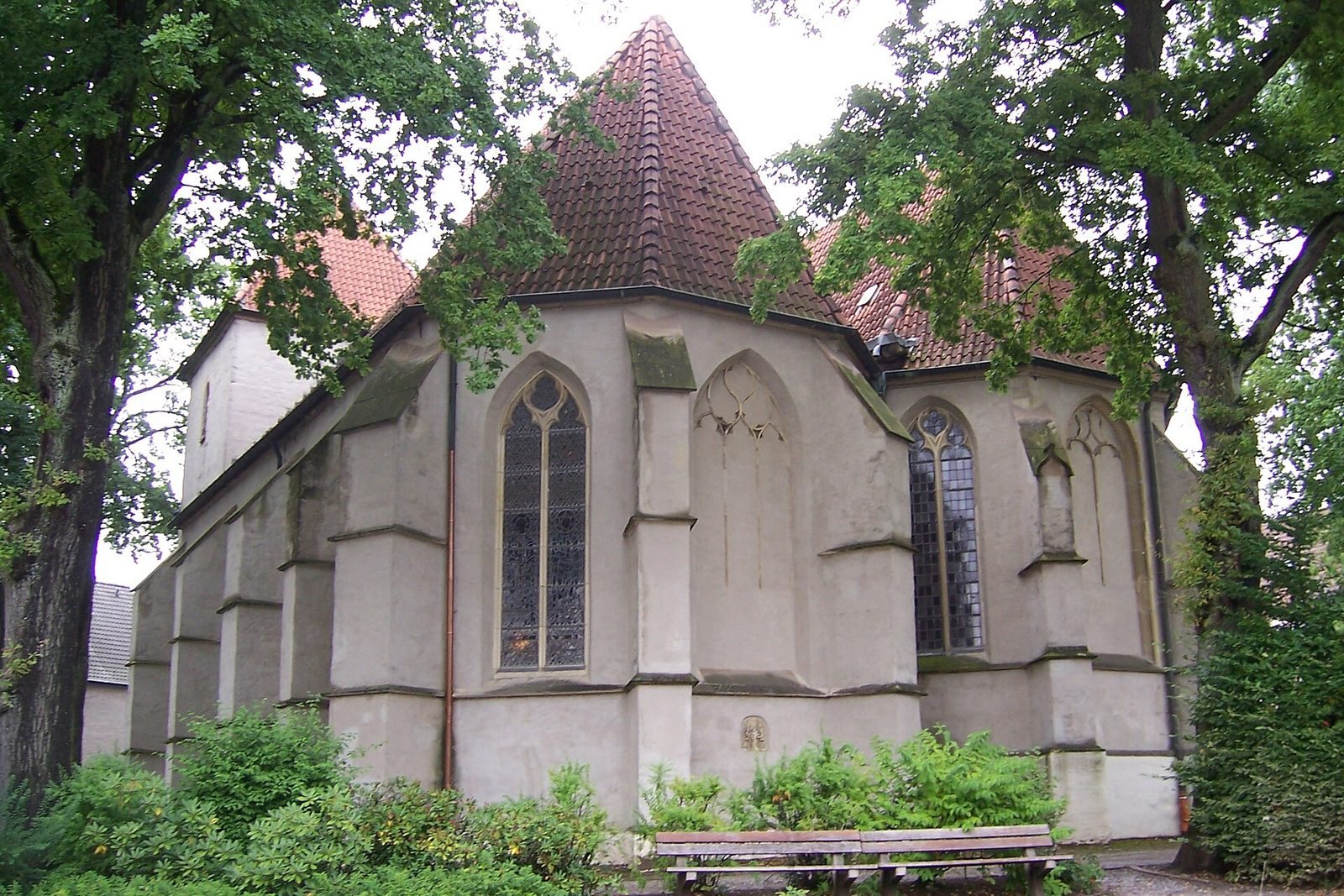
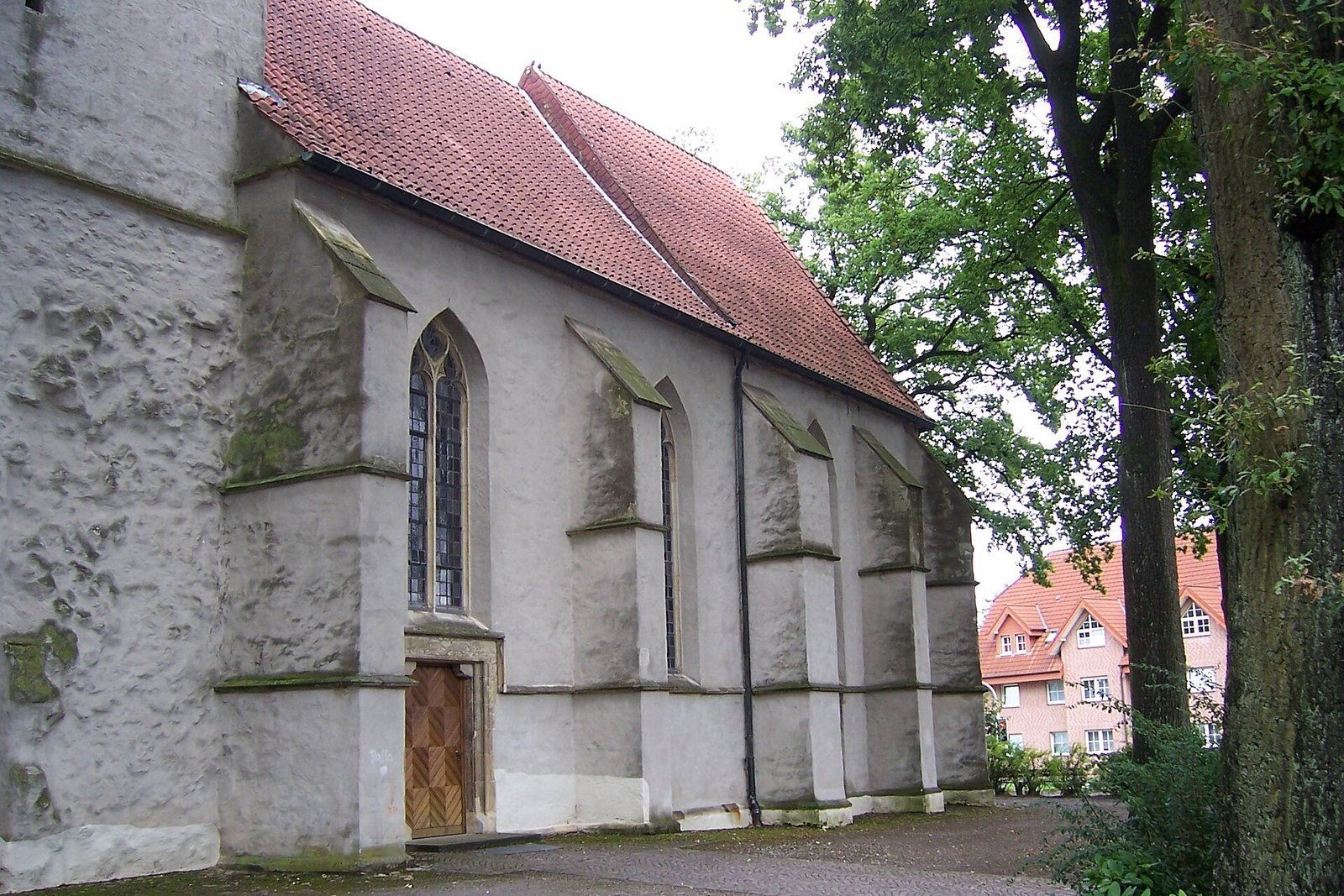
The building took shape over several phases. The lower storey of its Romanesque tower dates to 1200, and the upper storey to around 1300. The Gothic nave dates to the 15th century; the north nave is dated to 1529 and attributed to Henric de Suer, a master builder from Coesfeld.
Parish changes and modern use
In the 15th century, Klein-Reken became an independent parish under the patronage of St. Anthony Abbot. During the 20th century, the congregations of St. Elisabeth (1938/64) and St. Marien (1953/58) arose in Maria Veen. By 2006, the communities had again formed a single parish.
After the modern church of St. Henry was completed, Sts. Simon and Jude ceased to serve as the village’s parish church. Part of the building became a sacred museum, while worship continued there. A renovation in the second half of the 20th century removed grave slabs from the floor, the wooden facing of a side-altar table, and a gallery that had spanned both naves and the western bay.
A sacristy was provided again on the south side in 2019, after the earlier one had been demolished and the church had gone several decades without one. The 2019–20 renovation also introduced an electric bell-ringing system.
Remains
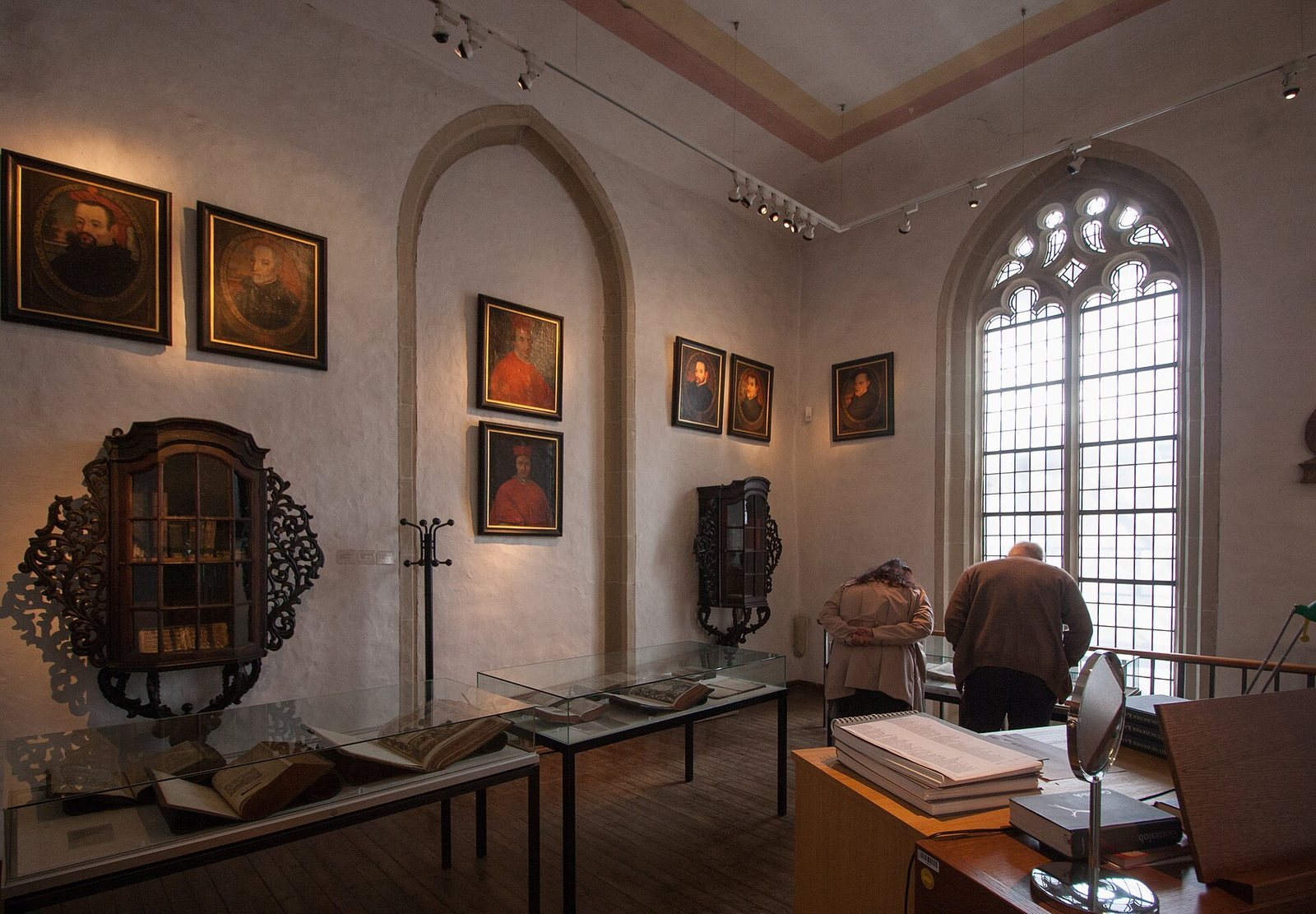
The church combines a Romanesque tower with two naves. A gallery remains in the north nave beside the tower, and the north nave contains the sacred museum. Baroque furnishings and Gothic features form part of the interior, while the south nave has a distinctive mix of vaulted bays and a mirror ceiling.
Medieval fabric
Tower and gallery
The Romanesque tower has lower and upper storeys. Beside it, a gallery survives in the north nave.
Naves and chancel
The south nave has four vertical divisions and a five-eighths termination, a polygonal end formed from five sides of an eight-sided plan. Its main body has two vaulted bays, while the chancel has one bay and a five-eighths end. A mirror ceiling, with a broad flat centre and shaped perimeter, is also fitted in the south nave. Wall supports indicate that a vault existed or was planned; the ceiling’s date and the reason for its installation are unknown.
Church furnishings
Altars, pulpit, and baptismal font
The principal Baroque altars remain in their original positions. The church also has a Baroque communion rail and pulpit, the latter probably brought from the collegiate church in Vreden. The pulpit has a later access stair and a Neo-Gothic cross. The Romanesque baptismal font was reshaped at its upper section in the Baroque style in 1732.
Choir stalls and figures
The Gothic choir stalls were repainted to match the oldest finish found when earlier layers were exposed. Different painted finishes on a side altar were also uncovered on a trial basis and left visible. Other furnishings include South German figures, among them one of St. George, and statues made for the church, some Gothic. A Baroque statue depicts John of Nepomuk.
Sacristy
The sacristy lies beneath the organ platform. Before its demolition, the earlier sacristy was a single-storey, nearly square building, slightly wider than the length of the choir bay. Its gabled roof ridge ran at right angles to the church’s long axis; the structure reached the church’s eaves, and its gable end had three window bays.
Sacred museum
North-nave displays
The museum occupies the north nave and developed from a temporary exhibition. Its cases contain sacred vessels and Bible tiles. A wall tile bears an image of the Madonna with a Dutch inscription.
Gallery collection
Cases on the gallery hold devotional literature and missals. The gallery also contains a fragment of a Baroque altarpiece from St. Gudula’s Church in Rhede and portraits from the Jesuit college in Coesfeld. A small electric organ stands in the museum area, with the sacristy beneath its platform.
Nativity figures
A group of carved, painted wooden Nativity figures dates to the first half of the 18th century and was probably made for this church. It includes three kings, two shepherds, a kneeling woman, and a dark-skinned figure that may represent a camel driver.