Le Vieux Château: A Medieval Fortress in Le Neubourg, France
Site at a Glance
- Popularity
- Medium
- Country
- France
- Primary era
- Medieval
- Eras represented
- Medieval, Early Modern
- Civilizations
- Duchy of Normandy, French
- Site type
- Military
- Remains
- Castle
On this page9 sections
History
Le Vieux Château is a medieval fortress in Le Neubourg, in the Eure department of Normandy, France. Built around 1000, it became a stronghold of the Duchy of Normandy, the medieval territory ruled by the dukes of Normandy. Its architecture is described as Anglo-Norman, a tradition shaped by connections between Normandy and England.
A Norman stronghold and royal setting
In the twelfth century, Henry I of England, known as Henry Beauclerc, captured the fortress by assault. After Henry’s death in 1135, Norman lords gathered at the castle and chose Stephen of Blois as England’s next king. On 2 November 1160, Margaret of France, daughter of King Louis VII, married Henry the Young, son of King Henry II, at the castle.
The Beaumont family held the lordship in the twelfth century, followed by the Meulan and Vieux-Pont families in the thirteenth and fourteenth centuries. The castle was involved in political affairs and the Hundred Years’ War, the prolonged conflict between the English and French crowns conventionally dated from 1337 to 1453.
The end of its military role
In November 1660, Alexandre de Rieux, Marquis de Sourdéac, arranged for the royal Marais troupe to perform Pierre Corneille’s The Golden Fleece at the castle. The opera combined fantastical subjects and spectacle with music, and was the first work of its kind staged in France. The performance marked the end of the castle’s military role.
Demolition, residence, and preservation
In 1782–83, the eastern part of the complex was demolished to create the market square, Place du Château. Much of the castle was also demolished in 1785 for the square. The property later became a private residence and remained in the Lettré family’s ownership for many years. The municipality decided to acquire the castle in 2011, and the sale was completed in 2014.
An inheritance had divided the castle’s two parts in 1843. In 2017, the municipality acquired Maison-Neuve, bringing them together again. The wider site, including the old castle, a Norman house, the Hôtel du Soleil d’Or, and their surroundings, was protected in 1943. The castle was listed as a historic monument in 2002. Its classification on 25 June 2020 superseded that listing and covered the built and unbuilt complex, including Maison-Neuve and its extensions, defensive works, the lower courtyard, and ditches, while excluding twentieth-century structures.
Remains
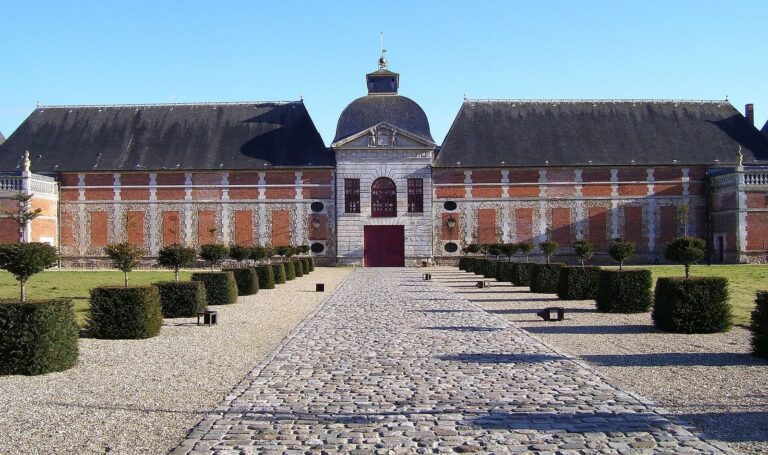
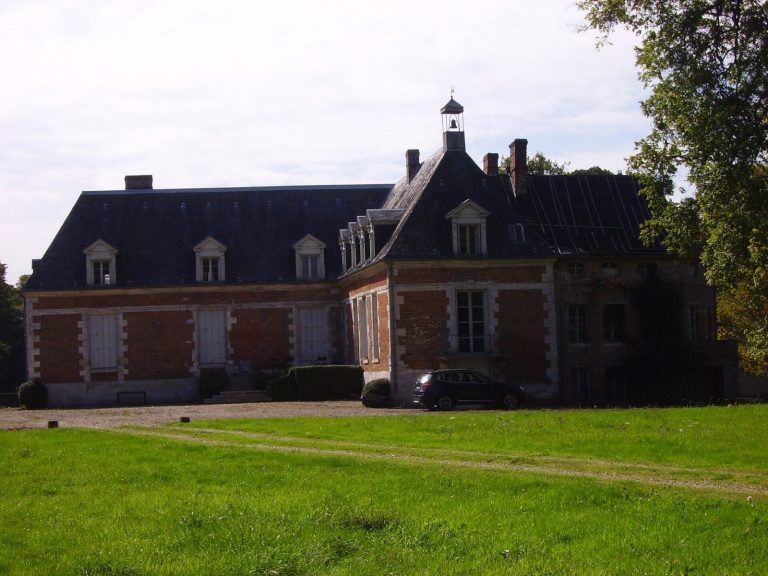
The surviving complex combines a fortified northern frontage with residential buildings to the south. The northern defensive line extends for about 120 metres, while the southern side includes a thirteenth-century residence and Maison-Neuve.
Defensive works
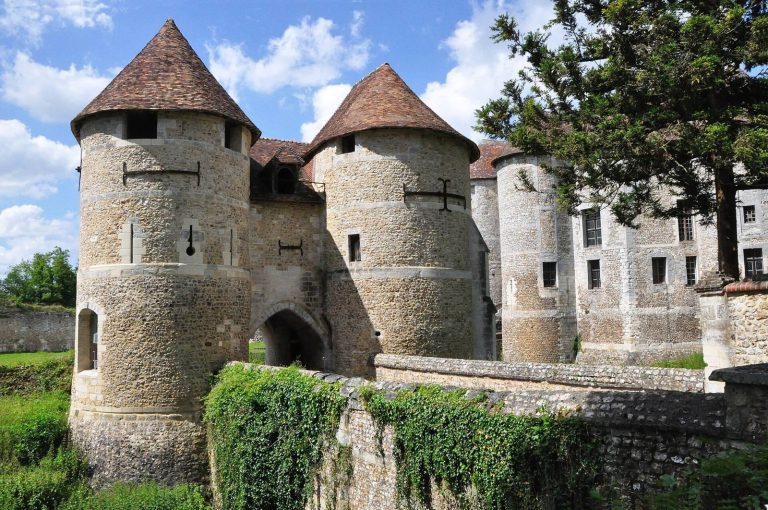
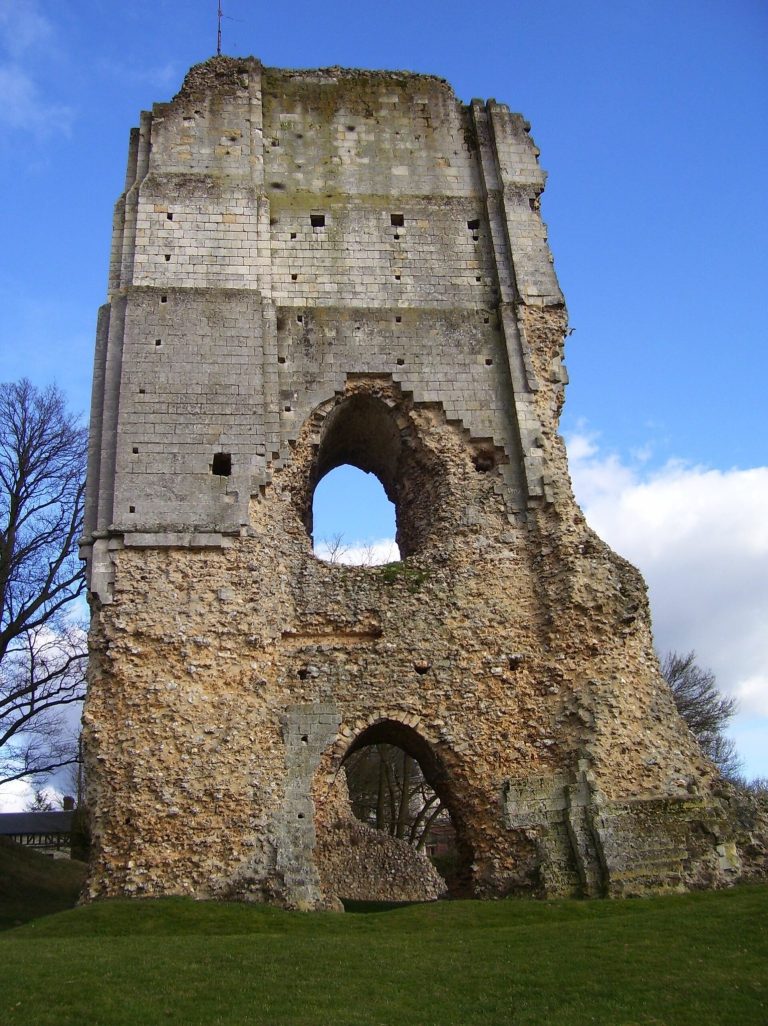
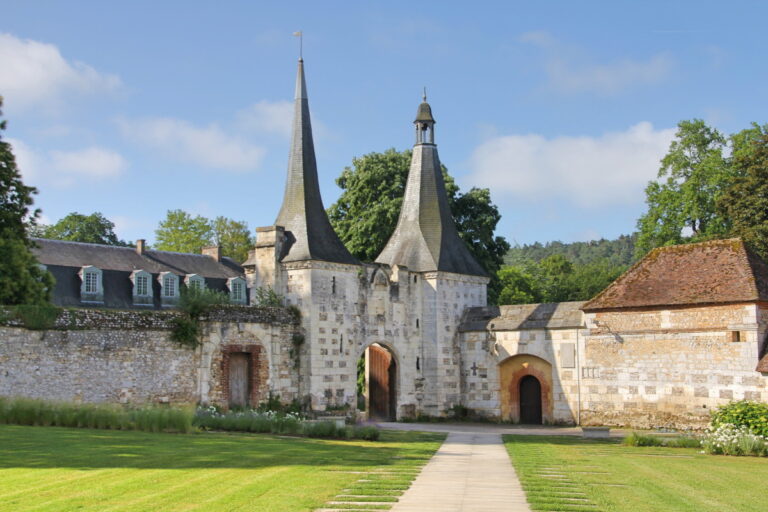
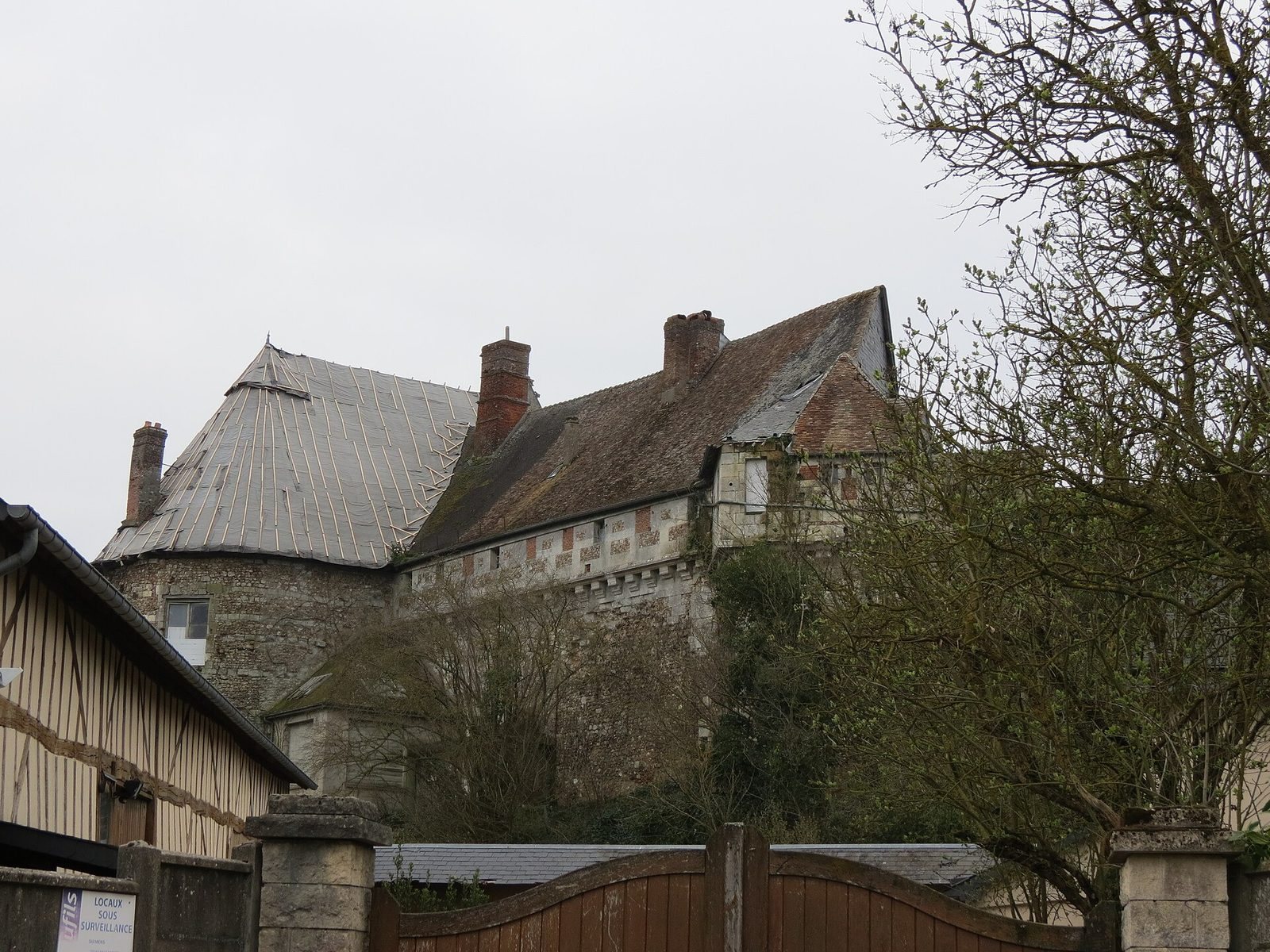
The northern frontage consists of towers, a defensive wall joining the fortifications, and a gate with a bridge that could be raised to block entry. The complex also retains a medieval horseshoe-shaped tower associated with Madame de Boulay and the last 17 metres of ramparts. Its grounds include a lower courtyard and ditches.
Residential buildings
Ancienne Comédie
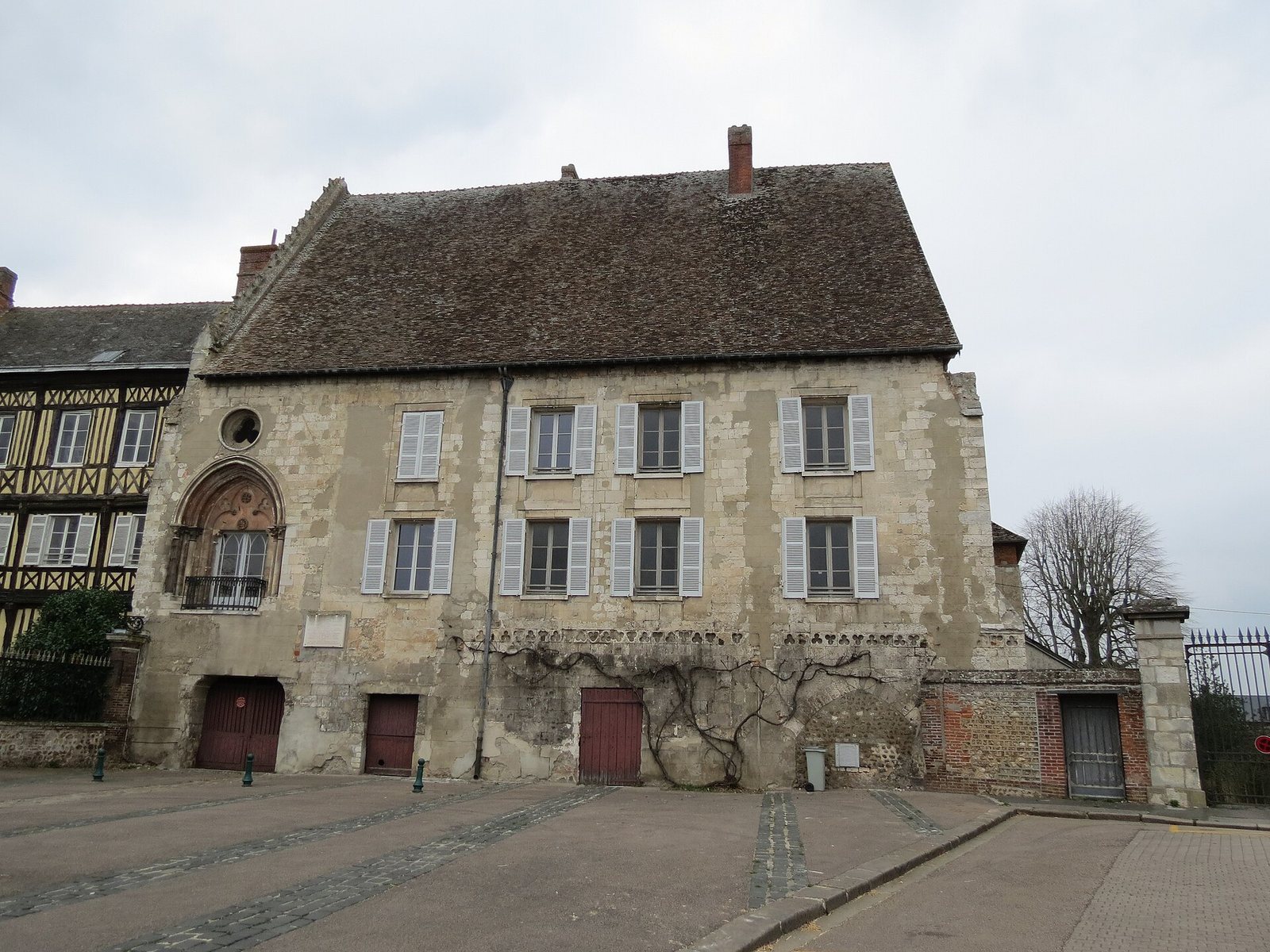
The former great hall, called the Ancienne Comédie and formerly known as the Salle des Préaulx, is dated to 1300. It stands against the old defensive wall and has a timber roof.
Maison-Neuve
Maison-Neuve is a half-timbered house dated to 1509. Its south façade is visible from the public garden.