Fort van Duffel: A Belgian Railway-Defence Fort
Site at a Glance
- Popularity
- Low
- Country
- Belgium
- Primary era
- Modern
- Eras represented
- Modern
- Civilizations
- Belgian
- Site type
- Military
- Remains
- Fort
On this page8 sections
History
Fort van Duffel is a late nineteenth-century military fort in Duffel, Belgium, built between 1886 and 1888. It formed part of the outer belt of the Fortified Position of Antwerp, Belgium’s defensive system centered on the city, and was assigned to protect Railway Line 25 between Brussels and Antwerp.
Construction and changing role
In the nineteenth century, Belgium’s small army was expected to defend long land borders. The country’s strategy centered on Antwerp as a National Redoubt, a fortified place where the army could withdraw. As artillery range increased, the defensive belts moved farther from the city. An inner belt of Brialmont forts, associated with military engineer Henri Alexis Brialmont, was joined by a more distant outer belt built between 1878 and 1905.
Fort van Duffel stood near the boundary between Duffel and Sint-Katelijne-Waver. Railway Line 25, open since 1836, provided the fastest link between Brussels and Antwerp and was an important transport route. The fort was strengthened in 1894 as advances in weaponry made its defenses outdated. Its military usefulness nevertheless remained limited. In 1906 it was assigned a reduced supporting role in the area between the forts of Walem and Sint-Katelijne-Waver. The law establishing this change took effect in 1913. The garrison moved to Fort Koningshooikt, and the central gun cupola was transferred to Fort Kessel.
World War I
German bombardment of the fort began on 28 September 1914. Its commander, Jules Hastray, had 80 soldiers, but requested reinforcements and ammunition did not arrive. Trees around the fort obstructed the German guns’ view, while the defenders eventually exhausted their ammunition. On 3 October, a German negotiator offered terms that Hastray rejected. After learning that reinforcements would not come, Hastray ordered the equipment destroyed and led his soldiers away quietly. German forces occupied the empty, burning fort on 4 October. It had no further major military role.
Between the wars and World War II
The Belgian army used the fort briefly after World War I, then abandoned it as a military position. A caretaker and his family occupied it for many years; until 1972, the caretaker was a military employee. During World War II, German forces did not use the fort. Families sheltered there during bombing, and men required to work in Germany hid within it.
Demolition, restoration, and protection
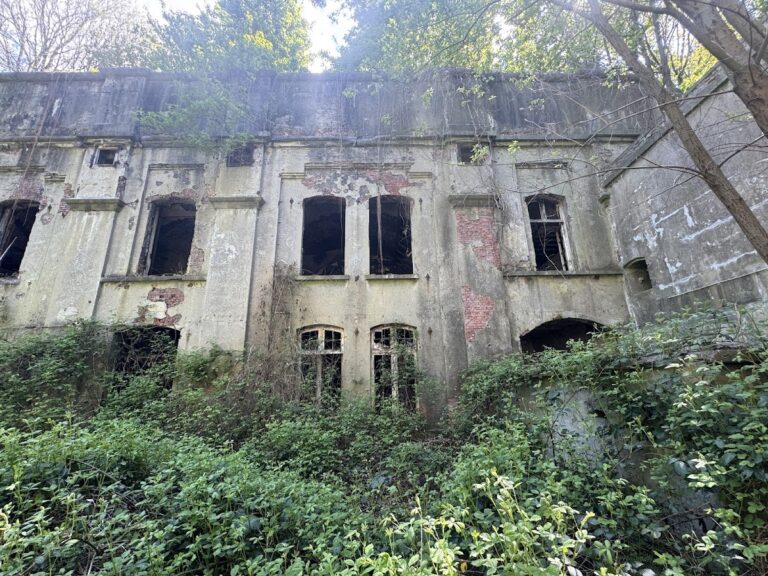
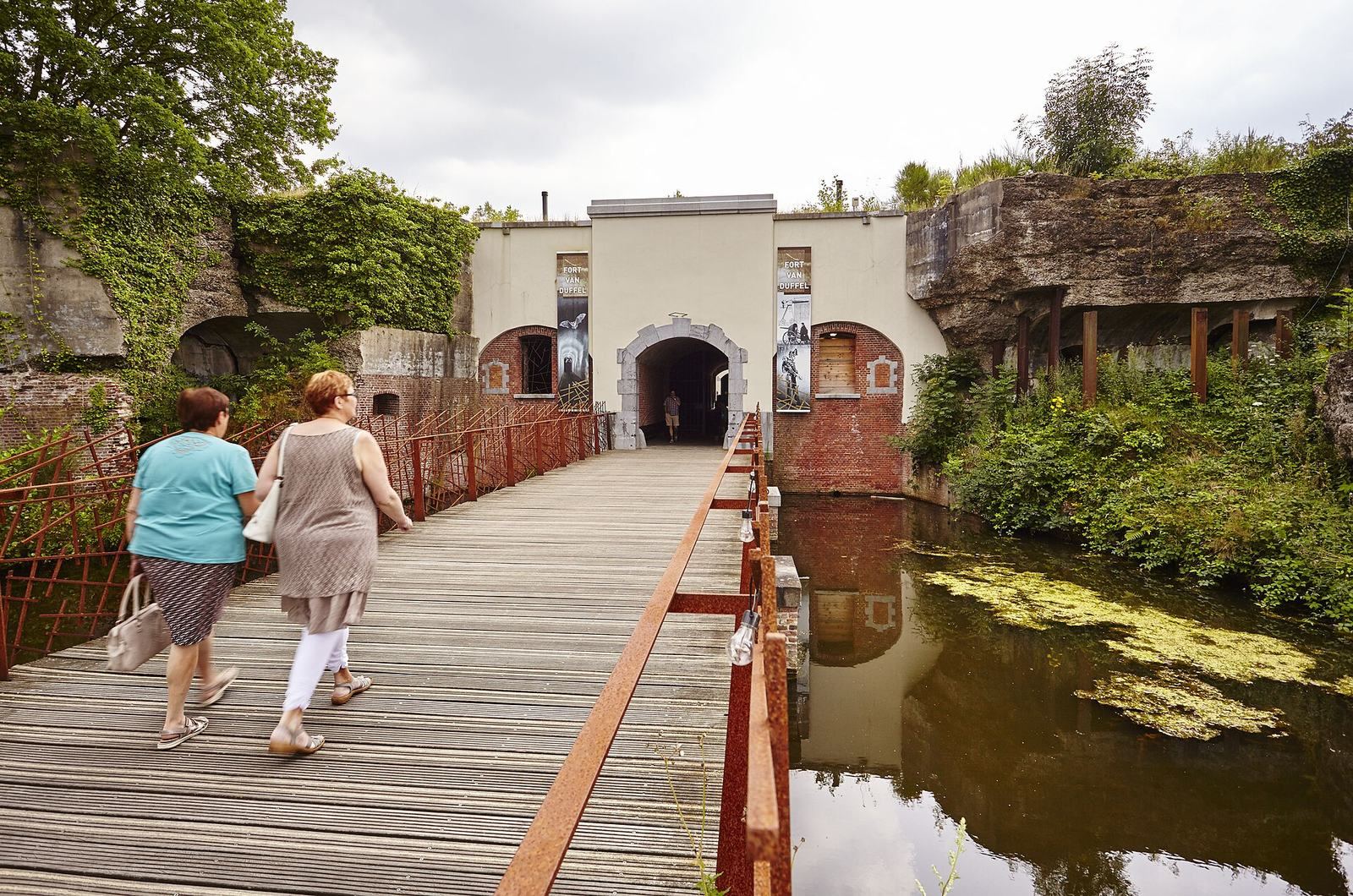
The fort was sold to a building contractor in 1972, and demolition began. Work stopped after the contractor died in 1973. Part of the estate was taken to allow the adjoining Mechelsebaan to be straightened, and the fort fell into disrepair. Kempens Landschap, a nonprofit association, acquired the ruin in late 2009, and partial restoration began in 2011. On 25 April 2012, Flemish Government minister Geert Bourgeois protected the fort as a monument. It is also part of the Natura 2000 site Historic Fort Belts of Antwerp as Bat Habitats, within the European Union’s protected-area network under the Habitats Directive.
Remains
Earthwork and artillery defenses
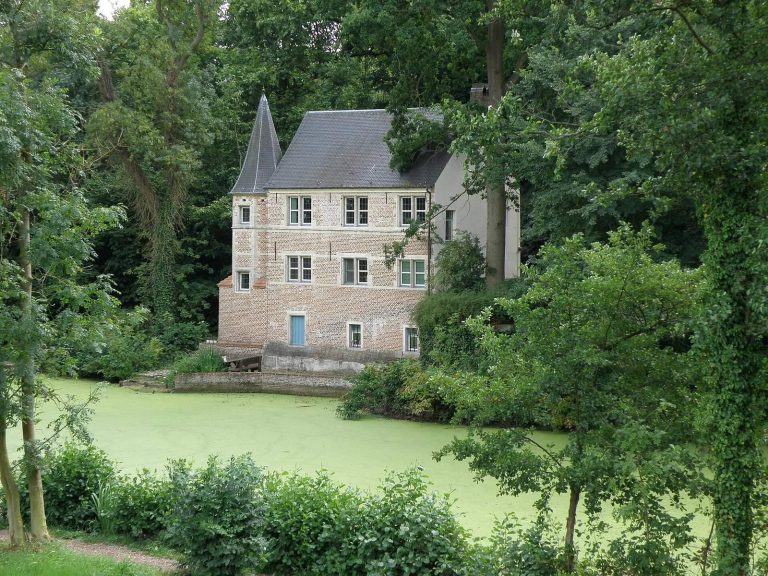
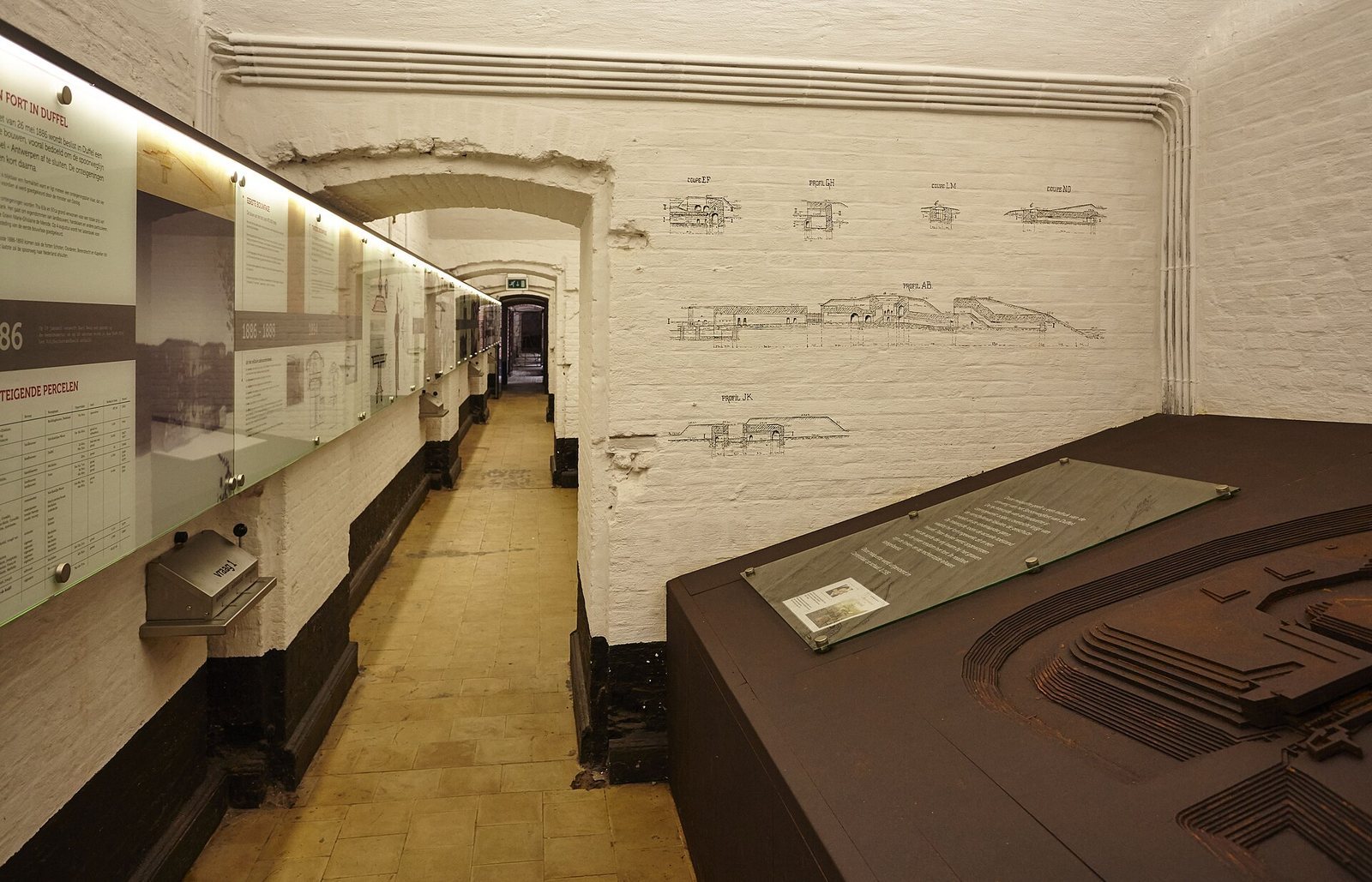
The fort’s layout consists of a raised earthwork surrounded by an excavated moat, with artillery positions and underground defenses. Before the 1894 strengthening, guns stood on the earth ramparts. The works replaced them with cannons beneath armored steel cupolas, reached by underground passages from a passage that ran around the fort. Some concrete vaults were three metres thick, and the fort was the first to receive reinforced-concrete vaults. Its surviving concrete casemates, protected chambers for guns or troops, date from the 1894 strengthening.
Moat and bat habitat
After World War I, alder and acacia were planted as coppice along the moat, a form of tree management in which stems are cut back to encourage new growth. Oak trees were also planted within the moat on the fort estate. Ten bat species have been observed at the site, including Geoffroy’s bat and the relatively rare pond bat and whiskered bat. Kempens Landschap built a tunnel to provide bats with a place to roost.