Palais du gouvernement de Nancy: An Eighteenth-Century Government and Military Headquarters
Site at a Glance
- Country
- France
- Primary era
- Early Modern
- Eras represented
- Early Modern
- Civilizations
- Duchy of Lorraine, Holy Roman Empire
- Site type
- Civic
- Remains
- Palace
On this page8 sections
History
The Palais du gouvernement de Nancy is an eighteenth-century classical urban mansion in France, built from 1751 to 1753 as the New Intendance, an administrative residence for Lorraine’s chancellor. It later became a government residence and the seat of Lorraine’s governor. Its construction followed an earlier, unfinished scheme to replace the old ducal palace.
The New Louvre and the New Intendance
Duke Leopold I of Lorraine considered the old ducal palace too cramped and outdated. In 1715, architect Germain Boffrand began work on Leopold’s proposed “New Louvre,” whose main façade was planned to face the Place de la Carrière. The project required the demolition of the choir of Saint George’s collegiate church and outbuildings belonging to the old palace.
Work stopped after Leopold-Clément, the duke’s heir, died in 1723. Leopold remained at Lunéville, and after his own death in 1728, his successor François III entrusted the regency to his mother, Elisabeth Charlotte of Orléans. Financial difficulties prevented the project from restarting. In July 1739, the remains of the New Louvre became municipal property. Stanislas, who was directing Nancy’s redevelopment, ordered the unfinished structure and the remaining parts of Saint George’s church demolished. The cleared site was incorporated into plans for a new residence and administrative building for Lorraine’s chancellor, Antoine-Martin Chaumont de La Galaizière.
Architect Emmanuel Héré oversaw the New Intendance, which was built between 1751 and 1753. Artists worked on its decoration, and in 1758 Stanislas’s engraver Dominique Collin depicted the building as part of a record of the ruler’s construction projects.
Government residence and military command
When Stanislas died in 1766, Lorraine became part of France under an earlier agreement. The new governor, Jacques Philippe de Choiseul-Stainville, claimed the palace as the city’s principal residence, prompting urgent repairs before his arrival. In 1788, when he was assigned to govern Alsace, Choiseul la Baume succeeded him.
During the French Revolution, the palace was rented to private occupants, briefly housed a café, and was later decommissioned by the municipality. In 1791 it became the headquarters of the newly formed Fourth Military Division. Generals de Victongoff, Bernoville, Gilot and Lacoste held command there in succession. General d’Escars was the last to serve at the palace; when his tenure ended in 1817, the division merged with the Third and its headquarters moved to Metz.
Toward the end of Louis XVIII’s reign, Nancy lent the building to the Meurthe department for its administration, with the department responsible for maintenance. The first prefect, the Marquis de Foresta, took up residence in 1823. Republican commissioners and, later, prefects under the Second Empire continued to use the palace. Among its visiting rulers and dignitaries were Charles X, Louis-Philippe I, Francis Joseph of Austria, Napoleon III and Empress Eugénie.
A French reorganization into five major military commands followed an assassination attempt on Napoleon III in 1858. Prefect Lengle then yielded the palace to Marshal Canrobert, commander of the Eastern Divisions. MacMahon, Forey, Bazaine and General de Failly followed him. During the War of 1870, the Franco-Prussian War, the occupying German army established its command in the building. Generals Adolf von Bonin, Heinrich von Zastrow and Albrecht von Stosch held command there in turn, until July 1873.
Military headquarters and civic use
After France lost Alsace and Moselle, Nancy became the new capital of eastern France and gained strategic importance. The palace became the headquarters of the 11th Infantry Division, called the “Iron Division,” in 1874. The XX Army Corps took its place in 1899 and remained until 1935; its commanders included Paul Pau, Ferdinand Foch, Hippolyte Pénet and Maurice Gamelin. Nancy became the seat of the XX Military Region in 1936. German forces occupied the palace from 1940 to 1944.
After the Liberation, the building again housed military commands. It served the Second Infantry Division from 1946 to 1956, the Meurthe-et-Moselle Subdivision from 1959 to 1964, and the First Army Corps from 1964 to 1975. The Nancy Arms Command used it in 1975–1976. From 1976 to 1985 it housed the Fourth Armoured Division and 61st Territorial Military Division; from 1985 to 1991, the Fourth Airmobile Division and the 61st Territorial Military Division; from 1991 to 1999, the Fourth Airmobile Division; and from 1999 to 2009, the Fourth Airmobile Brigade.
The army left in 2010, and the building passed to the City of Nancy. The city incorporated it into a major renovation and extension programme for the Lorraine Museum. The palace has hosted thematic public exhibitions since 2013, while its upper floors are used by the city’s Culture and Attractiveness division and its Livre sur la place mission. It was classified as a French historical monument in 1923, with further protection for the Place du Général-de-Gaulle façade in 1928 and for the furnishings and north façade in 2005. Since 1983, it has also been included in the UNESCO World Heritage designation that covers the Place de la Carrière.
Remains
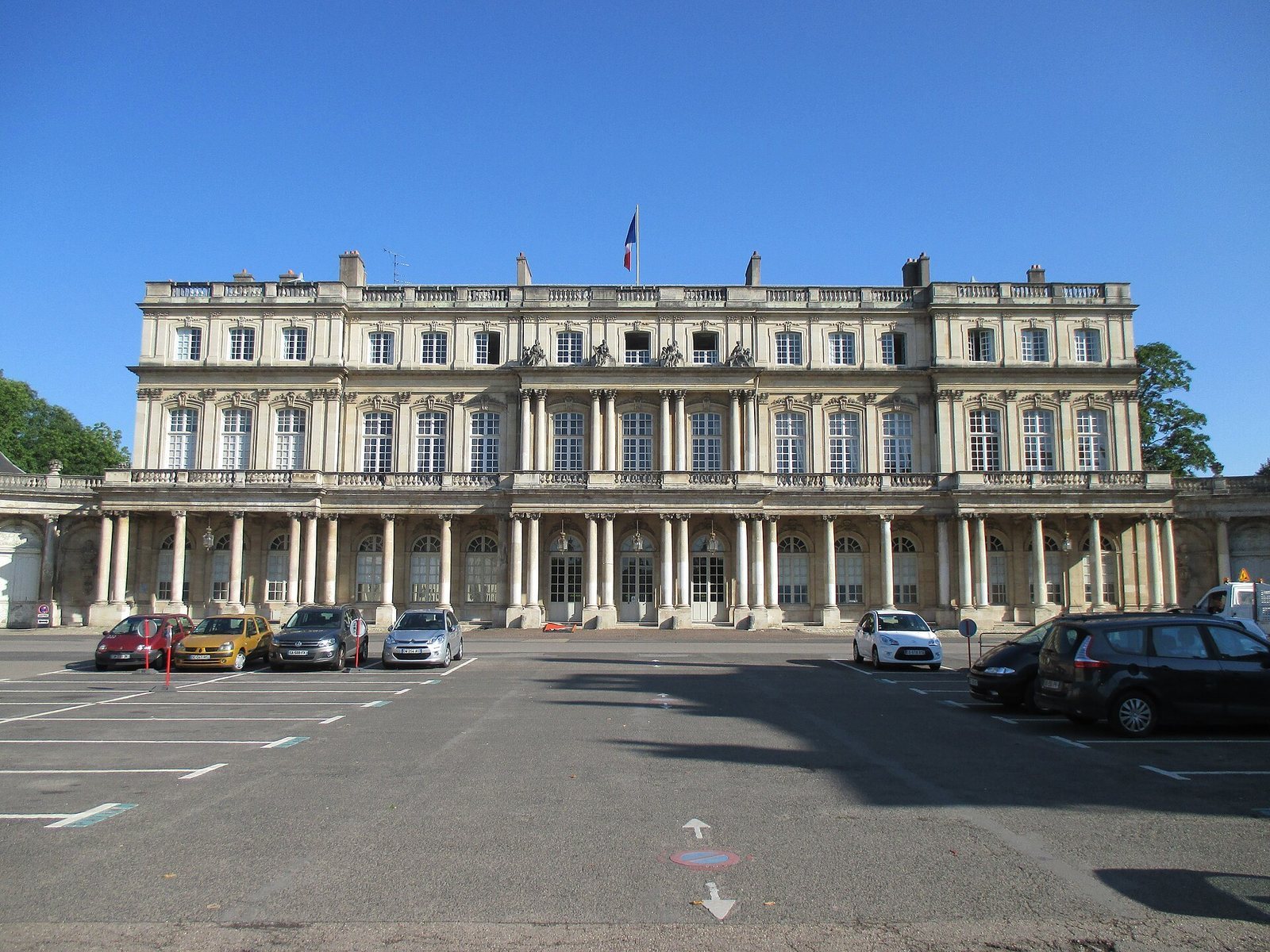
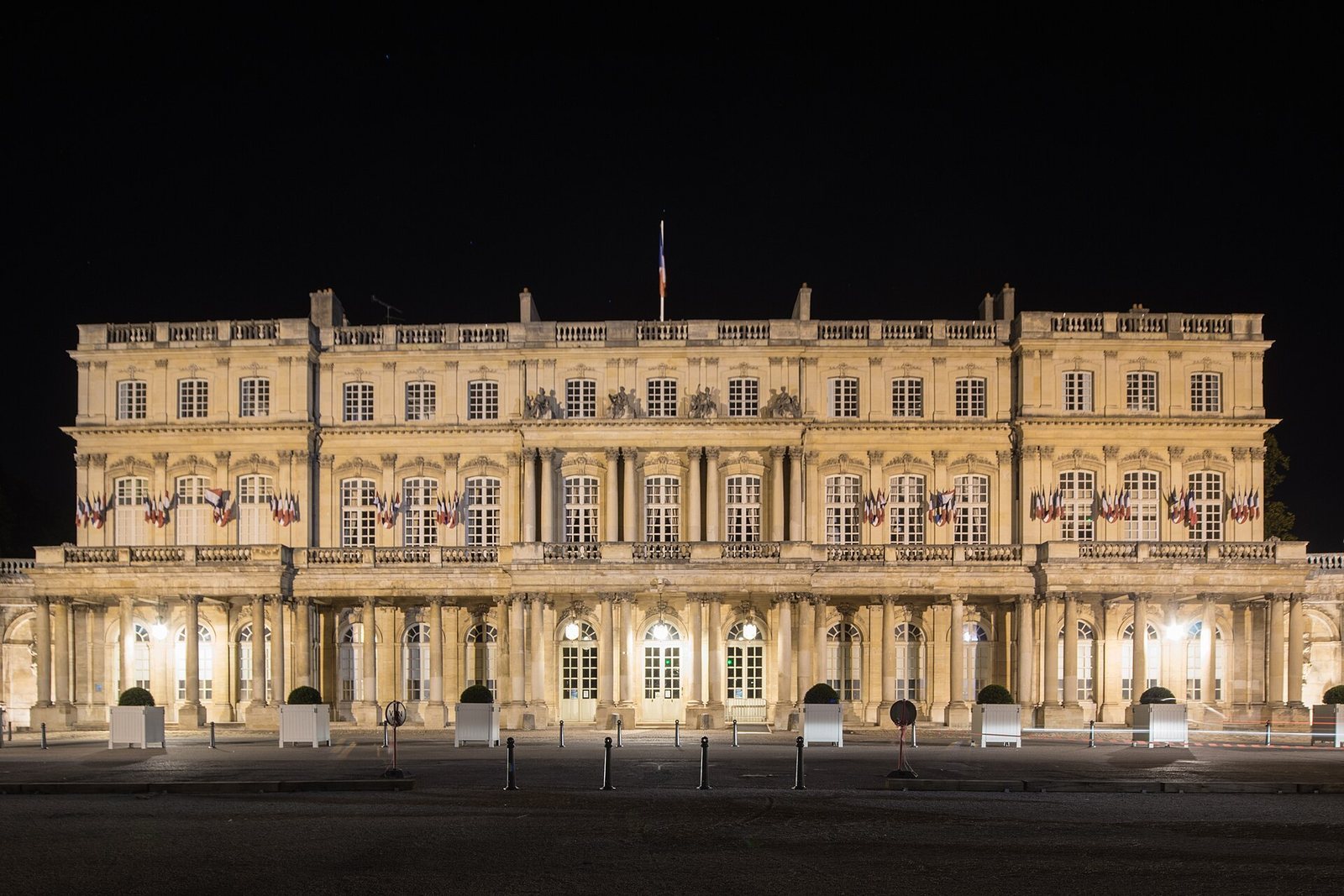
The palace is a large classical mansion whose semicircular form closes the Place de la Carrière and marks the western boundary of Pépinière park. A balustrade runs along its upper edge. Its grounds, interior spaces and surviving fragments from the earlier New Louvre form distinct parts of the site.
Palace exterior and sculpture
Collin’s 1758 engraving shows six groups of children on a balustraded balcony; these sculptures were removed later. The engraving predates four seated female figures accompanied by children, sculpted by Barthélemy Guibal and placed in the horizontal architectural band between the first and second floors. Guibal was among the sculptors who contributed to the palace’s decoration, alongside Vallier, Lenoir, Walneffer and Söntgen.
Garden and earlier remains
The palace garden covers 8,800 square metres and includes maple plantings and two monumental plane trees. Each tree is 42 metres high and measures 6.70 metres in circumference. Planted during Stanislas’s rule and described as more than 250 years old, they received France’s “remarkable trees” label in 2013. False arcades from the unfinished New Louvre survive in the garden along the Lorraine Museum.
Interior spaces
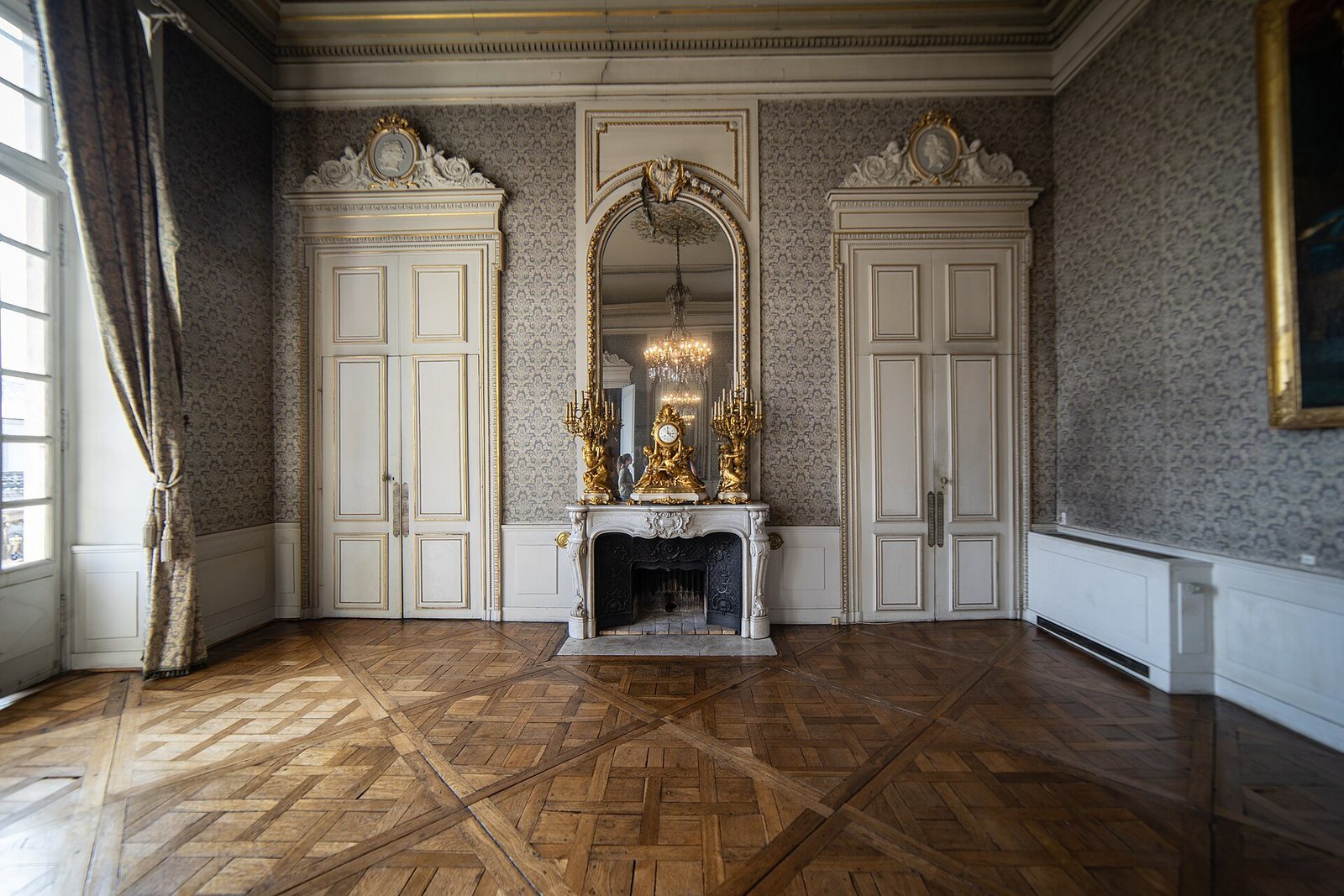
Identified interior features include an entrance hall, sculpted portal, grand staircase and first-floor salons. These include the Painting Salon and a salon in the Napoleonic style. Gergonne, Girardet and Lamour were entrusted with the interior decoration.