Fort Independence: Boston Harbor’s Granite Bastion Fort
Site at a Glance
- Country
- United States
- Primary era
- Modern
- Eras represented
- Early Modern, Modern
- Civilizations
- British, English
- Site type
- Military
- Remains
- Fort
On this page10 sections
History
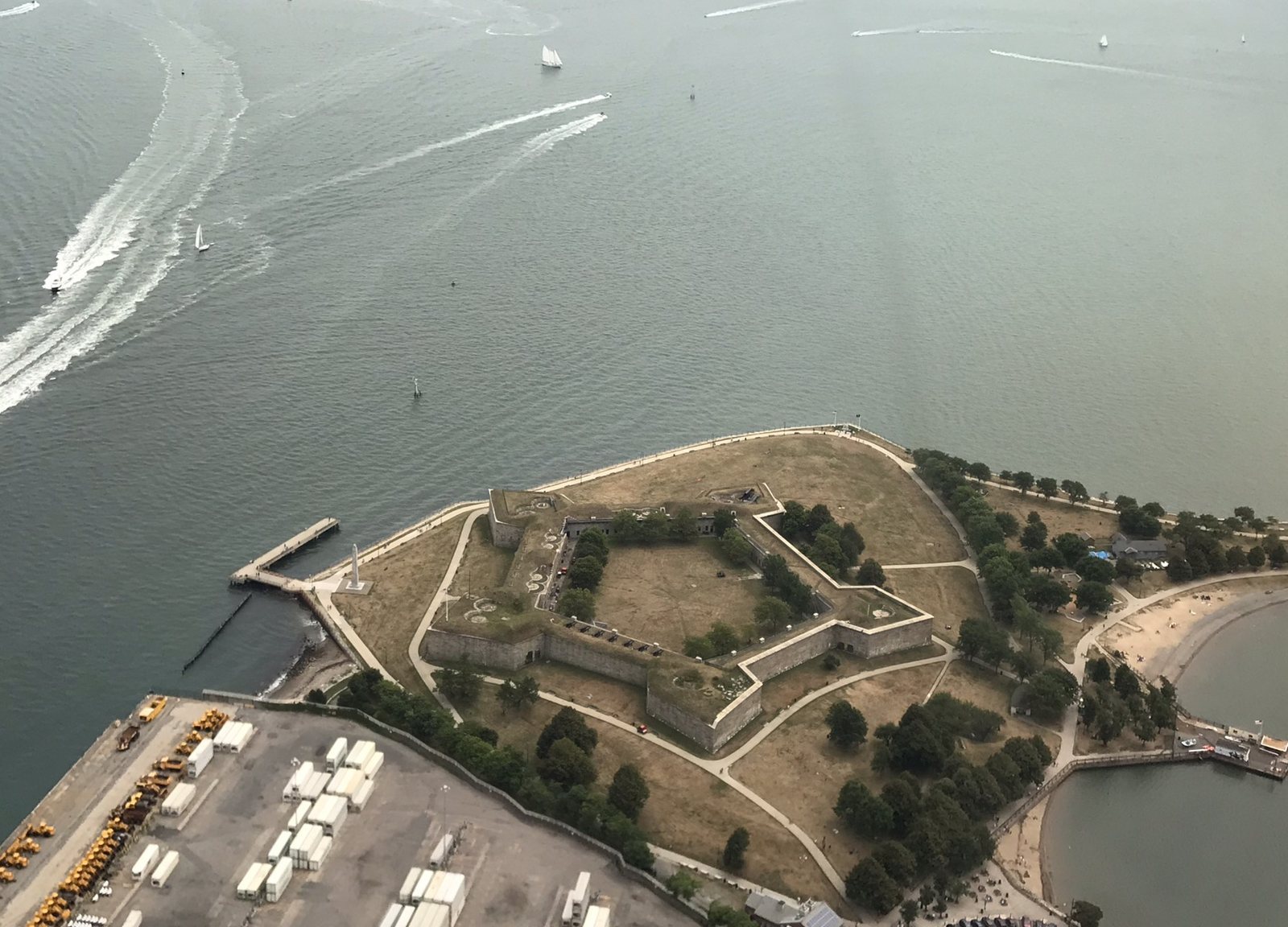
Fort Independence is a coastal bastion fort, with projecting sections for defensive fire along its walls, on Castle Island in Boston, United States. Its present granite structure was built between 1833 and 1851. English colonists first fortified the island in 1634 to defend Boston Harbor, making it one of the oldest continuously fortified sites of English origin in the country.
Colonial defenses and Castle William
The first fort was established with partial financial support from Governor John Winthrop and the colonial council. Deputy Governor Roger Ludlow and Captain John Mason planned and supervised its construction, and Nicholas Simpkins became its first commander. After the original work deteriorated, a French warship’s presence in Boston Harbor prompted a rebuilding in 1644. Richard Davenport took command the following year and served until he was killed by lightning in 1665. Roger Clap succeeded him and remained in command until 1686. A fire destroyed the fort on March 21, 1673, and it was rebuilt the next year.
In 1689, Governor Edmund Andros was held at the fort and sent to England for trial after the Glorious Revolution, the 1688–1689 overthrow of James II and his replacement by William III and Mary II. The fort was renamed Castle William in 1692 in honor of William III. Military engineer Wolfgang William Romer directed an expansion between 1701 and 1703, and a fifth bastion was added in 1740.
Castle William sheltered British officials, provincial leaders, and soldiers during Boston’s political unrest. Thomas Goldthwaite was appointed to supervise repairs in 1763. Stamps intended for use under the Stamp Act were kept at the fort in September 1765, and the dispute over the act and the Boston Massacre of 1770 also led people to seek refuge there. During the Siege of Boston in 1775, the British used Castle William as their principal stronghold. After George Washington’s Continental Army fortified Dorchester Heights, the British left Boston in March 1776, setting fire to the fort and damaging its ordnance as they withdrew.
Revolution and the early republic
American forces rebuilt the fort in 1776 and named it Fort Adams. Massachusetts designated it a prison in 1785, and it continued in that role until 1805. The name Fort Independence had previously belonged to a Revolutionary-era fort at Point Allerton in Hull. It was transferred to Castle Island at a ceremony attended by President John Adams on December 7, 1797, apparently leaving the earlier Hull fort without a name. That fort fell into disuse after the War of 1812, and a later fort built at Point Allerton in the nineteenth century was called Fort Revere.
The fort and island had passed to the United States government by 1800. From 1800 to 1803, military engineer Jean Foncin directed rebuilding and enlargement. During the War of 1812, a conflict between the United States and Britain, British naval forces repeatedly captured American merchant and fishing vessels in Massachusetts Bay but did not attack Boston Harbor. Colonel John Breck commanded Fort Independence during the war.
A duel at the fort on December 25, 1817, killed Lieutenant Robert F. Massie. Folklorist Edward Rowe Snow later recorded a legend that soldiers sealed the duel’s victor, Lieutenant Gustavus Drane, inside a fort vault. Drane survived, continued his military career, became a captain, and died on active duty in 1846. Edgar Allan Poe served with the 1st United States Artillery Regiment at the fort in 1827. The tale about Drane has been said to inspire Poe’s story The Cask of Amontillado.
The nineteenth-century fort and Civil War
Construction of the present fort began in 1833 under Colonel Sylvanus Thayer. The main work was substantially complete by 1848, while repairs and other work continued through 1861. The new granite fort provided a renewed defense for Boston Harbor.
At the start of the Civil War in 1861, the Fourth Battalion of the Massachusetts Volunteer Militia garrisoned the fort, organized there, and trained in infantry and artillery drill. The battalion became the nucleus of the 24th Massachusetts Volunteer Infantry. At least the 11th and 13th Massachusetts regiments also trained at the fort.
Changing military use and the creation of a park
After the Civil War, Fort Independence was used less as the larger Fort Warren reduced its military importance. In the 1880s, landscape architect Frederick Law Olmsted proposed the Dorchesterway, an earthen causeway and parkway that would have linked Castle Island with Boston’s Emerald Necklace, a network of parks and parkways. The proposal was not carried out, but Boston began shaping a park-like setting around the fort in the 1890s.
The federal government ceded Castle Island, apart from the fort, in 1890. Boston began filling the marshes between the island and South Boston that year to create green space and promenades. The work was completed in the 1920s, connecting the island to the mainland, and the fort itself was ceded to Boston in 1908. The federal government briefly reclaimed the island during the Spanish-American War in 1898 and returned it to Boston in 1899.
Twentieth-century service and preservation
The military took control of the fort during both world wars and installed anti-aircraft guns. In World War I, the fort served mainly as a small-arms ammunition depot. In World War II, the Navy used it as a station for degaussing ships, a process that reduces a ship’s magnetic field and can help protect it from magnetic mines. The fort returned to Boston after each war.
In 1962, the federal government transferred Castle Island and Fort Independence permanently to Massachusetts, formally known as the Commonwealth of Massachusetts. The fort was added to the National Register of Historic Places in 1970 and is preserved as a state park, managed by the Massachusetts Department of Conservation and Recreation and the nonprofit Castle Island Association. Ceremonial salutes are occasionally fired from the fort, which has never fired a shot in anger.
Remains
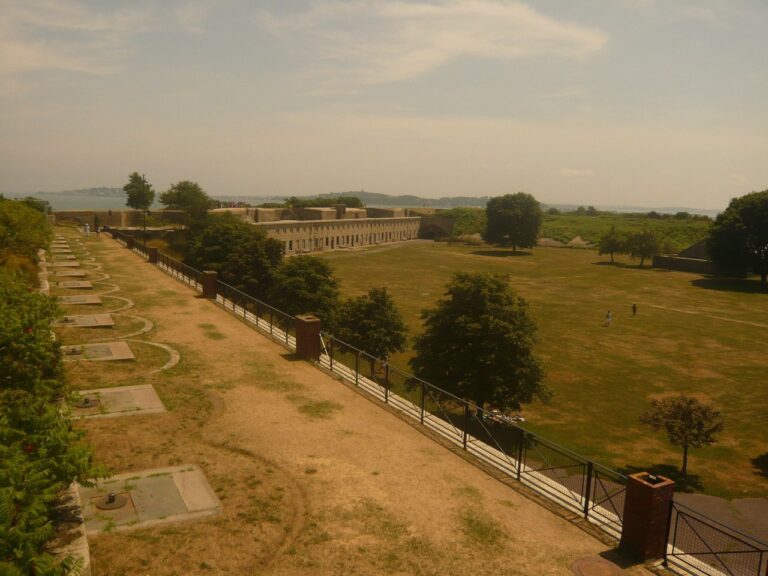
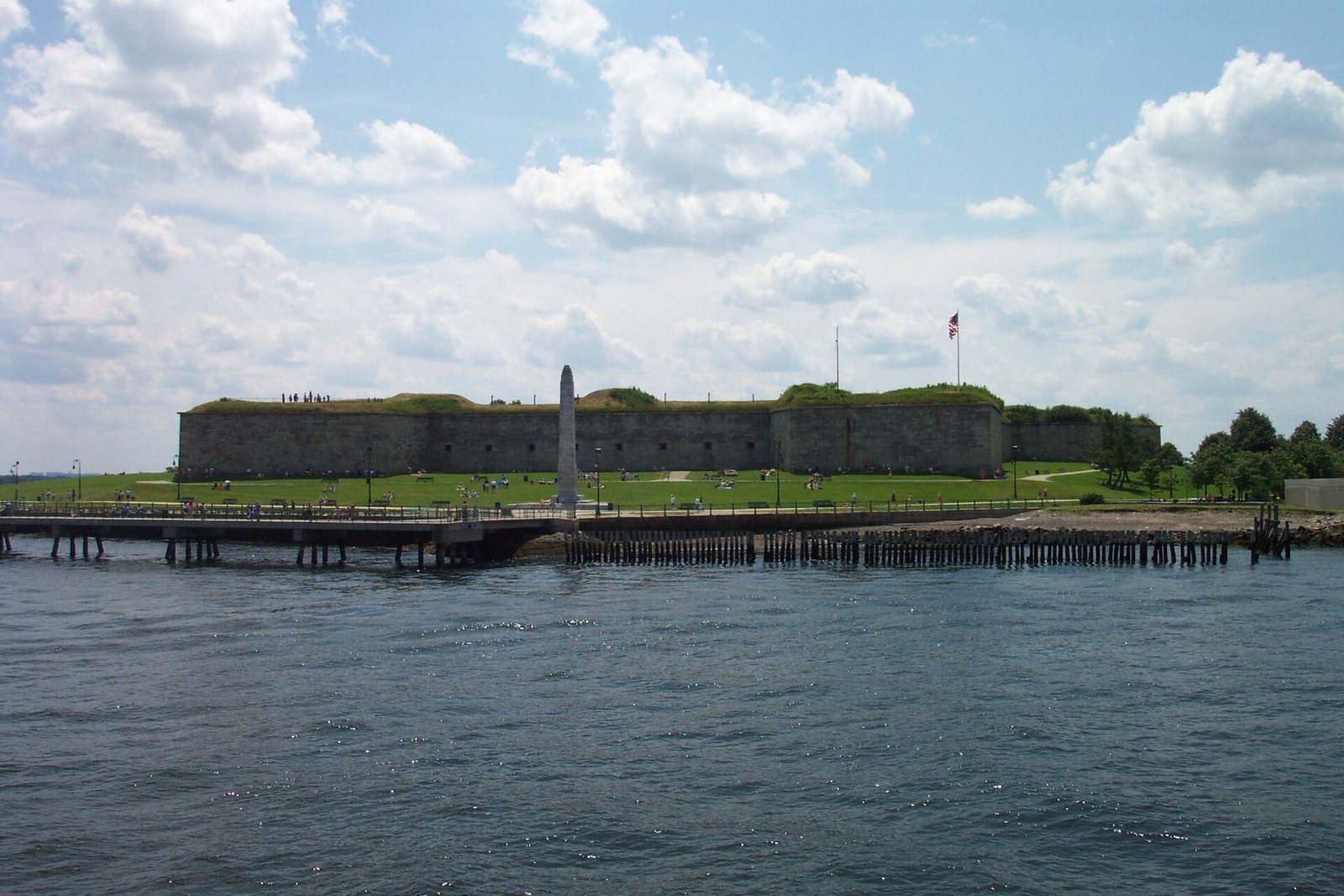
Fort Independence occupies a 15-acre site on Castle Island in South Boston. Its surviving form is a granite bastion fort, built from stone quarried at Rockport, Massachusetts. The site preserves the present fort alongside a small, concealed remnant of the earlier Castle William.
Early defenses
The first fort was an earthwork with mud walls and masonry made using lime from oyster shells, with cannon directed toward the sea. Its 1644 replacement enclosed a 50-foot-square compound behind 10-foot walls of pine logs, stone, and earth. It carried six saker guns, a type of cannon, and three smaller guns. The stone Castle William built in 1674 had four bastions. Its main fort held 38 guns and 16 culverins, or long-barreled guns, while a water battery, a harbor-facing gun emplacement, held six more. A later armament included 54 cannon: 24 nine-pounders, 12 twenty-four-pounders, and 18 guns of 32 or 48 pounds. Expansion brought the total close to 100 guns, and the fifth bastion added in 1740 mounted twenty 42-pounders. In 1811, the fort was described as a regular pentagon with masonry bastions, 42 heavy cannon, and two additional batteries for six guns.
The present granite fort
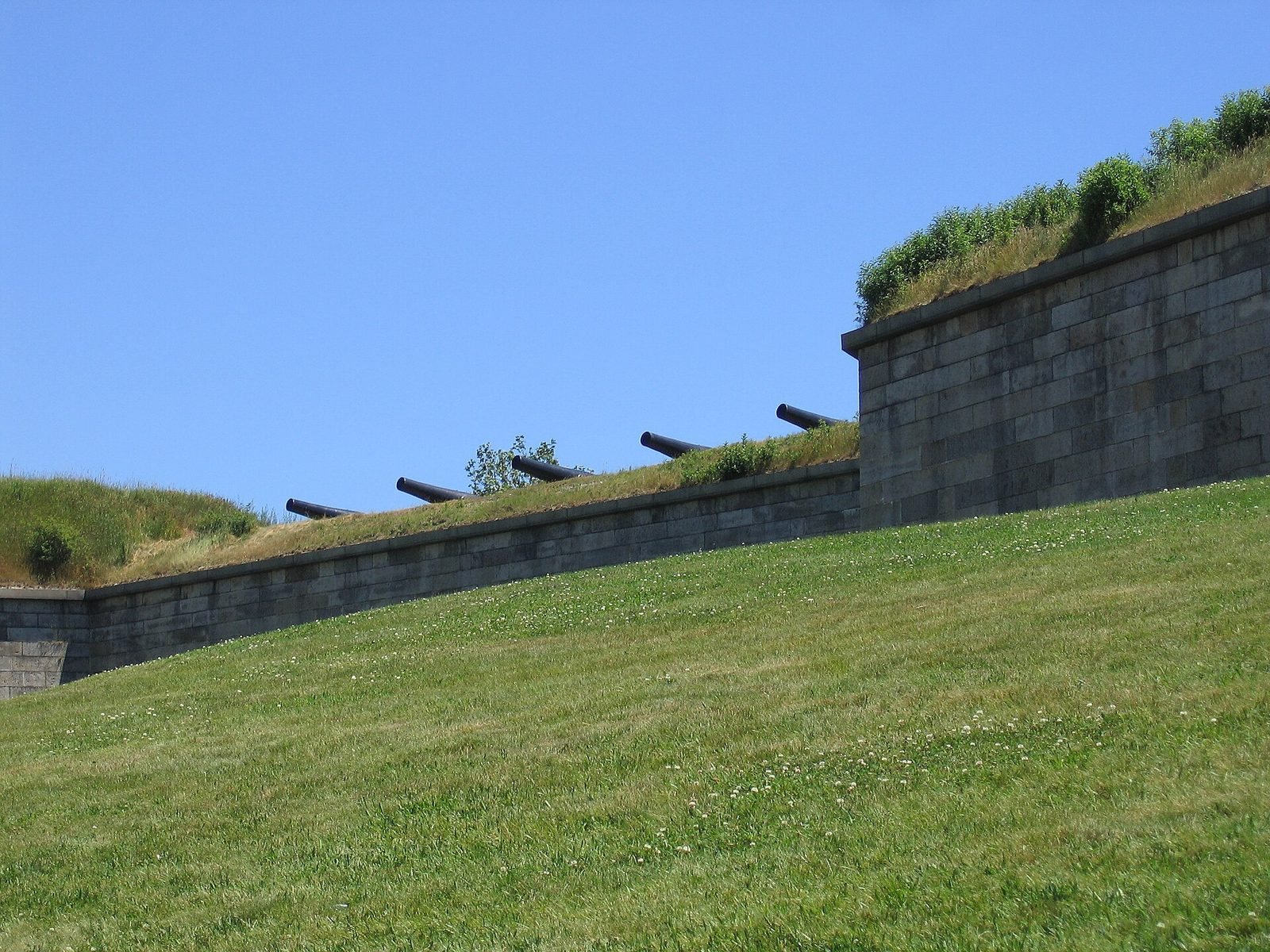
The present fort’s walls rise 30 feet and are 5.5 feet thick. At its peak during the Civil War era, it mounted 96 cannon, including some 15-inch Rodman guns, large American coastal-defense cannon that could fire a 450-pound projectile more than three miles.
Earlier masonry and the Massie monument
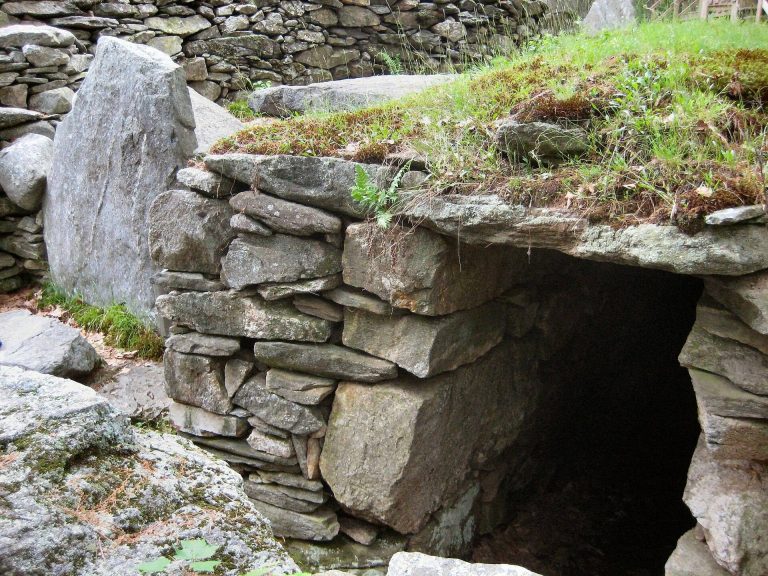
A small piece of Castle William’s brickwork remains in the rear part of the present fort, concealed beneath later stonework. Outside the west battery, a monument commemorates Massie and the 1817 duel. After World War II, Massie’s remains were moved to Fort Devens Cemetery near Ayer, Massachusetts.